

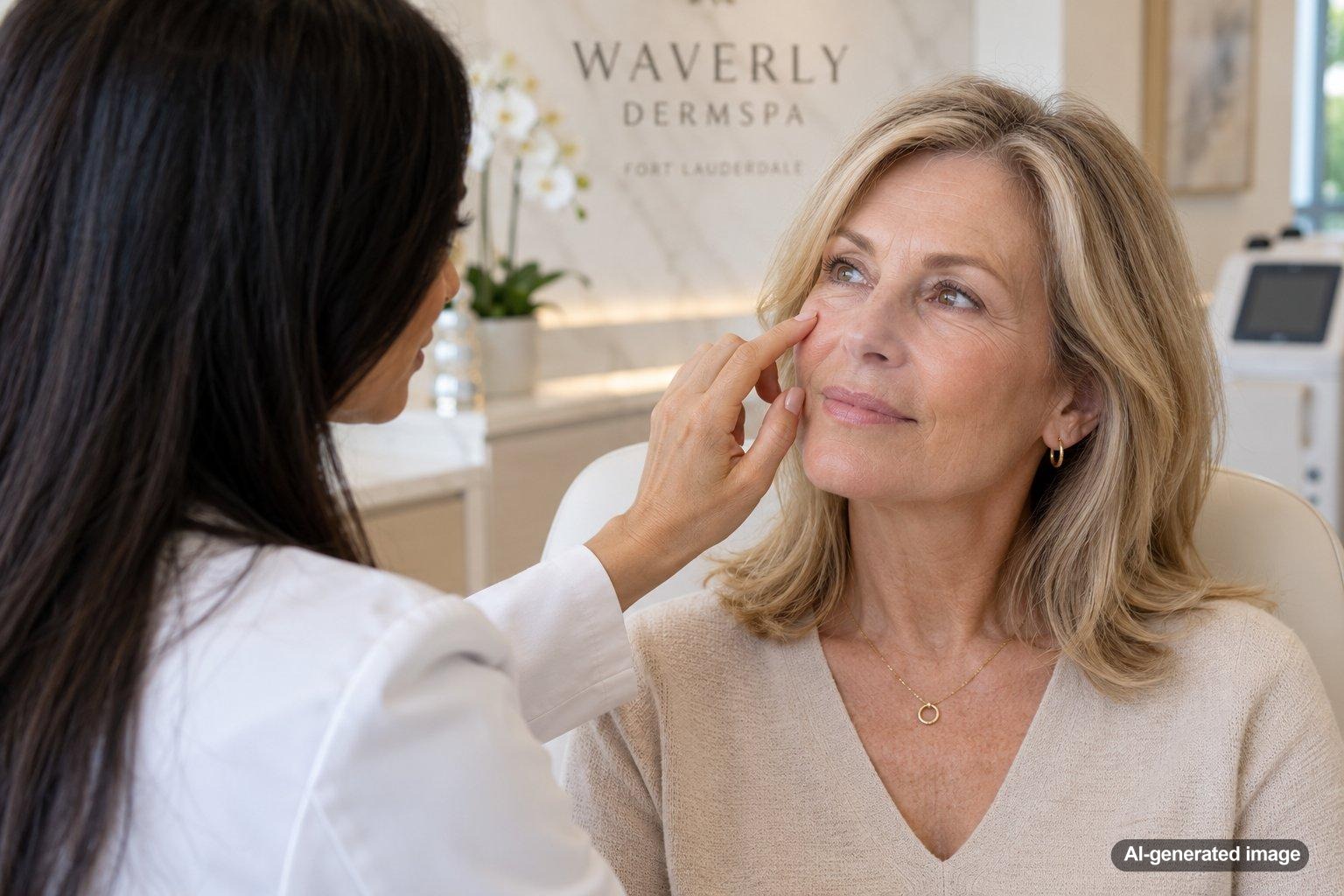
Fine lines across the upper cheeks can become more noticeable with time, especially when sunlight, repeated facial movement, and gradual changes in skin texture overlap. Tetra CoolPeel CO2 is an in-office laser resurfacing option that may be considered when the goal is to improve the appearance of fine lines and uneven texture without relying on volume replacement alone.
The upper cheek is also a nuanced treatment area because it sits close to the delicate skin around the eyes. A dermatologist can evaluate the pattern of lines, skin tone, sun exposure, sensitivity, and other factors before deciding whether CO2 resurfacing is an appropriate approach.
Quick answer
- Tetra CoolPeel CO2 is a fractional CO2 resurfacing approach that may help soften the appearance of fine lines and uneven texture.
- The upper cheeks require individualized treatment planning because skin thickness and proximity to the eye area vary.
- Settings, treatment intensity, and the number of sessions can differ substantially from person to person.
- Temporary redness, dryness, sensitivity, or a rough texture can occur while treated skin recovers.
- Consistent sun protection and appropriate aftercare are important parts of the treatment process.
What Tetra CoolPeel CO2 is
CO2 laser resurfacing uses controlled laser energy to create a treatment response within the skin. Fractional approaches treat selected microscopic areas rather than uniformly resurfacing the entire surface at once. As the skin goes through its natural repair process, its texture and the appearance of fine lines may gradually change.
CoolPeel is an approach delivered with the Tetra CO2 platform. Treatment can be customized according to the area being addressed, the person’s skin characteristics, and the amount of resurfacing considered appropriate. It should not be viewed as a single standardized treatment that is identical for every face.
Why fine lines develop on the upper cheeks
Upper cheek lines often reflect several changes happening at the same time rather than one isolated cause. Common contributors can include:
- Cumulative ultraviolet exposure and photoaging.
- Gradual changes in collagen and skin elasticity with age.
- Repeated facial expressions near the outer eye and cheek area.
- Dryness that temporarily makes fine surface lines look more prominent.
- Changes in facial volume or support that alter how the skin folds.
- Uneven texture from prior sun exposure or other skin changes.
Because these factors can overlap, resurfacing is not necessarily the only option worth considering. An examination helps distinguish primarily textural lines from concerns related to volume, pigmentation, vascular changes, or deeper facial movement.
How CoolPeel may fit into an upper-cheek treatment plan
For someone whose main concern is superficial texture and fine etched lines, fractional CO2 resurfacing may be one option a dermatologist discusses. The purpose is generally to create controlled resurfacing while allowing the skin to repair itself afterward.
The appropriate treatment depth and intensity depend on factors such as skin tone, previous procedures, sensitivity, sun exposure, the location of the lines, and how much recovery time is acceptable. More aggressive treatment is not automatically better. A carefully selected treatment plan is generally more important than pursuing the highest possible setting.
What you can do at home
Home care cannot reproduce an in-office CO2 laser treatment, but a consistent routine can support the appearance and resilience of upper-cheek skin. Conservative steps include:
- Use broad-spectrum sunscreen consistently and limit unnecessary direct sun exposure.
- Keep the skin comfortably moisturized, especially if dryness makes fine lines more visible.
- Avoid repeatedly irritating the upper cheeks with harsh scrubs or excessive exfoliation.
- Use active skincare products only as tolerated, particularly around the more sensitive eye and upper-cheek area.
- Tell your dermatologist about the products you routinely use before an upcoming laser procedure.
If a laser treatment is planned, your clinician can provide specific instructions about which products to pause and when to restart them.
Professional options for upper-cheek fine lines
CO2 resurfacing is only one possible approach. Depending on what is creating the lines, a dermatologist may discuss categories such as other laser or light procedures, microneedling-based treatments, injectable treatments, chemical peels, or a carefully designed skincare plan.
These treatments address different aspects of facial aging. For example, resurfacing primarily focuses on skin quality and texture, while an injectable treatment may be considered when movement or volume change plays a larger role. Sometimes a staged approach is more appropriate than trying to address every concern with one procedure.
Recovery and aftercare considerations
After fractional CO2 resurfacing, treated skin may temporarily look red, feel warm or sensitive, and develop dryness or a rough surface as it recovers. The degree and duration of these effects vary with treatment settings, the area treated, individual skin characteristics, and the person’s healing response.
Follow the aftercare instructions provided by your clinician rather than adding extra exfoliants or active products on your own. Gentle cleansing, appropriate moisturizing, and careful sun protection are commonly emphasized during recovery. Your clinician can also explain when makeup, exercise, and usual skincare products may be resumed based on how your skin is healing.
When to see a dermatologist
A consultation is worthwhile when fine lines bother you enough that you are considering a procedure, particularly in the upper-cheek and eye-adjacent area. A dermatologist can examine the skin in person, discuss your goals, review previous treatments and medications, and help determine whether resurfacing or another approach makes sense.
You should also contact your treating clinician if you develop an unexpected or concerning reaction after a procedure rather than trying to manage a significant reaction with additional cosmetic products at home.
FAQ
Can CoolPeel be used specifically on the upper cheeks?
The upper cheeks can be included in a resurfacing plan when a clinician determines that the area and the person’s skin characteristics are appropriate for treatment. Treatment parameters may differ from those used elsewhere on the face.
Will CoolPeel remove every fine line?
No cosmetic resurfacing procedure should be expected to erase every line. The goal is generally improvement in the appearance of texture and fine lines, and the degree of change varies from person to person.
Is CoolPeel the same as filler?
No. Laser resurfacing focuses primarily on the skin itself, while dermal fillers are used to restore or modify volume in selected areas. A dermatologist can help determine which type of treatment better matches what is creating the visible concern.
Can upper-cheek lines come from more than aging?
Yes. Sun exposure, facial movement, dryness, texture changes, and changes in facial volume can all influence how upper-cheek lines appear. More than one factor may be present at the same time.
How many CoolPeel treatments are needed?
There is no universal number. Treatment intensity, goals, baseline skin condition, response, and tolerance for recovery all influence whether additional sessions are considered.
Should I stop retinoids or acids before treatment?
Do not change prescription or active skincare products solely based on general advice online. Your treating clinician can review your routine and give individualized instructions about what to pause before and after the procedure.
At Waverly DermSpa, we offer Tetra CoolPeel CO2 and can help you understand whether it may be appropriate.
Ready to get help?
Schedule an appointment or send a message and our team will get back to you.
Prefer to call? 954-666-3736
Disclaimer
This article is for educational purposes and is not medical advice. For diagnosis and personalized treatment, please book an appointment with a board-certified dermatologist.
