

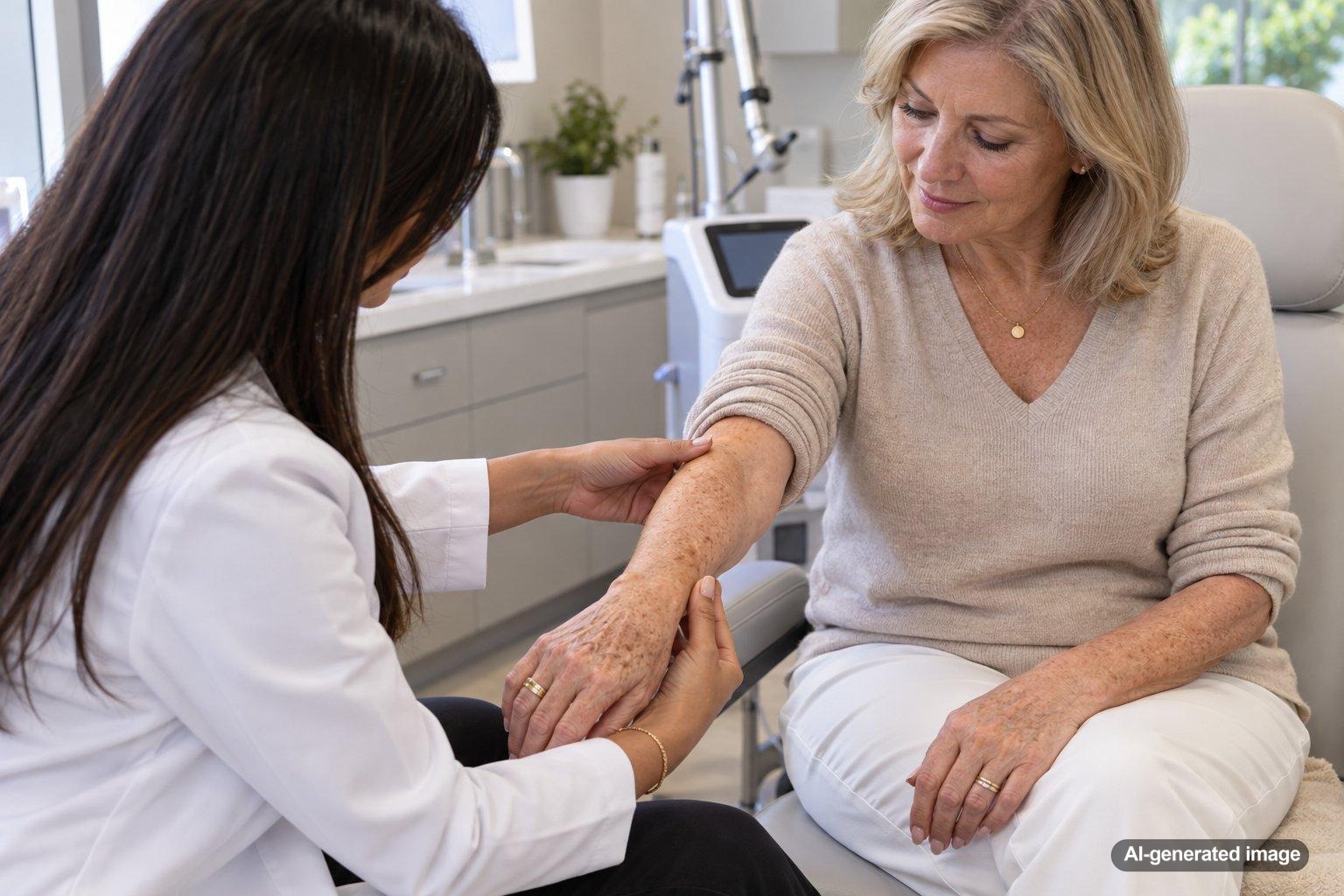
Sun exposure does not stop at the face. The backs of the hands and the forearms receive years of ultraviolet exposure from driving, walking outdoors, sports, and everyday activities, which can leave these areas looking uneven, spotted, rough, or more weathered than nearby covered skin. Tetra CoolPeel CO2 is a resurfacing option that may be considered when the goal is to improve selected visible signs of sun damage rather than simply cover them.
The right approach depends on what is actually causing the discoloration or texture change. A dermatologist should evaluate persistent spots, rough patches, or changing lesions before cosmetic laser treatment because not every mark that looks like sun damage should be treated as a cosmetic concern.
Quick answer
- Tetra CoolPeel CO2 may be considered for selected texture changes, uneven tone, and other visible signs of photoaging on the hands or forearms.
- The hands and forearms can require a different treatment plan from the face because skin thickness, cumulative sun exposure, healing patterns, and daily use vary by area.
- Brown spots should be evaluated before treatment, particularly if they are new, changing, irregular, rough, bleeding, or otherwise concerning.
- Sun protection before and after treatment is important because additional ultraviolet exposure can contribute to recurring discoloration and additional skin damage.
- A dermatologist can determine whether CO2 resurfacing, another laser or light treatment, a topical approach, or a different procedure is more appropriate.
What Tetra CoolPeel CO2 is
Tetra CoolPeel CO2 is a type of CO2 laser resurfacing treatment. CO2 lasers deliver controlled energy to targeted skin, creating a carefully planned treatment effect that encourages renewal as the area heals. The exact settings, treatment depth, number of passes, and treated surface area should be individualized rather than treated as a one-size-fits-all protocol.
Laser resurfacing is used in dermatology for concerns that can include uneven pigmentation, sun-damaged skin, fine textural changes, and certain signs of photoaging. Treatment goals for the hands and forearms are typically cosmetic, so a careful skin examination comes first when there are individual spots or rough areas that could represent something other than routine photoaging.
Why the forearms and hands show sun damage
These areas often receive substantial incidental ultraviolet exposure over many years. Common contributors include:
- Daily driving with the hands and forearms exposed near vehicle windows
- Outdoor exercise, gardening, boating, golf, tennis, and other recreational activities
- Applying sunscreen to the face but forgetting the arms and backs of the hands
- Frequent hand washing that removes sunscreen and leaves the hands unprotected afterward
- Living or spending extended periods in sunny climates such as South Florida
Visible changes may include uneven brown pigmentation, a mottled appearance, fine lines, roughness, and changes in overall texture. Some rough or scaly areas can have medical significance, however, which is why examination before cosmetic resurfacing matters.
What you can do at home
Daily photoprotection is the foundation of caring for sun-exposed hands and forearms, whether or not you choose an in-office procedure. A broad-spectrum, water-resistant sunscreen with SPF 30 or higher can be applied to exposed skin before going outdoors and reapplied according to the product directions, especially after washing or prolonged outdoor activity. Lightweight long sleeves and other sun-protective clothing can also reduce additional exposure.
Gentle moisturizing can support dry or weathered skin, particularly on the hands, which are exposed to frequent washing and sanitizing. Avoid aggressively scrubbing, peeling, or trying to remove individual dark or rough spots at home. If a spot looks unusual or changes over time, have it examined instead of assuming it is simply an age spot.
Professional options for sun-damaged hands and forearms
CO2 resurfacing is one option among several approaches that may be used for visible sun damage. Depending on the pattern of discoloration, texture, skin type, medical history, and treatment goals, a dermatologist may discuss laser resurfacing, other laser or light-based procedures, chemical peels, prescription or nonprescription topical products, or treatment directed at specific individual lesions.
Not every brown spot responds to the same procedure, and treating a broad area of photodamage is different from treating one isolated lesion. Skin tone also matters because some people have a greater tendency toward post-inflammatory lightening or darkening after procedures. A personalized evaluation helps determine an appropriate strategy and whether treatment should be staged.
At Waverly DermSpa, we offer Tetra CoolPeel CO2 and can help you understand whether it may be appropriate.
What to expect around treatment
Your clinician can explain preparation, treatment settings, expected skin response, and aftercare based on the area being treated. Temporary redness, sensitivity, swelling, dryness, flaking, crusting, or pigment changes can occur with laser resurfacing, and the degree of recovery varies with treatment intensity and individual skin characteristics. The hands and forearms are also exposed to friction, washing, clothing, and sunlight throughout the day, so practical aftercare planning matters.
Follow the specific skin-care and sun-protection instructions provided by your treating clinician. Avoid assuming that a protocol used for facial resurfacing should automatically be copied to the hands or arms.
When to see a dermatologist before cosmetic treatment
Have an area examined before resurfacing if you notice a spot or patch that is new, changing, irregular, persistently rough, tender, bleeding, crusting, or not healing as expected. Dermatologists can distinguish routine cosmetic concerns from lesions that may need a different type of evaluation or treatment.
It is also important to discuss your history of abnormal scars, pigment changes after procedures, active skin irritation, recent tanning or significant sun exposure, medications, and previous treatments. These factors may influence whether laser resurfacing is appropriate and how a treatment plan is designed.
FAQ
Can CoolPeel be used on the hands instead of only the face?
CO2 resurfacing can be used on areas beyond the face in selected patients. The hands have different skin characteristics and healing considerations, so treatment parameters should be chosen specifically for that area after an evaluation.
Can it help brown sun spots?
Laser procedures may help selected forms of sun-related pigmentation, but a dermatologist should first determine what the spots are. Age spots, actinic keratoses, benign growths, and skin cancers can sometimes look similar to an untrained eye and may require different management.
Can the forearms and hands be treated during the same visit?
Possibly, depending on the amount of skin involved, treatment goals, skin characteristics, and the plan recommended by the clinician. Treating a larger surface area may affect practical aftercare considerations.
Will one treatment remove all visible sun damage?
Results and treatment needs vary. Sun damage can include several different concerns at once, such as pigment changes, roughness, fine lines, and individual lesions, so more than one approach or treatment session may sometimes be considered.
Can sun spots return after laser treatment?
Additional ultraviolet exposure can contribute to new or recurring visible pigmentation over time. Consistent sun protection remains important after treatment.
Ready to get help?
Schedule an appointment or send a message and our team will get back to you.
Prefer to call? 954-666-3736
This article is for educational purposes and is not medical advice. For diagnosis and personalized treatment, please book an appointment with a board-certified dermatologist.
Sources & further reading
- American Academy of Dermatology (AAD) – What can make my hands look younger?
- Cleveland Clinic – Laser Skin Resurfacing
