

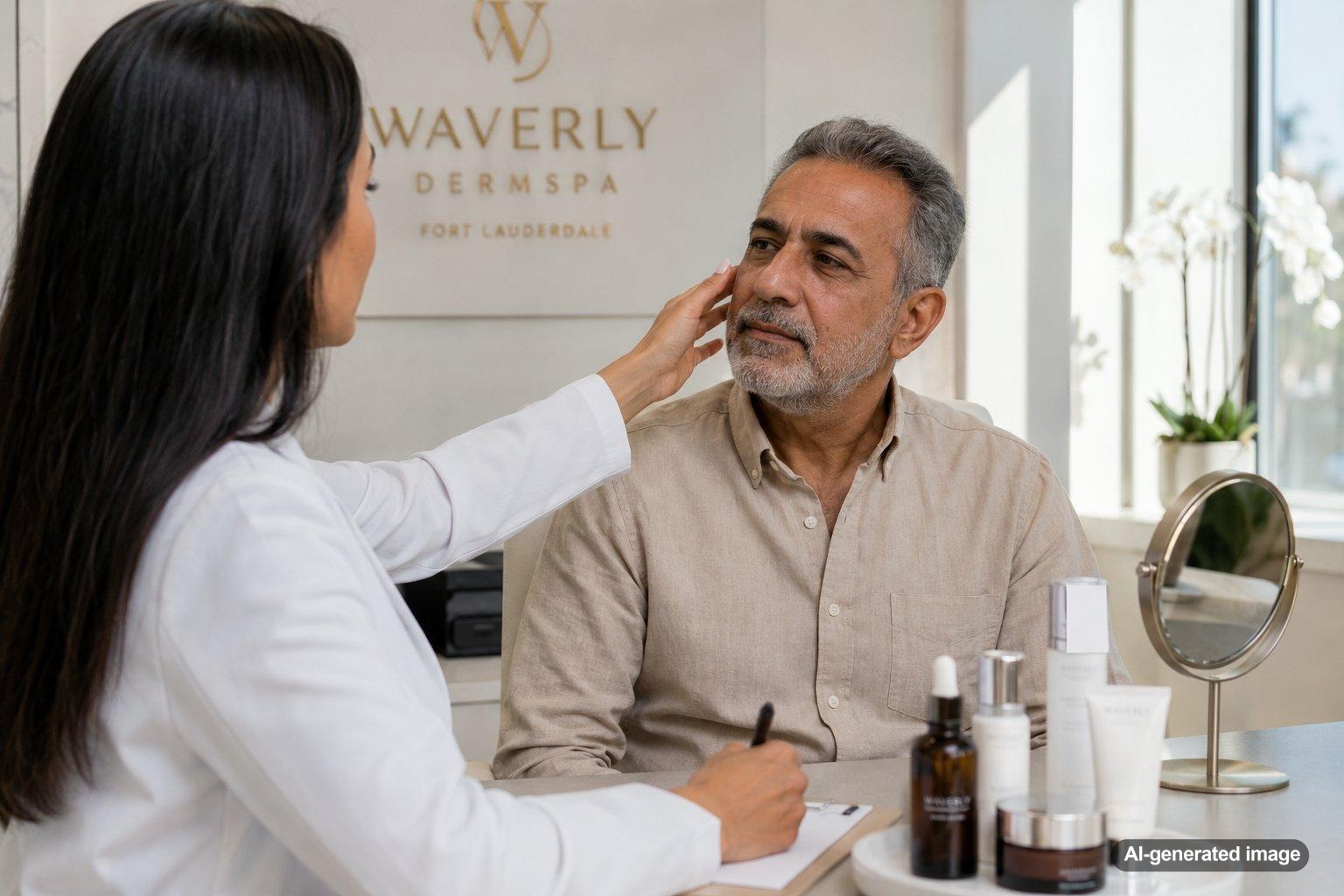
Brown patches and darker spots can feel frustrating because they often look similar at first glance. Sun spots and melasma are both forms of hyperpigmentation, but they tend to behave differently, respond differently to triggers, and may need different treatment plans.
In sunny Fort Lauderdale, pigment changes can be especially common for residents, seasonal visitors, and anyone spending time outdoors. The most helpful first step is not guessing from appearance alone. A dermatologist can evaluate the pattern, history, and skin type, then guide you toward a safe, realistic plan.
Quick answer
- Sun spots are often linked to cumulative ultraviolet exposure and usually appear as more defined flat brown spots on sun-exposed areas.
- Melasma often appears as broader, blotchy, symmetric patches, commonly on the cheeks, forehead, upper lip, or jawline.
- Sun spots may look more individual and speckled, while melasma often looks more mask-like or cloud-like.
- Both can darken with sun exposure, which is why daily sun protection matters for prevention and maintenance.
- Because some concerning growths can resemble ordinary brown spots, new, changing, bleeding, itching, or unusual spots should be checked by a dermatologist.
| Feature | Sun spots | Melasma |
|---|---|---|
| Typical look | Flat, defined brown spots | Blotchy patches or freckle-like areas |
| Common pattern | Individual spots on sun-exposed skin | Often symmetric on the face |
| Common triggers | Years of ultraviolet exposure | Sun, visible light, heat, hormonal shifts, and certain medications |
| Treatment approach | Evaluation first, then pigment-focused options when appropriate | Gentle, longer-term pigment control and trigger management |
What sun spots are
Sun spots, sometimes called age spots or solar lentigines, are flat areas of extra pigment that often appear on skin with a long history of sun exposure. They are common on the face, chest, shoulders, arms, and backs of the hands.
They may look like small tan to brown marks with clearer edges. While many sun spots are harmless, it is still important not to assume that every brown mark is simply sun damage. A dermatologist can look closely and decide whether a spot is consistent with a benign pigment change or needs a different type of evaluation.
What melasma is
Melasma is a pigment condition that often creates broader, patchy areas of brown, gray-brown, or sometimes bluish-gray discoloration. It commonly appears on the cheeks, forehead, bridge of the nose, upper lip, chin, or jawline.
Melasma often has a softer, more blended edge than a single sun spot. It may also appear on both sides of the face in a similar pattern. Many people notice that it becomes more visible after sun exposure, heat, pregnancy, hormonal changes, or certain medications, although the exact mix of triggers can vary.
How they differ in real life
The biggest practical difference is the pattern. Sun spots tend to be more separate and defined, while melasma tends to look like a broader patch or veil of pigment. Sun spots often reflect cumulative sun exposure over time. Melasma is more reactive, meaning it may flare with ultraviolet light, visible light, heat, and internal triggers.
That difference matters because aggressive treatment is not always better, especially for melasma. Some procedures or irritating skincare choices can make sensitive pigment more noticeable in certain skin types. A calm, measured plan is usually more effective than chasing a quick fade.
Common causes and triggers
- Sun exposure: Ultraviolet light can darken both sun spots and melasma.
- Visible light and heat: These can be meaningful for some people with melasma, especially in warm climates.
- Hormonal shifts: Pregnancy, hormonal medications, or other changes may be associated with melasma in some patients.
- Skin type and genetics: Some people are naturally more prone to pigment changes.
- Inflammation or irritation: Harsh products, picking, or over-exfoliation may contribute to uneven pigment or make existing discoloration harder to manage.
What you can do at home
Daily sun protection is the foundation. Use a broad-spectrum sunscreen, reapply when outdoors, and add shade, hats, and sunglasses when possible. For melasma-prone skin, your dermatologist may also discuss tinted mineral sunscreens because iron oxides can help with visible light protection.
Keep skincare steady and non-irritating. A gentle cleanser, moisturizer, and consistent sunscreen often matter more than a crowded routine. Brightening ingredients may help some people, but irritation can backfire, so it is wise to introduce products slowly and stop anything that stings, burns, or causes peeling beyond what your clinician has recommended.
Professional options
Professional care starts with diagnosis. Once your dermatologist understands what type of pigment you have, options may include prescription topicals, chemical peels, laser or light-based treatments, microneedling-based approaches, or a combination plan. The right choice depends on skin tone, pigment depth, medical history, pregnancy or nursing status, sensitivity, and how the pigment has behaved in the past.
For sun spots, carefully selected office treatments may help soften contrast. For melasma, the plan is often more gradual and maintenance-focused because melasma can recur or darken again with triggers. At Waverly DermSpa, we offer Laser Treatments and can help you understand whether they may be appropriate.
When to see a dermatologist
Schedule an evaluation if a spot is new, changing, growing, unusually dark, irregular at the border, bleeding, itching, crusting, painful, or different from your other spots. Also consider a visit if discoloration is spreading, affecting your confidence, or not responding to careful sun protection and a gentle skincare routine.
A dermatologist can distinguish common pigment concerns from growths that need closer attention. If you are unsure, it is worth getting checked rather than trying to fade a spot before it has been evaluated.
FAQ
Can sun spots turn into melasma?
Sun spots and melasma are different pigment patterns, so one does not simply turn into the other. However, a person can have both at the same time, especially on sun-exposed facial skin.
Can melasma go away on its own?
Melasma may improve when a trigger changes, such as after pregnancy or a medication adjustment guided by a clinician. For many people, it is a longer-term condition that needs ongoing sun protection and maintenance.
Are lasers always a good idea for brown spots?
No. Lasers and light-based treatments can be useful in selected cases, but they are not right for every type of pigment or every skin type. Melasma in particular needs careful evaluation because heat or irritation may worsen pigment in some people.
What sunscreen is best for melasma-prone skin?
Many dermatologists recommend daily broad-spectrum protection. For some melasma-prone patients, tinted mineral sunscreen may be helpful because it can add visible light protection. Your clinician can help you choose an option that fits your skin.
Should I try fading creams before seeing a dermatologist?
You can keep your routine gentle and use sunscreen consistently, but it is best to have new, changing, or uncertain spots evaluated before trying to fade them. That helps avoid delaying care for a spot that is not simply cosmetic pigment.
Ready to get help?
Schedule an appointment or send a message and our team will get back to you.
Prefer to call? 954-666-3736
This article is for educational purposes and is not medical advice. For diagnosis and personalized treatment, please book an appointment with a board-certified dermatologist.
Sources & further reading
- American Academy of Dermatology (AAD) – Melasma: Overview
- American Academy of Dermatology (AAD) – What can get rid of age spots?
- The Skin Cancer Foundation – Melanoma Warning Signs and Images
