

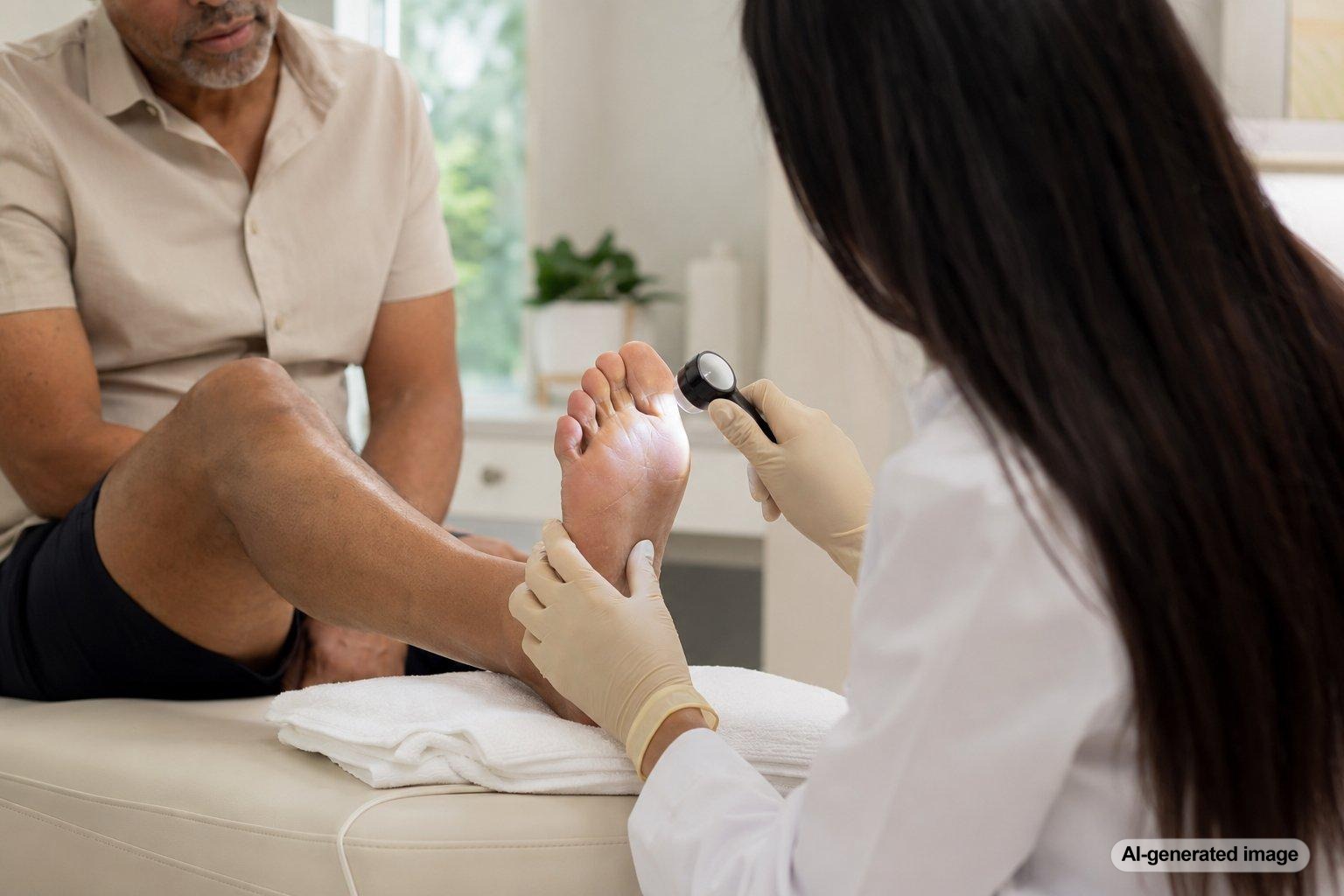
Strong foot odor combined with clusters of tiny, shallow holes in the soles can be associated with pitted keratolysis. This is a superficial bacterial skin infection that most often affects pressure-bearing areas, such as the heels and balls of the feet. It tends to develop when the feet remain warm and damp inside socks or closed shoes.
The appearance can be unsettling, but a dermatologist can evaluate the skin, distinguish the condition from athlete’s foot, plantar warts, eczema, and other causes, and recommend appropriate care. Managing moisture is important, but an active bacterial infection may also require clinician-directed treatment.
Quick answer
- Pitted keratolysis can cause small crater-like pits and a noticeably strong odor.
- It is associated with bacteria that thrive in warm, moist environments.
- Sweaty feet, non-breathable footwear, and long periods in damp socks can increase risk.
- It may resemble fungal infections or plantar warts, so an examination can be helpful.
- Keeping the feet dry may reduce contributing conditions, while a dermatologist can discuss treatment for the infection.
What is pitted keratolysis?
Pitted keratolysis is a superficial bacterial infection involving the outermost layer of skin. Certain bacteria can break down keratin, a structural protein in the skin, creating small depressions that may look like pinpricks, shallow craters, or irregular grooves.
The pits commonly appear on areas that bear weight, including the heels, forefoot, and toes. They may become easier to see after the feet have been wet. The surrounding skin can look pale, softened, or waterlogged, especially when moisture has been trapped for an extended period.
Some people have mild itching, tenderness, or a slippery sensation, but the most noticeable concern is often the odor. The smell may remain strong even after routine washing because bacteria and moisture are still affecting the skin.
Why does the odor become so strong?
Sweat itself is not always the main source of odor. When sweat remains trapped against the feet, bacteria can multiply and produce odor-causing compounds as they interact with the skin.
Pitted keratolysis may therefore smell more intense than ordinary sweaty feet. Deodorizing sprays can temporarily mask the smell, but they do not necessarily address an infection or the damp environment that supports bacterial growth.
Common causes and triggers
Pitted keratolysis is associated with a combination of bacteria, moisture, warmth, and limited airflow. Factors that may contribute include:
- Excessive sweating of the feet
- Wearing tight, closed, or non-breathable shoes for long periods
- Remaining in damp socks after exercise or work
- Living, working, or traveling in a hot and humid climate
- Wearing protective boots or occupational footwear throughout the day
- Participating in sports that keep the feet warm and sweaty
- Not allowing shoes to dry completely between uses
Fort Lauderdale’s warm, humid climate can make moisture management especially important. Travelers, athletes, hospitality workers, healthcare professionals, and anyone who spends long hours in closed shoes may notice that symptoms become more apparent during hot weather.
Could the tiny holes be something else?
Several conditions can affect the soles, and they do not all require the same care. Athlete’s foot may cause scaling, peeling, itching, or cracking, particularly between the toes. Plantar warts may feel firm or tender and can interrupt the normal skin lines. Eczema and contact irritation can produce redness, itching, or peeling without the characteristic odor and shallow pits.
A dermatologist may diagnose pitted keratolysis through a visual examination and medical history. Additional testing is not always needed, but it may be considered when the appearance is unusual, symptoms persist, or another condition is suspected.
What you can do at home
Conservative moisture-control measures may help make the feet less favorable to bacterial growth and may reduce recurrence after treatment:
- Wash the feet gently and dry them thoroughly, including between the toes.
- Change damp socks promptly after exercise, work, or outdoor activity.
- Choose clean, moisture-wicking socks and replace them during the day when needed.
- Rotate shoes instead of wearing the same pair every day.
- Allow footwear to dry completely in a ventilated area.
- Select breathable shoes when your work and activities allow.
- Remove shoes during appropriate breaks to improve airflow.
- Avoid sharing footwear, socks, or towels.
Avoid aggressively scraping, cutting, or sanding the pits. This can irritate the skin barrier and may create small injuries. Strong acids, harsh disinfectants, and undiluted essential oils may also cause irritation without addressing the underlying issue.
Professional treatment options
Because pitted keratolysis is bacterial, a dermatologist may discuss topical antibacterial medications or antiseptic washes after confirming the diagnosis. The specific option depends on the extent of the affected skin, sensitivity, medical history, and whether another condition is present.
If excessive foot sweating is contributing, your clinician can also evaluate whether hyperhidrosis is involved. Management may include appropriate antiperspirants, prescription options, or other approaches selected for the individual. Treating both the bacterial overgrowth and the persistent moisture can be important when symptoms repeatedly return.
Do not use leftover antibiotics or another person’s prescription. A dermatologist can help determine whether an antibacterial medication is appropriate and provide instructions for safe use.
When to see a dermatologist
Schedule an evaluation when the pits or odor persist despite improved foot hygiene and moisture control, or when you are unsure what is causing the changes. Prompt medical attention is especially important if you notice:
- Increasing pain, warmth, swelling, or redness
- Cracks, open sores, drainage, or bleeding
- Rapidly spreading skin changes
- Fever or feeling unwell
- Difficulty walking because of discomfort
- Diabetes, poor circulation, reduced sensation, or a weakened immune system
These features are not typical concerns to manage through foot-care products alone. A clinician can examine the area and determine whether another infection or complication needs attention.
Frequently asked questions
Is pitted keratolysis the same as athlete’s foot?
No. Pitted keratolysis is associated with bacteria, while athlete’s foot is a fungal infection. Both can be encouraged by damp footwear and may occur at the same time, which is one reason an examination can be useful.
Is pitted keratolysis contagious?
It is not generally considered highly contagious through ordinary contact, but sharing damp footwear, socks, or towels is not recommended. Good hygiene and keeping personal items separate can reduce exposure to microorganisms that affect the feet.
Can pitted keratolysis go away with washing alone?
Washing and drying the feet may reduce odor and moisture, but an established bacterial infection may require clinician-directed treatment. Persistent pits or recurring odor are worth discussing with a dermatologist.
Why do the pits look deeper after a shower?
Wet skin can become pale and softened, making shallow depressions more visible. Moisture may also cause nearby pits to appear as larger irregular areas.
Can foot deodorant treat pitted keratolysis?
Deodorant may mask odor but does not necessarily reduce sweating or treat bacterial overgrowth. An antiperspirant is designed to reduce sweat, while prescription treatment may be needed for the infection. A dermatologist can help you choose an appropriate approach.
Can the condition return?
Recurrence can happen when the feet continue to stay warm and damp for long periods. Rotating shoes, changing socks, improving ventilation, and addressing excessive sweating may help reduce contributing factors.
Ready to get help?
Schedule an appointment or send a message and our team will get back to you.
Prefer to call? 954-666-3736
This article is for educational purposes and is not medical advice. For diagnosis and personalized treatment, please book an appointment with a board-certified dermatologist.
Sources & further reading
- DermNet – Pitted Keratolysis: Symptoms, Causes, and Treatment
- Cleveland Clinic – Pitted Keratolysis: What It Is, Causes & Treatment
- American Academy of Dermatology (AAD) – Hyperhidrosis: 6 Tips Dermatologists Give Their Patients
