

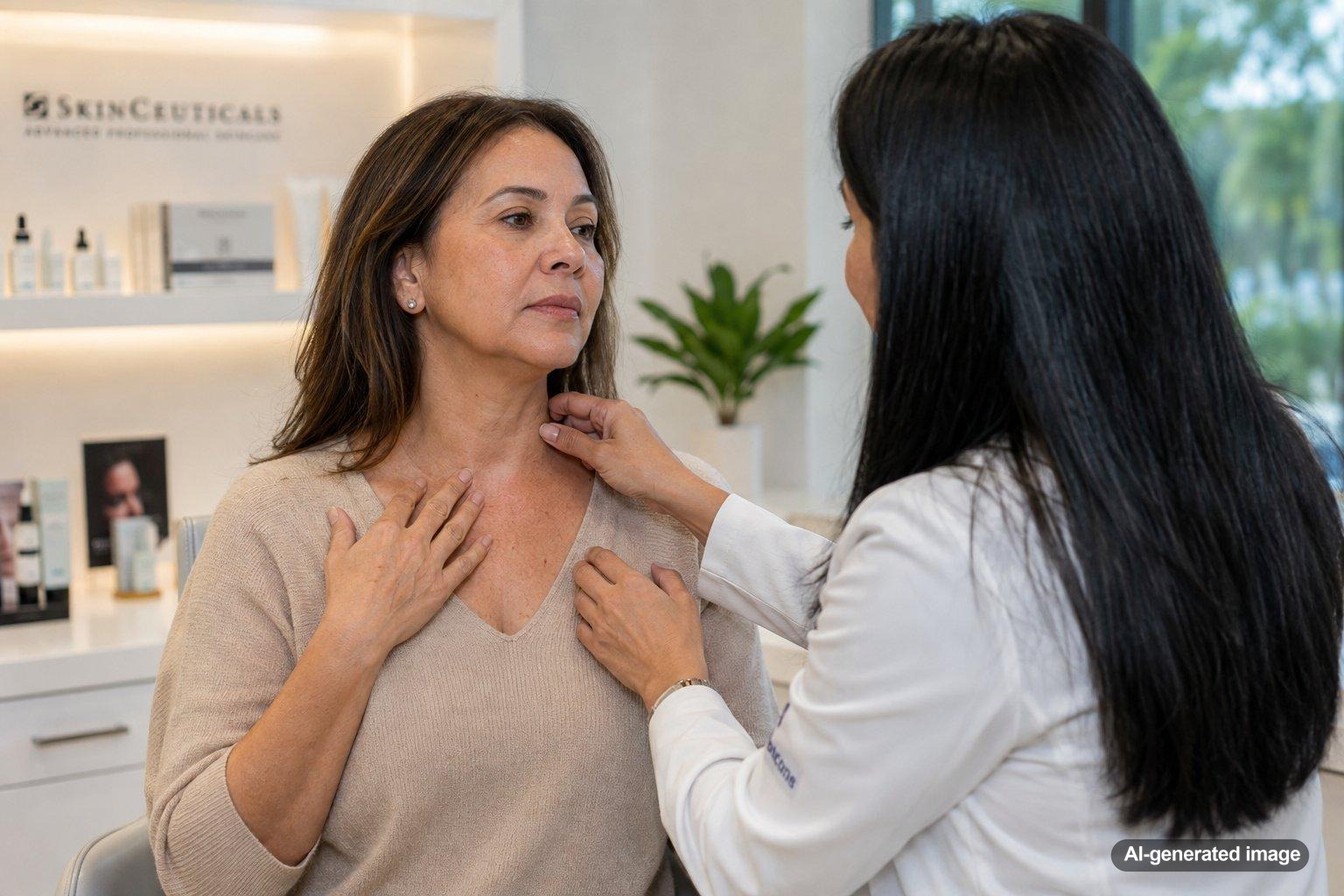
If raised, itchy welts seem to appear across your neck or chest during stressful moments, stress may be one of the triggers. Hives, also called urticaria, can develop when the body releases histamine and other chemicals into the skin. Emotional stress does not cause every case of hives, but it can trigger or worsen them in some people.
The neck and upper chest can be especially noticeable places for these reactions because they may also become warm, flushed, or sweaty when you’re anxious, embarrassed, overwhelmed, or physically stressed. However, several different skin conditions can resemble hives, so recurring or unexplained outbreaks are worth discussing with a dermatologist rather than assuming stress is always the cause.
Quick answer
- Stress can be associated with hives and may trigger an outbreak in some people.
- Hives are raised, often itchy welts that can appear quickly and change shape or location.
- Heat, sweating, pressure, exercise, foods, medications, infections, and other triggers can also play a role.
- Cooling the skin and avoiding known triggers may help with mild episodes.
- Trouble breathing or swelling of the lips, tongue, mouth, or throat requires emergency medical attention.
What are stress-related hives?
Hives are temporary raised welts caused by a reaction in the skin. They may look pink, red, skin-colored, or darker or lighter than the surrounding skin depending on your skin tone. They often itch, sting, or feel warm.
When histamine and other chemical messengers are released in the skin, small blood vessels allow fluid to move into nearby tissue. That produces the characteristic raised patches or welts. Stress is one recognized trigger, although the exact reason a particular person develops hives can be difficult to identify.
A typical hive can change shape, merge with nearby welts, fade, and then appear somewhere else. Individual spots often disappear relatively quickly even when new ones continue to form. Because many other rashes can resemble urticaria, a dermatologist can evaluate persistent or recurring symptoms and help determine what may be happening.
Why can stress bring out hives on the neck and chest?
Your nervous system, immune system, body temperature, and skin can all respond when you’re under emotional or physical stress. In susceptible people, that response may contribute to histamine release and the development or worsening of hives.
The neck and upper chest are also areas where people commonly notice flushing and warmth during stressful situations. Stress may increase sweating as well. For some people, a rise in body temperature or sweating can be associated with a form of hives called cholinergic urticaria. That does not mean every stress-related rash is cholinergic urticaria, and an examination may be needed to distinguish among possible causes.
Common triggers that can overlap with stress
It can be tempting to blame every outbreak on anxiety, especially when hives appear during a difficult day. In reality, several triggers may overlap. Common possibilities include:
- Emotional stress: Anxiety, frustration, excitement, or other intense emotions may trigger or worsen hives in some people.
- Heat and sweating: Exercise, hot weather, hot showers, or emotional sweating may contribute to certain types of urticaria.
- Pressure or friction: Tight collars, necklaces, bra straps, athletic clothing, bags, or scratching may provoke hives in susceptible skin.
- Foods or medications: Allergic reactions and medication reactions can cause hives, sometimes with other symptoms.
- Infections: Some infections can be associated with acute hives.
- Cold or temperature changes: Physical temperature triggers can cause hives in some people.
- Other unidentified triggers: Sometimes the cause remains unclear even after careful evaluation.
How can you tell whether it’s actually hives?
Hives generally behave differently from many other rashes. They tend to appear as raised welts rather than fixed patches of dry, scaly, or irritated skin. They may change size or shape, disappear from one place, and appear somewhere else.
A photograph can be useful if the eruption fades before an appointment. Consider taking clear pictures when the skin reaction is active and noting what was happening beforehand, such as exercise, emotional stress, a hot shower, a new medication, a meal, or exposure to a new product.
If a mark stays fixed in exactly the same location for an unusually long period, becomes painful rather than primarily itchy, leaves bruising or discoloration, or simply does not behave like a typical hive, a dermatologist can help evaluate whether another condition should be considered.
What you can do at home
For a mild episode without emergency symptoms, simple measures may help reduce irritation while you watch for patterns. Keep the approach gentle and avoid adding multiple new products while your skin is reacting.
- Move to a cooler environment if heat or sweating seems to be contributing.
- Apply a cool compress to uncomfortable areas.
- Wear loose, breathable clothing around the neck and chest.
- Avoid scratching or rubbing the affected skin when possible.
- Skip very hot showers until the reaction settles.
- Keep a simple record of possible triggers, including stress, foods, exercise, medications, temperature, and new skin products.
- Use fragrance-free, gentle skin care if the area feels sensitive.
Over-the-counter antihistamines are commonly used for hives, but medication choices can depend on your health history, other medications, age, pregnancy status, and the pattern of symptoms. A clinician or pharmacist can help you determine what may be appropriate for you.
What can a dermatologist do for recurring hives?
If outbreaks keep returning, a dermatologist can review the appearance and timing of the welts, possible exposures, medications, health history, and other symptoms. The goal is to determine whether the pattern is consistent with urticaria and whether there are clues pointing toward a specific trigger or another skin condition.
Professional management may include identifying and reducing avoidable triggers, discussing appropriate antihistamine strategies, and considering additional evaluation when symptoms are persistent or unusual. Prescription therapies may be considered for certain cases, especially when hives become chronic or are difficult to control. Your dermatologist can help decide which approach is appropriate based on your individual situation.
When should you see a dermatologist?
Consider scheduling an evaluation if hives are recurring, widespread, interfering with sleep or daily life, lasting for an extended period, or appearing without an obvious explanation. An appointment is also helpful if you’re not certain whether the skin changes are actually hives.
Seek emergency medical care if hives occur with difficulty breathing, wheezing, faintness, dizziness, or swelling involving the lips, tongue, mouth, or throat. Hives can sometimes occur during a serious allergic reaction, and airway symptoms should not be managed as a routine skin concern.
Frequently asked questions
Can anxiety really cause hives?
Emotional stress and anxiety can be associated with hives and may act as triggers for some people. However, hives have many potential causes, so recurring outbreaks should not automatically be attributed to anxiety without considering other possibilities.
Why do my neck and chest get red when I’m stressed?
Stress can cause flushing, warmth, and sweating, which may make the neck and chest look red even without hives. Hives are usually raised welts rather than redness alone. If you’re unsure what you’re seeing, photographs taken during an episode can be helpful during a dermatology evaluation.
Can sweating make stress hives worse?
It may. Heat, sweating, exercise, and emotional stress can overlap as triggers for certain forms of urticaria. Cooling down and noting whether episodes consistently follow sweating may help identify a pattern.
How long do stress hives last?
The duration varies. Individual hives often fade relatively quickly, but new ones can continue appearing during an episode. If outbreaks repeatedly return, persist for weeks, or behave differently from typical hives, a dermatologist can evaluate the pattern.
Are stress hives an allergic reaction?
Not necessarily. Allergies are one possible cause of hives, but stress, temperature, pressure, infections, and other factors can also trigger urticaria. Sometimes no specific cause is identified.
Should I worry if stress hives keep coming back?
Recurring hives are worth discussing with a dermatologist, particularly if the trigger is unclear or symptoms are affecting your quality of life. A clinician can evaluate whether the pattern fits recurrent or chronic urticaria and discuss appropriate next steps.
Ready to get help?
Schedule an appointment or send a message and our team will get back to you.
Prefer to call? 954-666-3736
This article is for educational purposes and is not medical advice. For diagnosis and personalized treatment, please book an appointment with a board-certified dermatologist.
Sources & further reading
- American Academy of Dermatology (AAD) – Hives: Causes
- Cleveland Clinic – Hives (Urticaria): Causes, Symptoms & Treatment
- Mayo Clinic – Symptoms and causes – Mayo Clinic
