

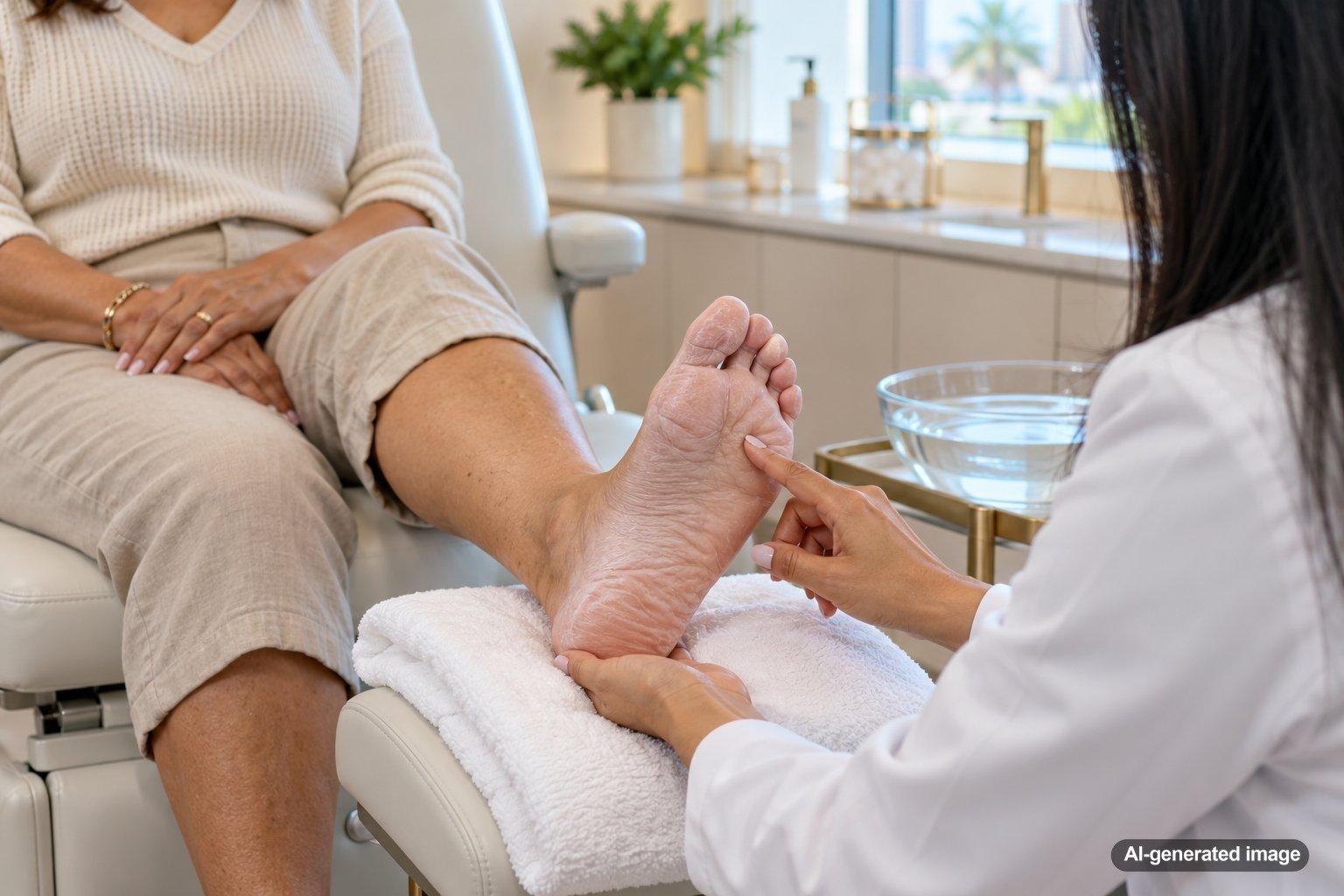
Seeing your soles turn pale, soft, and deeply wrinkled after a shower or a few minutes in the pool can be surprising, especially when the change seems to happen much faster than it does for other people. In many cases, this is simply an exaggerated version of the normal wrinkling that occurs when skin is exposed to water. However, unusually rapid or pronounced changes can sometimes reflect differences in sweating, the skin barrier, or the way the skin responds to moisture.
The important details are how quickly the changes appear, whether they cause discomfort, and how your feet look once they are dry. Understanding these patterns can help you distinguish a temporary response to water from a concern worth discussing with a dermatologist.
Quick Answer: Why Do Soles Turn White and Wrinkled So Fast?
- Normal water-induced wrinkling: The soles naturally develop wrinkles during water exposure because of changes in blood vessel activity within the skin.
- Temporary skin maceration: Prolonged moisture can soften the outer skin layer, making it appear pale, swollen, or unusually textured.
- Excessive sweating: Persistently damp feet may become more susceptible to moisture-related skin changes.
- Aquagenic wrinkling: Some people develop unusually prominent wrinkles, pale bumps, or a pebbled appearance shortly after water exposure.
- Skin irritation or other conditions: Persistent scaling, itching, peeling, pain, or discoloration may indicate that something beyond ordinary wrinkling is occurring.
If the changes disappear after drying and do not cause discomfort, they are often less concerning. Repeated, dramatic wrinkling within minutes, particularly with other symptoms, deserves a closer look.
What Happens to the Skin on Your Soles in Water?
The soles are different from the skin on most other parts of the body. They contain a relatively thick outer layer called the stratum corneum, which provides protection against pressure, friction, and everyday wear. They also have numerous sweat glands and a specialized structure designed to tolerate frequent contact with surfaces.
When your feet are immersed in water, the outermost skin layer absorbs some moisture. At the same time, the nervous system influences small blood vessels beneath the surface. This vascular response helps produce the familiar ridges and folds that develop on wet fingers and toes.
The pale appearance has a somewhat different explanation. As the outer skin becomes hydrated and softens, its texture and the way it reflects light can change. When the skin remains wet for an extended period, this process may become more noticeable and resemble a temporarily waterlogged surface.
These effects can overlap, but wrinkling and whitening are not necessarily caused by exactly the same mechanism.
Common Reasons Your Feet May Wrinkle More Quickly Than Expected
1. Your Normal Response to Water May Be More Noticeable
Not everyone develops water-induced wrinkles at the same rate or with the same intensity. Individual differences in skin structure, temperature exposure, and nervous system responses can influence what you see.
If your soles wrinkle quickly but return to their usual appearance after drying, without itching, pain, or other symptoms, the finding may simply reflect your individual response to immersion.
2. Moisture May Be Softening the Outer Skin Layer
Skin maceration occurs when the outer layer remains exposed to excessive moisture. The affected skin may look white, soft, swollen, or slightly fragile.
Although maceration is often associated with prolonged water exposure, frequently damp socks, enclosed footwear, and repeated wetting can contribute to a similar environment. More pronounced maceration may make the skin vulnerable to friction and irritation.
Maceration is not the same thing as ordinary water-induced wrinkling, although both can be visible after bathing or swimming.
3. Excessive Sweating May Contribute
The soles contain many sweat glands, and some individuals experience substantial sweating even when they are not exercising or feeling hot. This is sometimes associated with plantar hyperhidrosis, a form of excessive sweating affecting the feet.
Constant moisture inside shoes can soften the outer skin, increase friction, and make the feet feel persistently damp. Sweating may also contribute to certain patterns of water-induced skin changes.
If your feet are frequently wet inside otherwise dry shoes, or if sweating interferes with daily comfort, a dermatologist can evaluate whether excessive sweating is involved.
4. Aquagenic Wrinkling May Cause an Exaggerated Reaction
Aquagenic wrinkling is a condition in which the skin develops unusually prominent changes after brief exposure to water. It is most often described on the palms, but similar findings can occasionally involve the soles.
Rather than showing only ordinary folds, affected skin may develop small whitish bumps, swelling, a pebbled appearance, or conspicuous wrinkles. Some individuals also experience tightness, itching, burning, or tenderness.
Aquagenic wrinkling has been associated with altered sweat-related processes and, in some cases, certain medications or underlying medical conditions. One recognized association involves cystic fibrosis and carrier status, particularly when characteristic changes occur on the palms. However, rapidly wrinkled feet alone do not establish or strongly imply any particular underlying diagnosis.
A dermatologist can assess the appearance and timing of the reaction and determine whether additional evaluation is appropriate.
5. Another Skin Condition May Be Affecting the Soles
When whitening and wrinkling occur alongside persistent peeling, itching, cracking, or unusual odor, an additional skin condition may be contributing.
Examples include irritant dermatitis, fungal infections such as athlete’s foot, or other moisture-associated skin conditions. These problems do not necessarily cause the rapid wrinkling itself, but they can change the skin’s surface and make the effects of water more obvious.
The distinction matters because a condition involving inflammation or infection may require a different approach than temporary moisture-related wrinkling.
How to Tell Normal Water Wrinkling From a Change Worth Evaluating
The appearance of your feet before, during, and after water exposure can provide useful clues.
- Timing: Notice whether the changes develop gradually during a long bath or appear dramatically after only brief contact with water.
- Texture: Ordinary folds may look different from clusters of raised, pale bumps or pronounced swelling.
- Sensation: Burning, tenderness, itching, or tightness may suggest something beyond a routine response.
- Recovery: Observe whether the skin returns to its baseline appearance after drying or remains altered.
- Other symptoms: Persistent scaling, cracks, irritation between the toes, or excessive sweating may point toward an overlapping concern.
No single observation provides a definitive diagnosis. However, noting a consistent pattern can make a dermatology appointment more informative.
What Can You Do at Home?
If your soles become white and wrinkled quickly but otherwise feel comfortable, a few conservative habits may help reduce unnecessary moisture exposure and protect the skin.
- Dry your feet thoroughly: Gently pat your soles and the spaces between your toes after bathing or swimming.
- Change damp socks promptly: Avoid spending extended periods in wet socks or shoes.
- Choose breathable footwear: Shoes and socks that manage moisture may help keep the feet more comfortable during daily activities.
- Use gentle cleansing products: Avoid repeatedly scrubbing the soles or using harsh cleansers to remove temporary whiteness.
- Protect dry or irritated skin: A simple, fragrance-free moisturizer may support skin comfort when dryness is present. Avoid applying heavy products between persistently damp toes.
- Limit unnecessary soaking: If prolonged baths make the skin unusually soft or irritated, shorter periods of water exposure may be more comfortable.
Do not peel, scrape, or aggressively exfoliate whitened skin. If the surface has become fragile from moisture, unnecessary friction may worsen irritation.
These steps support general foot skin care, but they do not address every possible cause of rapid wrinkling.
What Can a Dermatologist Do About Rapidly Wrinkled Soles?
A dermatologist can evaluate whether the changes represent normal water-induced wrinkling, maceration, aquagenic wrinkling, excessive sweating, or another skin condition.
The evaluation generally begins with a discussion of symptoms, timing, footwear habits, sweating, medications, and whether the reaction occurs elsewhere on the body. Your clinician may examine the skin while it is dry and, when appropriate, assess how it responds to brief water exposure.
Professional recommendations depend on the findings and may include:
- Skin barrier care: Guidance on cleansing, moisturizing, and reducing excessive moisture or friction.
- Sweat management: Evaluation of excessive sweating and discussion of appropriate treatment categories, which may include topical products or other clinician-directed options.
- Assessment of inflammation or infection: Further examination or testing when persistent irritation, scaling, or other symptoms suggest a separate condition.
- Additional medical evaluation: Selective investigation of an associated condition when the clinical pattern and medical history provide a reason to do so.
Not everyone with quickly wrinkled soles needs treatment. When the change is harmless and temporary, understanding the process may be the most useful outcome of an evaluation.
When Should You See a Dermatologist?
Consider scheduling a dermatology appointment if your soles consistently become extremely wrinkled or develop pale raised bumps after very brief water exposure, especially if the reaction is new or becoming more pronounced.
Professional evaluation is also appropriate when you notice:
- Burning, itching, pain, or uncomfortable tightness with water exposure.
- Whitening, swelling, or altered texture that persists after the feet have dried.
- Repeated peeling, cracking, scaling, or irritation between the toes.
- Excessive sweating that affects comfort or creates persistently damp footwear.
- Skin changes that interfere with walking, exercise, or everyday activities.
Seek prompt medical attention for rapidly spreading redness, significant warmth or swelling, drainage, fever, or severe pain. Individuals with diabetes, impaired circulation, reduced sensation, or weakened immune function should be especially cautious about new foot wounds or signs of infection.
For people who spend considerable time swimming, boating, or enjoying the warm, humid climate in Fort Lauderdale, regular moisture exposure can make these changes easier to notice. The environment may contribute to damp skin, but it does not establish the underlying cause.
Frequently Asked Questions
Is it normal for my feet to wrinkle after just a few minutes in water?
Some variation in wrinkling speed is normal. However, unusually dramatic changes within minutes, particularly with raised white bumps, swelling, or discomfort, may warrant evaluation. A dermatologist can help distinguish ordinary wrinkling from an exaggerated water-related response.
Why do my soles turn white in the shower but look normal afterward?
Water can temporarily hydrate and soften the outer skin layer, changing its appearance. If the whiteness disappears after drying and there are no other symptoms, it may represent a temporary moisture-related change rather than a persistent skin problem.
Can sweaty feet make water wrinkling worse?
Excessive sweating may contribute to persistent moisture, skin softening, and certain exaggerated wrinkling patterns. However, sweating alone cannot explain every case. The appearance of the skin and any additional symptoms help guide evaluation.
Does rapid wrinkling mean I have aquagenic wrinkling?
Not necessarily. Aquagenic wrinkling is one possible explanation, but ordinary wrinkling and skin maceration can sometimes look similar. Characteristic pale bumps, pronounced swelling, or discomfort after brief water exposure may raise suspicion, but a clinical examination is needed to assess the possibility.
Is fast skin wrinkling a sign of cystic fibrosis?
Aquagenic wrinkling, especially on the palms, has been associated with cystic fibrosis and carrier status. However, quickly wrinkled soles are not a diagnostic test for cystic fibrosis, and many people with water-related skin changes do not have the condition. A clinician can determine whether your broader medical history supports additional assessment.
Should I use an exfoliating foot treatment to remove the white skin?
Not simply because your soles look white after getting wet. The appearance may reflect temporary hydration rather than excess skin that needs removal. Aggressive exfoliation can irritate softened skin, particularly when maceration or an underlying condition is present.
The Bottom Line
White, wrinkled soles after water exposure are often explained by normal skin responses or temporary softening of the outer skin layer. When the reaction happens unusually quickly, produces prominent pale bumps, or comes with discomfort, excessive sweating, aquagenic wrinkling, or another skin condition may be worth considering.
Rather than focusing on the appearance alone, pay attention to timing, symptoms, and whether the skin returns to normal after drying. A dermatologist can evaluate a recurring or unusual pattern and help you understand whether any further care is needed.
Ready to get help?
Schedule an appointment or send a message and our team will get back to you.
Prefer to call? 954-666-3736
Disclaimer
This article is for educational purposes and is not medical advice. For diagnosis and personalized treatment, please book an appointment with a board-certified dermatologist.
Sources & further reading
- DermNet – Aquagenic wrinkling of the palms
- Cleveland Clinic – Hyperhidrosis
- Centers for Disease Control and Prevention (CDC) – About Athlete’s Foot
