

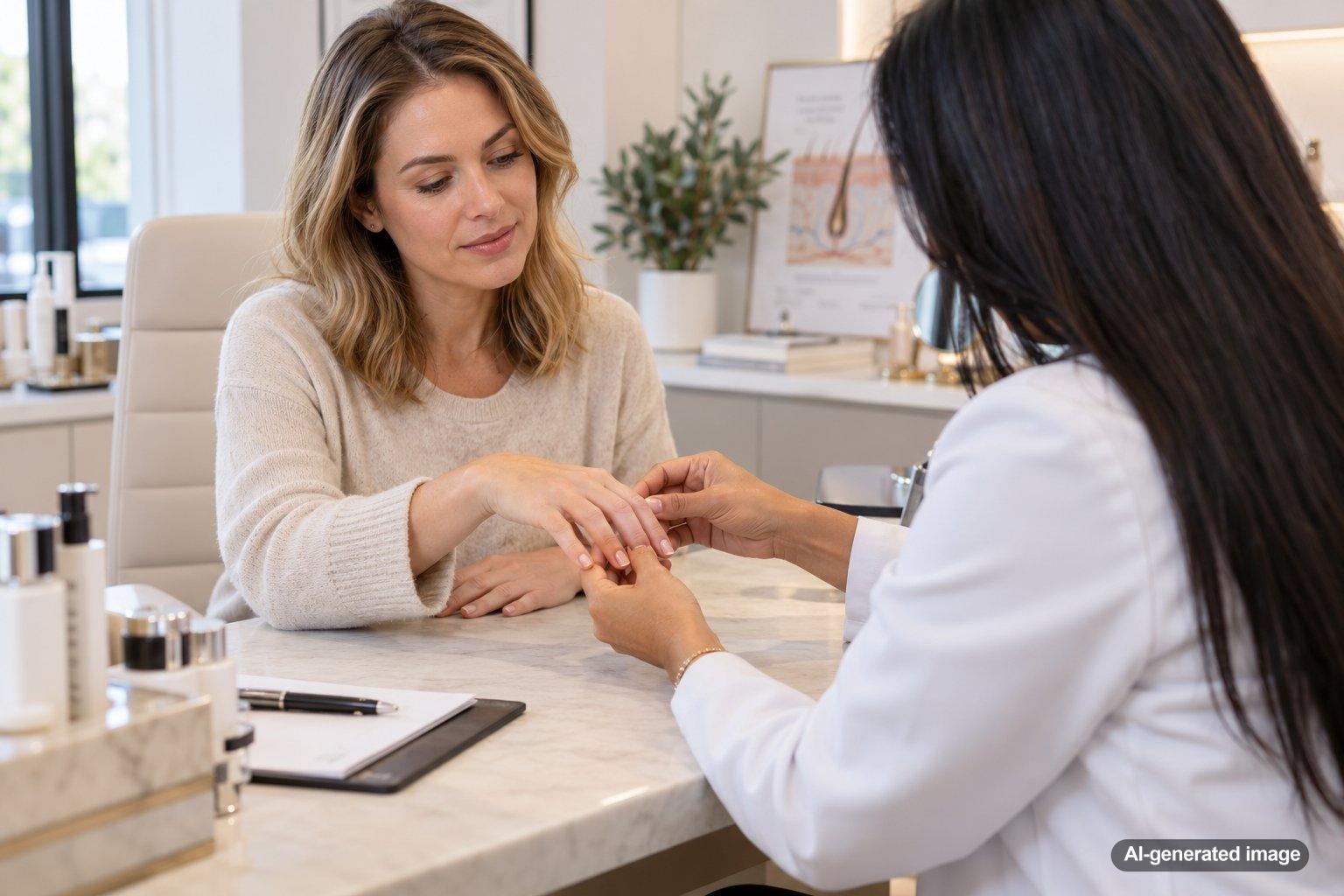
Small cuts around your cuticles after a manicure are usually caused by minor trauma to the delicate skin surrounding the nails. Trimming the cuticle too closely, aggressively pushing it back, using an electric file near the nail fold, clipping hangnails, or working on very dry skin can all create tiny breaks.
The cuticle and nearby nail folds form part of the protective barrier around the nail. When that barrier is disrupted, the area may feel tender, sting when you wash your hands, or develop small cracks. Most minor irritation improves with gentle care, but increasing redness, swelling, warmth, drainage, or pain deserves medical attention because broken skin can sometimes allow an infection to develop.
Quick answer
- Cutting or aggressively pushing back the cuticle can create small breaks in the surrounding skin.
- Nippers, files, drills, or other manicure tools may irritate the nail folds when used too close to living skin.
- Dry, brittle skin is more likely to split during or after a manicure.
- Acetone, cleansers, adhesives, and repeated hand washing may further irritate an already disrupted skin barrier.
- Persistent redness, swelling, warmth, pus, or worsening tenderness should be evaluated by a healthcare professional.
What are the small cuts around the cuticle?
The skin around each nail includes the cuticle and nail folds, which help form a barrier between the outside environment and the area where the nail grows. What looks like a tiny cut after a manicure may be a superficial nick from a tool, a split in dry skin, or a small area where a hangnail or cuticle was removed too closely.
The area can be surprisingly uncomfortable because the fingertips have many nerve endings and are exposed to frequent washing, soaps, sanitizers, and everyday friction. Even a very small break may sting for a while.
Common reasons cuticles get cut or irritated during a manicure
- Cuticle trimming: Removing tissue too aggressively can nick living skin instead of removing only loose, dead material.
- Forceful pushing: Pushing the cuticle back firmly can irritate or tear the skin at the base of the nail.
- Nippers and scissors: These tools can accidentally catch healthy skin, especially when trying to create a very clean-looking nail outline.
- Electric filing: A drill or file used near the nail fold may cause small abrasions when there is too much pressure or repeated contact with the skin.
- Dry skin: Dry cuticles and nail folds are less flexible and may split more easily when manipulated.
- Hangnails: Pulling, tearing, or clipping a hangnail too closely can leave a small open area beside the nail.
- Product irritation: Nail polish remover, acetone, cleansers, adhesives, or other products may sting or irritate skin that has already been disrupted.
Why the cuticle matters
It can be tempting to think of the cuticle as unnecessary skin that should be removed for a cleaner manicure. In reality, the tissue around the base of the nail helps protect the nail area from germs and outside irritants. The American Academy of Dermatology advises against cutting or forcefully pushing back cuticles because damaging this protective area can make it easier for germs to enter through broken skin.
That does not mean every tiny manicure nick will become a problem. It does mean that repeatedly injuring the same area can make the surrounding skin more vulnerable to irritation and infection.
What you can do at home
For a small superficial cut without concerning symptoms, conservative skin care is usually a sensible approach.
- Wash the area gently with soap and water rather than repeatedly scrubbing it.
- Pat the skin dry instead of rubbing it.
- Apply a simple fragrance-free moisturizer or protective ointment to help reduce dryness and cracking.
- Cover an open area with a clean bandage when needed to protect it from friction or dirt.
- Avoid picking, biting, clipping, or pushing the affected cuticle while it recovers.
- Limit exposure to harsh cleaners and wear appropriate gloves when your hands will be exposed to detergents or prolonged moisture.
If a product consistently causes burning, itching, or irritation around your nails, stop using it until the skin has recovered and consider discussing the pattern with a dermatologist.
How to reduce cuticle damage at your next manicure
You can tell your nail professional that your cuticles tend to become sore or split and ask for a gentler approach. In particular, you may prefer to avoid cuticle cutting and aggressive pushing. If electric filing is used, the surrounding skin should not be repeatedly abraded.
It is also reasonable to pay attention to salon hygiene. Manicure tools and work surfaces should be appropriately cleaned and disinfected between clients according to applicable salon standards. If an area is already visibly cut, irritated, or inflamed, consider allowing it to recover before having additional work performed around that nail.
When small cuts may need professional evaluation
A dermatologist can evaluate the area if the irritation keeps returning, affects several nails, or does not behave like a simple superficial nick. Recurrent problems can sometimes be related to ongoing trauma, irritant or allergic contact dermatitis, chronic dryness, or inflammation around the nail.
Broken skin can also provide an entry point for bacteria or other germs. An infection around the nail is called paronychia. It can cause increasing tenderness, redness, warmth, swelling, or a collection of pus. A clinician can determine whether an infection is present and whether medical treatment is appropriate.
When to see a dermatologist
Consider getting the area checked if you notice any of the following:
- Redness or swelling that is getting worse instead of settling down.
- Increasing warmth, throbbing, or significant tenderness around the nail.
- Pus or other drainage.
- Redness that appears to be spreading beyond the immediate cuticle area.
- A nail that begins lifting, changing color, or growing differently after the injury.
- Repeated inflammation after manicures despite switching to gentler nail care.
- A cut or sore that is not healing as expected.
People with conditions that affect circulation or immune function should generally be more cautious about signs of infection and discuss concerning nail-fold injuries with their healthcare provider.
FAQ
Is it normal for a manicure to make my cuticles bleed?
Bleeding means the skin barrier has been broken. An occasional accidental nick can happen, but routine bleeding should not be considered a necessary part of a manicure. Asking your technician not to cut the cuticles may help reduce repeated injury.
Why do my cuticles hurt the day after a manicure?
Tenderness may result from trimming, pushing, filing, or irritation from manicure products. If the discomfort is mild and steadily improving, gentle skin care may be enough. Increasing pain, redness, warmth, swelling, or drainage should be evaluated.
Should cuticles be completely removed?
Cuticles serve a protective function around the nail. Dermatology guidance generally recommends avoiding cutting or forcefully pushing them back because disrupting this barrier can increase the opportunity for irritation and infection.
Why do I get cuts even when the technician does not use cuticle nippers?
Dry skin, aggressive pushing, filing, electric manicure tools, hangnail removal, or repeated exposure to irritating products can also create tiny cracks around the nail folds.
Can a manicure cut become infected?
It can. Bacteria may enter through broken skin around the cuticle or nail fold and cause paronychia. Increasing redness, warmth, swelling, tenderness, or pus are reasons to seek medical evaluation rather than assuming the area is simply irritated.
Ready to get help?
Schedule an appointment or send a message and our team will get back to you.
Prefer to call? 954-666-3736
This article is for educational purposes and is not medical advice. For diagnosis and personalized treatment, please book an appointment with a board-certified dermatologist.
Sources & further reading
- American Academy of Dermatology (AAD) – Manicure and pedicure safety
- Cleveland Clinic – Nail Infection (Paronychia)
