

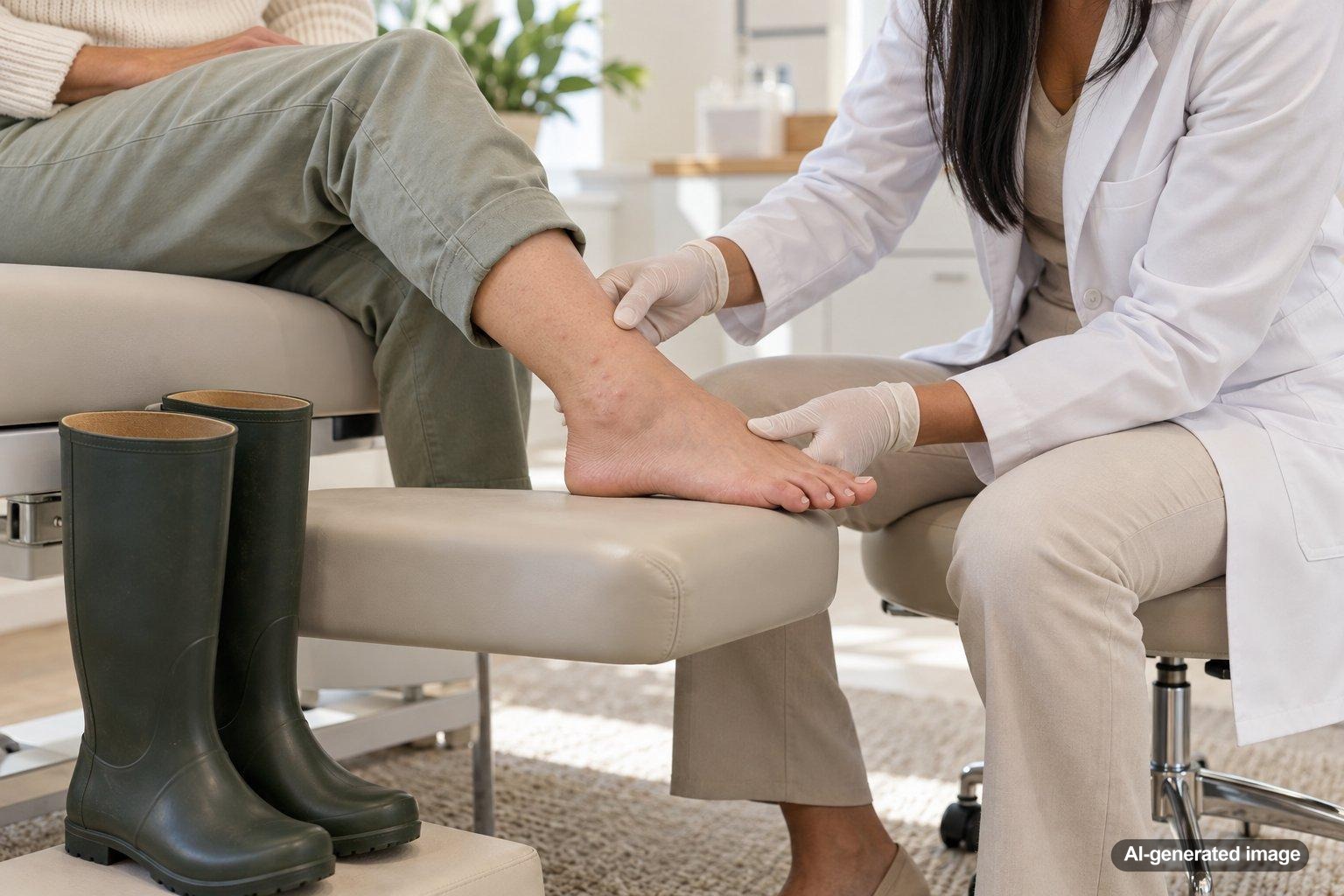
Small bumps around your ankles after wearing rain boots can develop when moisture, friction, and prolonged contact with footwear irritate the skin. Rain boots protect against wet conditions, but their relatively enclosed design can also trap perspiration and create repeated rubbing around the ankle. In some cases, the bumps may reflect contact dermatitis, including a sensitivity to materials used in the boots.
The location and appearance of the bumps can offer useful clues, although they cannot establish a diagnosis on their own. Whether the bumps itch, appear around the boot opening, or recur after wearing the same pair may help a dermatologist identify the underlying trigger. Understanding these possibilities is particularly useful in humid climates such as Fort Lauderdale, where warm temperatures and sudden rain showers can make enclosed footwear uncomfortable.
Quick Answer: Why Rain Boots Can Cause Ankle Bumps
- Trapped sweat: Moisture and warmth inside boots can contribute to irritation and sweat-related skin eruptions.
- Repeated friction: A stiff boot opening may rub against the ankles, especially while walking.
- Contact dermatitis: Rubber compounds, dyes, adhesives, or lining materials may irritate the skin or trigger an allergic reaction.
- Sock-related irritation: Damp fabric, elastic bands, dyes, or laundry products may contribute to localized irritation.
- Inflamed hair follicles: Heat, moisture, and rubbing may contribute to follicular bumps that require evaluation if persistent.
What Are These Small Ankle Bumps?
The bumps may be small raised areas of inflamed skin, sometimes accompanied by redness, itching, burning, dryness, or tenderness. Their appearance can vary depending on the underlying cause and skin tone. Some people notice tiny red or pink bumps, while others develop skin-colored elevations or darker patches of irritation.
A rash concentrated around the upper edge of a boot may suggest repeated contact or friction in that area. A broader eruption across the ankles or feet may suggest irritation from moisture or footwear materials. However, several skin conditions can produce similar patterns, so appearance alone is not enough to determine the cause.
Common Causes of Bumps After Wearing Rain Boots
Sweat and Moisture Trapped Inside Boots
Rain boots are designed to resist outside water, but that protection may also limit airflow. As perspiration accumulates, the skin can remain warm and damp, particularly during extended wear.
This environment may contribute to sweat-related irritation or heat rash. Small bumps, itching, or prickling sensations may become noticeable after removing the boots. Moisture can also soften the outer skin layer, making it more vulnerable to rubbing.
Friction Around the Boot Opening
The upper edge of a rain boot can repeatedly press against the ankle as the foot moves. Stiff materials, an awkward boot height, or a loose fit that allows excessive movement may increase rubbing.
Friction-related bumps often develop where the boot repeatedly contacts the skin. The affected area may feel tender or irritated rather than intensely itchy. Damp socks can increase friction, particularly during longer walks.
Irritant or Allergic Contact Dermatitis
Contact dermatitis is an inflammatory skin reaction that develops when a substance irritates the skin or triggers an immune response. Footwear can contain rubber additives, adhesives, dyes, preservatives, and other materials capable of causing reactions in susceptible individuals.
Irritant contact dermatitis can develop from repeated exposure to friction, moisture, and irritating substances. Allergic contact dermatitis involves sensitivity to a particular ingredient or material. An allergic reaction may develop even after someone has worn similar footwear for months or years without noticeable problems.
Symptoms can include itching, redness, swelling, rough patches, or small blisters. The location of the rash sometimes corresponds to the specific boot component touching the skin.
Inflammation Around Hair Follicles
Small bumps centered around individual hairs may sometimes reflect folliculitis, an inflammation of hair follicles. Friction and prolonged moisture exposure can contribute to follicular irritation, while some cases involve infection.
Follicular bumps may be tender, itchy, or occasionally contain pus. Because folliculitis and contact dermatitis can resemble other conditions, persistent or worsening symptoms warrant professional assessment.
How to Recognize a Possible Footwear Reaction
The timing and distribution of symptoms can provide clues. Consider whether the bumps appear only after wearing one particular pair of boots, whether they develop immediately or later, and whether they occur on both ankles.
- Bumps directly along the boot rim: May suggest mechanical rubbing or contact with the upper boot material.
- Itchy patches that develop after repeated wear: May be consistent with contact dermatitis.
- Small bumps following prolonged sweating: May be associated with heat and moisture.
- Individual tender bumps around hairs: May indicate follicular inflammation.
- Persistent scaling or spreading irritation: Deserves evaluation because dermatitis, fungal infections, and other conditions can overlap in appearance.
These patterns are observations rather than diagnostic tests. A dermatologist can distinguish between conditions that may require different approaches.
What You Can Do at Home
For mild irritation without concerning symptoms, reducing moisture and friction may help protect the skin while the cause is being investigated.
- Remove damp footwear promptly: Change out of wet boots and socks after returning indoors.
- Dry the skin gently: Wash with a mild cleanser when needed and pat the ankles dry without aggressive rubbing.
- Consider breathable socks: Moisture-managing fabrics may help reduce prolonged dampness.
- Check boot fit: Look for excessive pressure or repeated movement around the ankles.
- Allow boots to dry: Air out the interior between uses according to the manufacturer’s care instructions.
- Use simple skin care: A fragrance-free moisturizer may support the skin barrier when dryness or mild irritation is present.
- Avoid scratching: Scratching can further damage irritated skin and increase the possibility of secondary infection.
If the same pair repeatedly causes a rash, consider avoiding it until the cause has been evaluated. Changing the socks alone may not resolve an allergy to a boot component. Avoid applying multiple new creams or harsh treatments to an unexplained eruption.
How a Dermatologist Can Help
When ankle bumps recur or remain unexplained, a dermatologist can examine their distribution, texture, and associated symptoms. The evaluation may include questions about footwear materials, sock choices, skin care products, occupational exposure, and how quickly symptoms appear.
If allergic contact dermatitis is suspected, patch testing may help identify specific substances responsible for delayed skin reactions. This is different from testing for immediate allergies and can be particularly useful when footwear materials are possible triggers.
Depending on the findings, professional recommendations may include changes in footwear exposure, skin barrier support, topical anti-inflammatory treatments, or evaluation for an infection. Prescription treatments should be selected according to the diagnosis rather than used routinely for every ankle rash.
When Should You See a Dermatologist?
Consider scheduling a dermatology appointment if the bumps repeatedly return, persist despite avoiding the suspected trigger, become increasingly uncomfortable, or interfere with normal activities.
Seek prompt medical evaluation if the skin becomes progressively painful, hot, swollen, or develops spreading redness, pus, or significant drainage. Fever or rapidly worsening symptoms also warrant timely medical attention. Extensive blistering or substantial skin breakdown should not be managed through trial-and-error skin care alone.
Persistent bumps are not necessarily serious, but identifying the correct cause can help prevent unnecessary treatment and repeated exposure.
Frequently Asked Questions
Can I be allergic to rubber rain boots?
Yes. Some people develop allergic contact dermatitis from substances used in rubber footwear, including certain rubber-processing chemicals. The reaction does not necessarily mean an allergy to every type of rubber or every rain boot.
Why do the bumps appear only around my ankles?
The ankle area may experience concentrated friction or pressure from the boot opening. Elastic sock bands, trapped moisture, or contact with particular lining materials may also explain why the irritation appears in a narrow band.
Can rain boots cause heat rash?
Rain boots can create warm, humid conditions that may contribute to heat rash or other sweat-related irritation. However, not every cluster of bumps following perspiration is heat rash, and recurring symptoms may have another cause.
Why do my ankles itch after taking off rain boots?
Itching may become more noticeable after removing boots because of accumulated sweat, friction-related irritation, or contact dermatitis. The timing, distribution, and persistence of symptoms help guide further evaluation.
Should I stop wearing boots that repeatedly cause bumps?
Avoiding the suspected footwear while seeking clarification is a reasonable precaution. If symptoms improve when you stop wearing a particular pair, that information may be helpful during a dermatology appointment, although it does not confirm a specific allergy.
Will switching to cotton socks prevent the reaction?
Changing socks may improve comfort for some people, but cotton can retain moisture when damp. A breathable, well-fitting, moisture-managing sock may be more useful for prolonged wear. If the underlying issue is an allergy to a boot component, socks may not reliably prevent exposure.
Keeping Your Ankles Comfortable During Rainy Weather
Small ankle bumps after wearing rain boots often have an understandable connection to the conditions inside the footwear. Heat, moisture, pressure, and contact with certain materials are all possible contributors. The most useful next step depends on the appearance of the bumps, associated symptoms, and whether the reaction repeats.
At Waverly DermSpa in Fort Lauderdale, Dr. Maryann Mikhail, MD, can evaluate persistent or recurring ankle eruptions and help determine whether further testing or treatment is appropriate. A careful assessment is especially valuable when simple changes in footwear and moisture management have not helped.
Ready to get help?
Schedule an appointment or send a message and our team will get back to you.
Prefer to call? 954-666-3736
Disclaimer
This article is for educational purposes and is not medical advice. For diagnosis and personalized treatment, please book an appointment with a board-certified dermatologist.
Sources & Further Reading
- American Academy of Dermatology (AAD) – Itchy rash could be contact dermatitis
- DermNet – Shoe contact dermatitis
