

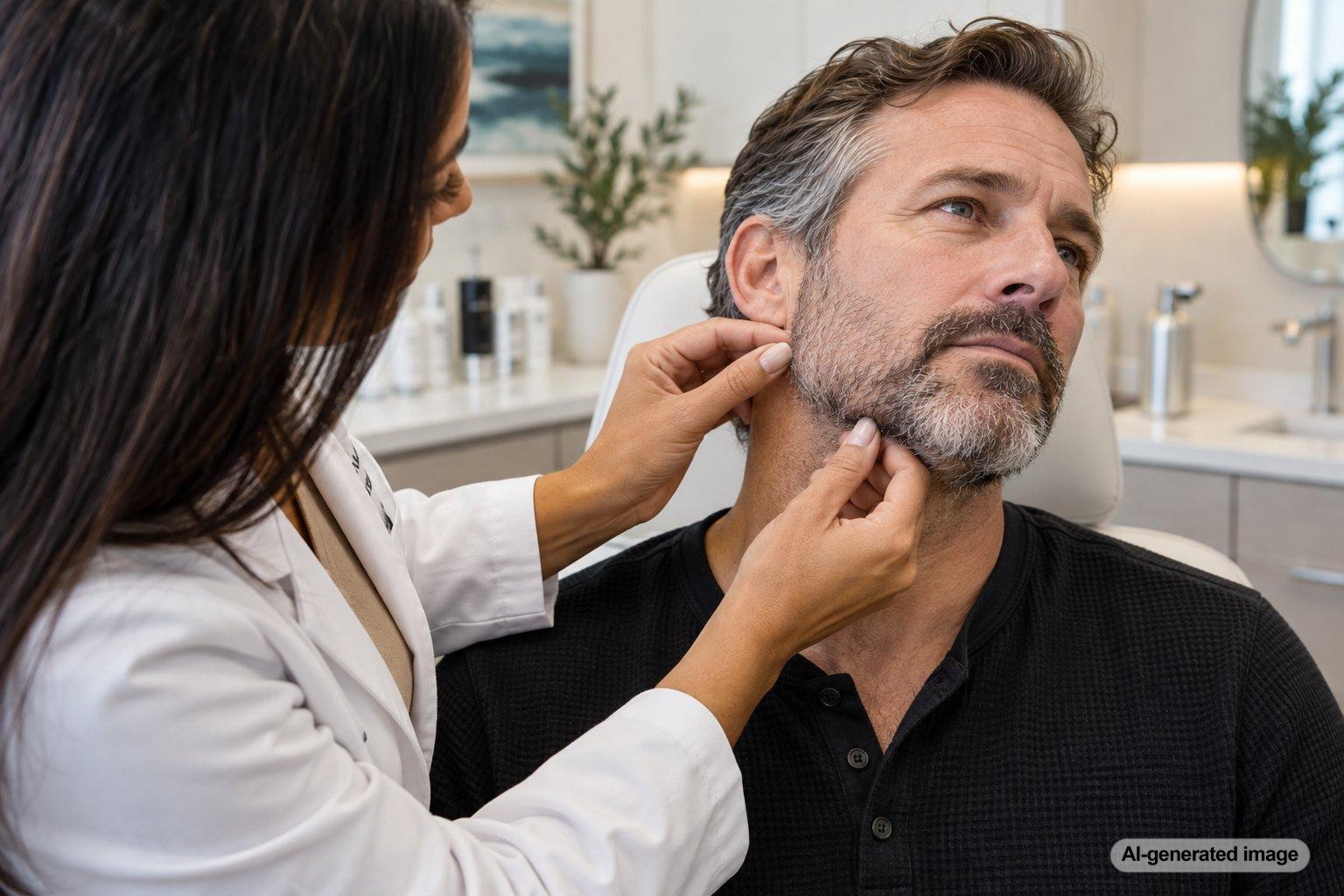
Yes, it is possible for one small area of your beard to behave differently from the rest. Hair follicles do not all point in exactly the same direction, and a localized patch may produce hairs that curve more sharply, grow at a lower angle, or repeatedly bend back toward the skin. That combination can make one area seem curlier and more prone to ingrown hairs, especially after close shaving.
This does not automatically indicate a serious skin problem. The pattern can reflect normal differences in follicle direction, shaving technique, friction, or changes in the skin around individual follicles. If the area becomes persistently painful, scarred, inflamed, or noticeably different over time, a dermatologist can evaluate what is happening.
Quick answer
- A small beard patch may naturally have follicles that grow at a different angle from neighboring hairs.
- Tightly curved hairs are more likely to turn back toward the skin after they are cut short.
- Repeated close shaving, plucking, or friction can make the same area develop ingrown hairs again and again.
- Changing how closely you shave and reducing irritation may help.
- Persistent bumps, drainage, scarring, or hair loss are reasons to have the area examined.
Why can one small beard area grow differently?
Beard growth is not perfectly uniform. Individual follicles can differ in direction, angle, shape, and the type of hair they produce. In one small section of the jawline, neck, cheek, or chin, the follicles may point more sideways than the surrounding hairs. A hair emerging at a low angle has an easier path back toward the skin, particularly if the hair itself curves.
You may notice the difference most after shaving because cutting the hair removes the length that normally helps it extend away from the skin. A short, curved hair may instead turn toward the follicle opening or neighboring skin as it grows.
Why curly beard hairs are more likely to become ingrown
An ingrown hair develops when a growing hair becomes trapped beneath the skin or curves back into it. Beard hairs that are naturally coarse or tightly curved can be more likely to do this, but the way the hair is cut also matters.
Very close shaving can leave the tip of a curved hair near or slightly below the skin surface. As the hair continues growing, its natural curve may direct it into the surrounding skin rather than straight outward. Pulling the skin tight while shaving can sometimes contribute because the freshly cut hair may retract beneath the surface after the skin is released.
Common reasons the same spot keeps getting ingrown hairs
- Natural follicle direction: The hairs in that patch may simply emerge at a sharper or more irregular angle.
- Closer shaving in one area: Curves of the neck, chin, and jaw can cause a razor to pass more closely over certain spots.
- Shaving against the grain: Going directly against local hair growth may create an especially short cut.
- Repeated passes: Shaving the same small patch several times can increase irritation around the follicles.
- Plucking or tweezing: Removing individual hairs can irritate the follicle and may contribute to recurring bumps.
- Friction: Collars, helmet straps, masks, or other repeated rubbing can irritate beard-bearing skin.
- Skin buildup: Dead skin around a follicle opening can sometimes make it harder for a short hair to emerge cleanly.
What you can try at home
If the area is mildly ingrown without significant pain, swelling, or drainage, conservative grooming changes may reduce how often it happens.
- Let the beard grow slightly longer instead of shaving extremely close.
- Pay attention to the direction the hairs actually grow in that specific patch rather than assuming the entire beard follows the same grain.
- Shave with the direction of growth when practical.
- Avoid stretching the skin tightly while shaving.
- Use fewer razor passes over the problem area.
- Avoid digging at trapped hairs with needles, fingernails, or tweezers.
- Use gentle cleansing and avoid aggressive scrubbing when the area is irritated.
- Consider a beard trimmer that leaves a small amount of visible hair if a completely smooth shave repeatedly causes bumps.
If a hair is visibly emerging from the skin, resisting the urge to pick at it can reduce additional irritation and discoloration. Persistent marks or bumps deserve a more individualized approach rather than increasingly aggressive exfoliation.
Could the hair itself really be curlier in just one spot?
Yes. Beard texture can vary across surprisingly small areas. One patch may contain hairs that are flatter, curlier, coarser, or oriented differently than neighboring follicles. The difference can become much more noticeable when the surrounding beard is shaved short.
It can also look as though the hair suddenly became curly when the real difference is its growth angle. A hair growing nearly parallel to the skin may appear more curved because more of its path stays close to the surface.
Professional options for recurring ingrown beard hairs
If grooming changes are not enough, a dermatologist can examine the follicles and determine whether the bumps are truly caused by ingrown hairs or whether another skin issue may be contributing. Professional recommendations depend on the appearance of the skin, how often the problem occurs, whether discoloration or scarring is developing, and how you prefer to maintain your facial hair.
Depending on the situation, options may include adjustments to skincare, treatment aimed at reducing inflammation, or discussion of longer-term hair reduction for a repeatedly troublesome area. These approaches are not appropriate for everyone, so evaluation is useful before choosing a treatment strategy.
At Waverly DermSpa, we offer Excel HR Laser Hair Removal and can help you understand whether it may be appropriate.
When should you see a dermatologist?
It is worth having the area checked if the problem keeps returning despite gentler shaving, or if you are not sure that the bumps are actually ingrown hairs. Seek professional evaluation sooner if you notice:
- Increasing pain, warmth, swelling, or tenderness
- Drainage or crusting
- Deep or recurring bumps
- Persistent dark marks or thickened skin
- Scarring
- A patch where hairs are thinning or disappearing
- A new change in skin texture that does not settle
- A bump or lesion that looks different from your usual ingrown hairs
A dermatologist can look closely at the area and help separate a straightforward grooming problem from conditions that may need a different approach.
FAQ
Why does only one part of my beard get ingrown hairs?
The follicles in that particular area may grow at a different angle, produce curlier hairs, or experience more friction or closer shaving than the rest of your beard. Small anatomical differences can create a very consistent problem spot.
Should I pull an ingrown beard hair out?
Picking, digging, or repeatedly tweezing the area can cause additional irritation and may contribute to discoloration or scarring. If a hair is deeply trapped, painful, or surrounded by significant inflammation, it is better to have the area evaluated.
Would growing my beard longer help?
For some people, leaving the hair slightly longer reduces the chance that a curved tip will re-enter the skin. You do not necessarily need a long beard. Even avoiding an extremely close shave may make a difference.
Can shaving direction really vary within the same beard?
Yes. Beard hairs can grow downward in one area, diagonally in another, and sideways or upward in a nearby patch. Checking the grain of each troublesome area can help you avoid repeatedly shaving directly against it.
Why does the spot stay dark after an ingrown hair goes away?
Inflammation can sometimes leave temporary discoloration after the original bump has settled. Repeated picking or recurring irritation can make those marks more noticeable. A dermatologist can evaluate persistent discoloration and discuss appropriate options for your skin.
Ready to get help?
Schedule an appointment or send a message and our team will get back to you.
Prefer to call? 954-666-3736
This article is for educational purposes and is not medical advice. For diagnosis and personalized treatment, please book an appointment with a board-certified dermatologist.
