

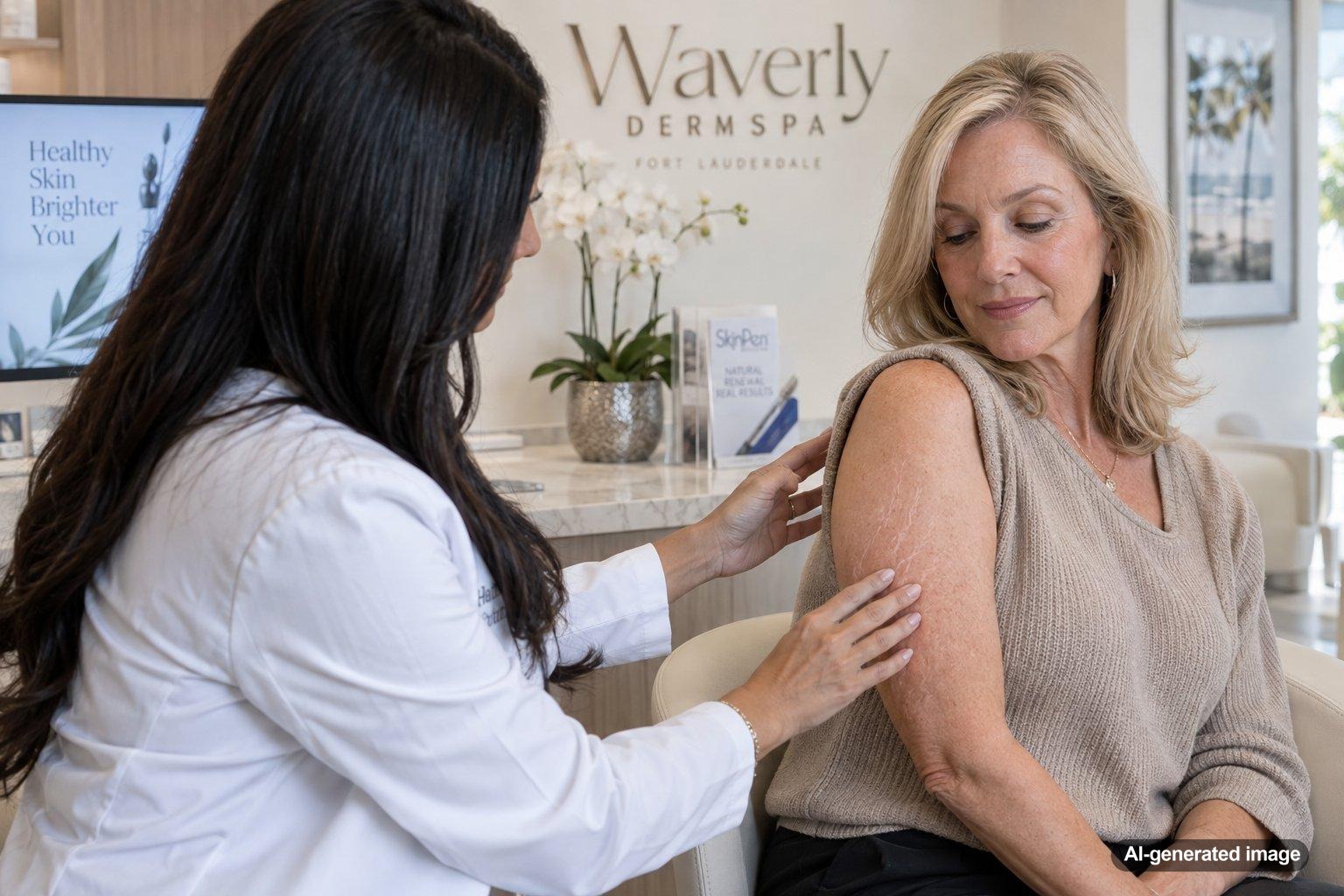
Stretch marks on the upper arms can become noticeable after growth, weight changes, muscle development, or other periods when the skin stretches relatively quickly. While they are common and usually harmless, some people would prefer them to look softer or blend more naturally with the surrounding skin. SkinPen microneedling is one professional option that may help improve the appearance and texture of stretch marks by creating controlled microchannels in the skin and supporting the body’s natural remodeling response.
Results vary based on factors such as the age, depth, color, and location of the stretch marks, as well as individual healing patterns. A consultation can help determine whether microneedling is a reasonable option for your specific skin and goals.
Quick answer
- SkinPen microneedling may help soften the texture and visibility of some upper arm stretch marks.
- The treatment works by creating controlled microchannels that encourage natural skin renewal and remodeling.
- Stretch marks typically require a series of treatments rather than a single session.
- Improvement is gradual and varies from person to person.
- A professional evaluation is important because not every stretch mark or skin type should be treated in exactly the same way.
What SkinPen microneedling is
SkinPen is a professional microneedling device used to create very small, controlled channels in the skin. These microchannels trigger a natural repair response that can support collagen and elastin remodeling over time. For stretch marks, the goal is not to erase the marks completely, but to help improve their texture and make them appear less prominent.
Because stretch marks represent structural changes within the skin, improvement usually develops gradually. The treated area may begin to look smoother and more even as the skin goes through its normal renewal process.
Why stretch marks form on the upper arms
Stretch marks can develop when the skin stretches or changes more quickly than its deeper support structures can comfortably accommodate. On the upper arms, common contributing factors can include:
- Rapid growth during adolescence
- Weight gain or weight loss
- Muscle growth from strength training
- Changes in body composition
- Genetic differences in skin elasticity
- Hormonal influences
Newer stretch marks may appear pink, red, purple, or darker than the surrounding skin. Older stretch marks often become lighter and may have a slightly indented or crepey texture. Their appearance can influence which treatment approach is most appropriate.
How SkinPen may help upper arm stretch marks
Microneedling focuses primarily on texture and skin remodeling. By creating controlled micro-injuries, the treatment encourages the skin to begin a repair process. Over time, this may help the treated area feel smoother and make the borders of individual stretch marks less visually distinct.
The upper arms can respond differently from facial skin because body skin is often thicker and may heal at a different pace. Treatment settings, session spacing, and the number of sessions may therefore vary according to the individual and the characteristics of the stretch marks.
What to expect during treatment
Before microneedling, the treatment area is typically cleansed and prepared. A topical numbing product may be used to improve comfort. The provider then passes the SkinPen device across the stretch marks using settings selected for the treatment area and skin characteristics.
After treatment, temporary redness, warmth, sensitivity, or mild swelling can occur. The skin may also feel dry or tight as it recovers. Your provider can give you specific aftercare instructions based on the treatment performed and your skin’s needs.
What you can do at home
Good home care can support comfortable recovery and help protect the treated skin. Conservative steps may include:
- Follow the aftercare instructions provided by your clinician.
- Keep the area clean and avoid unnecessary rubbing or friction.
- Use gentle skincare products while the skin is recovering.
- Avoid picking, scratching, or aggressively exfoliating the treated area.
- Protect exposed upper arms from excessive sun exposure.
- Ask your provider when you can resume stronger active skincare products on the area.
Because individual treatment plans differ, follow the instructions given for your specific procedure rather than relying on a one-size-fits-all routine.
How many sessions might be needed?
Stretch marks commonly require more than one microneedling session because skin remodeling occurs gradually. The appropriate number of treatments depends on factors such as how established the stretch marks are, their depth and texture, the size of the treatment area, and how the skin responds between visits.
Your clinician can reassess the area as treatment progresses and help determine whether additional sessions make sense. Improvement should be viewed as gradual and variable rather than predictable on an exact timeline.
Can older stretch marks be treated?
Older stretch marks may still be considered for microneedling, although their response can differ from newer marks. Mature stretch marks often look pale or silvery and may have more established textural changes. In these cases, treatment generally focuses on softening texture and improving how the marks blend with nearby skin rather than restoring the skin to its original appearance.
Professional options for stretch marks
Microneedling is one of several professional approaches that may be considered for stretch marks. Depending on the color, depth, age, and texture of the marks, a dermatologist may discuss options such as energy-based treatments, resurfacing procedures, or combination treatment plans.
No single approach is appropriate for everyone. A professional evaluation is useful for identifying whether the main concern is color, texture, skin laxity, or a combination of these factors.
When to see a dermatologist
Most stretch marks are not medically concerning. However, it’s worth having the area evaluated if you are unsure whether the changes are actually stretch marks, if they appeared unexpectedly without an obvious reason, or if the skin is painful, inflamed, rapidly changing, or accompanied by other symptoms.
A dermatologist can also evaluate your skin before a cosmetic procedure and help determine whether microneedling or another approach may be more appropriate for your goals.
FAQ
Can SkinPen completely remove upper arm stretch marks?
Microneedling is generally used to improve the appearance and texture of stretch marks rather than eliminate them completely. The amount of improvement varies among individuals.
Does SkinPen work on white stretch marks?
Older white or silvery stretch marks may still be treated, particularly when texture is the main concern. Their response can differ from newer stretch marks, so an in-person assessment is helpful.
Is microneedling only for the face?
No. Professional microneedling may be used on selected body areas, including the upper arms, when the skin and treatment concern are appropriate for the procedure.
How soon will I notice a difference?
Changes from microneedling are typically gradual because the treatment relies on the skin’s natural remodeling process. The timing and degree of visible improvement vary from person to person.
Can SkinPen be combined with other stretch mark treatments?
In some cases, a dermatologist may recommend a broader treatment plan based on the stretch marks’ color, depth, age, and texture. Whether treatments should be combined or spaced apart depends on the individual.
At Waverly DermSpa, we offer SkinPen and can help you understand whether it may be appropriate.
Ready to get help?
Schedule an appointment or send a message and our team will get back to you.
Prefer to call? 954-666-3736
This article is for educational purposes and is not medical advice. For diagnosis and personalized treatment, please book an appointment with a board-certified dermatologist.
