

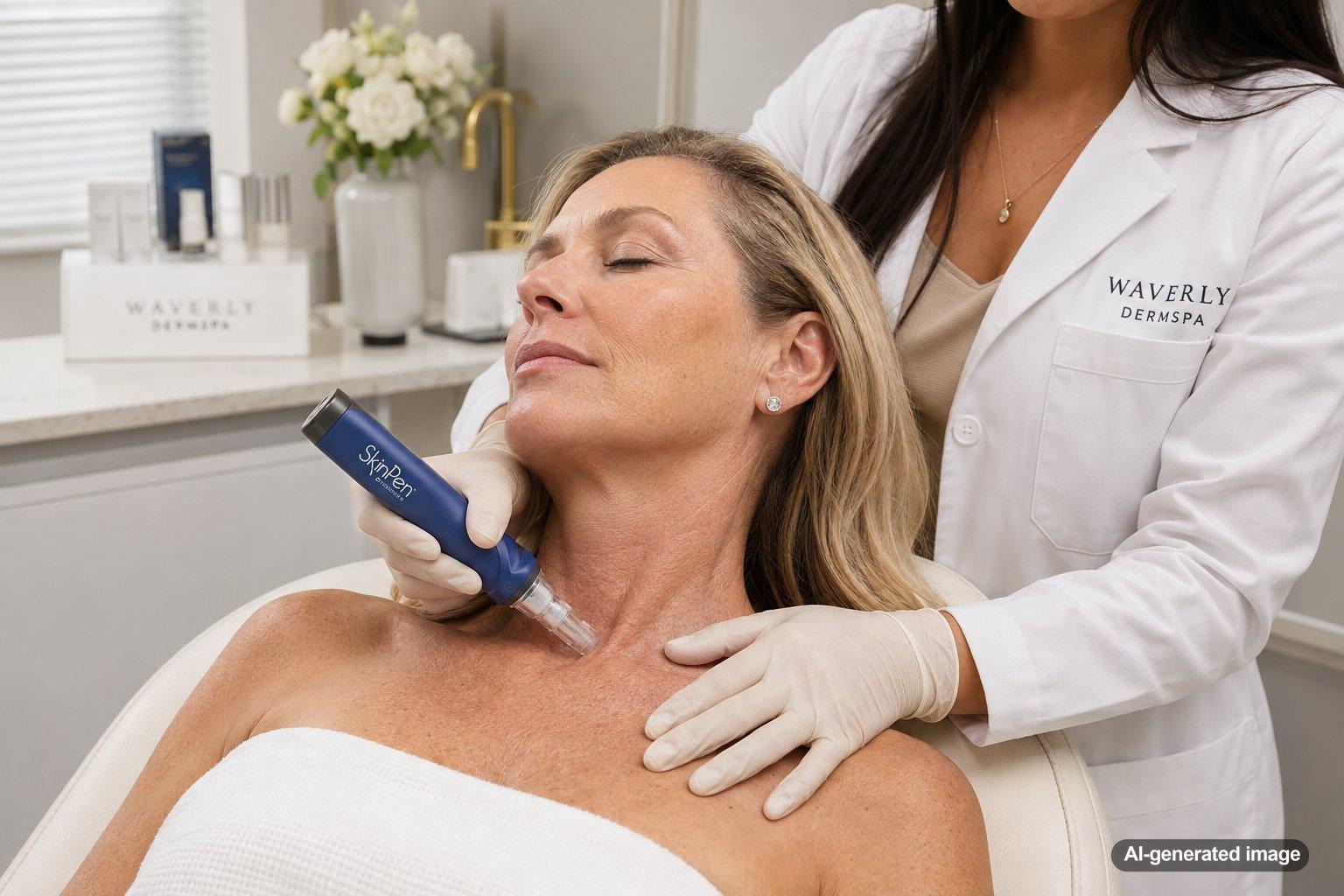
Crepey skin on the neck and decolletage can be frustrating because these areas often show changes in texture even when the face still looks relatively smooth. The skin may appear thin, finely wrinkled, or less firm, especially after years of sun exposure and natural changes in collagen.
SkinPen is a professional microneedling device that creates controlled microchannels in the skin. This process is intended to stimulate the skin’s natural repair response and collagen production. For appropriate patients, microneedling may help improve the appearance of fine lines, uneven texture, and crepey-looking skin. Treatment planning matters, however, because the neck and upper chest have different characteristics from facial skin and should be evaluated individually.
Quick answer
- SkinPen microneedling creates controlled micro-injuries that encourage a natural skin-remodeling response.
- Microneedling may gradually improve the appearance of fine lines, texture, and mild crepiness.
- The neck and decolletage require thoughtful treatment because the skin can be thinner and more sun-exposed than many facial areas.
- Results vary, and a series of treatments may be recommended rather than a single session.
- A dermatologist can evaluate your skin, medical history, and treatment goals before recommending microneedling for these areas.
What is SkinPen microneedling?
Microneedling uses very small needles to create controlled punctures in the skin. These micro-injuries trigger a healing response that can support the production and remodeling of collagen and elastin, proteins that contribute to the skin’s structure and resilience.
SkinPen is a motorized microneedling device used in professional settings. Unlike superficial at-home rollers, professional microneedling can reach living layers of the skin and should be performed by a properly trained provider. The depth and technique can be adjusted according to the area being treated, the patient’s skin, and the goals of treatment.
Why does the neck and decolletage become crepey?
Crepey-looking skin usually develops through a combination of factors rather than one single cause. Common contributors include:
- Natural collagen changes: The skin gradually produces and maintains less structural collagen as it ages.
- Sun exposure: The neck and upper chest often receive significant cumulative ultraviolet exposure, sometimes without the same daily sunscreen habits used on the face.
- Thin skin: These areas naturally have less cushioning than some other parts of the body, which can make fine lines and texture more visible.
- Repeated movement: Looking down, turning the head, sleeping positions, and everyday movement can contribute to visible lines over time.
- Dryness: Dehydrated surface skin can temporarily make a crepey texture look more pronounced.
How might SkinPen help crepey-looking skin?
The goal of microneedling is not to physically remove loose skin. Instead, it creates a controlled healing response that may improve skin quality over time. As remodeling occurs, some patients notice that the treated skin looks smoother, more even, or slightly firmer.
Changes from microneedling tend to develop gradually rather than immediately because collagen remodeling takes time. The amount of improvement can vary based on age, baseline skin quality, sun damage, treatment area, treatment plan, and individual healing response.
Microneedling may be more appropriate for mild to moderate textural concerns than for substantial skin laxity. If loose skin is the main concern, a dermatologist can explain whether another treatment approach may better match your goals.
Why treatment of the neck and decolletage requires care
The skin of the neck and upper chest does not always behave exactly like facial skin. It can be thinner, more sensitive, and more affected by chronic sun exposure. A provider should therefore evaluate the area rather than simply applying the same settings or approach used on the face.
Medical microneedling devices also have specific legally authorized indications and treatment parameters. Uses outside a device’s authorized labeling may have different evidence and risk considerations. Your clinician can explain how a recommended treatment fits your particular skin concern and treatment area.
What can you do at home for crepey neck skin?
A consistent skin care routine can support the appearance and health of the neck and decolletage, whether or not you choose an in-office procedure.
- Use broad-spectrum sunscreen: Apply sun protection to the neck and upper chest when these areas are exposed.
- Moisturize consistently: A well-formulated moisturizer can reduce dryness that makes fine texture more noticeable.
- Treat the area gently: Avoid aggressive scrubbing or frequent use of irritating products on thin, sensitive skin.
- Ask about active ingredients: Retinoids and other topical ingredients may be helpful for some people, but tolerance varies, especially on the neck. A dermatologist can help determine what makes sense for your skin.
- Skip aggressive DIY microneedling: Professional microneedling reaches deeper layers of skin and requires appropriate technique, sanitation, and patient selection.
What should you expect from professional microneedling?
Before treatment, your provider should review your medical history, medications, skin concerns, prior procedures, and tendency toward scarring or pigment changes. The skin is typically cleansed, and topical numbing medication may be used before the procedure.
During treatment, the device passes across the selected area while very small needles create controlled microchannels. Afterward, temporary redness, tightness, dryness, sensitivity, peeling, mild swelling, bruising, or pinpoint bleeding can occur. These effects vary from person to person.
Because improvement develops through the healing process, results are typically assessed over time. Some patients may be advised to have multiple sessions depending on their goals and response. No specific number of treatments or degree of improvement can be predicted for everyone.
Who may not be a good candidate?
Microneedling isn’t appropriate for every person or every skin condition. A clinician may recommend delaying or avoiding treatment in situations involving active skin infections, certain inflammatory skin conditions, recent significant sun exposure, impaired healing, a history of problematic scarring, bleeding concerns, immune suppression, or certain medications.
Pregnancy, nursing, prescription medications, and significant medical conditions should also be discussed with your healthcare provider before treatment. The safest approach is an individualized assessment rather than assuming that a cosmetic procedure is appropriate based only on appearance.
When should you see a dermatologist first?
Crepey texture by itself is usually a cosmetic concern, but the neck and chest are also common areas for cumulative sun exposure. Schedule a dermatology evaluation if you notice a new or changing mole, a growth that bleeds or does not heal, a persistent rash, a painful lesion, an unexplained color change, or anything else that concerns you.
A dermatologist should also evaluate the area before cosmetic treatment if you have an active skin condition or are unsure whether what looks like simple texture change could have another cause.
Frequently asked questions
Can SkinPen tighten loose neck skin?
Microneedling may improve skin texture and the appearance of mild crepiness by supporting collagen remodeling, but it should not be viewed as a substitute for procedures designed to address substantial skin laxity. A consultation can help clarify what type of improvement is realistic.
Can the neck and decolletage be treated at the same appointment?
That depends on your skin, goals, treatment plan, and whether each area is appropriate for treatment. Your provider can assess both areas and explain the recommended approach.
How quickly will I notice a difference?
Microneedling does not rely on an immediate tightening effect. Changes may become noticeable gradually as the skin heals and remodels. Timing and degree of improvement vary significantly among patients.
Does microneedling hurt on the neck?
Sensation varies. Topical numbing medication is commonly used before professional microneedling, but patients may still feel pressure, vibration, warmth, or prickling during treatment. Sensitivity can differ between the face, neck, and upper chest.
Can I use retinol after SkinPen?
Freshly treated skin can be more sensitive to active skin care ingredients. Follow the specific aftercare instructions provided by your clinician rather than automatically restarting retinol, exfoliating acids, or other potentially irritating products.
Is SkinPen the right choice for every type of crepey skin?
No. Skin quality, laxity, pigmentation, sun damage, medical history, and treatment goals all matter. Your clinician can help you compare microneedling with other professional options when appropriate.
At Waverly DermSpa, we offer SkinPen and can help you understand whether it may be appropriate.
Ready to get help?
Schedule an appointment or send a message and our team will get back to you.
Prefer to call? 954-666-3736
This article is for educational purposes and is not medical advice. For diagnosis and personalized treatment, please book an appointment with a board-certified dermatologist.
Sources & further reading
- U.S. Food and Drug Administration (FDA) – Microneedling Devices
- American Academy of Dermatology (AAD) – Microneedling can fade scars, uneven skin tone, and more
