

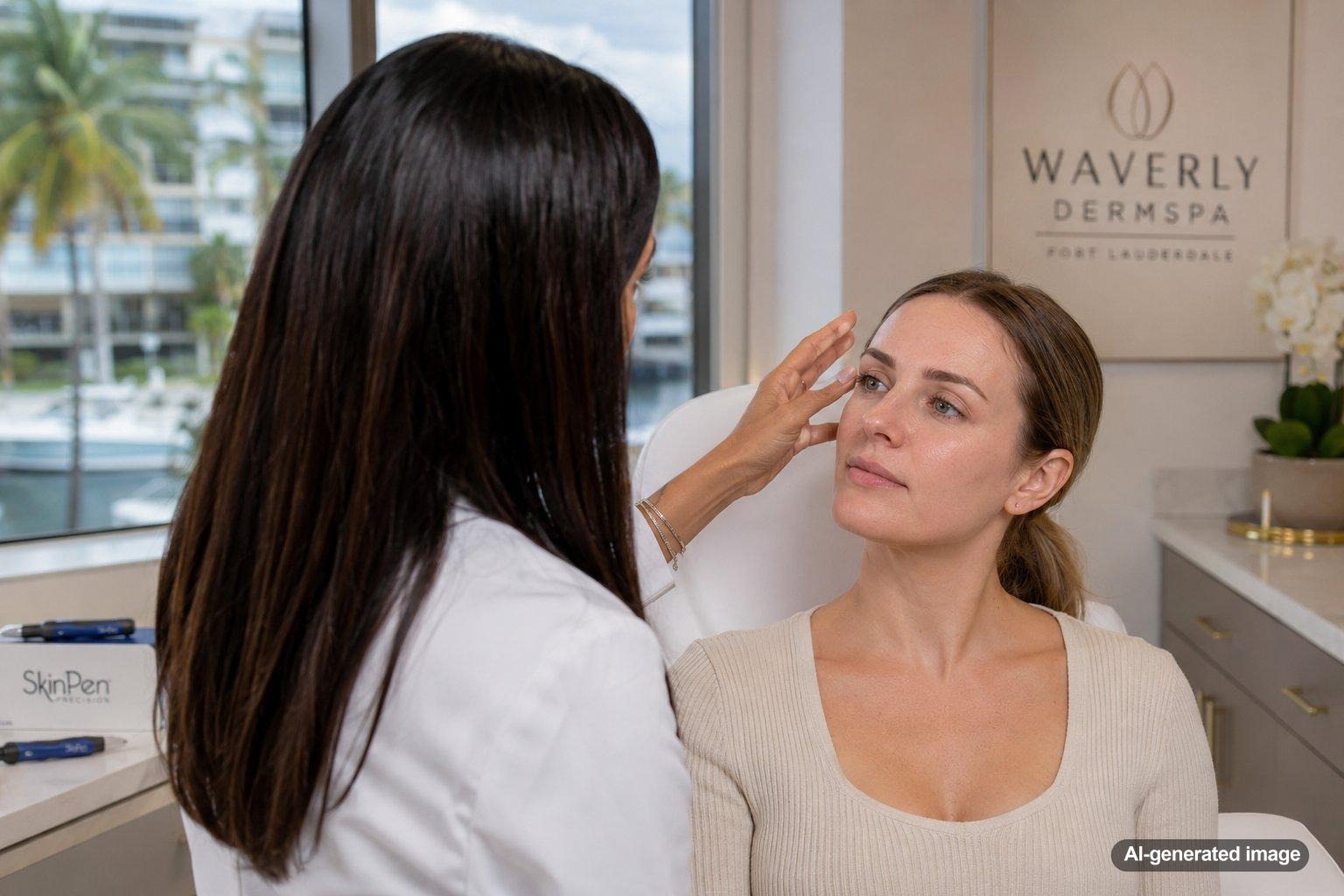
Crepey skin around the eyelids and brow area can make the eye area look tired, textured, or less defined, even when you feel well rested. SkinPen microneedling may help improve the appearance of fine lines and uneven texture by creating controlled microchannels that support the skin’s natural renewal response.
The eye area requires particular care because the skin is thin and close to delicate structures. Treatment should be planned by an experienced medical professional who can evaluate exactly where microneedling may be appropriate, which areas should be avoided, and whether another approach would better match your concerns.
Quick answer
- SkinPen may help soften the appearance of fine lines and crepey texture around selected areas near the eyes and brows.
- The device is not casually passed over the mobile eyelid or placed close to the eye without careful medical assessment.
- Results develop gradually as the skin completes its repair and collagen-remodeling process.
- Temporary redness, sensitivity, dryness, swelling, or pinpoint bleeding may occur.
- A dermatologist should evaluate your skin, medical history, medications, and treatment goals before the procedure.
What crepey skin around the eyes looks like
Crepey skin is thin-looking skin with fine crinkles, delicate folds, or a slightly loose texture. Around the eyes, it may appear beneath the brow, near the outer corners, or in the upper cheek and lower-eye transition.
This texture often becomes more visible with facial movement, dehydration, makeup, or bright overhead lighting. It is not necessarily a sign that anything is medically wrong. However, a dermatologist can check the area when the change is sudden, one-sided, irritated, swollen, or accompanied by a rash.
Why the eyelid and brow area becomes crepey
The skin around the eyes is naturally thinner than skin on many other parts of the face. Several overlapping factors may make crepey texture more noticeable:
- Collagen and elastin changes: The skin’s supportive framework gradually changes with age.
- Sun exposure: Repeated ultraviolet exposure may contribute to fine lines, uneven tone, and reduced elasticity.
- Facial movement: Smiling, squinting, and raising the brows repeatedly fold the skin.
- Dryness: Dehydrated skin can temporarily make fine texture look more pronounced.
- Skin irritation: Retinoids, exfoliating acids, fragranced products, or aggressive cleansing may leave this area dry and reactive.
- Genetics and anatomy: Brow position, eyelid shape, fat distribution, and natural skin thickness influence how the area ages.
- Smoking and environmental exposure: These factors may contribute to visible changes in skin quality over time.
How SkinPen microneedling works
SkinPen is a professional microneedling device that uses small, rapidly moving needles to create controlled microchannels in the skin. This controlled injury prompts a repair response that includes gradual collagen remodeling.
For crepey texture, the goal is not to remove skin or create an immediate lifting effect. The goal is to encourage a smoother, firmer-looking surface over time. The degree of improvement varies based on skin thickness, the severity of laxity, sun damage, age, treatment settings, and the number of sessions completed.
SkinPen is different from radiofrequency microneedling. Standard SkinPen treatment does not deliver heat through the needles. That distinction matters when comparing expected effects, risks, recovery, and appropriate treatment areas.
Can SkinPen be used directly on the eyelids?
Not every part of the eyelid should be treated, and the term “eyelid area” can describe several different anatomical zones. A clinician may consider carefully selected skin near the orbital rim, below the brow, or beside the eyes while maintaining an appropriate distance from the eye itself.
The movable upper eyelid, lash line, tear duct region, and extremely thin skin immediately surrounding the eye require additional caution. Whether any portion of these areas can be treated depends on the device instructions, the clinician’s training, your anatomy, and your individual risk factors.
A consultation is important because microneedling cannot correct every cause of eyelid aging. Significant skin redundancy, low brows, prominent fat pads, muscle-related wrinkles, or under-eye hollows may respond more appropriately to another treatment or a surgical evaluation.
What a consultation may include
Before treatment, your dermatologist may examine your skin at rest and during facial movement. The evaluation may include:
- The exact location and severity of crepey texture
- Your eyelid anatomy and brow position
- Your history of cold sores, eczema, psoriasis, keloids, or pigment changes
- Current rashes, infections, open skin, or irritated areas
- Medications and supplements that may affect bleeding or healing
- Recent sun exposure, tanning, procedures, or use of irritating skincare products
- Your expectations and tolerance for downtime
Your clinician can then determine whether SkinPen may be appropriate, which zones can be treated, and whether the plan should include the surrounding face for a more balanced result.
What treatment may feel like
The skin is usually cleansed before treatment, and a topical numbing product may be applied when appropriate. During the procedure, patients often describe pressure, vibration, or a prickling sensation. Sensitivity can vary significantly around the brows, temples, and orbital area.
The clinician controls the treatment depth and technique according to the location and skin thickness. Delicate areas are not necessarily treated with the same settings used on the cheeks, forehead, or acne scars.
After treatment, the skin may look pink or red and may feel warm, tight, tender, or dry. Mild swelling can be more noticeable around the eyes because this tissue is prone to holding fluid. Recovery varies, so it is sensible to avoid scheduling treatment immediately before an important event.
What results can SkinPen provide?
SkinPen may gradually improve the appearance of fine lines, mild crepey texture, and uneven skin quality. Changes are typically subtle and progressive rather than immediate or dramatic.
Some people pursue a series of treatments followed by periodic maintenance. The number and spacing of sessions should be individualized. More pronounced eyelid laxity may not respond sufficiently to microneedling alone, and no procedure can stop the ongoing effects of aging, facial movement, and sun exposure.
How to prepare conservatively
Follow the instructions provided by your treating clinician. Depending on your skin and current routine, you may be advised to temporarily pause retinoids, exfoliating acids, scrubs, or other potentially irritating products before treatment.
Protect the area from tanning and sunburn. Tell your provider about prescription medications, blood-thinning products, allergies, previous reactions to numbing medication, active cold sores, and any history of slow healing or abnormal scarring. Do not stop a prescribed medication unless the clinician who manages it tells you to do so.
Aftercare for the eye and brow area
Post-treatment skin can be more reactive than usual. Your clinician may recommend a simple routine centered on gentle cleansing, bland hydration, and sun protection.
- Avoid rubbing, scratching, or picking at flaking skin.
- Keep makeup and unapproved skincare off the area for the period specified by your clinician.
- Do not apply retinoids, exfoliating acids, scrubs, or fragranced products until you are cleared to restart them.
- Avoid strenuous exercise, saunas, hot tubs, and excessive heat during the initial recovery period if instructed.
- Use sun protection that your clinician considers appropriate for newly treated skin.
- Contact the office if swelling, pain, redness, drainage, or vision-related symptoms are worsening rather than improving.
Who may need a different approach?
Microneedling may not be appropriate during an active skin infection, cold sore outbreak, significant dermatitis flare, or period of poor wound healing. Extra caution may be needed for people with bleeding disorders, immune suppression, a history of keloids, uncontrolled medical conditions, or medications that affect healing.
Pregnant or nursing patients should discuss elective cosmetic procedures and topical medications with their physicians. People with suspicious lesions, persistent eyelid inflammation, unexplained swelling, or changes in vision should receive a medical evaluation rather than proceeding directly with a cosmetic treatment.
Other professional options
Crepey eye-area skin may be addressed with several treatment categories. The appropriate choice depends on whether the main concern is texture, pigmentation, muscle movement, volume loss, brow position, or excess skin.
- Prescription or professional skincare plans
- Carefully selected chemical treatments
- Laser or light-based procedures
- Neuromodulators for movement-related lines
- Volume-restoring treatments for selected hollows
- Energy-based procedures for skin quality or laxity
- Surgical consultation for substantial excess eyelid skin or low brow position
Combination plans are sometimes considered, but treatments should be sequenced carefully to reduce irritation and allow adequate healing.
When to see a dermatologist
Schedule a medical evaluation before cosmetic treatment if the area has a new rash, crusting, drainage, persistent itching, significant swelling, pain, a changing growth, or an unexplained color change. Seek prompt medical care for sudden eyelid drooping, eye pain, visual changes, severe swelling, or symptoms of an allergic reaction.
A dermatologist can also help determine whether the texture is primarily related to dryness, dermatitis, sun damage, laxity, or another concern that would change the treatment plan.
Frequently asked questions
Is SkinPen the same as RF microneedling?
No. SkinPen creates controlled microchannels without delivering radiofrequency heat. RF microneedling combines needles with thermal energy, so the treatment experience, potential risks, and appropriate uses differ.
Will SkinPen lift a drooping eyelid?
SkinPen may improve mild skin texture, but it is not a substitute for surgery and may not meaningfully correct a low brow, substantial excess eyelid skin, or eyelid drooping caused by a medical or anatomical issue.
Can I microneedle my eyelids at home?
At-home treatment near the eyes is not recommended. Improper depth, pressure, sanitation, or placement may cause irritation, infection, pigment changes, scarring, or accidental eye injury.
How much downtime should I expect?
Recovery varies. Temporary redness, warmth, tightness, dryness, tenderness, pinpoint bleeding, and swelling may occur. Your clinician can explain what is typical for the treatment settings and areas being considered.
Can SkinPen be combined with other eye-area treatments?
It may be possible to include microneedling within a broader treatment plan, but the timing should be determined by your clinician. Closely spaced procedures or strong skincare products may increase irritation and prolong recovery.
Is microneedling appropriate for every skin tone?
Microneedling can be considered for a wide range of skin tones, but pigment changes remain possible. A personalized plan, conservative settings, sun protection, and appropriate aftercare are especially important for patients prone to hyperpigmentation.
At Waverly DermSpa, we offer SkinPen and can help you understand whether it may be appropriate.
Ready to get help?
Schedule an appointment or send a message and our team will get back to you.
Prefer to call? 954-666-3736
This article is for educational purposes and is not medical advice. For diagnosis and personalized treatment, please book an appointment with a board-certified dermatologist.
Sources & further reading
- U.S. Food and Drug Administration (FDA) – Microneedling Devices
- American Academy of Dermatology (AAD) – Microneedling can fade scars, uneven skin tone, and more
