

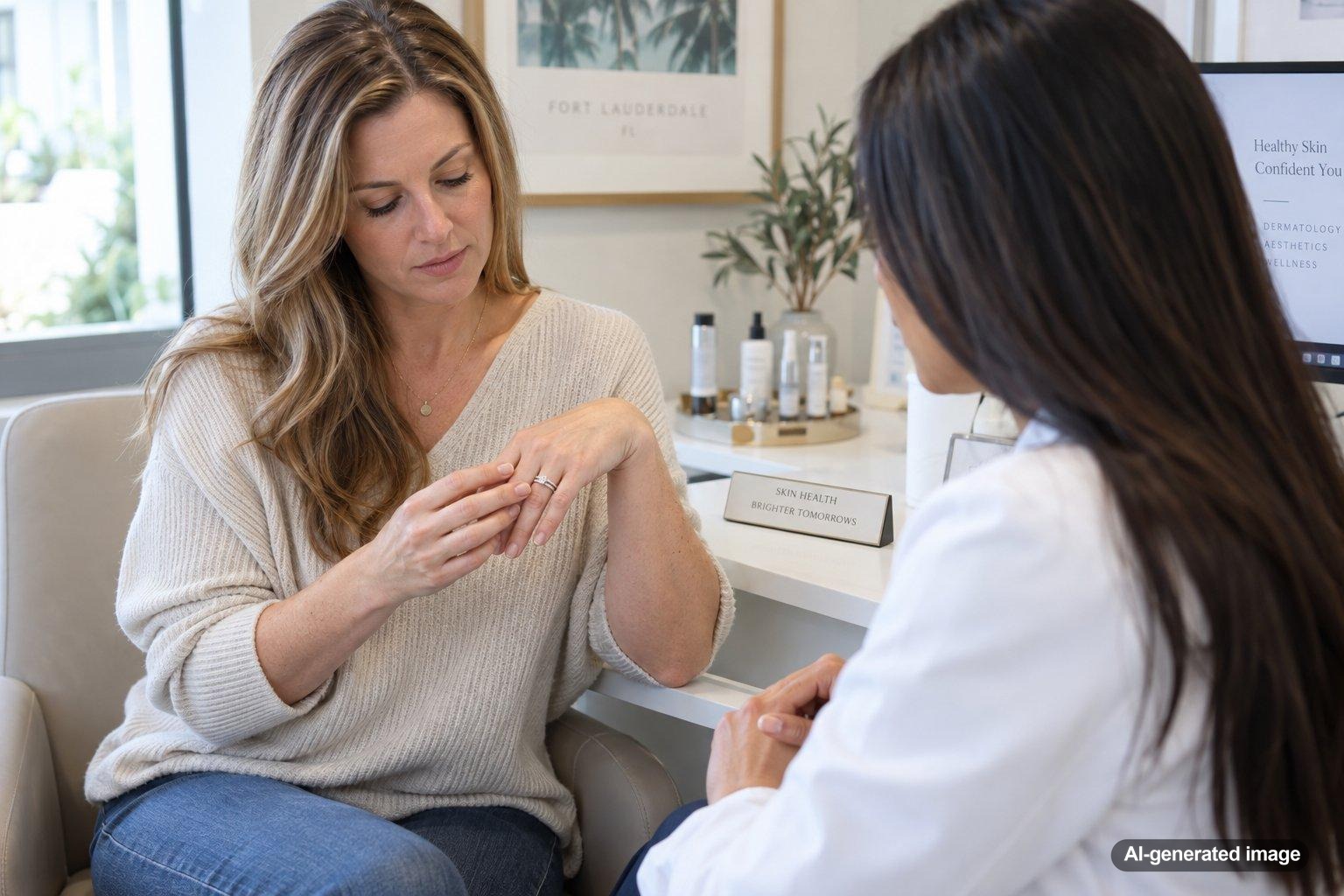
Peeling and itching under a wedding ring can happen when the skin beneath the band becomes irritated or reacts to something it touches. Moisture, soap, hand sanitizer, friction, and residue trapped beneath a snug ring can all stress the skin barrier. In other cases, the pattern may be associated with allergic contact dermatitis from a metal or another material in the ring.
Even a wedding band you’ve worn comfortably for years can become associated with irritation. Changes in hand-washing habits, skin sensitivity, ring fit, moisture exposure, or development of a contact allergy can all affect how the skin behaves.
Quick answer
- Soap, water, sweat, or hand sanitizer trapped beneath a ring can irritate the skin.
- Friction from a tight or frequently moving band may contribute to dryness, scaling, and itching.
- Some people develop allergic contact dermatitis to metals used in jewelry, including nickel.
- Removing the ring temporarily and keeping the area clean and thoroughly dry may help irritated skin recover.
- If the problem keeps returning, spreads, blisters, becomes painful, or shows signs of infection, a dermatologist can evaluate the cause.
What is happening to the skin under the ring?
The skin beneath a wedding band sits in a small, covered environment. Water and cleansing products can remain between the ring and skin after hand washing, while sweat and normal skin oils may also collect there. Repeated exposure can weaken the outer skin barrier and contribute to irritant contact dermatitis.
Another possibility is allergic contact dermatitis. This occurs when the immune system reacts to a substance touching the skin. Jewelry metals are recognized triggers, and nickel is a common example. A reaction can develop even if a person previously wore the same piece of jewelry without noticeable trouble.
Common causes and triggers
- Soap and water trapped beneath the band: Frequent hand washing without removing or thoroughly drying beneath the ring can leave irritating residue against the skin.
- Hand sanitizer: Alcohol-based products and other ingredients may sting or dry already irritated skin, particularly when product collects beneath jewelry.
- Friction: A snug ring or repetitive movement against the same area can contribute to redness, dryness, scaling, or tenderness.
- Moisture: Sweat or water beneath a band can keep skin damp and make the barrier more vulnerable to irritation.
- Metal sensitivity: Nickel and other metals used in jewelry or alloys can be associated with allergic contact dermatitis in susceptible people.
- Products on the hands: Fragrances, preservatives, cleaning products, lotions, or other substances may become trapped beneath the ring and irritate sensitive skin.
What you can do at home
A conservative first step is to give the affected skin a break from the ring. Leaving the band off for a period can reduce friction and prevent soap, water, and other products from being trapped against the irritated area.
When washing your hands, rinse thoroughly and dry the affected finger carefully, including the area where the ring normally sits. A simple fragrance-free moisturizer may help support dry or irritated skin. Avoid aggressively scrubbing, peeling loose skin, or repeatedly exposing the area to fragranced products while it is sensitive.
Once the skin has settled, pay attention to whether irritation returns after wearing the ring again. That pattern can provide useful information for a dermatologist, but it does not by itself identify the exact cause.
Could you be allergic to your wedding ring?
It is possible, although irritation beneath a ring does not automatically mean you have a metal allergy. Allergic contact dermatitis can occur after exposure to metals found in jewelry, particularly nickel. Depending on how a ring is manufactured, an alloy may contain several metals even when the piece is described primarily as gold, silver, or another material.
A dermatologist can evaluate whether the distribution and appearance of the rash suggest contact dermatitis. When an allergy is suspected and identifying the trigger would be helpful, patch testing may be considered. This is different from simply guessing which metal is responsible based on the appearance of the skin.
Professional options
If the irritation persists or repeatedly returns, a dermatologist can examine the skin and consider whether the problem appears more consistent with irritant contact dermatitis, allergic contact dermatitis, another form of eczema, or a different skin condition. Evaluation can also help rule out problems that may look similar.
Depending on the findings, your clinician may discuss skin-barrier care, ways to reduce exposure to suspected triggers, testing for contact allergies, or appropriate topical treatment. Prescription therapies should be selected after an individualized evaluation rather than based on the location of the rash alone.
When to see a dermatologist
Consider scheduling an evaluation if the rash repeatedly returns whenever you wear the ring, does not improve after avoiding likely irritants, or is interfering with normal use of your hands. It is also worth getting checked if you develop significant swelling, blistering, cracking, increasing pain, drainage, crusting, warmth, or redness that appears to be spreading.
A dermatologist can also help if you’re uncertain whether the ring itself is the trigger. Contact dermatitis can have several possible causes, and identifying the relevant exposure can be more useful than repeatedly switching products without knowing what the skin is reacting to.
FAQ
Why did my wedding ring suddenly start irritating me after years?
Skin can become more sensitive because of changes in washing habits, dryness, friction, moisture, product exposure, or other factors. Allergic contact dermatitis can also appear after previous exposures, so tolerating a ring in the past does not completely rule out a later reaction.
Should I stop wearing my ring if the skin underneath is peeling?
Temporarily removing the ring can reduce friction and prevent moisture or cleansing products from remaining against irritated skin. If symptoms return consistently after you resume wearing it, a dermatologist can help investigate why.
Does an itchy ring rash mean I am allergic to nickel?
Not necessarily. Nickel can trigger allergic contact dermatitis, but soap residue, moisture, friction, hand-care products, and other metals or materials can produce similar symptoms. An examination and, when appropriate, patch testing can help clarify the cause.
Can soap trapped under a ring cause peeling skin?
Yes. Repeated exposure to soap and water beneath jewelry can irritate the skin, especially when the area remains damp. Removing rings while washing and drying the finger thoroughly before replacing them may reduce that exposure.
Can I keep wearing the ring if the rash is mild?
Continuing to expose irritated skin to the same friction, moisture, or possible trigger may make it harder for the skin barrier to settle. Giving the area a break from the ring and watching how it responds can be useful. Persistent or recurring symptoms are worth discussing with a dermatologist.
Ready to get help?
Schedule an appointment or send a message and our team will get back to you.
Prefer to call? 954-666-3736
This article is for educational purposes and is not medical advice. For diagnosis and personalized treatment, please book an appointment with a board-certified dermatologist.
Sources & further reading
- American Academy of Dermatology (AAD) – Itchy rash could be contact dermatitis
- Cleveland Clinic – Contact Dermatitis: Symptoms, Causes, Types & Treatments
