

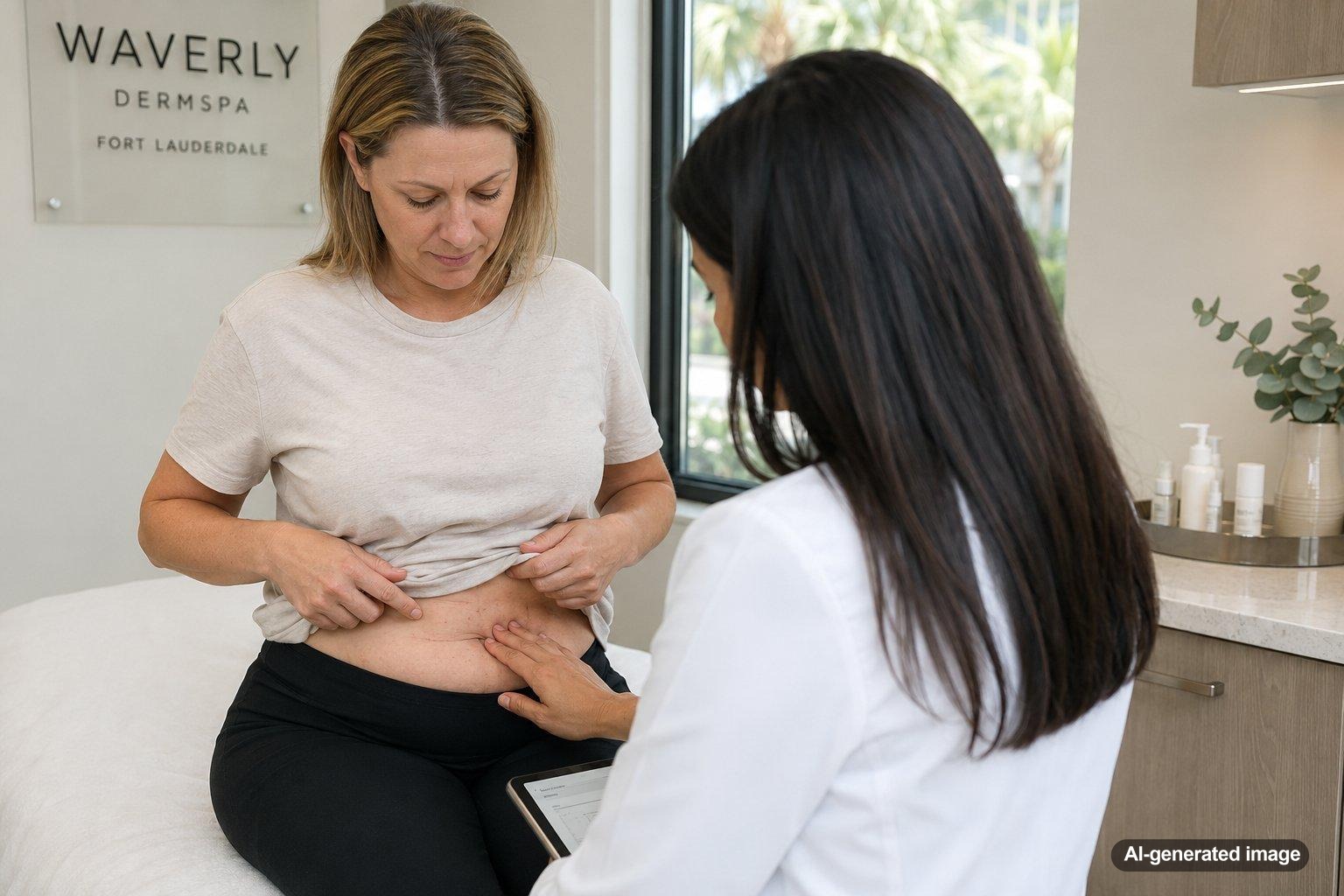
Skin under a belly fold can crack when repeated friction, trapped perspiration, and prolonged dampness weaken the skin barrier. The area may become tender, raw, itchy, or red, and small splits can form when softened skin rubs against itself. This pattern is often associated with a skin-fold rash called intertrigo, but irritation, contact dermatitis, yeast or bacterial overgrowth, eczema, and inverse psoriasis can sometimes look similar.
Because different causes may require different care, recurring or painful cracking deserves a professional evaluation. A dermatologist can examine the pattern, check for infection or inflammation, and recommend treatment that fits the actual cause rather than relying on trial and error.
Quick answer
- Heat, perspiration, and skin-to-skin rubbing are frequent contributors.
- Trapped moisture can soften the skin, making it easier to split or erode.
- Yeast or bacteria may grow more easily in warm, damaged skin folds.
- Inflammatory conditions such as eczema or inverse psoriasis can also affect this area.
- Spreading redness, drainage, odor, significant pain, fever, or repeated cracking should be evaluated by a dermatologist.
What is happening to the skin?
The skin barrier normally helps keep moisture inside the body while blocking irritants and microorganisms. Inside a deep fold, however, perspiration may remain on the skin instead of evaporating. The surfaces can become overly moist, stick together, and rub whenever you walk, bend, exercise, or sit.
This combination of moisture and friction may cause maceration, which means the outer skin becomes softened and fragile. The area can then develop redness, soreness, superficial erosion, or narrow cracks. Once the barrier is disrupted, products that never bothered you before may sting, and yeast or bacteria may have an easier opportunity to multiply.
Common causes and triggers
Moisture and friction
Intertrigo is an inflammatory rash that occurs where skin touches skin. Warm weather, exercise, tight clothing, prolonged sitting, and heavy perspiration can increase moisture and rubbing. Fort Lauderdale’s heat and humidity can make this cycle harder to interrupt, especially when the fold remains damp for much of the day.
Chafing
Repetitive movement can irritate the surface even without an infection. Chafing may begin with burning, tenderness, or redness and progress to peeling, tearing, or bleeding if the friction continues.
Yeast or bacterial overgrowth
Warm, damp folds provide an environment where microorganisms can multiply. Candida yeast is one possible contributor. A yeast-related rash may appear bright red, moist, itchy, or burning, sometimes with smaller spots near the main rash. Bacterial involvement may cause increasing tenderness, drainage, crusting, unpleasant odor, warmth, or rapidly spreading redness.
Appearance alone is not always enough to identify the cause. Using the wrong product can delay appropriate treatment or further irritate already damaged skin.
Irritant or allergic contact dermatitis
Fragranced body wash, cleansing wipes, laundry products, powders, deodorizing sprays, adhesives, and topical medications may irritate sensitive skin. An allergic reaction is also possible, particularly when the rash repeatedly returns after exposure to the same product.
Eczema or inverse psoriasis
Inflammatory skin conditions can develop in body folds. Eczema may cause itching, dryness, sensitivity, and fissures. Inverse psoriasis often appears as smooth, well-defined inflammation in areas where skin touches skin and may have less visible scaling than psoriasis on the elbows or knees.
These conditions may resemble intertrigo or occur alongside it, which is one reason persistent cracking should not be self-diagnosed.
Repeated scratching or overcleaning
Scratching creates additional trauma, while aggressive scrubbing removes protective oils and can deepen irritation. Frequent use of alcohol, peroxide, harsh antiseptics, or heavily fragranced products may also interfere with healing.
What you can do at home
Conservative care focuses on reducing moisture, friction, and irritation while protecting the fragile skin barrier. These measures may help with mild irritation, but they should not replace an examination when the area is open, painful, infected-looking, or repeatedly cracking.
- Clean gently. Use lukewarm water and a mild, fragrance-free cleanser. Avoid scrubbing the fold with a washcloth or exfoliating tool.
- Dry carefully. Pat the area dry with a clean, soft towel. A hair dryer on a cool setting may help dry a difficult-to-reach fold without rubbing.
- Change damp clothing. Replace sweaty garments soon after exercise, outdoor activity, or prolonged time in humid weather.
- Choose breathable fabrics. Soft, moisture-wicking clothing may reduce heat and friction. Avoid tight waistbands that repeatedly press against the irritated area.
- Reduce rubbing. When the skin is intact, a thin layer of a simple, fragrance-free barrier product may help reduce friction. Ask a dermatologist which product is appropriate if the skin is open, weeping, or unusually sensitive.
- Avoid fragranced powders and sprays. These products can clump when wet, irritate cracked skin, or trigger contact dermatitis.
- Do not share towels. Use a clean towel and wash clothing that contacts the affected area, particularly when an infection is possible.
Try not to apply multiple medicated products at once. Antifungal creams, antibiotic ointments, and topical steroids address different problems, and some may worsen irritation or mask the appearance of an infection when used incorrectly. A dermatologist can help you choose a targeted option.
Professional evaluation and treatment options
A dermatologist will usually begin by examining the location, borders, moisture level, scale, odor, tenderness, and pattern of the rash. You may be asked about sweating, new personal-care products, previous episodes, existing skin conditions, and treatments you have already tried.
When the cause is uncertain, testing may include a gentle skin scraping, swab, or culture. Treatment depends on what is found and may involve:
- Barrier-supportive care and strategies to control moisture and friction
- A targeted topical antifungal when yeast or another fungal cause is suspected
- An antibacterial treatment when a bacterial infection is identified
- A carefully selected anti-inflammatory medication for eczema, psoriasis, or significant inflammation
- Reviewing products that may be causing irritant or allergic contact dermatitis
- A longer-term prevention plan for recurrent skin-fold irritation
Prescription strength, product type, and duration depend on the diagnosis, the condition of the skin, and your medical history. Your clinician can help you decide what is appropriate.
When to see a dermatologist
It is worth getting checked when the skin keeps reopening, home care is not helping, or you are unsure whether an infection is present. Seek prompt medical attention for:
- Redness that is spreading beyond the fold
- Increasing warmth, swelling, or pain
- Pus, yellow crusting, drainage, bleeding, or a strong odor
- Blisters, open sores, or rapidly worsening skin breakdown
- Fever, chills, dizziness, or feeling generally unwell
- Darkening tissue, severe tenderness, or pain that seems out of proportion to the visible rash
- Frequent recurrences or involvement of several skin folds
- A rash that persists despite keeping the area clean and dry
Earlier evaluation may be especially important if you have diabetes, reduced circulation, a weakened immune system, or another condition that can affect wound healing.
Frequently asked questions
Is cracking under a belly fold always a yeast infection?
No. Yeast is one possibility, but friction, moisture, irritant dermatitis, eczema, psoriasis, and bacterial infection can cause overlapping symptoms. A dermatologist can evaluate the rash rather than assuming every skin-fold problem is fungal.
Should I use an antifungal cream?
An antifungal may be appropriate when a fungal or yeast-related condition is present, but it will not address every cause of cracking. It is best to ask a clinician before treating an open, painful, recurrent, or uncertain rash.
Can I put deodorant or body powder under the fold?
Fragranced deodorants and powders may sting, irritate broken skin, or trigger contact dermatitis. Powders can also become pasty when mixed with perspiration. A dermatologist can recommend a safer moisture-control approach for your skin.
How can I keep the area dry in humid weather?
Pat the fold dry after bathing, change out of sweaty clothing promptly, choose breathable fabrics, and consider using a cool hair dryer when towel drying is difficult. Avoid excessive rubbing, which can create more cracking.
Why does the same crack keep coming back?
Recurrence may mean that moisture and friction are continuing or that an underlying condition has not been identified. Contact dermatitis, eczema, psoriasis, recurrent infection, and other health factors may contribute. A dermatologist can help clarify the pattern and create a prevention plan.
Can weight loss prevent skin-fold rashes?
Changes in body shape may reduce the depth or rubbing of some folds, but people of many body types can develop intertrigo and chafing. Current symptoms still need gentle skin care and, when persistent, an appropriate medical evaluation.
Ready to get help?
Schedule an appointment or send a message and our team will get back to you.
Prefer to call? 954-666-3736
This article is for educational purposes and is not medical advice. For diagnosis and personalized treatment, please book an appointment with a board-certified dermatologist.
Sources & further reading
- Cleveland Clinic – Intertrigo: What Is It, Causes, Symptoms & Treatment
- DermNet – Intertrigo (Rash in body folds): Causes, Images, and More
- American Academy of Dermatology (AAD) – Rash 101 in adults: When to seek medical treatment
