

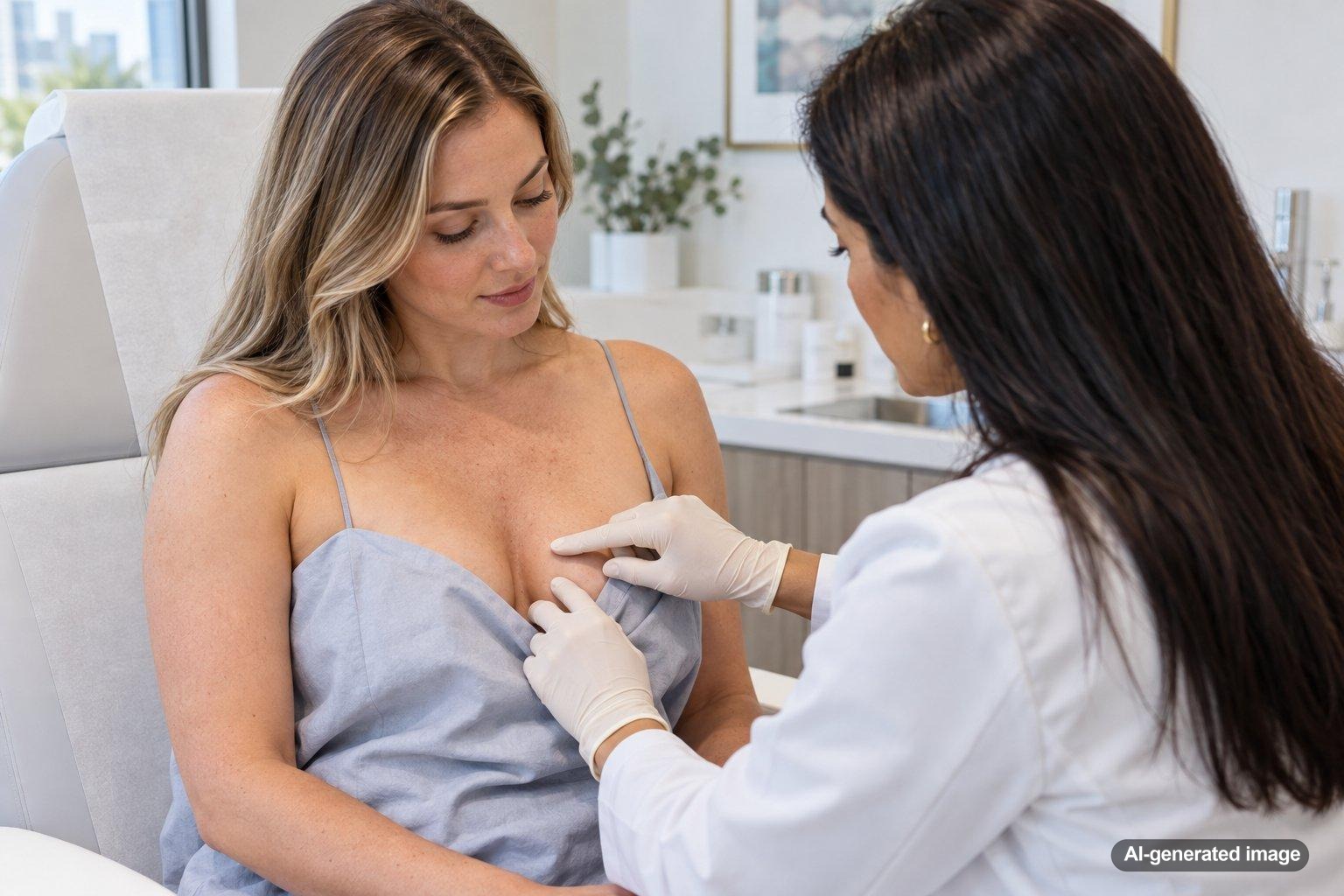
Skin between the breasts can look darker than the surrounding chest for several reasons, and the color difference does not automatically mean something is wrong. Friction, sweating, repeated irritation, prior rashes, and natural differences in pigmentation can all leave this area looking deeper in color. The skin may also become slightly thicker or more noticeable when irritation happens repeatedly.
Because several unrelated skin changes can look similar, the pattern, texture, symptoms, and timing matter. A dermatologist can examine the area if the discoloration is new, persistent, uncomfortable, changing, or difficult to explain.
Quick answer
- Repeated rubbing from skin, bras, or clothing can contribute to gradual darkening.
- Heat and moisture can make the area more prone to irritation.
- Dark marks may remain after redness, chafing, or another episode of inflammation settles.
- Some pigmentation patterns are related to the way the skin naturally responds to friction or irritation.
- New, rapidly changing, thickened, itchy, painful, or spreading discoloration is worth having evaluated.
Why can the skin between the breasts become darker?
The area between and underneath the breasts has a combination of factors that can make pigmentation more noticeable. Skin may rub against skin, a bra edge may repeatedly contact the same spot, and warmth can allow perspiration to remain on the surface longer than it does on more exposed areas of the chest.
When skin is repeatedly irritated, pigment-producing cells may respond by leaving more color behind. This is often called post-inflammatory hyperpigmentation. The original irritation can be subtle enough that some people remember no obvious rash at all.
Common causes and triggers
- Friction: Repeated rubbing from skin contact, bras, sports bras, or close-fitting clothing may gradually darken the area.
- Sweat and moisture: Warm, humid conditions can soften the skin and make it easier to irritate, especially during exercise or hot South Florida weather.
- Previous irritation: A period of redness, chafing, itching, or sensitivity may resolve while leaving darker pigment behind.
- Skincare or fragrance products: Fragrance, body sprays, cleansers, lotions, and other products may irritate sensitive skin in some people.
- Natural pigmentation: Skin folds and areas of repeated contact can naturally appear somewhat darker than nearby exposed skin.
- Changes in skin texture: Darkening that is also noticeably thicker, velvety, scaly, or otherwise different in texture may have a different explanation and deserves a closer look.
Could friction alone cause the discoloration?
Yes, friction can contribute. The effect is usually gradual rather than sudden. Repeated contact can cause low-level irritation, and the skin may respond by producing more visible pigment. This is especially common in areas where skin touches skin or where clothing applies pressure in the same place day after day.
Reducing friction may help prevent additional irritation, although existing pigment can take time to fade and may not disappear completely on its own.
Does sweating make it worse?
Sweat itself does not necessarily cause pigmentation, but prolonged moisture can make skin more vulnerable to friction and irritation. A combination of heat, moisture, and rubbing is often more relevant than any one factor by itself.
People who exercise frequently, wear close-fitting athletic clothing, or spend significant time outdoors in a humid climate may notice that this area becomes irritated more easily.
What can you do at home?
Simple measures that reduce irritation are usually the safest place to start while you observe the area.
- Keep the skin gently clean and dry without aggressive scrubbing.
- Choose breathable, properly fitting bras and clothing when possible.
- Change out of damp workout clothing reasonably soon after exercising.
- Avoid harsh scrubs, abrasive brushes, and repeated rubbing in an attempt to remove the pigment.
- Consider simplifying fragranced products if the area seems sensitive after using them.
- Use a gentle moisturizer if the skin feels dry or easily irritated.
Trying to scrub away darker skin can create more irritation and potentially make pigmentation more noticeable. Strong acids, bleaching products, or multiple active ingredients can also be difficult to tolerate in a skin-fold area.
Can skincare ingredients lighten the area?
Some ingredients used for uneven pigmentation may help in appropriate situations, but the best approach depends on why the skin is darker in the first place. An ingredient that is useful for ordinary post-inflammatory pigmentation may be irritating if the area is already inflamed, sensitive, or affected by another skin condition.
A dermatologist can help distinguish simple pigmentation from an active skin problem before stronger brightening products or office treatments are considered. This can be particularly useful if over-the-counter products have caused burning, peeling, or worsening discoloration.
Professional options for persistent pigmentation
If the discoloration remains after the source of irritation has been addressed, professional care may focus first on identifying the cause and then on managing the pigment safely. Depending on the examination, options may include adjustments to skincare, topical therapies, or selected in-office treatments.
The chest and skin-fold areas can respond differently from facial skin, so treatment intensity and product selection need to be considered carefully. Your clinician can help you decide which approach may be appropriate for your skin tone, sensitivity, and the appearance of the area.
When should you see a dermatologist?
Consider scheduling an evaluation if the discoloration is new without an obvious reason, continues to spread, keeps returning, or comes with symptoms beyond color change.
- The skin becomes painful, persistently itchy, tender, cracked, or raw.
- There is ongoing redness, scaling, drainage, or an unusual odor.
- The area becomes noticeably thicker or develops a distinctly different texture.
- The pigmentation appears rapidly or is changing significantly.
- Similar darkened areas are appearing elsewhere on the body.
- Home care and reducing friction do not seem to help.
A dermatologist can look at both the color and texture of the skin and determine whether the change is primarily pigmentation or whether another process needs attention.
FAQ
Is darker skin between the breasts normal?
Some variation in pigmentation can be normal, particularly in areas exposed to friction, moisture, or skin-to-skin contact. A new or changing pattern is worth discussing with a dermatologist if you’re unsure.
Can a tight bra cause dark skin between my breasts?
Repeated pressure and rubbing from a poorly fitting bra may contribute to irritation and subsequent pigmentation. A better fit and less friction may help reduce ongoing irritation.
Why is the area darker even though there is no rash now?
Color can remain after visible irritation has settled. This type of residual pigmentation can persist longer than the redness or discomfort that originally triggered it.
Should I exfoliate dark skin between my breasts?
Aggressive exfoliation is generally not a good approach for a sensitive skin-fold area because additional irritation may worsen discoloration. Gentle skincare is usually a safer starting point.
Can the discoloration be treated?
Many pigmentation concerns can be managed, but the appropriate approach depends on the cause, skin type, and whether irritation is still active. A dermatologist can evaluate the area before recommending treatment.
Ready to get help?
Schedule an appointment or send a message and our team will get back to you.
Prefer to call? 954-666-3736
This article is for educational purposes and is not medical advice. For diagnosis and personalized treatment, please book an appointment with a board-certified dermatologist.
