

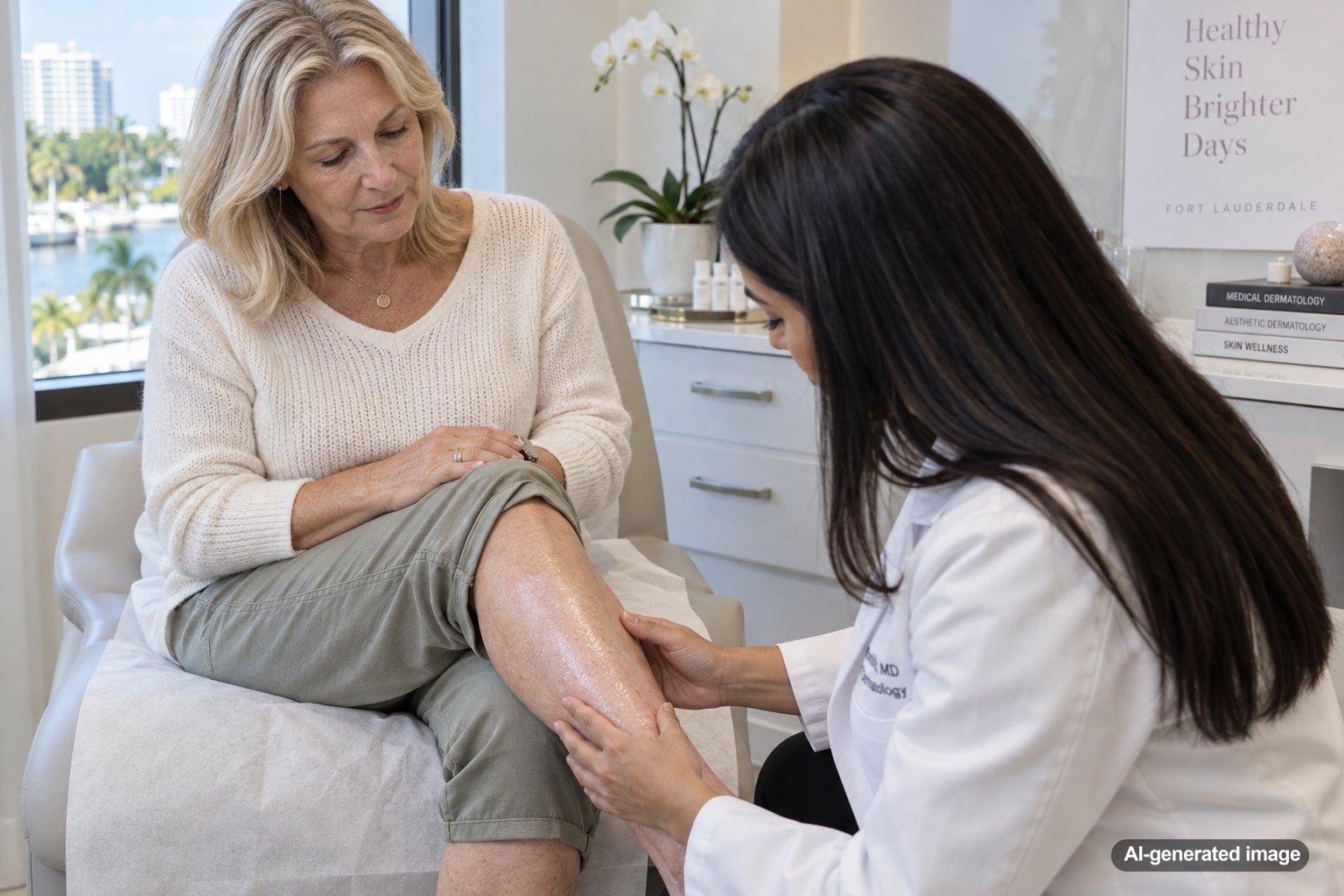
Shiny, tight skin on the shins can happen when the skin is extremely dry, stretched by swelling, or affected by changes in circulation. The appearance alone cannot identify the cause. Clues such as ankle swelling, itching, color changes, discomfort, and whether one or both legs are involved can help a clinician narrow it down.
A new or persistent change deserves attention, particularly when the skin feels firm, becomes discolored, or appears alongside swelling. A dermatologist can examine the skin while coordinating with another medical clinician if the findings suggest an underlying circulation or health concern.
Quick answer
- Very dry skin may look smooth, reflective, or tight, especially after bathing or sun exposure.
- Fluid accumulation can stretch the skin and make the lower legs appear shiny.
- Venous circulation problems may cause ankle swelling, heaviness, itching, visible veins, or brown-red discoloration.
- Firm, progressively tightening skin or other unexplained changes should be evaluated rather than treated as dryness alone.
- Sudden one-sided swelling, warmth, redness, or pain needs prompt medical attention.
What creates the shiny, tight appearance?
Healthy skin has fine lines and a flexible surface. When the outer skin barrier loses water, those lines may become less noticeable and the surface can feel stretched. Swelling beneath the skin can create a similar effect by placing tension on the tissue from below.
Light also reflects more evenly from skin that is taut or smooth, which can create a glossy appearance. This is why the combination of shine and tightness should be considered together with texture, swelling, color, sensation, and how quickly the change developed.
Common causes and contributing factors
- Dry skin: Hot showers, strong cleansers, low humidity, sun exposure, aging, and insufficient moisturizing can weaken the skin barrier.
- Temporary swelling: Long periods of standing, sitting, travel, warm weather, and high salt intake may contribute to fluid collecting around the ankles and lower legs.
- Venous insufficiency: When leg veins have difficulty returning blood upward, swelling and skin changes may develop. Possible clues include heaviness, aching, visible veins, itching, and rusty-brown discoloration near the ankles.
- Inflammation related to venous disease: Persistent fluid and circulation changes may irritate the skin, sometimes leading to scaling, redness, itching, firmness, or sores.
- Medication or medical factors: Certain medicines and conditions involving the heart, kidneys, liver, lymphatic system, or thyroid may be associated with swelling or skin changes. A medical clinician should assess these possibilities.
- Less common skin or connective tissue conditions: Progressive hardening or tightening can occasionally have causes that require a focused dermatologic and medical evaluation.
What you can safely do at home
If the change is mild, affects both legs evenly, and is not accompanied by concerning symptoms, gentle skin care can support the skin barrier while you arrange an evaluation if needed.
- Take short, lukewarm showers instead of long, hot ones.
- Use a mild, fragrance-free cleanser only where necessary.
- Apply a thick fragrance-free cream or ointment while the skin is slightly damp.
- Avoid scrubbing, exfoliating acids, fragranced lotions, and aggressive massage over swollen or irritated skin.
- Notice whether swelling changes after prolonged sitting, standing, or leg elevation.
- Photograph the area in consistent lighting so you can track changes in color, swelling, and texture.
Do not start compression stockings solely on the basis of shiny skin. Compression can be useful for some circulation problems, but it is not appropriate for every person. A clinician can determine whether it is safe and what level may be suitable.
How a dermatologist may evaluate the change
A dermatologist may compare both legs and assess dryness, pitting swelling, firmness, temperature, color, visible veins, scaling, and any open areas. Questions about timing, discomfort, itching, medications, travel, activity, and medical history can provide important context.
Depending on the findings, the next steps may include a skin-care plan, treatment for inflammation, or referral to a primary care, vascular, rheumatology, or other medical specialist. Testing is selected according to the suspected cause rather than the shiny appearance alone.
When to see a dermatologist
Schedule an evaluation when the change persists, keeps returning, spreads, or is accompanied by itching, scaling, discoloration, tenderness, thickening, or sores. It is also worth getting checked when the skin is becoming progressively firmer or movement around the ankle feels restricted.
Seek prompt medical care for sudden swelling in one leg, especially with pain, warmth, or redness. Emergency care may be appropriate if leg swelling occurs with chest pain, shortness of breath, faintness, or coughing blood. Rapidly spreading redness, severe pain, fever, drainage, or an open wound also warrants timely assessment.
FAQ
Can dehydration make my shins look shiny?
Dry skin can look smooth, taut, or reflective, but drinking more water alone may not correct a damaged skin barrier. Gentle cleansing and regular use of a rich moisturizer may help when surface dryness is responsible.
Does shiny skin always mean poor circulation?
No. Dryness and temporary swelling can also create shine. Circulation changes become more likely when shine occurs with persistent ankle swelling, heaviness, visible veins, discoloration, itching, or skin thickening.
Why are my shins shiny at the end of the day?
Fluid may accumulate in the lower legs after prolonged standing or sitting. If the pattern is frequent, worsening, one-sided, or accompanied by other symptoms, a medical evaluation is appropriate.
Should I exfoliate shiny skin on my legs?
Avoid aggressive exfoliation until the cause is clearer. Scrubs and strong acids can irritate dry or inflamed skin and may be unsafe over swollen, fragile, or discolored areas.
Can I use compression socks?
Compression may help certain venous conditions, but the correct type and pressure depend on your circulation and medical history. Ask a qualified clinician before using medical-grade compression.
Which type of doctor should I see?
A dermatologist can evaluate the skin changes. If swelling or circulation appears to be involved, primary care or a vascular specialist may also be needed.
Ready to get help?
Schedule an appointment or send a message and our team will get back to you.
Prefer to call? 954-666-3736
This article is for educational purposes and is not medical advice. For diagnosis and personalized treatment, please book an appointment with a board-certified dermatologist.
Sources & further reading
- DermNet – Venous insufficiency
- MedlinePlus (NIH) – Edema
- American Academy of Dermatology (AAD) – Dry skin: Diagnosis and treatment
