

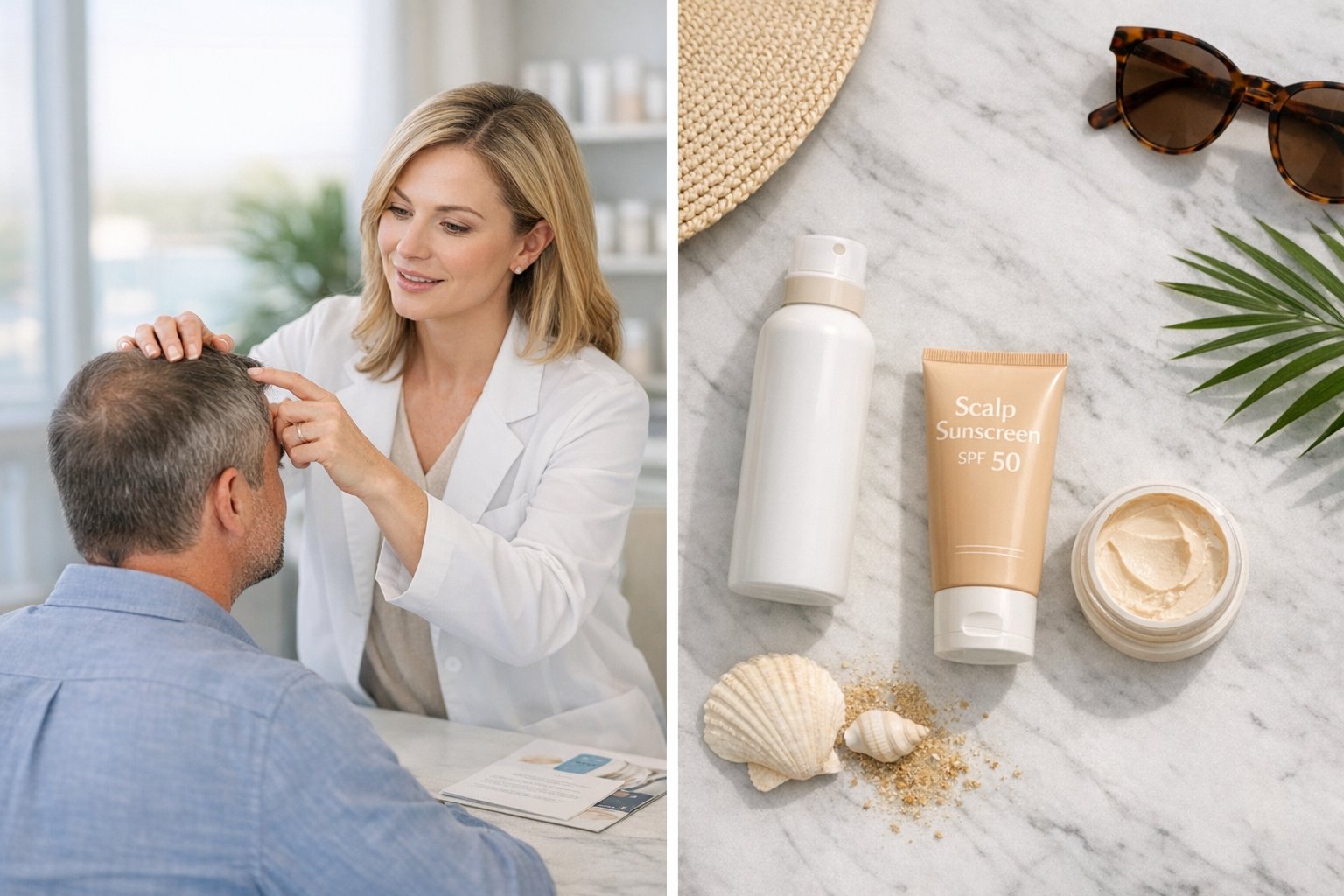
Your scalp is skin, and it can sunburn just as easily as your face. For many people, the most exposed spots are the hair part, hairline, and any areas where hair is thinning. The good news is that scalp protection can be simple, comfortable, and easy to fit into your routine.
Quick answer
- Protect your part line and hairline daily when you will be outdoors, especially midday.
- Choose a format you will actually use: lotion along the part, or a spray or powder designed for scalp and hair.
- Add physical coverage: a hat is often the easiest option for long outdoor time.
- Reapply when you are outside for extended periods, after sweating, or after swimming.
What it is
Scalp sunscreen simply means using sun protection on the skin of your scalp. Because hair can hide the scalp, it is easy to miss. But the scalp can still get significant sun exposure, especially at the part line, temples, and the top of the head. Sun exposure can lead to redness, tenderness, peeling, and long-term sun damage, just like other areas of skin.
Common causes and triggers
- A visible part line, especially a wide or changing part
- Thinning hair at the crown, temples, or hairline
- Short haircuts or shaved styles
- Outdoor activities (walking, tennis, boating, beach time)
- Midday sun and reflective surfaces (water, sand, pavement)
- Recent scalp treatments or irritation that make skin feel more sensitive
What you can do at home
Start with the approach that feels realistic for your day to day. Consistency matters more than finding a perfect product.
- For a straight part line: Use a small amount of broad-spectrum sunscreen and apply directly along the part with a fingertip or a clean makeup brush, then gently pat in.
- For thinning areas at the crown: Consider a spray sunscreen labeled for scalp use, applied in short bursts and then lightly pressed in to reduce residue.
- For oily hair or dark hair concerns: A tinted or non-tinted powder sunscreen can be a comfortable option and may feel less greasy.
- For long outdoor time: Pair sunscreen with a hat. Physical coverage often makes protection easier and more reliable.
- For sensitive scalps: Choose fragrance-free options when possible and avoid applying to broken or actively irritated skin.
If you are using styling products, it can help to apply scalp protection first, let it set briefly, and then style as usual.
Professional options
If scalp sunburns keep happening, or you are noticing persistent redness, rough spots, or areas that do not seem to heal, an in-office evaluation can help clarify what is going on. Common professional options include:
- Skin exam of the scalp: A dermatologist can examine hard-to-see areas, including the part line and crown.
- Guidance on product selection: Recommendations can be tailored to your hair type, scalp sensitivity, and lifestyle.
- Evaluation of spots of concern: If a lesion looks unusual, your clinician can advise next steps, which may include close monitoring or biopsy when appropriate.
When to see a dermatologist
Book a visit if you notice any of the following on your scalp:
- A spot that is changing in size, shape, or color
- A sore that does not heal
- Persistent bleeding, crusting, or scabbing
- A rough or scaly patch that keeps returning
- New tenderness, itching, or pain in one specific area
- Frequent sunburns on the scalp despite protection
FAQ
Do I really need sunscreen if I have thick hair?
You may not need it every day everywhere, but many people still expose the scalp at the part line and hairline. If those areas see sun, protecting them is a smart habit.
What SPF should I use on my scalp?
Many dermatologists recommend broad-spectrum SPF 30 or higher for daily outdoor exposure. The best choice is one you can apply comfortably and consistently.
Will scalp sunscreen make my hair greasy?
Some lotions can feel heavy in hair, which is why sprays and powders can be easier. Using a small amount only where the scalp is exposed can also help.
Can I use my face sunscreen on my scalp?
Often, yes, especially along a part line. If it feels too oily or leaves residue, switching to a scalp-friendly spray or powder may be more comfortable.
How often should I reapply?
If you are outside for extended periods, sweating, or swimming, reapplication is typically needed. Hats and seeking shade can reduce how much reapplication you need.
Ready to get help?
Schedule an appointment or send a message and our team will get back to you.
Prefer to call? 954-666-3736
Disclaimer: This article is for educational purposes and is not medical advice. For diagnosis and personalized treatment, please book an appointment with a board-certified dermatologist.
Sources & further reading
- American Academy of Dermatology (AAD): How to select a sunscreen
- The Skin Cancer Foundation: Sunscreen guidance
