

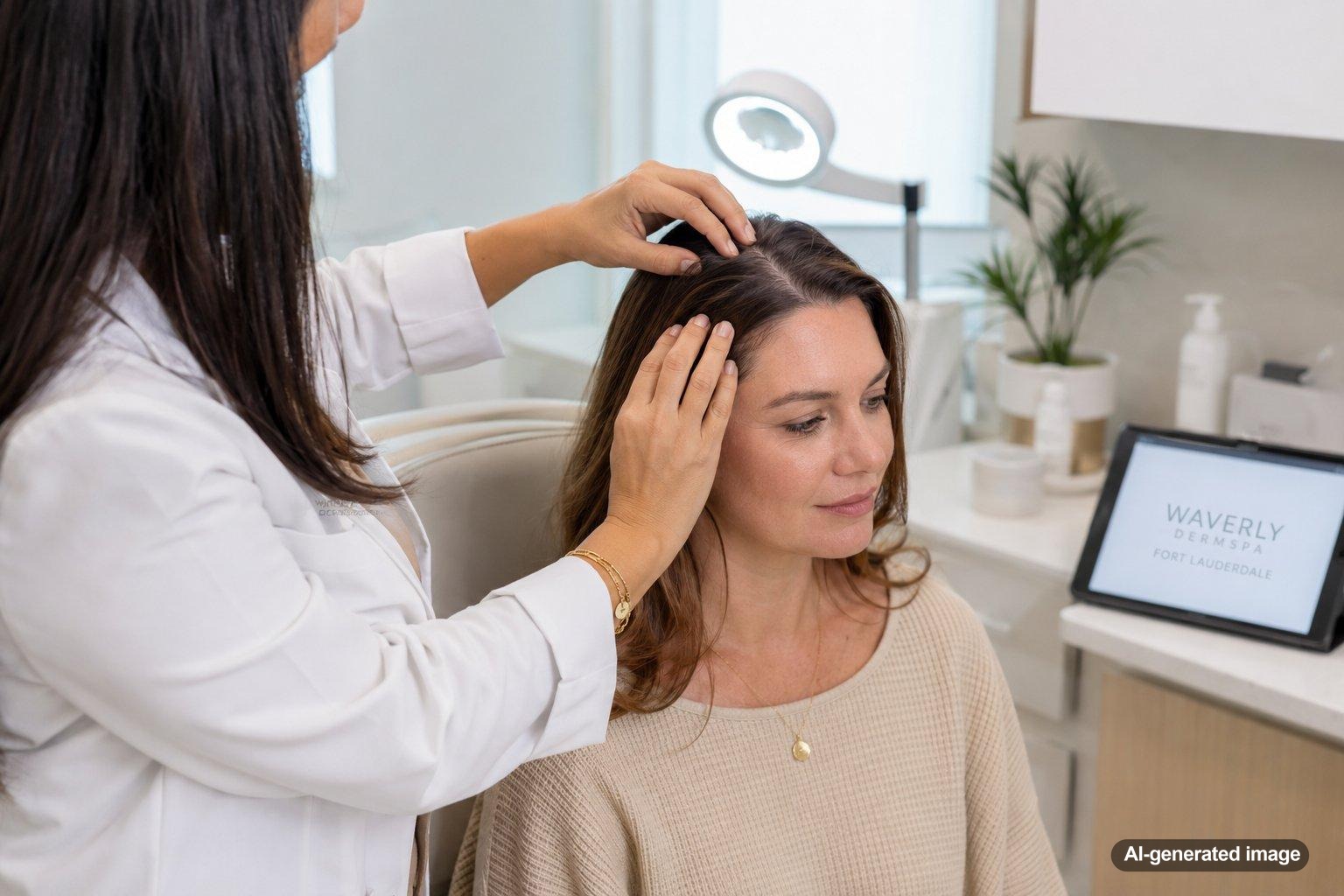
Scalp psoriasis and dandruff can look similar at first: flakes on your hair, shoulders, or scalp, often with itching and irritation. The difference is that dandruff is usually related to scalp oil, yeast activity, and irritation, while scalp psoriasis is an inflammatory skin condition that can create thicker, more defined plaques. Because both can overlap with seborrheic dermatitis, the safest answer is not to self-diagnose, but to look for patterns and get checked when symptoms persist.
In general, dandruff tends to cause loose white or yellowish flakes and mild to moderate itch. Scalp psoriasis is more likely to cause thicker scale, visible patches, soreness, bleeding from scratching, or flaking that extends beyond the hairline. A dermatologist can evaluate your scalp and help distinguish between these possibilities.
Quick answer
- Dandruff often causes small, loose flakes with itch and may improve with consistent anti-dandruff shampoo use.
- Scalp psoriasis may cause thicker, more stubborn scale, raised patches, or plaques that can extend to the forehead, neck, or behind the ears.
- Seborrheic dermatitis can sit in the middle, causing inflamed, greasy-looking scale on the scalp and oily areas of the face.
- Home care can help mild flaking, but worsening, painful, bleeding, or persistent symptoms should be evaluated.
- You do not have to know the diagnosis before coming in. A dermatologist can help sort out what is happening.
| Clue | More typical of dandruff | More typical of scalp psoriasis |
|---|---|---|
| Flakes | Loose, fine, white or yellowish flakes | Thicker scale that may cling to raised patches |
| Scalp appearance | May look oily, mildly red, or irritated | May show well-defined patches or plaques |
| Location | Usually limited to the scalp, though related irritation may affect oily areas | Can extend past the hairline, behind the ears, or onto the neck |
| Symptoms | Itching and visible flakes | Itching, soreness, thicker scale, cracks, or bleeding from scratching |
| Response to shampoo | Often improves with appropriate medicated shampoos | May need prescription scalp treatment or a more tailored plan |
Why the two can be confusing
Both dandruff and scalp psoriasis can cause flakes, itch, and embarrassment, so it is understandable if you are unsure which one you are dealing with. Dandruff is commonly linked with seborrheic dermatitis, a condition that affects oil-rich areas such as the scalp, eyebrows, sides of the nose, eyelids, ears, chest, and upper back. It can be stubborn, but it is not contagious.
Scalp psoriasis is different. It is associated with immune-driven inflammation and can create plaques on the scalp. These plaques may be subtle or more noticeable, and they can sometimes resemble stubborn dandruff. Some people also have psoriasis elsewhere, such as the elbows, knees, nails, or skin folds, but scalp symptoms may be the main reason they seek care.
Common causes or triggers
The causes and triggers are not the same for everyone, but the pattern can offer useful clues.
- Dandruff and seborrheic dermatitis may be influenced by scalp oil, yeast that naturally lives on the skin, stress, weather changes, irritation from products, and inconsistent scalp cleansing.
- Scalp psoriasis may flare with stress, skin injury or scratching, illness, certain medications, seasonal changes, harsh products, or other individual triggers.
- Both conditions can worsen when the scalp barrier is irritated, which is why aggressive scrubbing, picking, or frequent harsh treatments can backfire.
What you can do at home
For mild flaking, conservative scalp care is a reasonable first step. Choose gentle hair products, avoid scratching, and give medicated dandruff shampoos enough consistent use to see whether they help. Ingredients in over-the-counter shampoos may include zinc pyrithione, selenium sulfide, ketoconazole, salicylic acid, or coal tar. Different scalps tolerate different ingredients, so stop a product if it causes burning, significant stinging, or a rash.
If you have textured, curly, color-treated, or chemically processed hair, shampoo frequency and application time may need to be adjusted to reduce dryness and irritation. Try to apply treatment shampoos mainly to the scalp rather than the hair shaft when possible, and follow with appropriate conditioning for your hair type.
Professional options
When symptoms are persistent, spreading, painful, or unclear, a dermatologist can examine the scalp and look for clues that are hard to see on your own. In some cases, professional options may include prescription shampoos, topical anti-inflammatory solutions, scale-softening treatments, antifungal treatments when seborrheic dermatitis is suspected, or a broader psoriasis care plan when psoriasis is present.
Because scalp conditions can overlap, treatment is most helpful when it matches the actual diagnosis. A product that helps dandruff may not be enough for scalp psoriasis, and a psoriasis plan may be different from a seborrheic dermatitis plan. Your clinician can help you decide what is appropriate for your scalp, hair type, skin tone, and symptom pattern.
When to see a dermatologist
It is worth booking an appointment if flakes keep returning despite consistent care, if scale is thick or painful, if your scalp bleeds from scratching, if you notice hair shedding with inflammation, or if the rash spreads beyond the scalp. You should also seek evaluation if you have joint pain, nail changes, a history of psoriasis, or scalp symptoms that are affecting your sleep, confidence, or daily routine.
A visit is especially helpful if you are unsure whether you have dandruff, seborrheic dermatitis, scalp psoriasis, eczema, contact dermatitis, or another scalp condition. You do not need to arrive with the answer. The goal is to understand what your scalp is showing and choose a plan that makes sense.
FAQ
Can dandruff turn into scalp psoriasis?
Dandruff does not simply turn into psoriasis. However, seborrheic dermatitis and psoriasis can look similar, and some people can have overlapping features. If the pattern changes or does not respond to usual care, an exam can help clarify what is happening.
Is scalp psoriasis contagious?
No. Scalp psoriasis is not contagious. Dandruff and seborrheic dermatitis are not considered contagious either, even though yeast that naturally lives on skin can play a role in seborrheic dermatitis.
Can scratching make scalp psoriasis worse?
Scratching can irritate the skin barrier and may worsen inflammation or lead to bleeding. If itch is strong enough that you keep scratching, it is a good reason to see a dermatologist.
Will anti-dandruff shampoo help scalp psoriasis?
Some over-the-counter shampoos may help reduce scale or itch for some people, but scalp psoriasis often needs a more targeted plan. If shampoo helps only briefly or not at all, professional evaluation is reasonable.
Can scalp psoriasis cause hair loss?
Inflammation, heavy scale, scratching, and harsh removal of scale may contribute to shedding in some cases. A dermatologist can evaluate whether hair changes are related to inflammation, hair practices, another scalp condition, or a separate hair loss issue.
Ready to get help?
Schedule an appointment or send a message and our team will get back to you.
Prefer to call? 954-666-3736
This article is for educational purposes and is not medical advice. For diagnosis and personalized treatment, please book an appointment with a board-certified dermatologist.
Sources & further reading
- National Psoriasis Foundation – Scalp Psoriasis: Symptoms, Causes and Treatment
- American Academy of Dermatology (AAD) – Scalp Psoriasis: Overview
- Mayo Clinic – Dandruff: Symptoms and Causes
- DermNet – Sebopsoriasis
