

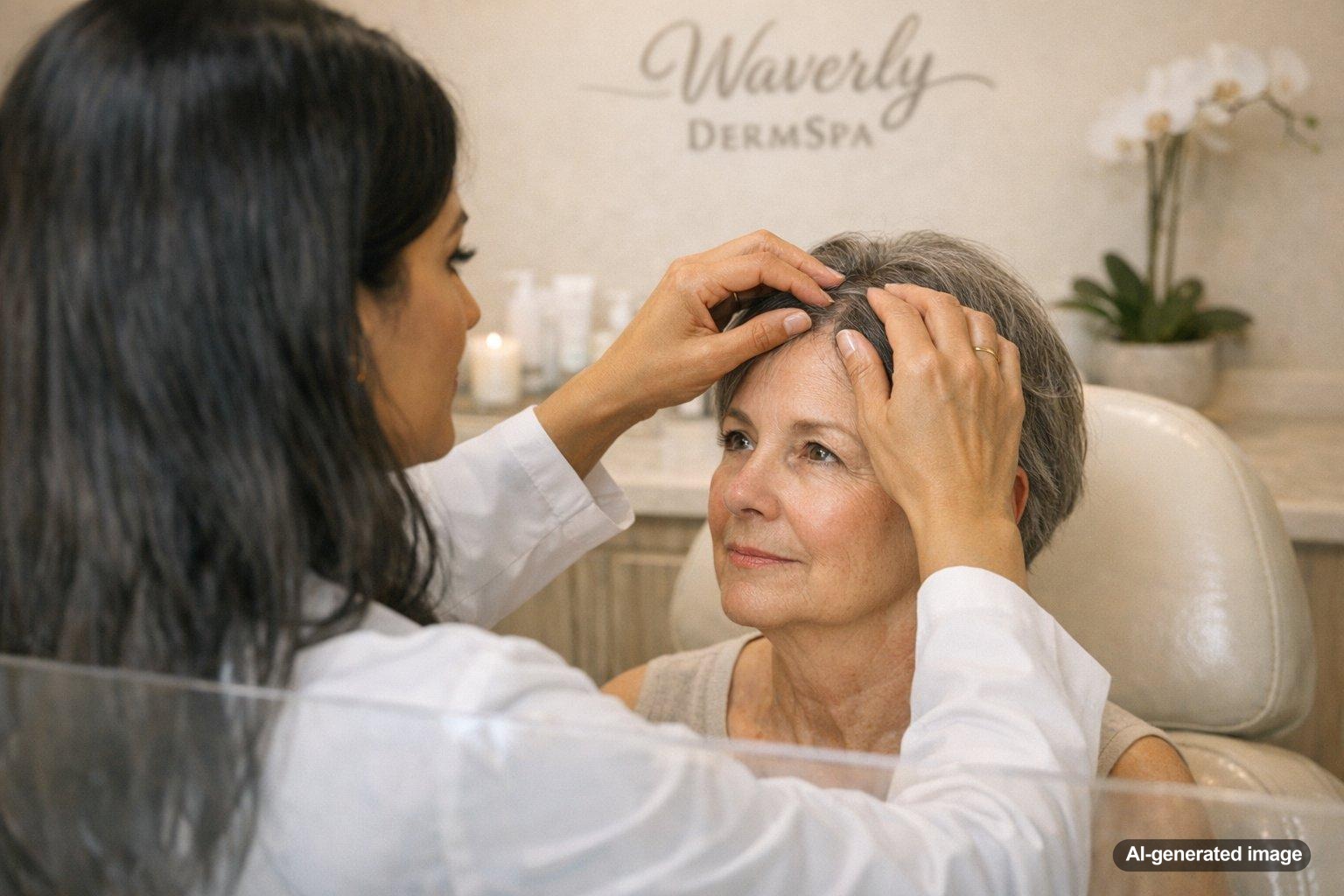
Scalp psoriasis can feel frustrating because it is visible, uncomfortable, and often difficult to care for under the hair. Flaking, itching, redness, and thick scale may come and go, and the right routine often depends on how irritated the scalp is and whether other areas of skin are involved.
A calm, consistent approach can make scalp care feel more manageable. Gentle hair practices, thoughtful product choices, and a dermatologist’s evaluation can help clarify whether symptoms are related to psoriasis, another scalp condition, or a combination of factors.
Quick answer
- Scalp psoriasis may cause itching, flaking, thick scale, redness, soreness, or plaques that extend beyond the hairline.
- It can look like dandruff, seborrheic dermatitis, eczema, or fungal conditions, so an exam can be helpful.
- A gentle routine focuses on softening scale, reducing friction, avoiding scratching, and using treatments as directed.
- Common options include medicated shampoos, topical prescriptions, light-based approaches, or broader psoriasis treatments when appropriate.
- See a dermatologist if symptoms bleed, hurt, spread, cause hair shedding, or do not improve with careful home care.
What scalp psoriasis is
Scalp psoriasis is an inflammatory skin condition that can affect part of the scalp or, for some people, a larger area. It may appear as dry, thickened, scaly patches that can be itchy or tender. The scale may look silvery, white, gray, or flaky, and redness can appear different depending on skin tone.
Because hair covers the area, scalp psoriasis can be harder to treat than psoriasis on more exposed skin. Products need to reach the scalp, not just the hair, and irritation from scratching, tight hairstyles, or harsh products may make symptoms feel worse.
Common causes or triggers
Psoriasis is linked to immune system activity and skin cell turnover. Flares can vary from person to person, and identifying patterns may help you and your dermatologist build a practical plan.
- Stress, illness, or changes in sleep can be associated with flares for some people.
- Cold, dry weather or travel between climates may make dryness and scaling more noticeable.
- Scratching, picking, tight hairstyles, or rough brushing can irritate the scalp.
- Some hair products, fragrances, dyes, or styling practices may aggravate sensitive skin.
- Alcohol use, smoking, or certain medications may be relevant for some patients and should be discussed with a clinician.
What you can do at home
Home care should be gentle, consistent, and realistic. The goal is to reduce irritation and support the scalp barrier while avoiding habits that can worsen discomfort.
- Use a gentle shampoo routine. Choose a mild shampoo for regular washing, and avoid aggressively scrubbing the scalp.
- Consider medicated shampoos carefully. Some over-the-counter shampoos may help with scale or itching, but they can be drying. Follow label directions and stop if irritation increases.
- Soften scale before removing it. Do not pick thick scale. Gentle softening can make flakes easier to loosen without scraping the skin.
- Avoid scratching. Scratching can lead to bleeding, soreness, and more irritation.
- Be thoughtful with styling. Tight ponytails, extensions, heat tools, harsh dyes, and fragranced styling products may bother an inflamed scalp.
- Track patterns. Note whether flares seem linked to travel, stress, product changes, weather, or recent illness.
Professional options
A dermatologist can evaluate the scalp, confirm what may be contributing to symptoms, and recommend a plan based on severity, hair type, lifestyle, and other health considerations. Common options include medicated shampoos, scalp solutions, foams, oils, topical anti-inflammatory medications, light-based treatment, or broader psoriasis medications when scalp symptoms are part of more widespread psoriasis.
If hair shedding is present, your dermatologist can also look for other contributors. In many cases, shedding related to scalp inflammation or scratching may improve when irritation is better controlled, but treatment plans should be individualized.
When to see a dermatologist
It is worth getting checked if symptoms are persistent, painful, spreading, or affecting your confidence or daily comfort. You should also schedule an evaluation if you notice bleeding, open areas, significant tenderness, drainage, sudden hair shedding, nail changes, joint stiffness, or symptoms that do not respond to careful over-the-counter care.
For Fort Lauderdale residents, snowbirds, and international visitors, a dermatologist visit can be especially helpful if a flare begins while traveling or if your usual products are not working in South Florida’s heat, humidity, sun exposure, or frequent swimming conditions.
FAQ
Is scalp psoriasis the same as dandruff?
Not always. Scalp psoriasis can cause flakes, but it may also cause thicker scale, inflamed patches, soreness, or plaques that extend beyond the hairline. Dandruff and seborrheic dermatitis can overlap in appearance, so an exam can help clarify the cause.
Can scalp psoriasis cause hair loss?
Scalp psoriasis itself may be associated with temporary shedding, especially when there is heavy scale, scratching, or inflammation. A dermatologist can evaluate whether psoriasis, irritation, medication, styling practices, or another condition may be contributing.
Should I wash my hair more or less often?
There is no single schedule that fits everyone. Some scalps feel better with more frequent gentle washing, while others become dry or irritated. Your dermatologist can help tailor shampoo frequency and treatment timing to your scalp and hair type.
Can I color my hair if I have scalp psoriasis?
Hair color, bleach, fragrance, and chemical services may irritate an active flare. If your scalp is cracked, bleeding, or very tender, it is best to pause and ask your dermatologist when it may be safer to resume.
When should I stop trying over-the-counter products?
If symptoms are worsening, painful, bleeding, spreading, or not improving after careful use, schedule a dermatology visit. Prescription options or a different diagnosis may need to be considered.
Ready to get help?
Schedule an appointment or send a message and our team will get back to you.
Prefer to call? 954-666-3736
Disclaimer
This article is for educational purposes and is not medical advice. For diagnosis and personalized treatment, please book an appointment with a board-certified dermatologist.
Sources & further reading
- American Academy of Dermatology (AAD) – Scalp psoriasis: Symptoms
- National Psoriasis Foundation – Scalp Psoriasis: Symptoms, Causes & Treatment
- Mayo Clinic – Psoriasis – Symptoms and causes
