

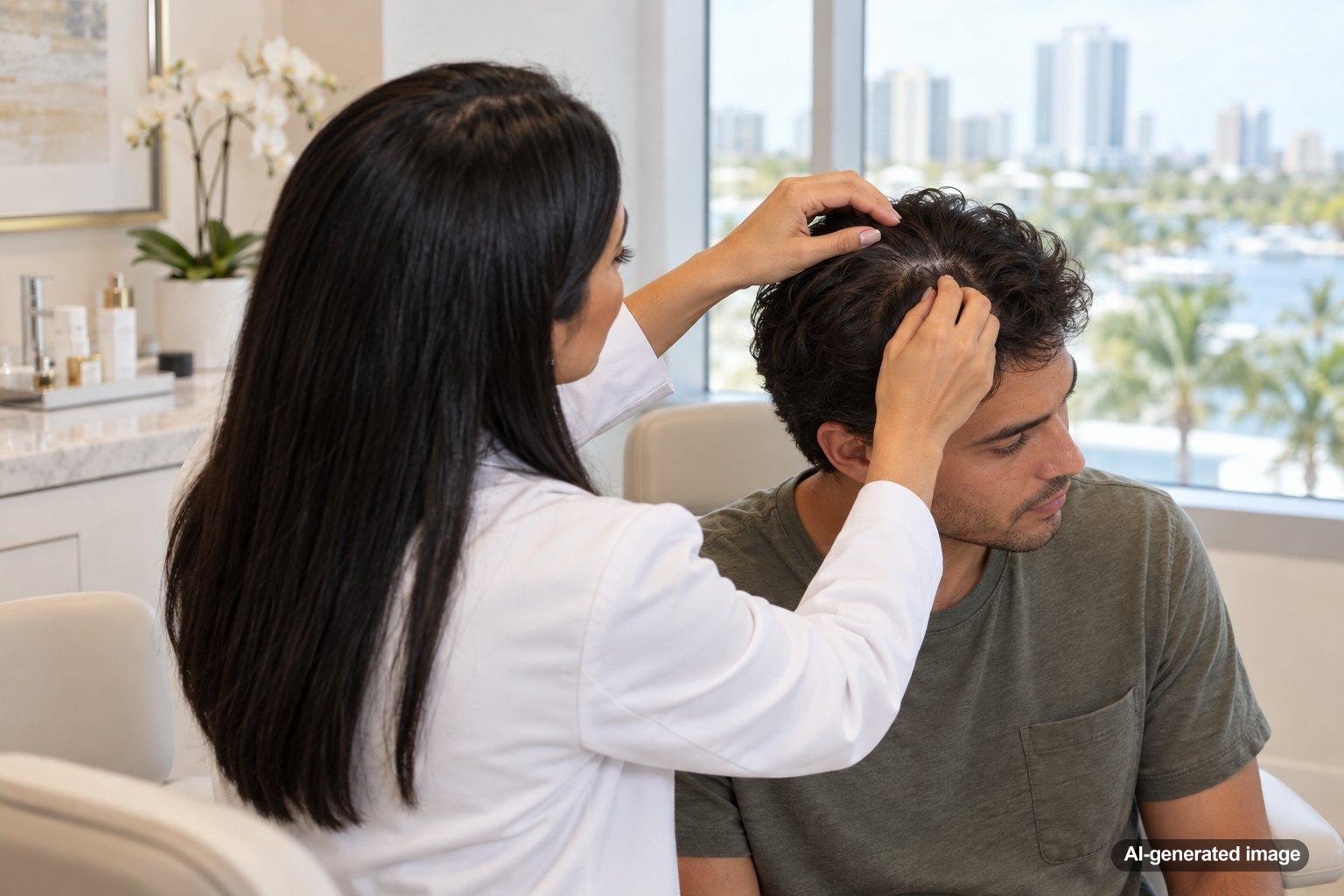
Noticing small pimples on your scalp after a sweaty workout, a hot day outside, or time in a humid environment can be frustrating. Sweat itself does not automatically cause acne, but the combination of moisture, oil, friction, hair products, and prolonged heat can create conditions that make scalp bumps more likely. Depending on how the spots look and feel, they may be related to clogged follicles, irritation, acne, or folliculitis.
Because several scalp conditions can look remarkably similar, recurring or uncomfortable bumps are worth evaluating rather than assuming every spot is ordinary acne.
Quick answer
- Sweat can mix with oil, dead skin, and hair products around the follicles.
- Heat, moisture, hats, helmets, and other friction can aggravate the scalp.
- Some acne-like scalp bumps may actually be folliculitis, which involves inflammation or infection of a hair follicle.
- Showering and shampooing after heavy sweating may help reduce buildup and prolonged moisture.
- Persistent, painful, spreading, or repeatedly recurring bumps should be evaluated by a dermatologist.
Why sweating can be followed by scalp pimples
Your scalp contains many hair follicles along with oil-producing glands. After heavy sweating, moisture can remain trapped against the scalp, particularly under thick hair, hats, workout headbands, helmets, or other headwear. Sweat may also combine with natural oil, dead skin cells, styling products, and environmental debris.
That combination does not necessarily create a breakout on its own, but it can contribute to an environment where follicles become clogged or irritated. Friction can add another layer of irritation, especially when sweaty headwear repeatedly rubs the same areas.
Could the bumps be folliculitis instead of acne?
Possibly. Folliculitis can resemble an acne breakout because it produces bumps around hair follicles. It can occur when follicles become inflamed or infected, and hot, damp conditions may make follicles more vulnerable to irritation. A dermatologist can distinguish folliculitis from acne and from other scalp conditions that may look similar.
Clues that deserve professional evaluation include bumps that are consistently itchy, tender, crusted, filled with pus, or concentrated around individual hairs. These features do not confirm a particular condition on their own, but they can help your dermatologist decide what should be examined more closely.
Other common triggers that may contribute
- Occlusive headwear: Hats, helmets, scarves, and workout headbands can hold heat and moisture against the scalp.
- Friction: Repeated rubbing can irritate follicles, especially when skin is already warm and damp.
- Hair products: Oils, pomades, conditioners, dry shampoo, and styling products may leave residue on the scalp or near the hairline.
- Delayed washing: Allowing sweat and product residue to remain on the scalp for long periods may aggravate some people’s skin.
- Hot and humid weather: Fort Lauderdale’s warm climate can mean more frequent sweating and longer periods of scalp moisture.
- Individual skin tendencies: People who are already prone to acne, irritation, or follicle inflammation may notice bumps more readily after sweating.
What you can do at home
Start with simple habits designed to reduce prolonged moisture, residue, and friction. You do not need to aggressively scrub your scalp, and harsh cleansing can sometimes make irritation worse.
- Shampoo after workouts or episodes of heavy sweating when practical.
- Use a gentle shampoo that cleans the scalp without leaving it feeling excessively dry or tight.
- Rinse shampoo and conditioner thoroughly, especially around the hairline and back of the scalp.
- Wash hats, helmet liners, headbands, pillowcases, and other items that regularly contact your scalp.
- Avoid picking or squeezing scalp bumps, which can increase irritation and make the area harder to evaluate.
- Consider temporarily simplifying oily or heavy styling products if breakouts consistently occur where those products touch the skin.
If you exercise frequently, you may also find it helpful to let the scalp dry rather than leaving damp hair under a hat or other close-fitting headwear for an extended period.
What a dermatologist may look for
If the bumps keep returning, a dermatologist can examine their distribution, appearance, and relationship to individual hair follicles. The evaluation may consider acne, several forms of folliculitis, product-related irritation, and other inflammatory scalp conditions.
Treatment depends on what is actually causing the bumps. Professional options may include adjustments to your cleansing or hair-care routine, topical treatments, or prescription therapy when medically appropriate. If an infection or another medical scalp condition is suspected, your dermatologist can determine whether additional testing or targeted treatment is needed.
When to see a dermatologist
Consider making an appointment if scalp bumps are persistent, frequently recurring, painful, very itchy, draining, crusting, or spreading despite basic changes to your routine. You should also seek evaluation if you notice associated hair loss, significant swelling, worsening tenderness, or another scalp change that concerns you.
A dermatologist can also help when you simply cannot tell whether the spots are acne, folliculitis, irritation, or something else. Similar-looking scalp conditions can require different approaches, so an accurate diagnosis matters when the problem does not settle down.
Frequently asked questions
Does sweat clog scalp pores?
Sweat is not necessarily a direct cause of clogged follicles. However, sweat can combine with oil, dead skin, and product residue while heat and friction irritate the scalp. Together, these factors may contribute to breakouts in people who are susceptible.
Should I wash my hair every time I sweat?
There is no single washing schedule that suits every scalp or hair type. After significant sweating, cleansing or thoroughly rinsing the scalp can help remove sweat and residue. If frequent shampooing leaves your scalp dry or irritated, a dermatologist can help you choose a routine that balances cleansing with scalp comfort.
Can a workout hat cause scalp pimples?
Close-fitting headwear can contribute to heat, moisture, and friction. If bumps appear where a hat, helmet, or headband touches your scalp, keeping that item clean and allowing the scalp to dry after exercise may help.
Why are my scalp bumps itchy?
Itching can occur with several scalp conditions, including irritation and some forms of folliculitis. Itching alone cannot identify the cause. Recurrent itchy bumps are worth having examined, especially if they are tender, crusted, or spreading.
Can hair products cause bumps around my hairline?
Some heavier oils, pomades, styling creams, or other products may contribute to clogged or irritated skin in susceptible people. If bumps consistently appear where a specific product touches the scalp or hairline, simplifying your routine can help you identify a possible trigger.
When should I stop trying to manage the bumps myself?
If basic changes such as washing after heavy sweating, cleaning headwear, and reducing friction do not help, or if the bumps become painful or keep returning, a dermatologist can evaluate the scalp and recommend appropriate next steps.
Ready to get help?
Schedule an appointment or send a message and our team will get back to you.
Prefer to call? 954-666-3736
This article is for educational purposes and is not medical advice. For diagnosis and personalized treatment, please book an appointment with a board-certified dermatologist.
Sources & further reading
- American Academy of Dermatology (AAD) – Acne-like breakouts could be folliculitis
- Cleveland Clinic – Folliculitis: Appearance, Causes, Symptoms & Treatment
