

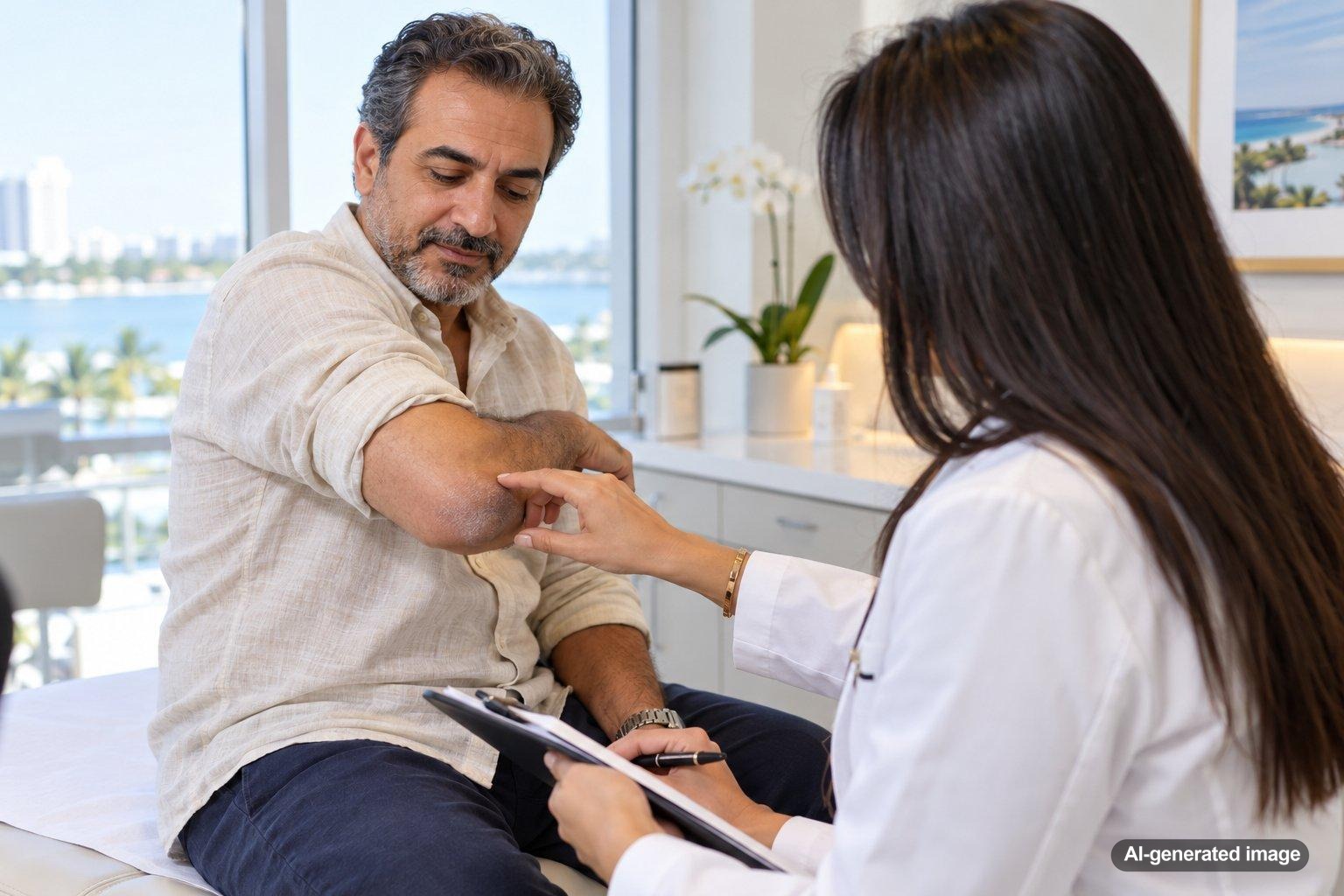
Rough, gray-looking skin on the elbows is often related to a combination of dryness, repeated friction, and the naturally thicker skin in this area. The elbows have fewer oil-producing glands than some other parts of the body, and everyday pressure from leaning on desks, armrests, counters, or other surfaces can make the skin feel thicker and look duller or darker.
In many cases, a gentle moisturizing routine and less friction can improve the way the area looks and feels. However, persistent discoloration, significant scaling, discomfort, or changes that do not respond to basic skin care are worth discussing with a dermatologist.
Quick answer
- Elbow skin can become rough because it is naturally thick and frequently exposed to pressure and friction.
- Dryness can make the surface look ashy, gray, uneven, or more noticeable in contrast with surrounding skin.
- Repeated rubbing may contribute to thickened skin and visible discoloration over time.
- Gentle moisturizing and avoiding aggressive scrubbing are reasonable first steps.
- If the change is persistent, uncomfortable, spreading, or unusual for you, a dermatologist can evaluate it.
Why can elbows look rough and gray?
The skin over the elbows is designed to tolerate frequent bending, stretching, and contact with surfaces. Because of that, it can become thicker and drier than nearby skin. When dry surface cells build up, they can scatter light differently and create a gray or ashy appearance.
Skin tone also matters. Dryness and thickening may appear pale or chalky on some skin tones and darker, gray-brown, or uneven on others. This does not necessarily point to one specific condition. The appearance can reflect several everyday factors occurring at the same time.
Common reasons elbow skin becomes rough or discolored
- Dry skin: Low moisture levels can make the outer skin layer feel coarse and look dull or ashy.
- Friction: Frequently resting your elbows on hard surfaces can gradually encourage thickening.
- Pressure: Repeated pressure in the same area can make the skin feel tougher than the surrounding skin.
- Frequent washing or harsh cleansers: Hot water and strong cleansing products may strip oils from already dry skin.
- Sun exposure: Unprotected elbows can develop uneven-looking pigmentation, especially when combined with dryness or friction.
- Natural skin texture: Some people simply develop thicker or more visibly textured skin over joints.
What can you do at home?
Start with a simple routine rather than trying to scrub the discoloration away. Aggressive exfoliation can irritate the area and may make texture or uneven color more noticeable.
- Apply a fragrance-free moisturizer after bathing and whenever the elbows feel dry.
- Choose richer creams or ointments if lightweight lotions do not provide enough moisture.
- Use lukewarm rather than very hot water when showering.
- Avoid harsh scrubs, pumice stones, and repeated vigorous rubbing.
- Try to reduce prolonged pressure on your elbows when working at a desk or sitting.
- Use broad-spectrum sunscreen on exposed arms and elbows when spending time outdoors.
Some moisturizers contain ingredients that help soften rough surface buildup. If your skin is sensitive, introduce new products gradually and stop if you develop burning, significant redness, or irritation.
Why scrubbing harder usually is not the answer
Gray or dark-looking elbow skin can sometimes resemble surface dirt, which makes vigorous scrubbing tempting. However, the appearance is often related to dryness, thickened skin, or pigment changes rather than something that can simply be washed away.
Repeated friction from scrubbing may further irritate the skin barrier. A gentler approach focused on moisture, protection, and consistency is usually more appropriate for routine care.
What professional options may be considered?
If home care is not helping, a dermatologist can examine the area and determine whether the roughness and discoloration are primarily related to dryness and friction or whether another skin issue may be contributing. Depending on the examination, professional guidance may include changes to your skin care routine, targeted topical products, or other appropriate options.
For cosmetic concerns involving persistent uneven tone or texture, your clinician can also explain which office-based approaches may be reasonable for your skin type. Treatment choices should be individualized because irritated or thickened elbow skin does not always respond well to the same products or procedures used on the face.
When should you see a dermatologist?
It is worth scheduling an evaluation if the skin change is new, worsening, uncomfortable, or difficult to explain. You should also consider getting checked if the area becomes very itchy, cracked, painful, inflamed, unusually thick, or begins changing in other ways.
A dermatologist can also help when discoloration persists despite a consistent gentle moisturizing routine or appears in multiple areas of the body. If you’re unsure, it’s worth getting checked rather than repeatedly experimenting with stronger exfoliating products.
FAQ
Why do my elbows look gray even after I wash them?
The color may come from dry surface buildup, thickened skin, friction, or uneven pigmentation rather than dirt. Washing more aggressively may increase dryness and irritation.
Can moisturizer make rough elbows look better?
Regular moisturizing may help soften the outer skin layer and reduce an ashy or rough appearance. Rich creams and ointments can be especially useful when the area becomes very dry.
Should I exfoliate dark or rough elbows?
Gentle exfoliating ingredients may be appropriate for some people, but aggressive physical scrubbing can irritate the skin. A dermatologist can help you choose an approach if basic moisturizing is not enough.
Why are my elbows darker than the rest of my arms?
Elbows experience more friction, pressure, and skin thickening than many nearby areas. Those factors can make pigment differences more noticeable. Persistent or unexplained changes can be evaluated by a dermatologist.
Can sun exposure make elbow discoloration more noticeable?
Yes. Sun exposure can contribute to uneven-looking pigmentation on exposed skin. Using broad-spectrum sunscreen on the arms and elbows may help limit additional darkening from ultraviolet exposure.
Ready to get help?
Schedule an appointment or send a message and our team will get back to you.
Prefer to call? 954-666-3736
This article is for educational purposes and is not medical advice. For diagnosis and personalized treatment, please book an appointment with a board-certified dermatologist.
