

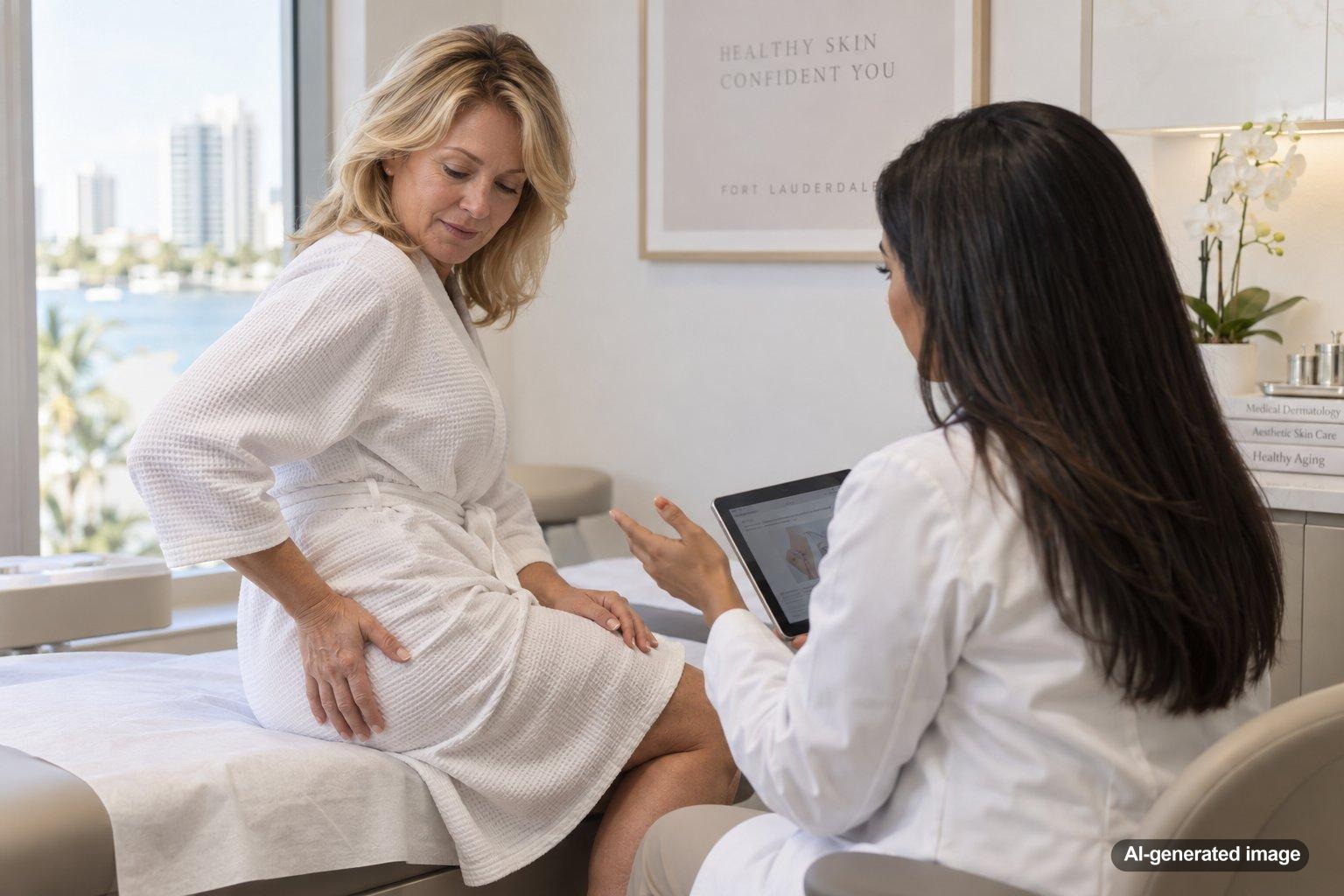
Rough, bumpy skin on the buttocks is common and can develop for several reasons, including plugged hair follicles, dryness, friction, sweat, and irritation from clothing or personal-care products. The texture may feel like tiny firm bumps, scattered rough patches, or small follicle-centered spots. The appearance alone usually isn’t enough to determine the cause, but the pattern and accompanying symptoms can offer useful clues.
If the bumps are persistent, uncomfortable, inflamed, or changing, a dermatologist can evaluate the skin directly and help distinguish between simple texture concerns and conditions that may need medical care.
Quick answer
- Small, firm, skin-colored bumps can be associated with keratin collecting around hair follicles, including a pattern often called keratosis pilaris.
- Sweat, tight clothing, prolonged sitting, and repeated friction can make buttock skin feel rougher or more irritated.
- Dry skin and an impaired skin barrier may make normal follicular texture more noticeable.
- Red, tender, itchy, draining, or recurring bumps deserve closer attention because they may represent something other than simple roughness.
- Gentle cleansing, consistent moisturizing, and avoiding aggressive scrubbing may help improve texture for some people.
What causes rough, bumpy skin on the buttocks?
The buttocks contain many hair follicles and are exposed to pressure, friction, heat, sweat, and clothing throughout the day. That combination makes the area prone to noticeable texture even when the skin otherwise looks healthy.
One possible explanation is keratin collecting around the openings of hair follicles. This can create many small, firm bumps with a sandpapery feel. A similar texture is commonly noticed on the upper arms and thighs as well.
Other people develop roughness because the skin is dry or repeatedly irritated. When the outer skin barrier loses moisture, individual follicles and tiny surface irregularities can become easier to see and feel.
Common triggers that can make the texture more noticeable
- Tight clothing: Leggings, compression garments, snug underwear, and fitted workout clothes may create repeated friction.
- Sweat and heat: Staying in damp clothing after exercise can increase irritation around hair follicles.
- Long periods of sitting: Pressure and rubbing may contribute to localized irritation.
- Dry skin: Low moisture levels can exaggerate rough texture and make bumps feel more prominent.
- Harsh cleansing: Strong soaps, frequent exfoliation, or vigorous scrubbing can disrupt the skin barrier.
- Hair removal: Shaving or other hair-removal methods may temporarily irritate follicles or contribute to ingrown hairs.
- Fragranced products: Some body washes, lotions, detergents, or fabric products may irritate sensitive skin.
Could it be keratosis pilaris?
Keratosis pilaris is one possible explanation for small, rough bumps around hair follicles. The bumps are often skin-colored, whitish, or slightly pink and may feel more noticeable than they look. They are typically not deeply painful.
However, several different skin concerns can create bumps in the same area. A dermatologist can examine the distribution, color, inflammation, and follicular pattern before determining what is most likely.
What you can do at home
A simple, consistent routine is often a better starting point than aggressive exfoliation. The goal is to reduce irritation while keeping the skin comfortably moisturized.
- Wash the area gently with lukewarm water and a mild cleanser.
- Avoid rough washcloths, stiff brushes, and forceful body scrubs.
- Apply a fragrance-free moisturizer regularly, particularly after bathing.
- Change out of sweaty exercise clothing when practical.
- Consider looser, breathable clothing if tight fabrics seem to worsen the texture.
- Avoid repeatedly picking or squeezing individual bumps.
- If you introduce an exfoliating skincare ingredient, start conservatively rather than combining multiple strong products at once.
Some over-the-counter body products contain ingredients that help loosen accumulated surface skin or support smoother texture. Because these ingredients can also cause dryness or irritation, especially when overused, your clinician can help you decide whether they make sense for your skin.
What if the bumps look more like pimples?
Follicle-centered red bumps can have several explanations. Friction, sweat, ingrown hairs, and inflammation around the follicles may all create a pimple-like appearance. The appropriate approach depends on whether the spots are simply rough, actively inflamed, itchy, painful, or developing drainage.
Repeatedly treating every buttock bump as acne can sometimes make irritation worse, particularly if strong cleansers, scrubs, or several active ingredients are used together. If the pattern keeps returning, an examination can be more useful than repeatedly changing products.
Professional options
If home care isn’t improving the texture, a dermatologist can first determine what type of bumps are present. Depending on the findings, professional guidance may include adjustments to cleansing and moisturizing, targeted topical skincare, management of follicular plugging or inflammation, or evaluation for another cause.
For people primarily concerned with persistent texture rather than an active rash or painful eruption, an aesthetician may also help with a gentle body skincare plan after medical concerns have been ruled out. Your clinician can help you decide which approach is appropriate for your skin.
When should you see a dermatologist?
It is worth getting checked when the bumps are painful, increasingly red, swollen, very itchy, repeatedly draining, leaving significant marks, spreading, or returning despite a gentle skincare routine. You should also seek evaluation for a new eruption that looks substantially different from your usual skin texture.
A dermatologist can examine the area directly rather than relying only on how the bumps feel. That can help separate harmless follicular roughness from irritation, ingrown hairs, inflammatory conditions, or other problems that may require a different approach.
FAQ
Why does the skin on my buttocks feel like sandpaper?
A sandpapery texture may be related to dry skin or small plugs around hair follicles. Friction and irritation can make the texture more noticeable. An examination can help clarify the cause if it persists.
Should I scrub the bumps off?
Usually, aggressive scrubbing isn’t helpful. Repeated friction can irritate the skin barrier and make redness or roughness more noticeable. Gentle cleansing and moisturizing are more conservative starting points.
Can tight leggings make buttock bumps worse?
They can contribute for some people. Tight or non-breathable clothing may increase friction, warmth, and moisture against the skin, particularly during exercise or long periods of wear.
Can shaving cause bumps on the buttocks?
Hair removal can irritate follicles and may contribute to ingrown hairs or temporary inflammation. If bumps consistently appear after shaving, changing technique or discussing other hair-removal approaches with a clinician may help.
Why do the bumps keep coming back?
Recurring texture may reflect an ongoing tendency toward follicular plugging, dryness, friction, irritation, or another recurring skin process. Identifying the pattern and triggers can be more useful than repeatedly trying stronger products.
Can a dermatologist help with rough buttock texture even if it doesn’t hurt?
Yes. Persistent texture concerns can still be evaluated even when they aren’t painful. A dermatologist can identify the likely cause and discuss conservative skincare or other appropriate options based on what the skin actually looks like.
Ready to get help?
Schedule an appointment or send a message and our team will get back to you.
Prefer to call? 954-666-3736
This article is for educational purposes and is not medical advice. For diagnosis and personalized treatment, please book an appointment with a board-certified dermatologist.
