

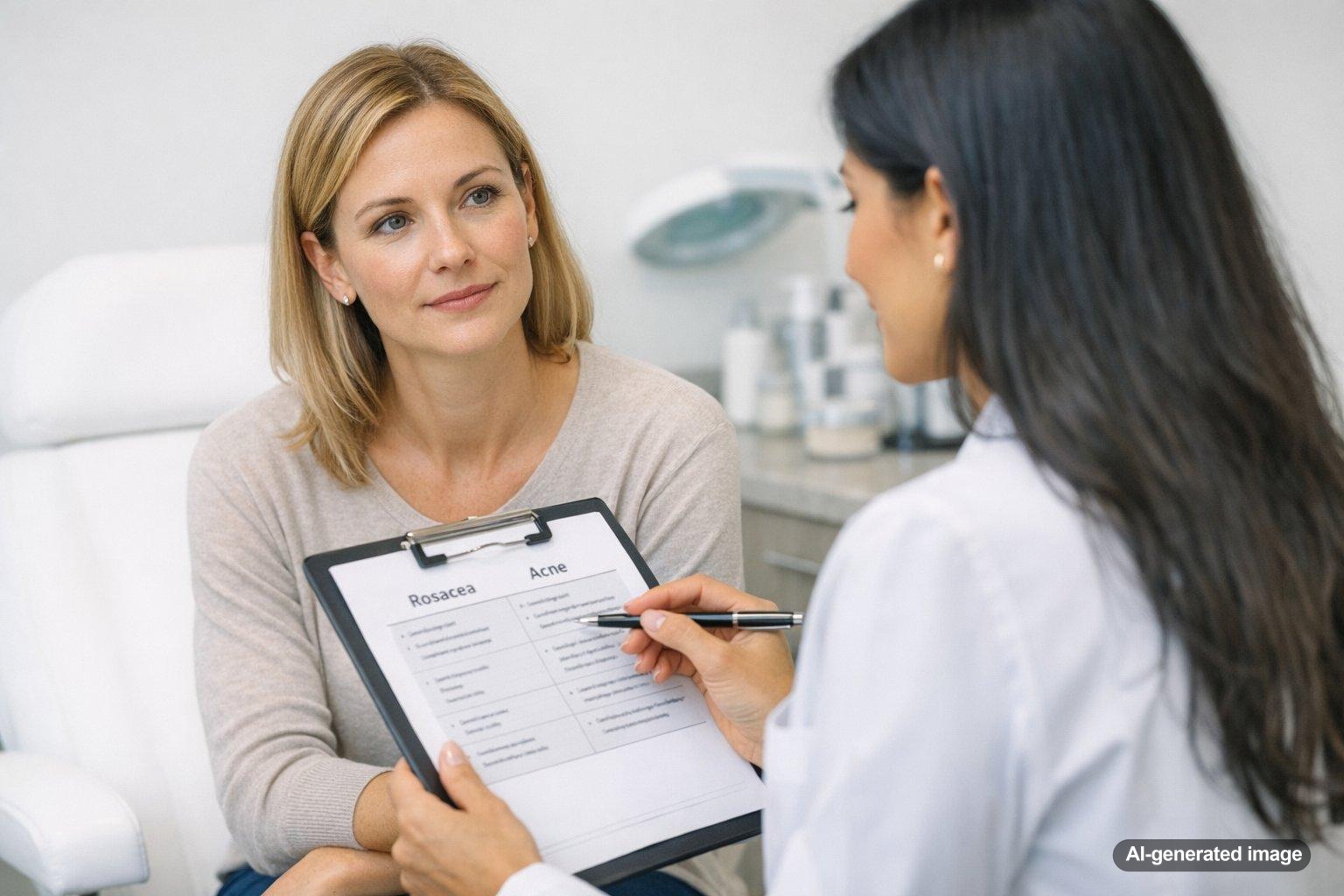
Redness, bumps, and sensitivity can make it difficult to tell whether a flare is rosacea, acne, or a mix of both. The difference matters because the routines that help one condition may irritate the other. Rosacea often centers on flushing, persistent facial redness, visible blood vessels, stinging, and acne-like bumps, while acne is more closely tied to clogged pores, blackheads, whiteheads, and inflamed pimples.
Because the two can overlap, the safest next step is not to guess. A board-certified dermatologist can evaluate your skin pattern, triggers, medical history, and current products, then recommend a plan that fits your skin.
Quick answer
- Rosacea often causes flushing, persistent redness, sensitivity, visible blood vessels, and acne-like bumps, especially across the cheeks, nose, chin, and forehead.
- Acne often includes clogged pores, blackheads, whiteheads, papules, pustules, nodules, or cysts, and may affect the face, chest, back, or shoulders.
- Rosacea can feel hot, sting, burn, or flare after triggers such as heat, sun, alcohol, spicy foods, stress, or certain skin care products.
- Acne is commonly influenced by oil, dead skin cell buildup, bacteria, hormones, friction, and pore-clogging products.
- If redness is persistent, painful, rapidly changing, involves the eyes, or is not improving with gentle care, it is worth getting checked.
| Feature | Rosacea | Acne |
|---|---|---|
| Common look | Flushing, redness, visible vessels, acne-like bumps, sensitivity | Blackheads, whiteheads, pimples, inflamed bumps, deeper tender lesions |
| Common areas | Central face, especially cheeks, nose, chin, and forehead | Face, jawline, chest, back, and shoulders |
| Clogged pores | Usually not the main feature | Often present, especially blackheads and whiteheads |
| Triggers | Heat, sun, alcohol, spicy foods, stress, hot drinks, irritating products | Oil, dead skin cell buildup, hormones, friction, pore-clogging products |
| Best next step | Gentle care, trigger awareness, dermatologist-guided options | Non-comedogenic care, acne-safe ingredients, dermatologist evaluation if persistent |
Why rosacea and acne are easy to confuse
Rosacea and acne can both create bumps that look inflamed, especially on the face. Rosacea bumps may resemble pimples, but they often appear alongside flushing, lasting redness, warmth, stinging, burning, or visible blood vessels. Acne is more likely to involve clogged pores, such as blackheads and whiteheads, along with pimples or deeper bumps.
Another clue is how the skin behaves between breakouts. Rosacea-prone skin may stay reactive or flushed even when bumps calm down. Acne-prone skin may feel oily or congested, although acne can happen in many skin types.
Key signs that point more toward rosacea
- Facial flushing that comes and goes, then may become more persistent over time.
- Redness or color change across the cheeks, nose, chin, or forehead.
- Skin that stings, burns, or feels unusually sensitive with common products.
- Visible blood vessels, especially around the nose and cheeks.
- Acne-like bumps without obvious blackheads or whiteheads.
- Eye irritation, dryness, gritty feeling, or eyelid redness.
People with deeper skin tones may notice warmth, sensitivity, swelling, acne-like bumps, or brown or violet color changes rather than bright redness. This is one reason an in-person evaluation can be helpful.
Key signs that point more toward acne
- Blackheads or whiteheads.
- Pimples, pustules, tender bumps, nodules, or cyst-like lesions.
- Breakouts on the face, chest, back, shoulders, or jawline.
- Flares that seem related to hormones, sweat, friction, heavy products, or pore-clogging makeup.
- Post-breakout dark marks, redness, or texture changes.
Acne can be mild or more persistent, and deeper lesions may increase the risk of scarring. When acne is painful, widespread, or leaving marks, a dermatologist can help guide safer options.
Common triggers and causes to consider
Rosacea is often managed by identifying personal triggers and reducing irritation. Common triggers can include:
- Sun exposure and heat.
- Alcohol or spicy foods.
- Hot drinks.
- Stress.
- Harsh exfoliants, fragranced products, or irritating active ingredients.
Acne is more closely linked with clogged follicles, oil, dead skin cells, bacteria, inflammation, hormones, friction, and products that are not labeled non-comedogenic. Some people have both acne and rosacea, which can make over-the-counter trial and error frustrating.
What you can do at home
Until you know which condition is driving your symptoms, keep your routine calm and simple. Consider a gentle cleanser, lightweight moisturizer, and daily broad-spectrum sunscreen. Avoid scrubbing, harsh peels, abrasive devices, and stacking multiple strong active ingredients at once.
- Choose fragrance-free products when possible.
- Patch test new products on a small area before applying them widely.
- Use non-comedogenic labels if clogged pores are a concern.
- Track possible rosacea triggers, including sun, heat, alcohol, spicy foods, and product changes.
- Do not pick or squeeze inflamed bumps, since this may increase irritation and marks.
Professional options
For rosacea, common dermatologist-guided options may include prescription topical medications, oral medications for select cases, laser or light-based approaches for visible vessels or persistent redness, and skin care adjustments. For acne, options may include prescription topical treatments, oral medications when appropriate, in-office procedures, or a long-term maintenance plan.
At Waverly DermSpa, we offer Excel V+ and can help you understand whether it may be appropriate.
When to see a dermatologist
- Redness is persistent, spreading, painful, or worsening.
- Your skin burns, stings, or reacts to products you used to tolerate.
- You notice eye redness, dryness, sensitivity, or a gritty feeling.
- Breakouts are painful, deep, frequent, or leaving marks.
- You are not sure whether your symptoms are acne, rosacea, dermatitis, or another condition.
- Over-the-counter products seem to make your skin more irritated.
A dermatologist can help distinguish patterns that are difficult to separate at home and can recommend options based on your skin type, triggers, medical history, and goals.
FAQ
Can rosacea look like acne?
Yes. Rosacea can cause acne-like bumps, which is why it is often mistaken for acne. Clues that may point toward rosacea include flushing, persistent redness, sensitivity, visible blood vessels, and trigger-related flares.
Can I have both rosacea and acne?
Yes, it is possible to have both. When symptoms overlap, a dermatologist can help determine which condition is most active and how to build a routine that does not aggravate either one.
Should I use acne products on rosacea bumps?
Some acne products may be too irritating for rosacea-prone skin. If your skin stings, burns, or becomes more red with acne treatments, pause the product and seek professional guidance.
Is facial redness always rosacea?
No. Redness can be associated with many causes, including irritation, dermatitis, sun exposure, allergic reactions, medications, and other skin conditions. An evaluation can help clarify the cause.
What should I bring to a dermatology appointment?
Bring a list of current skin care products, prescriptions, supplements, recent procedures, known triggers, and photos of flares if your symptoms come and go.
Ready to get help?
Schedule an appointment or send a message and our team will get back to you.
Prefer to call? 954-666-3736
Disclaimer
This article is for educational purposes and is not medical advice. For diagnosis and personalized treatment, please book an appointment with a board-certified dermatologist.
Sources & further reading
- American Academy of Dermatology (AAD) – Is that acne or rosacea on your skin?
- Mayo Clinic – Rosacea – Symptoms and causes
- Mayo Clinic – Acne – Symptoms and causes
