

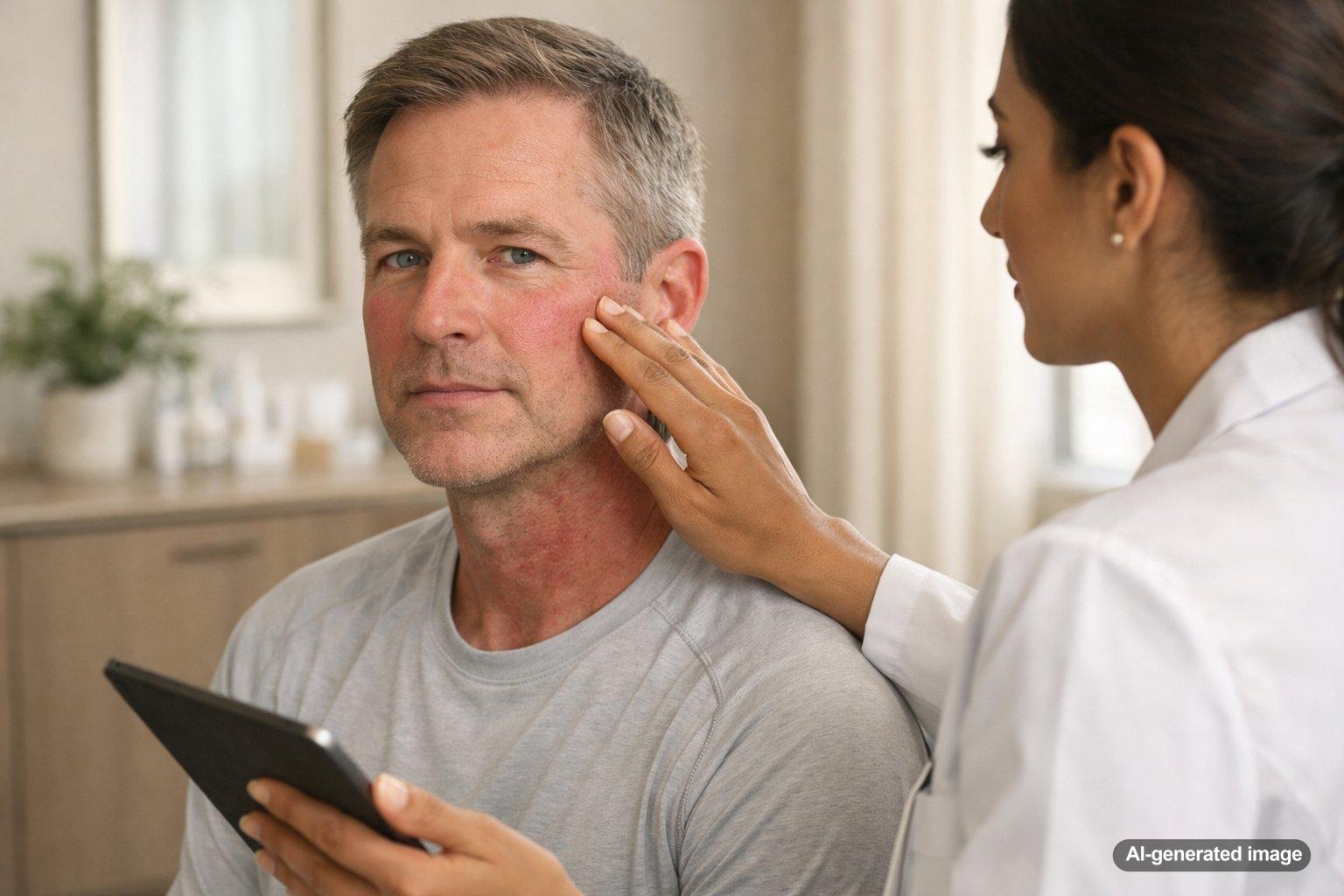
A flushed face after a workout is often a normal response to heat, movement, and increased circulation. When your body temperature rises, blood vessels near the surface of the skin can widen to help release heat, which may make the face, neck, chest, or ears look red for a while.
Still, not all post-exercise redness feels the same. If redness lingers, burns, stings, comes with bumps, or seems to be getting more intense over time, it may be worth discussing with a dermatologist. The goal is not to avoid movement, but to understand your skin’s pattern and support it thoughtfully.
Quick answer
- Some redness after exercise is common, especially during heat, humidity, cardio, or intense workouts.
- Redness that fades as you cool down is usually less concerning than redness that persists, burns, stings, or repeatedly flares.
- Common triggers include heat, sweat, friction, hot showers after exercise, spicy foods, alcohol, and certain skincare products.
- Gentle cooling, hydration, shade, and a simple skincare routine may help reduce irritation.
- A dermatologist can evaluate whether facial redness may be related to sensitive skin, rosacea, dermatitis, or another skin concern.
What exercise redness usually is
Exercise increases blood flow and body temperature. To help cool you down, the body sends more blood toward the skin’s surface. On the face, where blood vessels are more visible, this can look like redness or flushing.
This type of redness may be more noticeable in fair skin tones, but flushing and heat sensitivity can affect many skin tones. In deeper skin tones, it may appear more like warmth, darkening, uneven tone, or a sensation of heat rather than obvious redness.
Common causes and triggers
Post-workout redness can be influenced by both the workout itself and what happens around it. Common triggers include:
- Heat and humidity: Outdoor workouts in Fort Lauderdale can make flushing more noticeable because the skin is already working harder to cool the body.
- High-intensity exercise: Running, cycling, HIIT, and hot yoga may trigger more visible flushing than lower-intensity movement.
- Sweat and salt: Sweat can sting or irritate sensitive skin, especially if it sits on the face for a long time.
- Friction: Hats, headbands, masks, towels, and tight workout clothing can rub the skin and increase irritation.
- Hot showers afterward: Heat immediately after exercise can prolong redness.
- Active skincare products: Retinoids, exfoliating acids, benzoyl peroxide, and strong scrubs may make skin more reactive around workouts.
- Rosacea-prone skin: Exercise can be one possible flushing trigger for some people with rosacea, though each person’s triggers vary.
What you can do at home
Simple, conservative steps may help your skin calm down more comfortably after exercise:
- Cool down gradually instead of stopping intense movement abruptly.
- Move to shade, air conditioning, or a fan when possible.
- Rinse sweat from the skin with lukewarm water rather than hot water.
- Use a gentle, fragrance-free cleanser after sweaty workouts.
- Apply a lightweight, non-irritating moisturizer if your skin feels tight or dry.
- Avoid scrubbing red or heated skin, even if it feels oily or sweaty.
- Use broad-spectrum sunscreen for outdoor workouts, especially in South Florida sun.
- Track patterns, such as heat, workout type, skincare products, alcohol, spicy foods, or stress, to see what seems to make redness worse.
If your skin is very reactive, consider keeping active ingredients, exfoliants, or stronger treatments away from the immediate pre-workout and post-workout window unless your clinician has advised otherwise.
Professional options
If redness is persistent or bothersome, a dermatologist can evaluate the pattern, timing, symptoms, and skin history. Common professional approaches may include identifying triggers, adjusting skincare, discussing prescription options when appropriate, or considering in-office treatments for visible redness.
At Waverly DermSpa, we offer Excel V+ and can help you understand whether it may be appropriate.
When to see a dermatologist
It is worth getting checked if redness after exercise is new, worsening, uncomfortable, or not improving with gentle care. You should also schedule an evaluation if redness is associated with burning, stinging, swelling, bumps, eye irritation, scaling, crusting, or a rash that keeps returning.
Seek prompt medical attention if flushing comes with symptoms such as trouble breathing, chest pain, fainting, severe swelling, or a rapidly spreading rash. Those symptoms need timely medical evaluation.
FAQ
Is it normal for my face to get very red when I work out?
It can be normal, especially with heat, cardio, humidity, or intense exercise. The key details are how long it lasts, whether it feels uncomfortable, and whether it is changing over time.
How long should post-workout redness last?
There is no single normal timeline. Many people notice redness easing as they cool down, but lingering redness, burning, stinging, or frequent flares may deserve a dermatology evaluation.
Can exercise make rosacea worse?
Exercise can be a flushing trigger for some people with rosacea-prone skin, but that does not mean you need to stop exercising. A dermatologist can help you identify patterns and discuss ways to reduce flares while staying active.
Should I wash my face right after working out?
A gentle rinse or mild cleanse can help remove sweat, salt, sunscreen, and debris. Avoid harsh scrubbing, hot water, or strong exfoliants right after exercise if your skin is already red or warm.
Can skincare products make workout redness worse?
Yes, some active products may make skin more sensitive around heat and sweat. If you notice a pattern, your clinician can help you adjust timing or choose gentler options.
Ready to get help?
Schedule an appointment or send a message and our team will get back to you.
Prefer to call? 954-666-3736
Disclaimer: This article is for educational purposes and is not medical advice. For diagnosis and personalized treatment, please book an appointment with a board-certified dermatologist.
