

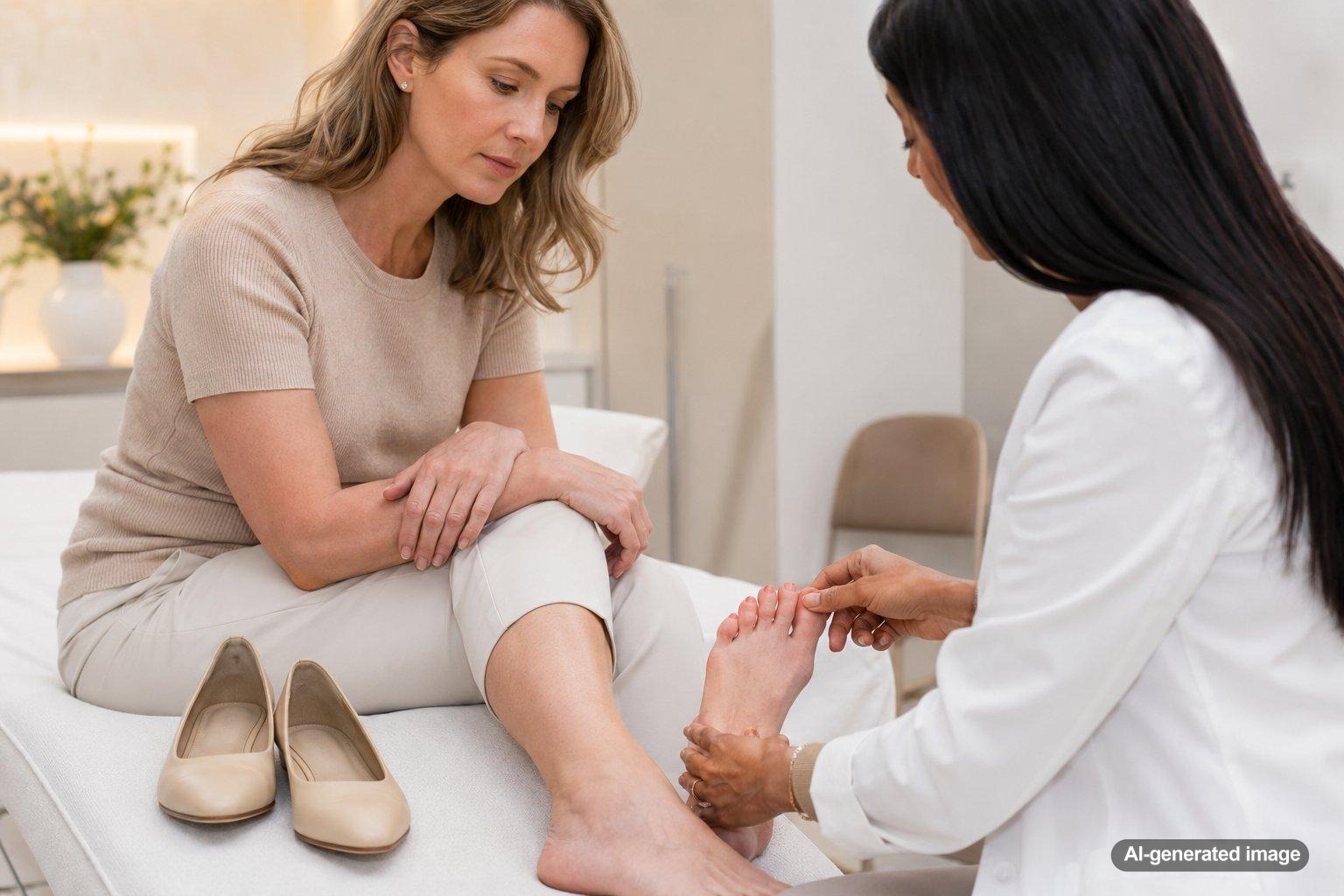
Red, swollen toes after wearing closed shoes are often a response to pressure, friction, trapped heat, or moisture. A narrow toe box, stiff seam, damp socks, or prolonged walking can irritate the skin and temporarily compress the toes. However, redness and swelling can also be associated with contact dermatitis, athlete’s foot, an ingrown nail, or inflammation around a nail.
The location, timing, and accompanying symptoms matter. Redness that matches a pressure point and improves after removing the shoes suggests mechanical irritation, while itching, scaling, cracking, warmth, drainage, or persistent pain deserves closer attention.
Quick answer
- Pressure and friction: Tight, pointed, or short shoes can rub the toes and cause temporary redness, tenderness, and swelling.
- Heat and moisture: Closed shoes create a warm, damp environment that may soften and irritate the skin.
- Skin reactions: Shoe materials, adhesives, dyes, or sock products may trigger contact dermatitis.
- Other possibilities: Scaling, itching, nail-fold pain, or drainage may point to a fungal infection, an ingrown nail, or paronychia rather than simple friction.
- Persistent or severe symptoms: Increasing warmth, spreading redness, pus, severe pain, numbness, or a color change should be evaluated promptly.
What may be happening to your toes
Closed shoes change the environment around your feet. They hold the toes together, increase contact with the shoe, and limit the evaporation of sweat. If the shoe is too narrow or shallow, the toes may repeatedly strike or rub against its upper, seams, or front edge. Skin can then become inflamed, producing redness, mild swelling, soreness, or a burning sensation.
Mechanical irritation often appears where the shoe makes contact. It may affect the tops or tips of several toes, the side of the little toe, or a prominent joint. Symptoms that occur only with one pair of shoes and settle after the pressure is removed make fit-related irritation more likely, although that pattern alone cannot confirm the cause.
Common causes and triggers
- A tight or shallow toe box: Shoes that squeeze the forefoot can compress the toes and create repeated rubbing.
- Shoes that are too short: Toes may strike the front of the shoe during walking, running, or downhill movement.
- Internal seams or stiff materials: A small area of repeated contact can produce localized redness, a blister, or a corn.
- Heat and perspiration: Damp skin is more vulnerable to friction. Moist conditions can also encourage athlete’s foot, which may cause itching, scaling, peeling, or cracking between the toes.
- Contact dermatitis: Rubber components, leather-processing chemicals, adhesives, dyes, or topical foot products may trigger an itchy or burning rash. The pattern may correspond to the area touching the material.
- Ingrown toenail or paronychia: Pressure from shoes can aggravate an ingrown nail. Redness, swelling, warmth, tenderness, or pus near a nail fold may be associated with inflammation or infection.
- Structural pressure points: Bunions, hammertoes, overlapping toes, and corns can make certain areas rub inside otherwise comfortable shoes.
- Conditions unrelated to footwear: Joint inflammation, injury, circulation problems, and other medical conditions may cause a red or swollen toe. The timing with shoes may make an existing issue more noticeable without being its sole cause.
What you can do at home
Start by removing the suspected source of pressure. Switch to clean, dry, well-fitting footwear with a wide and deep toe box. Avoid the problem pair until the skin has returned to normal. Check the inside for rough seams, worn lining, or debris, and compare the shoe’s shape with the outline of your forefoot.
- Wash the feet gently and dry carefully, especially between the toes.
- Change damp socks and choose breathable or moisture-wicking materials.
- Alternate shoes so each pair can dry completely before it is worn again.
- Protect an intact friction point with a simple nonmedicated pad, provided the pad does not make the shoe tighter.
- Avoid popping blisters, cutting into an ingrown nail, or attempting to drain a swollen nail fold.
- Note whether the reaction occurs with one pair, one material, or every closed shoe. A photograph taken when symptoms are visible may help during an evaluation.
If the skin is broken, draining, intensely painful, or increasingly warm, skip trial-and-error treatment and arrange a medical evaluation. People with diabetes, reduced circulation, decreased sensation, or a weakened immune system should seek guidance early rather than managing a new foot wound or possible infection alone.
Professional evaluation and treatment options
A clinician can examine the distribution of redness, the spaces between the toes, the nail folds, and any pressure points. The evaluation may include questions about footwear, activity, sweating, skin products, allergies, injuries, medications, and underlying health conditions.
Management depends on the cause. Common approaches may include footwear modification and pressure relief for mechanical irritation, skin-barrier care for dermatitis, or condition-specific treatment when a fungal or bacterial infection is suspected. Persistent contact reactions may warrant testing for a shoe-related allergen. Nail-fold swelling, drainage, or an ingrown nail may require focused nail care or another in-office approach. Prescription therapy should be selected only after an appropriate evaluation.
When to see a dermatologist
Schedule an appointment if redness or swelling repeatedly returns, affects several types of shoes, does not improve after removing pressure, or comes with itching, scaling, cracking, nail changes, blisters, or tenderness around a nail. A dermatologist can help distinguish irritation from a rash or infection and recommend care based on the examination.
Seek prompt medical attention for:
- Redness that is spreading or becoming rapidly more painful
- Marked warmth, pus, drainage, an open sore, or red streaking
- Fever or feeling unwell along with a red, swollen toe
- A toe that becomes blue, pale, dark, cold, or numb
- Severe pain, inability to bear weight, or swelling after an injury
- New foot redness or a wound when you have diabetes, impaired circulation, reduced sensation, or a weakened immune system
Frequently asked questions
Can tight shoes make every toe red and swollen?
They can. A narrow or shallow toe box may compress multiple toes at once, particularly after prolonged standing or walking. If the reaction persists after the shoes are removed or occurs without footwear pressure, another cause may need to be considered.
Why do my toes itch after wearing closed shoes?
Heat, sweat, friction, contact dermatitis, and athlete’s foot can all be associated with itching. Scaling or cracking between the toes may occur with athlete’s foot, while a rash that follows the contact pattern of a shoe material may suggest dermatitis. An examination can clarify the difference.
How can I tell if my shoes are too tight?
Your toes should not be forced together, touch the front during normal walking, or rub against the upper. Deep pressure marks, recurrent blisters, numbness, or pain in the same locations are practical signs that the shape or size may not suit your feet.
Could redness around one toenail be an infection?
Redness, warmth, swelling, tenderness, or pus around a nail fold can be associated with paronychia. An ingrown nail may also irritate the area and allow infection to develop. Avoid cutting into or draining the area yourself, especially if symptoms are worsening.
Why does the problem happen with only one pair of shoes?
That pair may have a narrower toe box, a shorter interior length, a stiff seam, less ventilation, or a material that irritates your skin. Compare the fit and contact points with shoes that do not trigger symptoms.
Should I keep wearing the shoes once the redness fades?
Reusing them without addressing the fit or contact point may bring the irritation back. Consider professional shoe fitting or a different shape. If every closed shoe causes symptoms, a medical evaluation may be more useful than repeatedly changing pairs.
Ready to get help?
Schedule an appointment or send a message and our team will get back to you.
Prefer to call? 954-666-3736
This article is for educational purposes and is not medical advice. For diagnosis and personalized treatment, please book an appointment with a board-certified dermatologist.
Sources & further reading
- American Academy of Dermatology (AAD) – How to prevent athlete’s foot
- Cleveland Clinic – Nail Infection (Paronychia)
- MedlinePlus (NIH) – Toe Injuries and Disorders
