

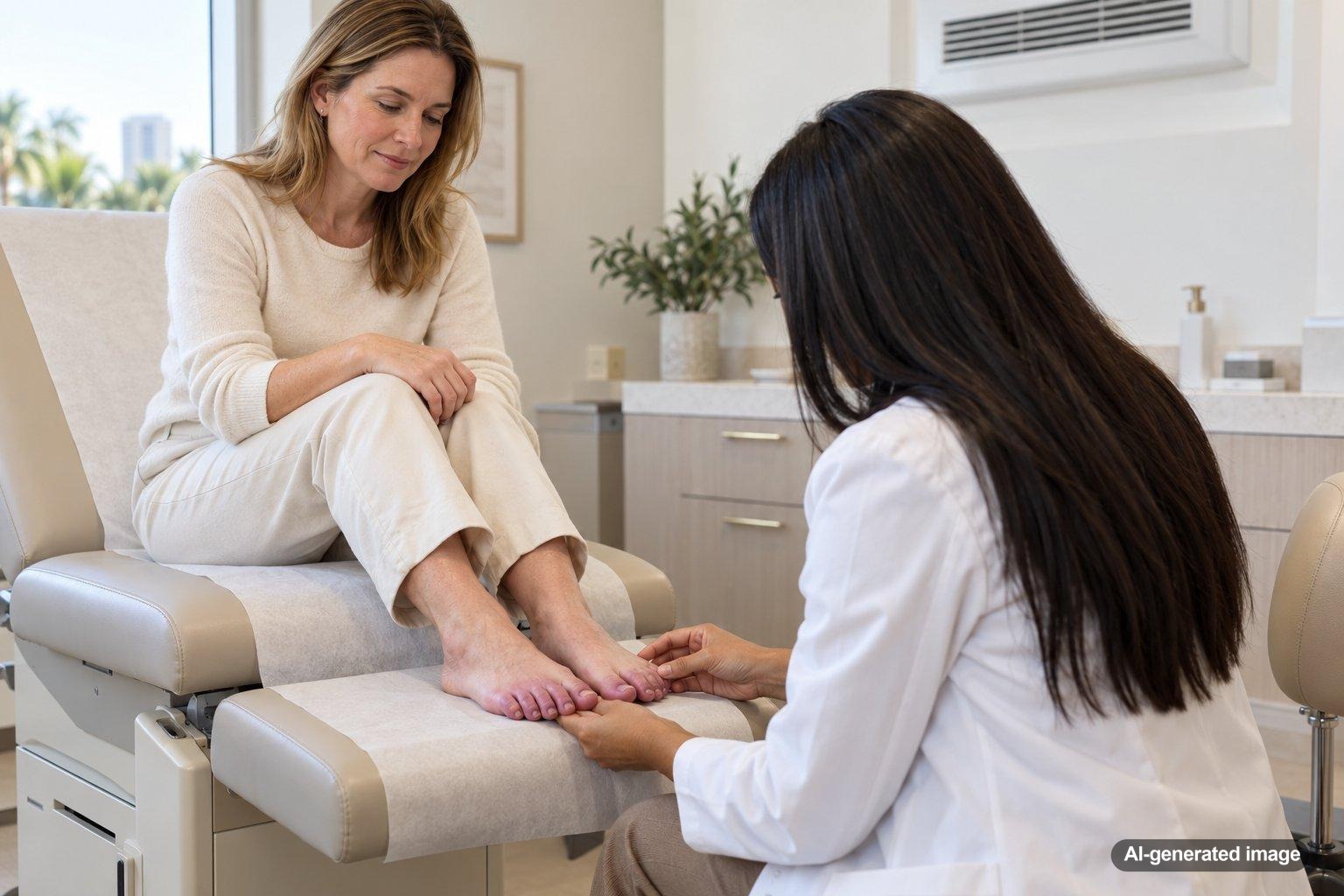
Spending time in a heavily air-conditioned office, restaurant, airplane, or hotel can leave your feet feeling unexpectedly cold. For some people, the change is visible: toes that looked normal earlier develop a reddish-purple, bluish, or mottled appearance after sitting in chilly indoor air. The color may gradually return to normal after walking around or moving into a warmer environment.
These changes can happen because cold temperatures affect the small blood vessels that supply the toes. However, not every episode of red-purple discoloration has the same explanation. The pattern, duration, temperature of the skin, and presence of other symptoms can help distinguish an ordinary response to cold from a condition that deserves medical attention. Even in Fort Lauderdale, where outdoor temperatures are often warm, prolonged exposure to strong indoor air conditioning can make these symptoms noticeable.
Quick answer: Why do toes turn red or purple in air conditioning?
- Cold causes small blood vessels to narrow. This can temporarily change how much blood reaches the toes and how the skin looks.
- Sitting still may contribute. Limited movement and prolonged sitting can influence circulation and make temperature-related color changes more noticeable.
- Some people have heightened vascular sensitivity. Conditions such as Raynaud’s phenomenon or acrocyanosis can cause distinctive cold-related color changes.
- Persistent red-purple spots may have another cause. Chilblains, also called pernio, can cause inflammation after cold exposure, particularly in cool, damp conditions.
- The accompanying symptoms matter. Temporary discoloration that improves with gentle warming is different from severe pain, sudden discoloration, wounds, or toes that remain unusually cold.
What happens to the blood vessels in your toes when you get cold?
Your body continuously adjusts blood flow to help maintain its internal temperature. When the surrounding environment becomes cold, small blood vessels near the skin’s surface narrow. This process, called vasoconstriction, reduces heat loss through the skin.
Because toes are relatively far from the body’s center and have a large surface area compared with their size, they can become noticeably cool during prolonged exposure. Changes in blood flow and the oxygen content of blood in superficial vessels may alter the appearance of the skin, producing reddish, purple, or bluish tones.
When the feet warm again, blood vessels generally relax and blood flow increases. Some people notice temporary redness, tingling, or warmth as their toes return toward their usual color.
The appearance alone cannot establish whether a particular episode is harmless. A clinician considers the entire pattern rather than relying on a photograph or a single color description.
Common reasons your toes may look red-purple in strong air conditioning
1. A temporary response to cold
A cool indoor environment can produce visible changes in the toes even when the rest of the body feels comfortable. Bare feet, thin sandals, cold flooring, or an air-conditioning vent directed toward the legs can increase the effect.
When the discoloration is mild, affects both feet similarly, and resolves after comfortable warming, a temporary vascular response is one possible explanation. Repeated episodes should still be discussed with a clinician, particularly if the pattern is changing.
2. Raynaud’s phenomenon
Raynaud’s phenomenon involves episodes in which small blood vessels narrow excessively in response to cold or emotional stress. The fingers are commonly affected, but the toes can be involved as well.
A typical episode may involve white or pale skin, followed by blue or purple discoloration and then redness as circulation returns. Not everyone experiences every color phase. Numbness, tingling, or discomfort can accompany the changes.
Raynaud’s can occur independently or in association with another medical condition, certain medications, or other factors. A clinician can help determine whether the symptoms fit this pattern and whether additional evaluation is appropriate.
3. Acrocyanosis
Acrocyanosis describes a bluish or dusky discoloration of the extremities, often accompanied by cool skin. Unlike the distinct episodes sometimes seen with Raynaud’s, acrocyanosis may create a more persistent or relatively symmetrical color change while the hands or feet remain cold.
Some forms are relatively benign, but a new, painful, one-sided, or otherwise unusual presentation should not be assumed to be simple acrocyanosis. Medical evaluation can help distinguish it from other circulation problems.
4. Chilblains, also called pernio
Chilblains are an inflammatory reaction associated with exposure to nonfreezing cold, especially when conditions are damp. They can produce red-purple patches or bumps on the toes, along with itching, burning, tenderness, or swelling.
Unlike a brief color change that disappears shortly after warming, chilblains usually remain visible much longer. A cool office alone does not establish this diagnosis, and persistent spots deserve an examination rather than an assumption about their cause.
5. Prolonged sitting and dependent positioning
When your feet remain below the level of your heart for an extended period, gravity affects the movement and distribution of blood in the lower extremities. Sitting without moving may make existing color changes or pooling more apparent, particularly when combined with cold temperatures.
However, discoloration accompanied by new swelling, significant pain, or a noticeable difference between the two legs requires assessment for other possible causes. It should not automatically be attributed to sitting or air conditioning.
How to tell a temporary cold response from something that needs attention
Several observations can help you describe your symptoms accurately during a medical visit.
- How quickly does the color change? A sudden, sharply defined change may suggest a different process from gradual mottling during prolonged exposure.
- Are both feet affected? Symmetrical changes may occur with temperature sensitivity, while a newly discolored single foot or toe can raise different concerns.
- Does gentle warming help? Notice whether the color returns toward normal after leaving the cold environment.
- Is there discomfort? Numbness, tingling, burning, itching, and severe pain are different clues.
- Does the skin develop bumps or wounds? Persistent lesions, swelling, blisters, or sores warrant evaluation.
- Are the episodes becoming more frequent? A new or progressive pattern is worth discussing even when the discoloration eventually fades.
Taking a clear photograph during an episode can be useful because the skin may appear normal by the time an appointment takes place. A photograph supports the clinical history but cannot replace a physical examination.
What you can do at home when your toes change color in cold indoor air
If symptoms are mild and there are no concerning signs, simple measures that reduce cold exposure may help limit discomfort.
- Keep your feet comfortably warm. Consider socks and closed-toe shoes in offices, movie theaters, restaurants, or other strongly air-conditioned spaces.
- Adjust direct airflow. When possible, avoid sitting with a cold vent blowing directly onto your feet or legs.
- Change positions regularly. Standing, walking briefly, and gently moving your ankles can help reduce the effects of prolonged immobility.
- Warm your feet gradually. Move into a comfortable room and allow your feet to warm naturally. Avoid very hot water, heating pads, or direct high heat, particularly if your toes feel numb.
- Keep footwear dry and comfortable. Damp socks and restrictive shoes may worsen discomfort in cold conditions.
- Notice recurring triggers. Keep track of whether symptoms occur after cold exposure, extended sitting, stress, or certain activities.
Avoid using vigorous rubbing or extreme heat to force a color change. If the skin remains discolored or the episode includes significant pain, do not rely on home warming as a substitute for medical assessment.
How a dermatologist or other clinician can evaluate red-purple toes
An evaluation generally begins with a review of the symptom history, medication use, associated medical conditions, and the circumstances surrounding each episode. The clinician may examine the skin, compare both feet, assess temperature and circulation, and look for signs of inflammation or tissue injury.
Depending on the findings, additional testing or a referral may be appropriate. For example, a suspected circulation disorder may require vascular assessment, while certain patterns of Raynaud’s or persistent chilblains may prompt consideration of underlying inflammatory or autoimmune conditions.
Management depends on the cause. Common approaches may include reducing cold exposure, addressing contributing medical factors, treating inflammatory skin changes when appropriate, or considering prescription therapy under medical supervision. Not every case requires medication or a dermatologic procedure.
At Waverly DermSpa in Fort Lauderdale, Dr. Maryann Mikhail, MD, can evaluate concerning skin changes and help determine whether dermatologic care or assessment by another medical specialist is the appropriate next step.
When should you see a dermatologist or seek medical care?
Schedule a medical evaluation if your toes repeatedly turn red or purple, especially when the episodes are new, worsening, painful, or difficult to explain. Persistent discoloration, itching, swelling, skin lesions, or changes that fail to improve with comfortable warming are additional reasons to get checked.
Seek urgent medical assessment if a toe or foot suddenly develops unusual discoloration with significant pain, marked coldness, new numbness, weakness, or a substantial difference from the other foot. These findings may indicate a problem with blood flow that should not wait for a routine dermatology visit.
New swelling or pain affecting one leg also deserves prompt medical attention. If leg symptoms occur with chest pain or shortness of breath, seek emergency care.
Open wounds, ulceration, darkening tissue, or signs of infection likewise require timely evaluation. A persistent change should not be dismissed simply because it first appeared in a cold room.
Frequently asked questions
Why do my toes turn purple in air conditioning but not outdoors?
Indoor air conditioning may expose your feet to sustained cold airflow while you remain seated and relatively still. Outdoors, you may move more frequently or wear different shoes. These environmental differences can influence toe temperature and appearance, although they cannot establish the cause of the discoloration.
Can Raynaud’s affect only my toes?
Yes. Raynaud’s can affect the toes, and symptoms do not necessarily involve the hands during every episode. A clinician can evaluate whether the color changes and accompanying sensations are consistent with Raynaud’s or another condition.
Are red-purple toes always a sign of poor circulation?
No. Cold-related vessel narrowing is a normal physiological response, while some persistent discoloration reflects an inflammatory skin reaction rather than a straightforward circulation problem. However, impaired blood flow is among the important possibilities that may need to be excluded, especially when symptoms are sudden, painful, or one-sided.
Can air conditioning cause chilblains?
Chilblains are associated with exposure to nonfreezing cold, particularly cool and damp conditions. They are not simply another name for temporarily purple toes. Persistent itchy, tender, or swollen red-purple spots following cold exposure may suggest chilblains, but an examination is needed to assess the cause.
Why do my toes look red when they start warming up?
As cold-narrowed blood vessels relax, blood flow near the skin can increase, making the toes appear redder or feel warm or tingly. This can occur during ordinary rewarming and during some Raynaud’s episodes. Persistent pain or abnormal color is a reason to seek evaluation.
Should I see a dermatologist if the discoloration goes away?
If episodes keep recurring, discussing them with a healthcare professional is reasonable even when the color returns to normal. A dermatologist can assess visible skin changes and help determine whether evaluation by a vascular specialist, rheumatologist, or another clinician may be useful.
Ready to get help?
Schedule an appointment or send a message and our team will get back to you.
Prefer to call? 954-666-3736
Disclaimer
This article is for educational purposes and is not medical advice. For diagnosis and personalized treatment, please book an appointment with a board-certified dermatologist.
