

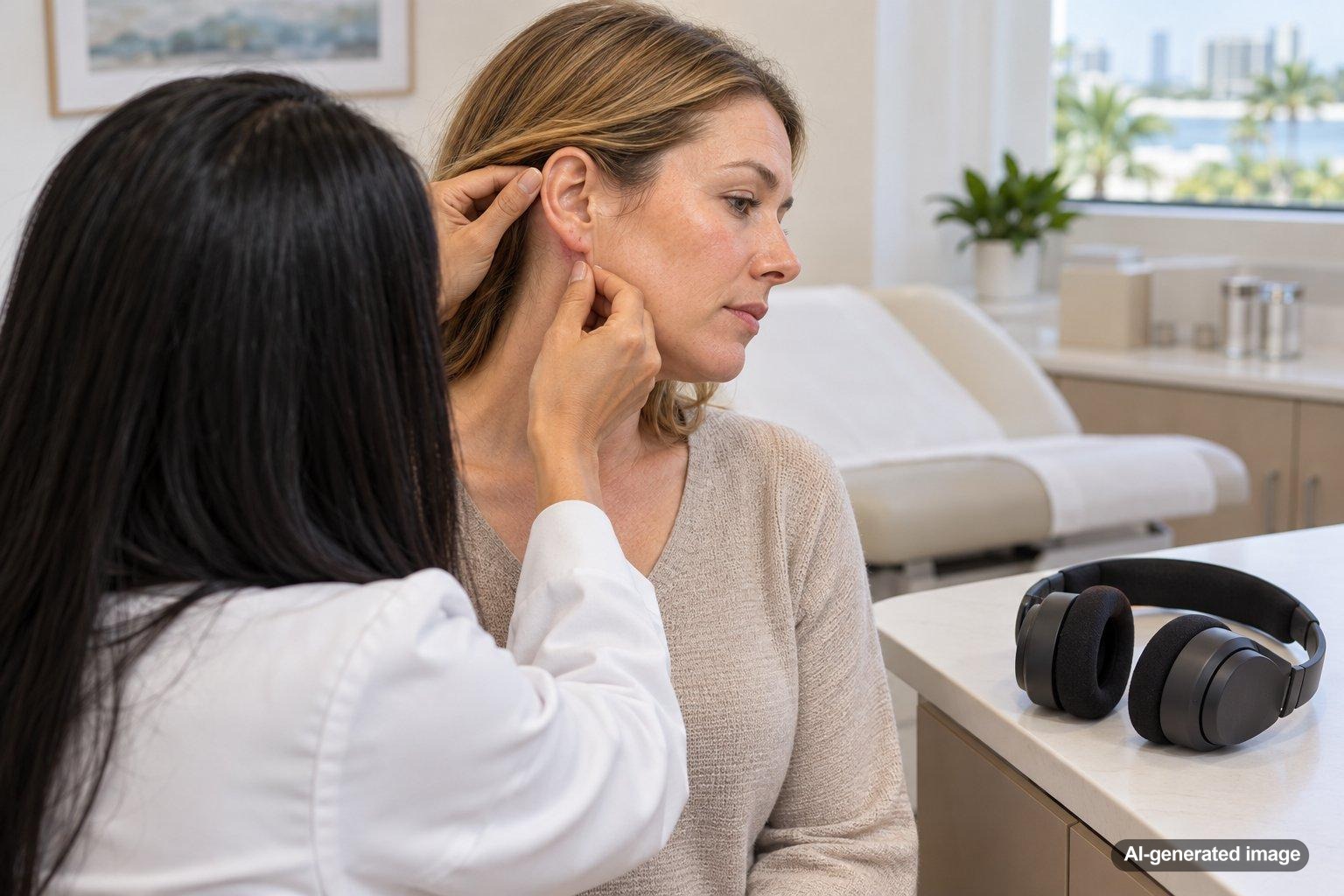
Over-ear headphones are designed for comfort, but the soft foam cushions that rest against your skin can sometimes leave your ears itchy, red, or irritated. You might notice a rash along the outer ear, behind the ears, or around the edges where the ear pads press against your head. The discomfort may become more noticeable after a long work session, a workout, or several hours of listening.
A rash from headphone foam often develops because of friction, trapped sweat, heat, or a reaction to materials in the ear cushions. In some cases, the problem may be contact dermatitis, a form of skin inflammation caused by irritation or an allergic response. Understanding why the reaction occurs can help you identify possible triggers, protect your skin, and recognize when a dermatologist should evaluate persistent symptoms.
Quick Answer: Why Does Headphone Foam Cause a Rash?
The foam or padding on over-ear headphones can contribute to a rash for several reasons:
- Friction and pressure: Ear cushions repeatedly rubbing or pressing against the skin may cause irritation.
- Heat and trapped sweat: A snug seal can hold warmth and moisture against the ears, making irritation more likely.
- Allergic contact dermatitis: Certain rubber additives, adhesives, dyes, or other components may trigger a delayed skin reaction in susceptible individuals.
- Cleaning product residue: Disinfectants, fragrances, and other cleaning ingredients left on ear pads may irritate sensitive skin.
- Preexisting skin sensitivity: People with an impaired skin barrier or eczema-prone skin may react more easily to repeated contact.
The location and timing of the rash can provide useful clues, although they cannot reliably establish the cause without an evaluation.
What Happens to Your Skin When Headphone Foam Causes Irritation?
Over-ear headphones create prolonged contact between the skin and a cushioned surface. The padding may contain polyurethane foam, memory foam, synthetic leather, fabric, rubber components, adhesives, or a combination of materials. The exact construction varies by manufacturer and model.
These materials are not automatically harmful. However, their physical properties and chemical ingredients can matter when they remain against the skin for extended periods.
The outermost layer of skin serves as a protective barrier. Friction, perspiration, and repeated exposure to irritating substances can disrupt that barrier. When this happens, the skin may become dry, tender, itchy, or visibly inflamed.
Contact dermatitis is one possible explanation. There are two major forms:
- Irritant contact dermatitis: Develops when physical or chemical exposure directly irritates the skin. An immune-system allergy is not required.
- Allergic contact dermatitis: Occurs when the immune system recognizes a particular substance as an allergen and produces a delayed inflammatory response after exposure.
Both forms may produce itching, redness, scaling, burning, or small bumps. On darker skin tones, inflammation may appear brown, purple, or darker than the surrounding skin rather than bright red.
Common Causes of a Rash From Over-Ear Headphone Foam
1. Friction From Ear Cushions
One of the simplest explanations is repeated mechanical irritation. Headphones that fit tightly can create pressure along the outer ears, temples, and skin behind the ears. Small movements during talking, walking, or working may cause the cushions to rub against the same areas repeatedly.
This is especially relevant when the ear pads are worn down, flattened, cracked, or no longer distribute pressure evenly.
Friction-related irritation may feel tender, warm, or uncomfortable during use. It can also coexist with other types of dermatitis.
2. Sweat and Heat Trapped Around the Ears
Over-ear headphones often form a seal around the ears to improve comfort and sound isolation. That seal can also reduce airflow and hold perspiration against the skin.
Warm, damp conditions may make friction more irritating and can aggravate an already sensitive skin barrier. People who wear headphones while exercising, commuting in humid weather, or working in warm environments may notice symptoms more frequently.
In Fort Lauderdale’s warm, humid climate, prolonged headphone use can be particularly uncomfortable when the ear cushions retain moisture.
Sweat-related irritation is not necessarily an allergy. However, moisture and friction can make an existing skin problem more noticeable.
3. Allergy to Rubber Additives or Other Cushion Materials
Some people develop allergic contact dermatitis from chemicals used in rubber manufacturing. These may include compounds called rubber accelerators, which help certain rubber materials develop their final properties.
Rubber accelerator allergy is a recognized cause of contact dermatitis, and rubber-containing headphones are among the products that may trigger reactions in sensitized individuals.
Other potential allergens, depending on the product’s construction, include certain adhesives, dyes, preservatives, or surface treatments.
The word foam does not identify a specific allergen. Different headphones use different formulations and coverings. A reaction to one pair does not establish that every foam cushion or every headphone model will cause the same problem.
Allergic contact dermatitis can take hours or days to become noticeable after exposure. A person may also develop sensitivity after previously using a product without difficulty.
4. Irritation From Synthetic Leather or Fabric Coverings
The material touching your skin is often the outer covering of the ear cushion rather than the foam underneath it.
Synthetic leather can create a relatively occlusive surface that retains warmth and moisture. Fabric coverings may feel more breathable but can still cause friction or hold sweat and cleaning residue.
As synthetic leather ages, its surface may crack or peel. Worn coverings can develop rough edges that rub against the skin.
A change in cushion texture or a noticeable increase in discomfort may be worth documenting, especially if the rash appears exactly where the covering touches your ears.
5. Residue From Headphone Cleaning Products
Headphones frequently come into contact with skin oils, perspiration, hair products, and environmental residue. Regular cleaning is useful, but cleaning products themselves can become a source of irritation.
Fragranced wipes, strong detergents, and disinfecting solutions may leave ingredients on the cushion surface. If those ingredients remain in contact with the skin, they can sometimes cause irritation or allergic contact dermatitis.
Using more cleaning solution than recommended can also leave cushions damp for longer than intended.
Follow the headphone manufacturer’s cleaning instructions, avoid soaking components, and allow cleaned surfaces to dry fully before wearing them.
6. Existing Eczema or a Sensitive Skin Barrier
People who already experience eczema, dryness, or frequent skin irritation may have a more reactive skin barrier.
For these individuals, the combination of pressure, perspiration, and prolonged contact can aggravate sensitive areas even when the headphone materials do not contain an ingredient to which they are allergic.
A rash around the ears can also have causes unrelated to the headphones, including other inflammatory skin conditions. The fact that headphones touch the affected area is a useful clue, but it is not proof that the cushions are responsible.
How Can You Tell Whether the Rash Is Irritation or an Allergy?
There is considerable overlap between irritant and allergic contact dermatitis. Both can cause itching, tenderness, dryness, scaling, or visible inflammation.
However, certain patterns may help a dermatologist determine which explanation deserves closer investigation.
- Symptoms during or shortly after wearing headphones: Friction, pressure, or heat-related irritation may be contributing factors.
- Symptoms that become noticeable later: Delayed itching or inflammation may raise suspicion for allergic contact dermatitis, although timing alone is not definitive.
- A rash that follows the ear cushion’s contact area: This suggests a possible relationship with direct skin contact.
- Repeated reactions to the same headphones: Recurrence can support investigating a specific material or exposure.
- Similar reactions to rubber-containing products: A broader contact allergy may be worth discussing with a dermatologist.
Some people have both irritation and an allergy, making the pattern more difficult to interpret.
When an allergic cause is suspected, a dermatologist may recommend patch testing. This involves applying small amounts of selected allergens to the skin under controlled conditions and evaluating reactions over several days.
Patch testing is different from testing for immediate allergies and can help identify substances associated with delayed allergic contact dermatitis.
What Can You Do at Home to Reduce Headphone-Related Irritation?
Simple changes in headphone use and skin care may help reduce exposure to common irritants while you investigate the cause.
Give Irritated Skin a Break
If your headphones repeatedly cause discomfort, stop wearing the suspected pair while the skin is irritated.
Continuing to press the same material against inflamed skin can prolong friction and irritation. Avoid using another pair that creates pressure against the affected area.
If you need audio equipment for work, consider an alternative that does not touch the irritated skin until you understand what may be contributing to the reaction.
Clean and Dry the Ear Cushions Properly
Clean the cushions according to the manufacturer’s guidance and allow them to dry completely before use.
Avoid harsh cleaners, heavily fragranced products, and unapproved solvents that may irritate the skin or damage the cushion material.
If a cleaning product seems associated with symptoms, discontinue that product and discuss the reaction with a dermatologist if it persists.
Consider the Fit and Cushion Condition
Check whether the headband creates excessive pressure or whether the cushions have become flattened, cracked, or rough.
Some headphones offer replaceable ear pads made with alternative coverings. A different texture, fit, or more breathable design may improve comfort when friction and heat are contributing factors.
However, changing the covering does not necessarily eliminate an allergy. Replacement cushions may contain similar additives or other sensitizing ingredients.
Keep Your Skin Care Gentle
Wash the affected external skin gently with lukewarm water and a mild, fragrance-free cleanser when needed. Avoid scrubbing, exfoliating, or applying irritating products to the rash.
A simple fragrance-free moisturizer may help support the skin barrier when dryness is present. A cool, clean compress may also provide temporary comfort.
Avoid scratching or picking at inflamed areas, particularly if the skin has become cracked or tender.
Do not apply products inside the ear canal unless a healthcare professional specifically recommends them.
Keep Track of Possible Triggers
Consider noting when symptoms appear, how long the headphones were worn, whether exercise or perspiration was involved, and whether the ear cushions were recently cleaned or replaced.
Photographs of the rash and information about the headphone model may be useful during a dermatology appointment.
Do not deliberately expose already irritated skin to a suspected allergen to see whether the rash returns. Repeated exposure can worsen an allergic reaction.
Can Changing the Ear Pads Prevent the Rash?
Replacing the ear cushions may help when pressure, surface damage, or moisture retention is contributing to the problem.
For example, a worn synthetic leather cushion might be replaced with a smoother or more breathable option compatible with the headphone model.
However, there is no universally suitable ear pad material for sensitive skin. Foam, fabric, synthetic leather, and other coverings can contain different additives, and individual reactions vary.
If you suspect an allergy, look for detailed material information from the manufacturer rather than relying solely on labels such as hypoallergenic or skin-friendly.
If patch testing identifies a specific allergen, a dermatologist can help you understand which product ingredients or materials to avoid.
Professional Options for Persistent Headphone-Related Rashes
When a rash continues despite reducing headphone exposure, a dermatologist can examine the skin and evaluate possible causes.
Professional evaluation may involve reviewing the rash’s appearance, discussing the timing of symptoms, examining the areas of contact, and considering other skin conditions that can affect the ears.
Common approaches may include:
- Clinical skin examination: Assessing whether the findings are consistent with contact dermatitis or suggest another condition.
- Patch testing: Identifying potential delayed contact allergies when the history suggests an allergic trigger.
- Skin barrier guidance: Recommending appropriate gentle cleansing, moisturizing, and avoidance strategies.
- Anti-inflammatory treatment: Considering topical medications when appropriate for the type, location, and severity of inflammation.
- Product and exposure review: Helping identify potential allergens in ear cushions, cleaning products, or other items touching the affected skin.
The skin around the ears and face can be sensitive. Prescription medications and even some nonprescription anti-inflammatory products should be selected carefully for these areas, particularly when used near the ear canal.
Your clinician can help you decide which options fit your symptoms and whether additional testing is appropriate.
When Should You See a Dermatologist?
A mild episode of irritation may improve after the suspected exposure is removed. However, recurring or persistent symptoms deserve closer attention.
Consider scheduling a dermatology appointment if:
- The rash repeatedly returns when you wear headphones.
- Itching, discomfort, or inflammation persists after you stop using the suspected headphones.
- The skin becomes cracked, thickened, or increasingly sensitive.
- Inflammation spreads beyond the original contact area.
- You develop blisters or significant scaling.
- You suspect an allergy to rubber additives or another headphone component.
- The rash affects your sleep, work, or daily comfort.
Seek prompt medical attention for increasing pain, marked warmth, spreading redness, pus, fever, or other signs that could indicate an infection. Significant ear swelling, drainage from the ear canal, or hearing changes also warrant medical evaluation.
If a reaction involves difficulty breathing or swelling of the tongue or throat, seek emergency medical care.
At Waverly DermSpa in Fort Lauderdale, Dr. Maryann Mikhail, MD, can evaluate persistent or recurring skin irritation and help determine whether additional assessment is appropriate.
Frequently Asked Questions
Can you be allergic to the foam in over-ear headphones?
Yes. Some people may develop allergic contact dermatitis from substances in headphone materials, including certain rubber additives or other ingredients. However, the foam itself is not necessarily the allergen. The cushion covering, adhesive, or another component may be involved. Patch testing can sometimes help identify a specific contact allergy.
Why do my ears itch after wearing headphones for several hours?
Prolonged headphone use can create friction, pressure, warmth, and moisture around the ears. These factors may irritate the skin, especially if it is already sensitive or dry. Allergic contact dermatitis is another possibility, particularly when the itching and rash repeatedly occur after exposure to a particular pair.
Can sweat trapped under headphones cause a rash?
Yes. Trapped perspiration can contribute to skin irritation, especially when combined with heat and rubbing. Sweat does not automatically mean that an infection or allergy is present. Taking breaks, reducing prolonged moisture exposure, and keeping ear cushions appropriately clean and dry may help.
Why did my old headphones suddenly start causing a rash?
Several factors may explain a new reaction. Ear cushions can become worn or rough, cleaning routines may change, and skin sensitivity can vary over time. Allergic sensitization may also develop after repeated exposure to a material that previously caused no noticeable symptoms. A dermatologist can help evaluate recurring reactions.
Are fabric ear pads better than synthetic leather for sensitive skin?
Fabric coverings may feel cooler or less occlusive for some people, but they are not automatically preferable for everyone. Fabrics can retain moisture or contain dyes and finishes that irritate susceptible skin. The best choice depends on the individual’s skin response, headphone fit, and any identified allergens.
How long does a headphone-related rash take to go away?
Recovery varies according to the cause, the degree of inflammation, and whether exposure continues. Some mild irritation may settle relatively quickly after the trigger is removed, while allergic contact dermatitis can persist longer and may require professional care. A rash that is worsening, recurring, or not improving should be evaluated rather than managed indefinitely at home.
Protecting Your Skin Without Giving Up Comfortable Listening
A rash from over-ear headphone foam does not always mean you are allergic to your headphones. Friction, pressure, sweat, cleaning residue, and sensitive skin can produce similar symptoms. The most useful first step is to reduce contact with the suspected trigger and pay attention to the pattern of irritation.
If the rash keeps returning, a dermatologist can help distinguish ordinary irritation from allergic contact dermatitis and discuss whether patch testing or other evaluation may be beneficial. Understanding the cause can make choosing more comfortable listening equipment less of a guessing process.
Ready to get help?
Schedule an appointment or send a message and our team will get back to you.
Prefer to call? 954-666-3736
Disclaimer
This article is for educational purposes and is not medical advice. For diagnosis and personalized treatment, please book an appointment with a board-certified dermatologist.
Sources & Further Reading
- DermNet – Rubber accelerator contact allergy
- American Academy of Dermatology (AAD) – Eczema types: Contact dermatitis causes
- American Academy of Dermatology (AAD) – Patch testing can find what’s causing your rash
- Cleveland Clinic – Contact Dermatitis: Symptoms, Causes, Types & Treatments
