

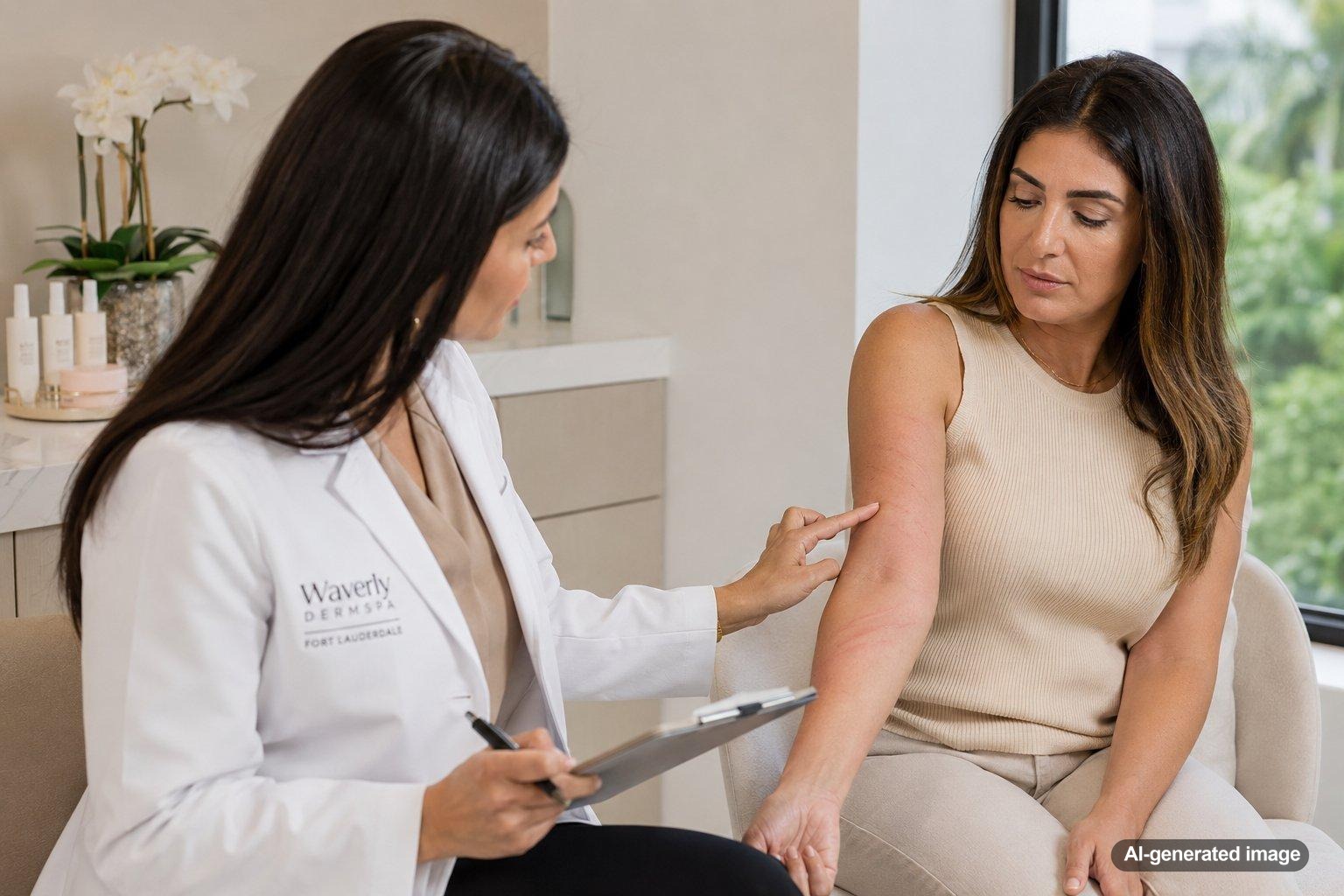
If a light scratch, a clothing seam, or even gentle rubbing leaves a raised red line on your skin, the reaction can look surprisingly dramatic. One possible explanation is dermatographism, also called dermatographia or skin writing. It is a form of inducible urticaria in which stroking, scratching, rubbing, or pressure can produce temporary raised welts along the path of contact.
Dermatographism is often mild, but some people experience significant itching or frequent reactions that become frustrating. A dermatologist can help determine whether your symptoms fit this pattern and whether another skin condition should be considered.
Quick answer
- Dermatographism causes raised, often red or pink lines after the skin is scratched, rubbed, or pressed.
- The reaction commonly develops within minutes of the trigger.
- Friction from clothing, towels, bedding, or scratching can bring out the marks.
- Many reactions fade relatively quickly, although the pattern can recur over time.
- If the welts are frequent, very itchy, persistent, or difficult to explain, a dermatologist can evaluate them.
What is dermatographism?
Dermatographism is an exaggerated wheal-and-flare response to mechanical stimulation of the skin. In plain English, the skin reacts to scratching or pressure by creating a raised line or welt in the same shape as the contact. This is why the condition is sometimes described as skin writing.
The response is related to the release of histamine and other inflammatory mediators in the skin. These substances can cause local blood vessels to widen and fluid to collect in the surrounding tissue, producing redness, swelling, and sometimes itching.
The reaction may be much more noticeable than the original scratch. Someone may lightly run a fingernail across an arm and then notice a raised linear welt developing a few minutes later. Clothing pressure, rubbing, or another source of friction can sometimes create the same effect.
Why does such light scratching cause a noticeable reaction?
The exact reason some people develop dermatographism is not always clear. The skin appears to have an unusually strong response to physical stimulation. Even minor mechanical pressure may trigger local inflammatory signaling that produces a hive-like mark.
This does not necessarily mean you are allergic to whatever touched your skin. Dermatographism can occur without a specific external allergen. The pattern is defined more by the physical trigger, such as pressure or scratching, than by exposure to one particular substance.
Common triggers for raised red lines
Anything that repeatedly rubs, scratches, or presses against the skin may make dermatographism more noticeable. Common triggers can include:
- Scratching an itch with your fingernails
- Tight waistbands, straps, collars, or clothing seams
- Friction from towels after bathing
- Rubbing from sheets or bedding
- Pressure from bags, watches, or other items against the skin
- Hot showers or vigorous skin rubbing
- Dry or irritated skin that makes scratching more likely
Some people also notice that symptoms fluctuate. Stress, environmental conditions, skin irritation, or other individual factors may influence how reactive the skin seems at a particular time.
What does dermatographism usually look and feel like?
The classic pattern is a linear raised welt that follows the exact path where the skin was stroked or scratched. Depending on skin tone, the surrounding area may appear red, pink, darker, lighter, or simply more swollen than the nearby skin.
Some people notice the marks without significant discomfort. Others experience itching, burning, or an urge to scratch, which can create additional lines and make the reaction seem more extensive.
Typical dermatographism develops soon after physical stimulation and often fades relatively quickly. A reaction that behaves very differently, remains persistent, develops without an obvious physical trigger, or comes with other symptoms deserves closer evaluation rather than being assumed to be dermatographism.
What can you do at home?
If your skin tends to react to friction, gentle skin care may reduce unnecessary irritation. Conservative steps include:
- Avoid vigorous scratching. Rubbing or scratching can create new welts and increase itching.
- Choose comfortable clothing. Looser garments and softer fabrics may create less friction against sensitive areas.
- Use warm rather than very hot water. Extremely hot showers can feel irritating for some reactive skin types.
- Pat rather than scrub. After bathing, gently pat the skin dry instead of rubbing aggressively with a towel.
- Keep dry skin moisturized. A simple moisturizer may help reduce dryness that encourages itching and scratching.
- Notice recurring triggers. Pay attention to whether certain clothing, activities, temperatures, or types of pressure consistently bring out the reaction.
These measures do not replace an evaluation when symptoms are persistent, uncomfortable, or unusual.
How a dermatologist can evaluate raised lines and welts
Dermatographism is often recognized from the characteristic relationship between physical stimulation and the appearance of a linear welt. During an evaluation, a dermatologist may ask how quickly the marks appear, how long they last, whether they itch, what seems to trigger them, and whether you have other skin or health symptoms.
A clinician may also assess the skin’s reaction to controlled pressure or stroking. The goal is not simply to reproduce a welt, but to determine whether the overall history and examination fit dermatographism or suggest another cause of hives, itching, swelling, or skin sensitivity.
Professional treatment options
Not everyone with dermatographism needs treatment. When symptoms are mild and infrequent, avoiding excessive friction and following gentle skin-care habits may be sufficient.
If itching or recurrent welts interfere with comfort, sleep, exercise, clothing choices, or daily activities, a clinician may discuss antihistamine-based treatment. Prescription therapies may be considered in more persistent cases that do not respond adequately to simpler approaches. Because medication choice and dosing depend on your individual situation, it is best to discuss these options with a qualified clinician rather than changing medications on your own.
When should you see a dermatologist?
It is worth scheduling an evaluation if the reaction is frequent, worsening, difficult to control, or interfering with your quality of life. A dermatologist can also help if you are unsure whether the marks are actually dermatographism.
Seek medical attention promptly if swelling involves the lips, tongue, mouth, or throat, if you have difficulty breathing, or if you develop other symptoms that could indicate a more serious allergic or systemic reaction.
You should also consider evaluation when welts appear without scratching or pressure, last much longer than expected, become painful, leave persistent discoloration or bruising, or occur with fever or other unexplained symptoms. Those features may point toward a different condition that needs assessment.
FAQ
Is dermatographism the same thing as hives?
Dermatographism is considered a form of inducible urticaria. The welts resemble hives, but they are characteristically triggered by scratching, rubbing, or pressure and tend to follow the shape of that physical contact.
Why can clothing leave raised lines on my skin?
For someone with dermatographism, friction or pressure from waistbands, straps, collars, seams, or other clothing can be enough to trigger a temporary raised welt. The pattern may trace the exact area where the fabric pressed against the skin.
Is dermatographism contagious?
No. Dermatographism itself is not contagious and cannot be passed to another person through skin contact.
Does dermatographism mean I have an allergy?
Not necessarily. The condition involves histamine and a hive-like response, but a specific allergen is often not identified. The defining trigger is usually mechanical stimulation such as scratching or rubbing.
Can dermatographism come and go?
Yes. The intensity and frequency of reactions can vary. Some people notice periods when their skin is more reactive and other periods when the condition is barely noticeable.
Should I intentionally scratch my skin to test for dermatographism?
Repeatedly provoking irritated skin is unnecessary. If you are concerned about recurring raised lines or welts, a dermatologist can evaluate the pattern in a controlled setting and consider other possible explanations.
Ready to get help?
Schedule an appointment or send a message and our team will get back to you.
Prefer to call? 954-666-3736
Disclaimer
This article is for educational purposes and is not medical advice. For diagnosis and personalized treatment, please book an appointment with a board-certified dermatologist.
Sources & further reading
- DermNet – Dermographism
- Mayo Clinic – Dermatographia (Dermatographism) – Symptoms and causes
- Cleveland Clinic – Dermatographia (Dermatographism): What It Is, Causes & Treatment
