

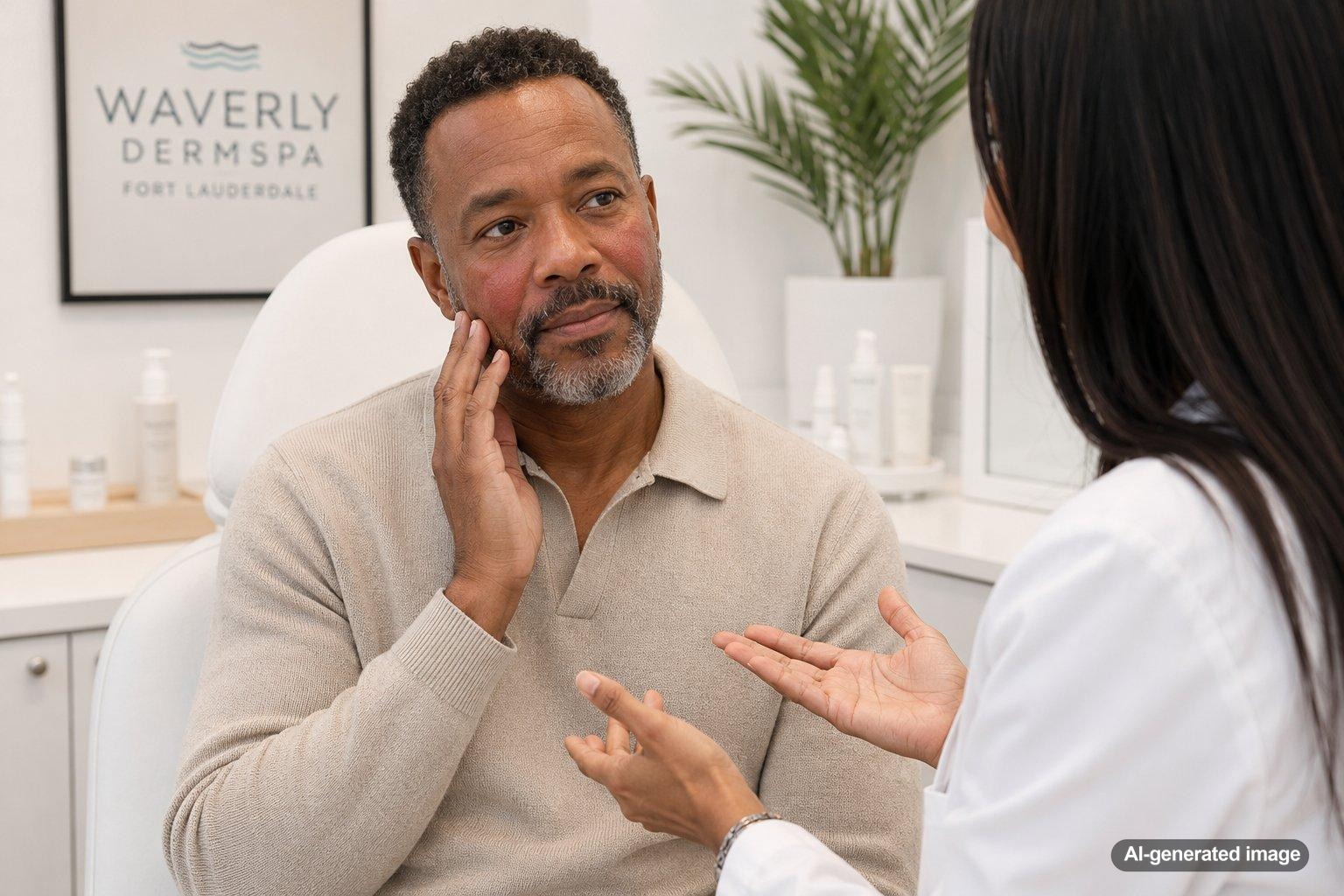
A little redness after a facial can be a normal response, especially if your treatment included steam, extractions, exfoliation, massage, or active skincare products. In many cases, the skin is simply reacting to touch, warmth, increased circulation, or temporary barrier sensitivity.
The key is knowing the difference between calm, expected pinkness and redness that feels unusual for your skin. Post-facial redness should generally feel mild, gradually settle, and improve with gentle care. If it is intense, worsening, painful, blistering, or paired with swelling or signs of irritation, it is worth checking in with a dermatologist.
Quick answer
- Mild pinkness or flushing after a facial can be normal, especially for sensitive or fair skin.
- Redness may be more noticeable after extractions, exfoliation, peels, or active ingredients.
- For the first day or so, keep skincare simple, hydrating, and fragrance-free when possible.
- Avoid scrubs, retinoids, strong acids, heat, and heavy workouts until the skin feels settled.
- If redness is severe, spreading, painful, warm to the touch, or not improving, a dermatologist can evaluate what may be happening.
What post-facial redness usually means
Post-facial redness is often a temporary surface response. During a facial, the skin may be cleansed, massaged, steamed, exfoliated, extracted, masked, and treated with products chosen for your skin goals. Each of those steps can increase visible circulation or make the skin feel more reactive for a short time.
Some people naturally flush more easily. Redness may also be more noticeable if your skin tends to be sensitive, dry, rosacea-prone, recently sun-exposed, or already using active ingredients at home. A calm amount of pinkness is not automatically a problem, but the way it feels and how it changes matters.
Common causes or triggers
Several normal parts of a facial can contribute to temporary redness. Common triggers may include:
- Massage and increased circulation: Hands-on work can bring temporary warmth and color to the skin.
- Steam or warm towels: Heat can make flushing more visible, especially in reactive skin.
- Extractions: Clearing clogged pores can leave targeted redness where pressure was applied.
- Exfoliation: Scrubs, enzymes, acids, or dermaplaning can make the skin look pink as the surface is refreshed.
- Active ingredients: Products with acids, retinoids, vitamin C, or other actives may feel more stimulating for some skin types.
- A sensitive skin barrier: Dryness, over-exfoliation, or recent irritation can make the skin more reactive than usual.
What you can do at home
After a facial, gentle care is usually the best first step. Think simple, soothing, and protective. Avoid the urge to keep adding products if your skin already feels warm or tight.
- Use a mild cleanser or rinse with cool water if your aesthetician advised cleansing that evening.
- Apply a simple, fragrance-free moisturizer to support the skin barrier.
- Use cool compresses for short periods if the skin feels warm or flushed.
- Wear broad-spectrum sunscreen during the day, especially after exfoliation.
- Pause scrubs, exfoliating acids, retinoids, and strong treatment serums until the skin feels calm again.
- Avoid saunas, hot yoga, steam rooms, tanning, and intense heat while the skin is visibly flushed.
- Try not to pick at extractions or touch the skin repeatedly, which can prolong irritation.
Professional options
If redness happens after every facial, your treatment plan may need to be adjusted. A gentle facial approach, fewer actives, less heat, lighter extractions, or more barrier-focused products may be more appropriate for reactive skin.
For people with ongoing redness, flushing, acne-like bumps, or sensitivity, a dermatologist can help determine whether there is an underlying condition such as rosacea, irritation, dermatitis, or another concern. Treatment options vary by person and may include prescription skincare, a revised home routine, or in-office options when appropriate.
At Waverly DermSpa, we offer HydraFacial and can help you understand whether it may be appropriate.
When to see a dermatologist
Most mild redness after a facial is not urgent, but certain symptoms deserve professional guidance. Consider booking an evaluation if redness is intense, worsening, uncomfortable, or different from your usual response.
- Redness that is spreading, hot, painful, or swollen
- Blistering, crusting, oozing, or open areas
- Itching, burning, or stinging that feels significant
- A rash that appears after a new product or treatment step
- Redness that does not seem to improve over time
- Recurring flushing or visible redness between facials
If you’re unsure, it is reasonable to get checked. A dermatologist can evaluate your skin, review what was used during the facial, and help you decide what to do next.
FAQ
Is redness after a facial normal?
Mild redness can be normal after a facial, especially after massage, steam, extractions, or exfoliation. It should generally feel manageable and gradually calm rather than become more uncomfortable.
Should I exfoliate if my skin is red after a facial?
It is usually better to pause exfoliation while the skin looks or feels irritated. Give the skin time to settle before returning to acids, scrubs, retinoids, or other active products.
Can I wear makeup after a facial?
Your provider may give specific aftercare instructions based on your treatment. In general, if the skin is red or sensitive, it may be helpful to keep the skin clean and avoid heavy makeup until it feels calmer.
What should I put on my skin after a facial?
A gentle moisturizer and sunscreen during the day are often the safest basics. Avoid layering multiple active serums unless your provider specifically recommended them for your skin.
Why do I get red after every facial?
Repeated redness may be related to sensitive skin, a reactive skin barrier, heat, extractions, exfoliation strength, or an underlying tendency toward flushing. A dermatologist or experienced aesthetician can help adjust your plan.
Ready to get help?
Schedule an appointment or send a message and our team will get back to you.
Prefer to call? 954-666-3736
Disclaimer: This article is for educational purposes and is not medical advice. For diagnosis and personalized treatment, please book an appointment with a board-certified dermatologist.
