

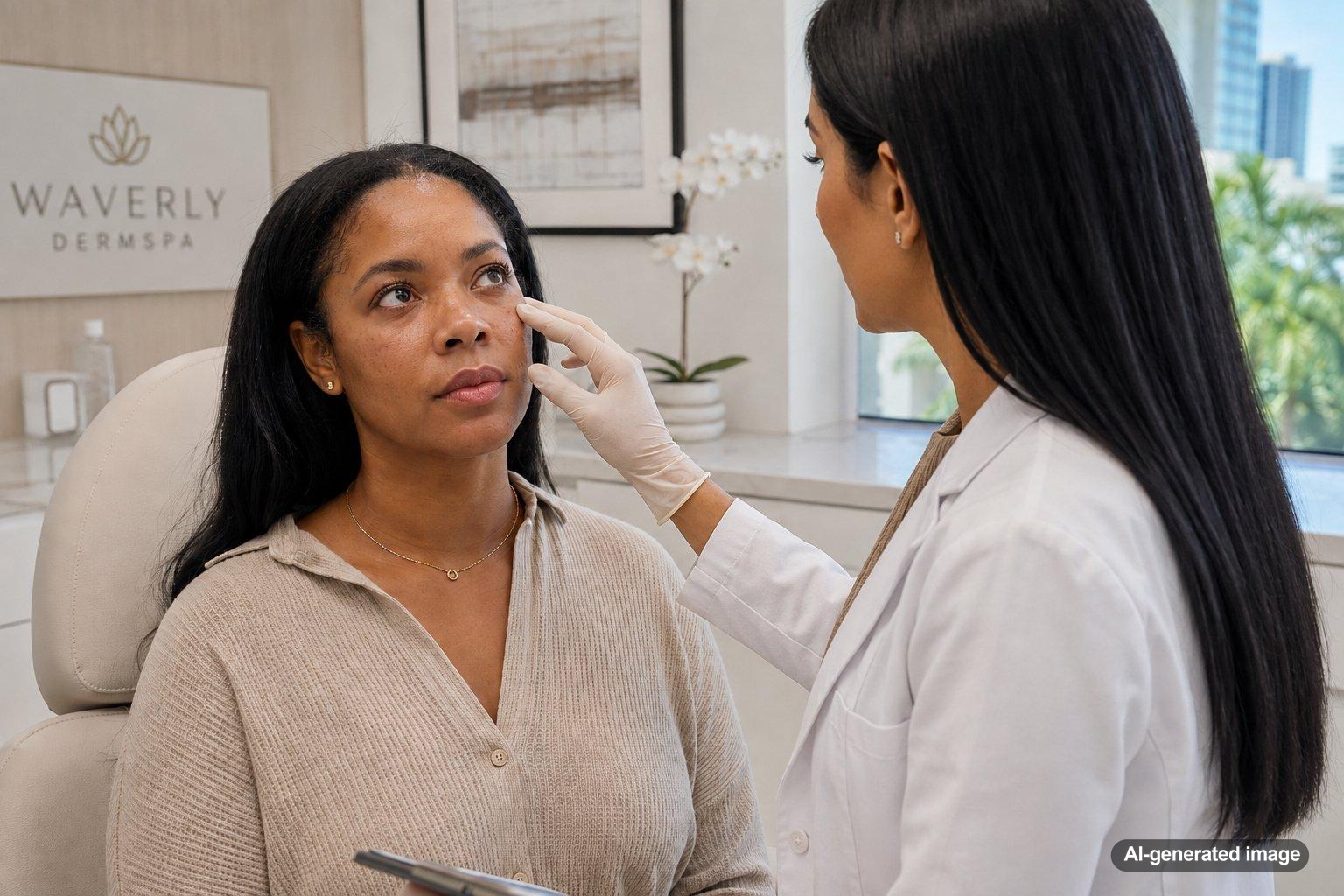
If a hard coughing spell is followed by clusters of tiny red, purple, or brown dots, one possible explanation is petechiae. These pinpoint spots happen when very small blood vessels, called capillaries, leak a small amount of blood into the skin. Prolonged or forceful straining from coughing can sometimes trigger them, especially on the face, neck, or upper chest.
That said, petechiae can have many causes, and the appearance alone does not tell you why they happened. A dermatologist or other clinician can evaluate the pattern, your recent symptoms, medications, and medical history if the spots are widespread, keep returning, or appear without a clear trigger.
Quick answer
- Forceful or prolonged coughing can sometimes cause petechiae by increasing pressure in tiny surface blood vessels.
- Petechiae are usually pinpoint, flat spots that may look red, purple, or brown and often do not fade when pressed.
- A small cluster that appears right after intense straining may have a mechanical trigger, but other causes are possible.
- Widespread, rapidly spreading, recurrent, or unexplained petechiae deserve medical evaluation.
- Seek urgent medical attention when petechiae occur with concerning symptoms such as fever, trouble breathing, confusion, fainting, or significant bleeding.
What are petechiae?
Petechiae are tiny spots of bleeding under the skin. They form when capillaries leak blood into nearby tissue. Because the color comes from blood under the skin rather than surface redness, petechiae often do not become pale when you press on them. Clinicians may call this a nonblanching appearance.
The dots can occur almost anywhere. When they follow coughing, vomiting, heavy lifting, or another episode of prolonged straining, they may be more noticeable on the face, neck, and upper chest. A cough-related pattern can be reassuring when the timing and distribution make sense, but it should not be used to self-diagnose the cause.
Why can coughing cause pinprick red dots?
Hard coughing briefly raises pressure in the chest, neck, and small blood vessels of the face and upper body. If the strain is strong or prolonged enough, fragile capillaries near the skin can break and leak a tiny amount of blood. This is one recognized reason petechiae may appear after repeated coughing.
Other forms of straining can create a similar effect, including vomiting, heavy lifting, or childbirth. The key clue is the close timing between the straining episode and the appearance of the spots. Even then, a clinician may want to look more closely if the pattern is unusual or you have other symptoms.
Common causes or triggers
Straining is only one possible explanation. Petechiae can also be associated with conditions or exposures that affect blood vessels, platelets, or clotting. Common categories a clinician may consider include:
- Mechanical strain: prolonged coughing, vomiting, heavy lifting, or other intense pressure.
- Minor trauma or friction: pressure, rubbing, or injury to the skin can sometimes create small areas of bleeding.
- Medications: some prescription and over-the-counter medicines can affect bleeding or platelet function. Do not stop a prescribed medication on your own; discuss concerns with the clinician who prescribed it.
- Infections: some viral or bacterial illnesses can be associated with petechiae, particularly when other symptoms such as fever or feeling very unwell are present.
- Platelet or clotting problems: low platelet counts and other blood-related conditions can sometimes cause petechiae or unusual bruising.
- Inflammatory or other medical conditions: several less common conditions may cause small-vessel bleeding and need professional evaluation.
What can you do at home?
If the spots appeared after a clearly intense coughing episode and you otherwise feel well, it can be useful to observe the area and avoid additional rubbing or pressure. Take note of when the spots appeared, where they are located, whether they are spreading, and whether you have bruising or bleeding elsewhere. A photo in consistent lighting may also help you describe changes to a clinician.
Avoid trying to scrub, exfoliate, massage, or treat the dots with strong skincare products. Petechiae are not caused by clogged pores, and topical acne products do not address blood that has leaked under the skin. If coughing is ongoing, the reason for the cough may also deserve evaluation, especially if it is severe, persistent, or accompanied by other symptoms.
If you take a medication that affects bleeding or clotting, do not change the dose or stop it without medical guidance. Your clinician can help you decide whether the medication is relevant and what to do next.
What can a dermatologist or clinician do?
Professional evaluation focuses first on identifying why the petechiae appeared. A clinician may examine the distribution of the spots, ask about recent coughing or straining, review medications and supplements, and look for associated bruising, bleeding, fever, or illness. Depending on the situation, blood testing or evaluation by another medical specialist may be appropriate.
There is not one cosmetic procedure that is appropriate for every case of petechiae. If the spots are truly related to recent straining, the priority is usually understanding the trigger and making sure there is no concerning underlying cause rather than immediately treating the color itself.
When should you see a dermatologist or seek medical care?
It’s worth getting checked if the petechiae are new and unexplained, appear repeatedly, are spreading, cover a large area, or occur along with easy bruising or other unusual bleeding. Medical evaluation is also important if you recently started a medication or have a condition that affects blood cells or clotting.
Seek urgent medical attention if petechiae occur with fever, confusion, fainting, trouble breathing, rapidly spreading spots, or significant bleeding. These combinations can be associated with conditions that need prompt assessment.
FAQ
Can coughing really cause petechiae?
Yes. Prolonged or forceful coughing can sometimes cause petechiae, particularly on the face, neck, or chest, because straining can increase pressure in tiny blood vessels. A clinician can help confirm whether that explanation fits your situation.
Do petechiae disappear when I press on them?
Petechiae often do not fade or turn pale with pressure because the color comes from blood that has leaked under the skin. However, a home pressure test is not enough to determine the cause of a rash or skin spots.
Are petechiae after coughing dangerous?
Not necessarily. A small area that appears immediately after forceful straining can have a mechanical explanation. But petechiae can also be associated with infections, medications, platelet problems, and other medical conditions, so widespread, recurrent, unexplained, or symptomatic cases should be evaluated.
How long do cough-related petechiae last?
The timeline can vary depending on the amount of bleeding under the skin, your skin, and whether the trigger continues. If the spots are not improving, are recurring, or are spreading, contact a clinician rather than relying on a fixed timeline.
Should I put anything on petechiae?
Usually, topical skincare is not the main issue because petechiae involve tiny amounts of blood under the skin. Avoid irritating the area with harsh exfoliants or aggressive treatments, and focus on getting the cause evaluated when the pattern is unexplained or concerning.
Ready to get help?
Schedule an appointment or send a message and our team will get back to you.
Prefer to call? 954-666-3736
This article is for educational purposes and is not medical advice. For diagnosis and personalized treatment, please book an appointment with a board-certified dermatologist.
Sources & further reading
- Mayo Clinic – Petechiae Causes
- Cleveland Clinic – Petechiae: What Are They, Causes, Treatment & Prevention
- MedlinePlus (NIH) – Bleeding into the skin
