

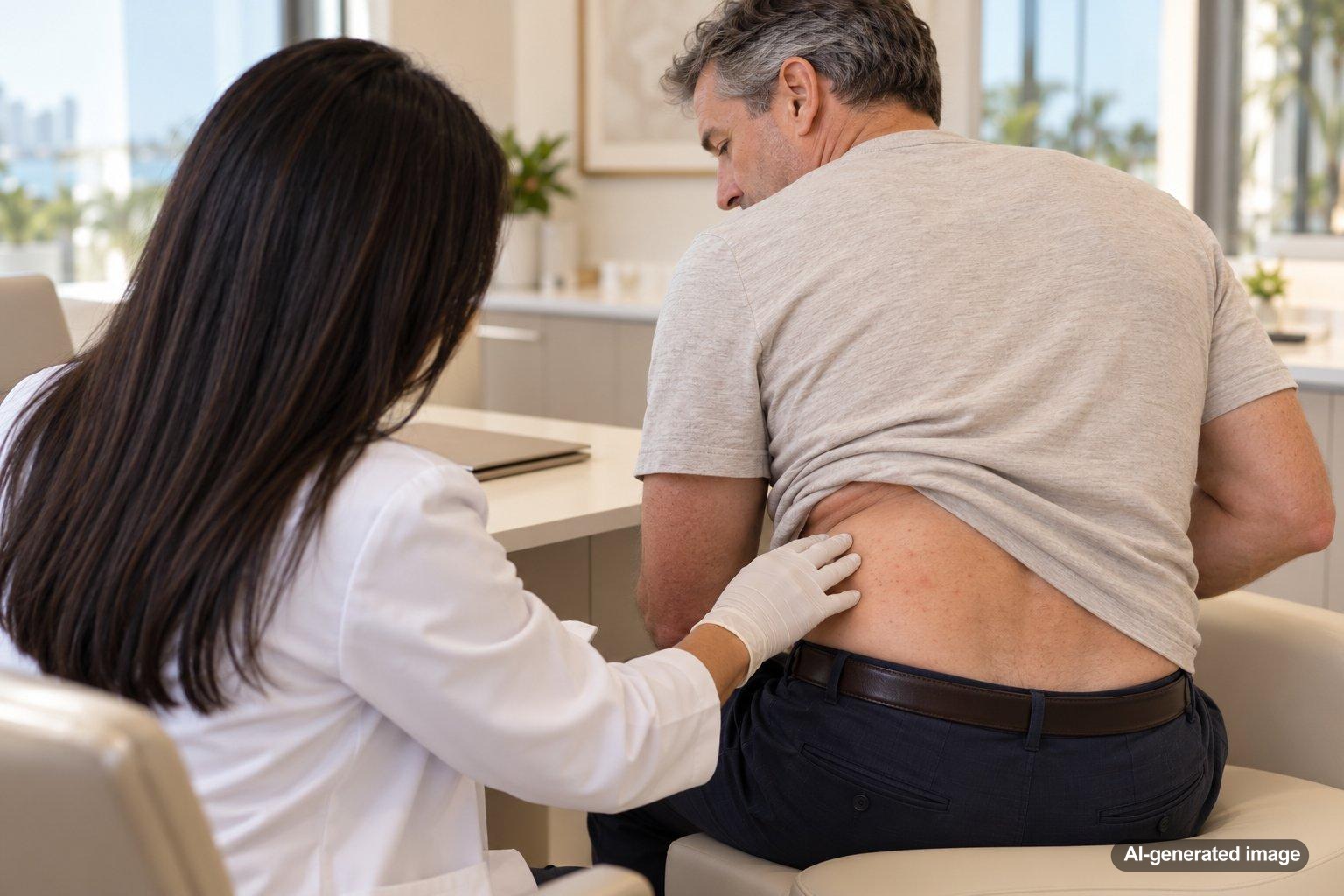
If you notice small pimples along your lower back after spending several hours in a car, the combination of pressure, friction, heat, and trapped moisture may be contributing. Your lower back stays in contact with the seat for much of the drive, while waistbands and clothing can rub against the same area. This environment may irritate hair follicles, worsen existing acne, or contribute to a condition called folliculitis.
These bumps are not necessarily ordinary acne, and their appearance alone cannot establish the cause. Some develop around clogged pores, while others involve irritated or inflamed hair follicles. Understanding why prolonged sitting affects this particular area can help you make practical adjustments and recognize when a dermatologist should evaluate the skin.
Quick Answer: Why Do Lower Back Pimples Appear After Driving?
- Repeated friction: Clothing and the car seat can rub against the lower back, irritating the skin and hair follicles.
- Trapped heat and sweat: Long periods against a seatback may create a warm, humid environment that contributes to breakouts.
- Pressure and restricted airflow: Continuous contact with the seat can make it harder for moisture to evaporate.
- Folliculitis: Inflamed hair follicles can produce small bumps that resemble acne, sometimes with itching or tenderness.
- Waistband irritation: Tight elastic, belts, and clothing seams may concentrate friction exactly where the bumps appear.
The most useful clue is whether the bumps repeatedly develop or worsen in areas where your skin contacts the seat or clothing during long drives.
What Are These Pimples on Your Lower Back?
The lower back contains hair follicles and oil-producing glands, just like other areas of the trunk. Bumps in this region can have several explanations, including acne, folliculitis, and irritation associated with pressure or rubbing.
Acne develops when hair follicles become clogged with oil and dead skin cells. It may include whiteheads, blackheads, red bumps, or deeper inflammatory lesions. The back is a common location for acne because it contains numerous oil-producing glands.
Acne mechanica describes acne that is triggered or aggravated by repeated friction, pressure, heat, and occlusion. Occlusion means that something covering the skin limits airflow and traps warmth or moisture. A snug waistband or prolonged contact with a seatback may create conditions that aggravate this type of breakout.
Folliculitis occurs when hair follicles become inflamed. It may result from irritation, friction, or an infection involving bacteria or yeast. These bumps can resemble acne but may be more uniform in appearance, itchy, tender, or centered around individual hairs.
Because these conditions can look similar, a dermatologist may need to examine the area to distinguish them, particularly when the problem keeps returning.
Why Long Car Rides Can Trigger Lower Back Breakouts
1. Your Lower Back Experiences Hours of Repeated Friction
Even when you feel relatively still, your body makes small movements as you adjust your posture, turn, or respond to changes in the road. Each movement may create slight rubbing between your skin, clothing, and seat.
When this happens repeatedly, the outer skin barrier and hair follicles may become irritated. Friction can be especially noticeable along the beltline, where clothing is already pressing against the body.
If your bumps form in a narrow band above your pants or near a clothing seam, consider whether that location corresponds with repeated pressure or rubbing.
2. Heat and Sweat Become Trapped Against the Seat
Car seatbacks can limit airflow over the areas they contact. During a long drive, warmth from your body, the vehicle interior, or direct sunlight may increase sweating.
Sweat itself is not the same as acne-causing oil, and sweating does not automatically cause pimples. However, moisture combined with friction and occlusion can create conditions that irritate follicles and aggravate certain skin problems.
This may be particularly noticeable during summer road trips, long commutes in warm weather, or travel in humid climates such as South Florida.
3. Tight Waistbands Concentrate Pressure on One Area
Jeans, leggings, athletic pants, belts, and fitted underwear can press against the lower back while you sit. The waistband may shift slightly whenever you change position, adding friction to an area already experiencing prolonged contact with the seat.
Elastic bands and thick seams can also trap heat. If the bumps consistently appear where the waistband rests, clothing may be contributing to the pattern.
4. Prolonged Occlusion May Aggravate Existing Acne
If you already experience back acne, extended periods of warmth, pressure, and friction may make affected areas more reactive.
For example, a person with occasional clogged pores along the lower back might notice more inflamed lesions after spending a day driving. The car ride may aggravate an existing tendency rather than create a completely new skin condition.
It is also important to remember that acne lesions can develop over time. Bumps noticed immediately after a trip may have begun forming before the drive.
5. Irritated Hair Follicles Can Resemble Ordinary Pimples
Folliculitis is another possible explanation, especially when the bumps are small, relatively similar in size, and located around hair follicles.
Friction and prolonged moisture exposure may damage or irritate follicles. Some cases of folliculitis involve bacteria or yeast, while others result from noninfectious irritation.
Itching, tenderness, or small pus-filled bumps can occur with folliculitis, but these features are not specific enough to identify the cause without an examination.
6. Clothing and Skin Products May Add to the Irritation
Heavy body lotions, oily products, or certain hair products that contact the lower back may contribute to follicular occlusion in susceptible individuals. Fragranced laundry products or fabric treatments may also irritate sensitive skin.
If your bumps are accompanied by broad redness, burning, or a patchy itchy rash rather than distinct pimples, contact irritation may be worth considering.
The timing of a new product, detergent, or clothing item can sometimes provide an important clue.
How Can You Tell Whether It Is Acne, Folliculitis, or Irritation?
Although an examination is needed for a reliable diagnosis, the appearance and behavior of the bumps can help guide a discussion with a dermatologist.
- Possible acne: A mixture of blackheads, whiteheads, and inflamed pimples may suggest acne, particularly when similar breakouts also occur elsewhere on the back.
- Possible folliculitis: Small bumps centered on hair follicles, especially if itchy or tender, may suggest follicular inflammation.
- Possible friction-related irritation: Bumps and redness concentrated beneath a waistband, seam, or area of repeated seat contact may point toward a mechanical trigger.
- Possible contact dermatitis: Diffuse redness, itching, scaling, or burning after exposure to a particular fabric or product may suggest an irritation or sensitivity reaction.
These patterns overlap. A rash that looks like acne is not necessarily acne, and a small pustule does not automatically indicate a bacterial infection.
What You Can Do at Home to Reduce Lower Back Breakouts
Simple changes that reduce friction, moisture, and unnecessary irritation may help, especially when bumps follow a predictable travel-related pattern.
Choose Comfortable Clothing for Long Drives
Consider pants with a softer, less restrictive waistband and avoid tight seams that press directly into the affected area. Lightweight, breathable materials may help reduce accumulated heat and moisture.
The goal is not to wear a particular fabric at all times, but to reduce persistent rubbing and pressure where your skin is already sensitive.
Keep the Area Cool and Dry
Use comfortable vehicle ventilation to limit excessive sweating. During safe, convenient travel stops, standing and changing position can temporarily relieve pressure and improve airflow.
If your clothing becomes noticeably damp, changing into a clean, dry garment when practical may reduce prolonged moisture exposure.
Cleanse Gently After Traveling
After a long drive, washing the lower back with a mild cleanser and lukewarm water may help remove accumulated sweat and surface residue.
Avoid vigorous scrubbing, harsh brushes, and abrasive exfoliation. These can further irritate inflamed follicles and may worsen discomfort.
Pat the skin dry with a clean towel instead of rubbing it aggressively.
Be Selective About Products Applied to the Area
If you use body lotion, consider a lightweight, noncomedogenic formulation, particularly if you are prone to acne. Noncomedogenic products are formulated to be less likely to clog pores, although individual reactions vary.
Avoid layering multiple new acne treatments onto already irritated skin. Products containing benzoyl peroxide or salicylic acid may be useful for certain types of acne, but they can also cause dryness or irritation and may not be appropriate for every acne-like rash.
Because folliculitis and contact dermatitis can resemble acne, persistent or uncomfortable bumps are better evaluated before starting increasingly strong treatments.
Avoid Picking or Squeezing the Bumps
Picking may increase inflammation, damage the skin barrier, and contribute to discoloration or scarring.
If the area feels tender, a clean, comfortably warm compress may provide temporary relief. Avoid excessive heat and stop if the skin becomes more irritated.
Look for Patterns Across Several Trips
Notice whether the bumps appear after particularly long drives, warm-weather travel, or wearing certain pants. It may also help to observe whether the problem occurs only while driving or after other activities involving prolonged sitting.
A brief record of timing, location, associated itching, and clothing can help your dermatologist identify potential triggers. Photos taken when the bumps are active may also be useful if they fade before an appointment.
Professional Dermatology Options for Recurrent Lower Back Pimples
When breakouts repeatedly return after travel, a dermatologist can assess whether the problem is primarily acne, folliculitis, contact irritation, or another condition.
An evaluation may include reviewing the pattern of breakouts, examining individual lesions, and discussing clothing, skin products, sweating, and travel habits. If an infection is suspected or the presentation is unusual, additional testing may sometimes be appropriate.
Management depends on the underlying cause. Common categories of care may include:
- Acne-focused treatment: Topical medications or other acne therapies may be considered when clogged pores and inflammatory acne are present.
- Folliculitis management: Care may involve reducing friction and moisture exposure, with targeted medication when a particular infectious or inflammatory cause is identified.
- Skin barrier support: A clinician may recommend adjusting cleansers, moisturizers, or other products if irritation is contributing.
- Trigger assessment: Reviewing clothing, occupational sitting patterns, exercise routines, and recurrent pressure points may help identify practical preventive changes.
Not every breakout requires prescription treatment. The value of an evaluation is determining what type of eruption is present so that care can be matched to the actual cause.
When Should You See a Dermatologist?
Consider scheduling a dermatology appointment if the bumps repeatedly return, remain present despite reducing irritation, become increasingly uncomfortable, or leave persistent dark marks or scars.
Professional evaluation is especially helpful when lesions are deep, painful, draining, or spreading, or when the diagnosis is unclear.
Seek prompt medical assessment for rapidly spreading redness, significant warmth or swelling, severe pain, fever, or other signs of a worsening infection. These symptoms should not be assumed to be routine acne.
If you have a condition or take medication that weakens your immune system, new or worsening pustular eruptions deserve particular attention.
Frequently Asked Questions
Can sitting in a car for hours actually cause pimples?
Prolonged sitting can contribute to circumstances that aggravate acne or irritate hair follicles, especially when the lower back experiences continuous pressure, rubbing, heat, and moisture. However, the appearance of bumps after a drive does not prove that sitting caused them.
Why are the pimples only along my waistband?
A waistband creates a concentrated area of pressure and friction. If bumps repeatedly follow that line, irritation from elastic, seams, or trapped moisture may be contributing. Acne, folliculitis, and contact reactions can still overlap in this location.
Are itchy lower back pimples more likely to be folliculitis?
Itching can occur with folliculitis, but it can also accompany contact dermatitis and other inflammatory eruptions. Uniform bumps centered around hair follicles may raise suspicion for folliculitis, although a dermatologist is needed to distinguish it from similar conditions.
Can a dirty car seat cause lower back acne?
A car seat does not have to be dirty for friction-related irritation to occur. Pressure, heat, and reduced airflow can affect the skin even when upholstery is clean. Keeping surfaces clean is reasonable, but it does not eliminate every possible cause of breakouts.
Should I use an acne body wash after every long drive?
Gentle cleansing after sweating may be sufficient for some people. Acne-specific washes can help certain acne breakouts, but they may irritate sensitive skin and are not appropriate for every condition that resembles acne. If the bumps persist, a dermatologist can help determine whether an active treatment is suitable.
Why do the bumps show up the next day instead of during the drive?
Inflammation may become more noticeable after exposure to friction, pressure, or moisture, and some lesions may have started developing before the trip. The timing alone cannot establish whether the bumps are acne, folliculitis, or another condition. Repeated episodes are worth documenting and discussing with a dermatologist.
The Bottom Line
Lower back pimples after long car rides often have a plausible connection to friction, pressure, heat, and trapped moisture. Tight waistbands and prolonged contact with a seatback may aggravate acne or irritate hair follicles, but similar-looking bumps can have different causes.
Reducing rubbing, choosing comfortable clothing, managing sweat, and cleansing gently after travel may help limit recurring irritation. If the bumps are persistent, painful, itchy, or repeatedly return, a dermatologist can evaluate the skin and recommend an appropriate approach.
Ready to get help?
Schedule an appointment or send a message and our team will get back to you.
Prefer to call? 954-666-3736
Medical Disclaimer
This article is for educational purposes and is not medical advice. For diagnosis and personalized treatment, please book an appointment with a board-certified dermatologist.
Sources & Further Reading
- American Academy of Dermatology (AAD) – Acne-like breakouts could be folliculitis
- DermNet – Folliculitis
- DermNet – Bacterial Folliculitis
