

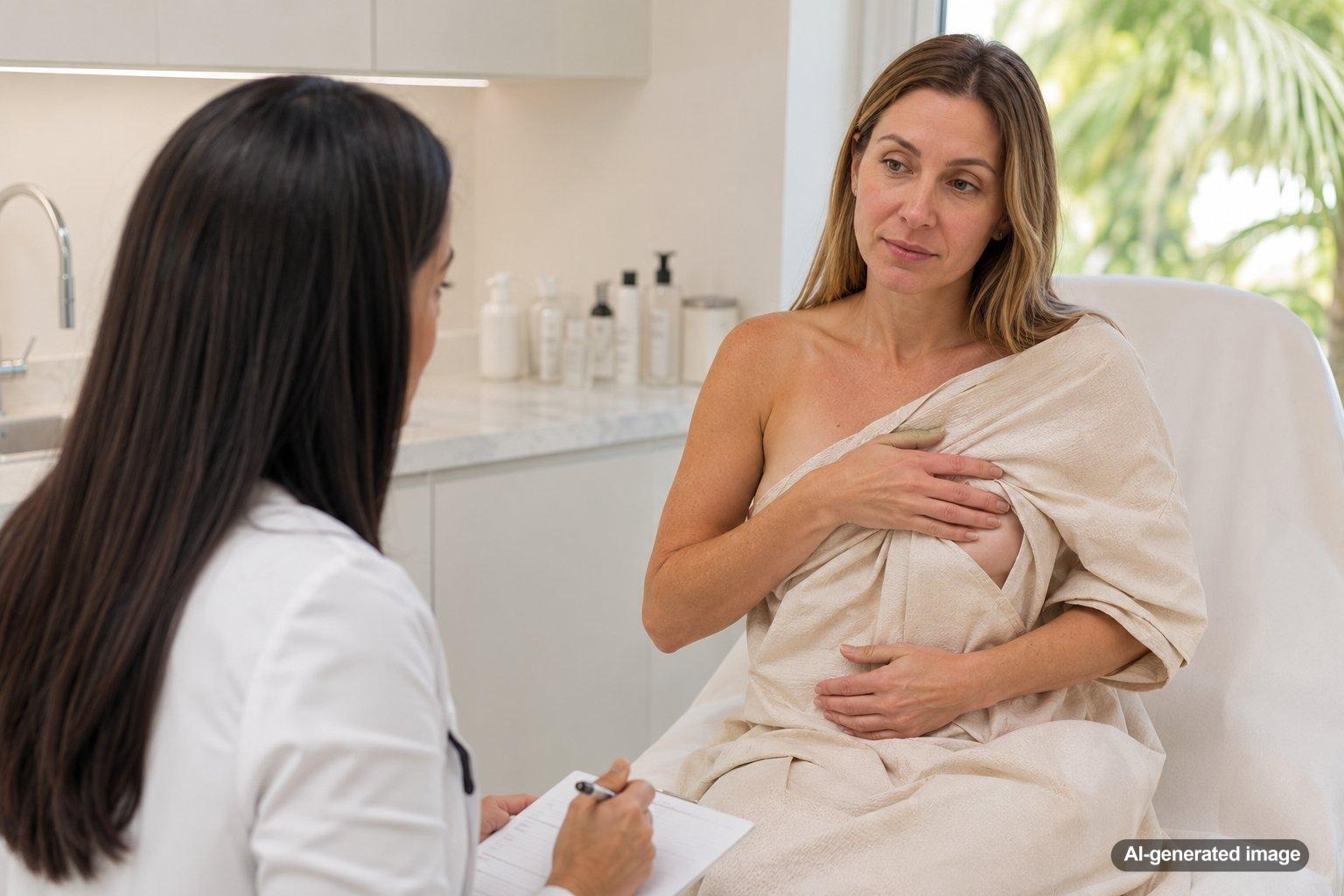
A persistent rash around one nipple can have a relatively simple explanation, such as irritation from clothing, a personal care product, or eczema. However, a rash that remains on only one side, involves the nipple itself, or keeps returning deserves an in-person medical evaluation. Several conditions can look similar without being treated the same way.
Changes in this sensitive area can feel uncomfortable or worrying. The most useful next step is not to guess from appearance alone, but to note the symptoms, avoid further irritation, and arrange an examination if the rash is not clearly improving.
Quick answer
- A one-sided nipple rash may be caused by eczema, contact dermatitis, friction, moisture, psoriasis, or an infection.
- Fragranced products, detergents, adhesives, topical medications, and certain fabrics may trigger irritation or an allergic reaction.
- A persistent rash involving one nipple can occasionally resemble mammary Paget disease, an uncommon form of breast cancer.
- Bleeding, discharge, nipple inversion, a lump, ulceration, or progressive crusting should be evaluated promptly.
- A dermatologist can examine the skin and determine whether testing, treatment, or referral for breast imaging is appropriate.
What a persistent nipple rash may look or feel like
The skin may appear red, pink, brown, gray, darker, or lighter than the surrounding area depending on your natural skin tone and the underlying cause. It may feel itchy, tender, burning, dry, or unusually sensitive. Some rashes become scaly or crusted, while others look smooth, moist, cracked, or thickened.
The location also matters. A rash limited to the areola may have different possible triggers than a change that begins directly on the nipple. Whether it affects one side or both sides, spreads beyond the areola, improves when an irritant is removed, or returns after treatment can provide useful clues. Appearance alone still cannot confirm a diagnosis.
Common causes and triggers
- Irritant contact dermatitis: Sweat, friction, tight bras, rough fabric, frequent washing, harsh cleansers, or residue from laundry products can weaken the skin barrier and cause inflammation.
- Allergic contact dermatitis: Fragrances, preservatives, fabric dyes, adhesives, topical antibiotics, body products, or ingredients in creams may provoke a delayed skin reaction.
- Eczema: Nipple eczema may cause itching, dryness, scaling, crusting, discoloration, or small areas that ooze. It may occur alone or alongside eczema elsewhere on the body.
- Psoriasis: Psoriasis can affect the breast and nipple area, sometimes producing a well-defined patch with scale or irritation.
- Fungal or bacterial infection: Warmth, moisture, broken skin, and scratching can allow microorganisms to grow or cause a secondary infection. Testing may be needed because infection can resemble dermatitis.
- Breastfeeding-related irritation: Friction, moisture, pumping equipment, feeding technique, blocked pores, and inflammatory breast conditions can contribute to nipple symptoms during lactation.
- Less common conditions: Benign nipple growths and other inflammatory or structural conditions may also produce persistent changes that require examination.
Why a one-sided rash should not be ignored
Eczema and contact dermatitis can affect only one side, so a unilateral rash does not automatically indicate a serious condition. Still, mammary Paget disease can begin as a slowly progressive, eczema-like change on one nipple and may extend onto the areola. It can include scaling, crusting, itching, burning, discharge, bleeding, thickening, or nipple retraction.
Because these signs overlap with more common skin problems, persistent symptoms should not be managed indefinitely through trial and error. A clinician may consider your age, health history, breast symptoms, duration of the rash, prior treatments, and examination findings when deciding what evaluation is appropriate.
What you can do at home while arranging care
Conservative skin care may reduce additional irritation, but it should not delay evaluation of a persistent one-sided change.
- Pause fragranced soaps, lotions, body sprays, essential oils, and new products used near the area.
- Switch to a fragrance-free detergent and avoid fabric softener or scented dryer products.
- Wear a clean, soft, breathable bra or shirt that does not rub the affected skin.
- Wash gently with lukewarm water and avoid scrubbing, exfoliating, or peeling scale.
- Keep the area comfortably dry without using powders or harsh drying agents.
- Avoid scratching, since broken skin can increase inflammation and the risk of infection.
- Do not repeatedly apply antibiotic, antifungal, steroid, or numbing products without guidance. These products can sometimes irritate the area, mask important features, or be inappropriate for the actual cause.
Consider taking a dated photograph for your own records and noting when the rash began, whether it changes with your menstrual cycle or activity, and which products contact the area. This information can help your clinician understand its progression.
How a dermatologist may evaluate the rash
A dermatologist may examine both breasts, the surrounding skin, and other areas where eczema, psoriasis, or allergic dermatitis commonly appears. You may be asked about recent products, detergents, clothing, medications, breastfeeding, discharge, pain, lumps, and previous skin conditions.
Depending on the findings, professional evaluation may include:
- Patch testing when allergic contact dermatitis is suspected.
- A skin scraping or laboratory testing when a fungal condition is possible.
- A swab when drainage, crusting, or another sign suggests bacterial infection.
- A skin biopsy when the diagnosis remains uncertain or a concerning condition needs to be excluded.
- Coordination with a breast specialist and imaging when nipple changes or associated breast symptoms warrant further assessment.
Treatment depends on the cause and may involve removing an irritant or allergen, supporting the skin barrier, managing inflammation, or treating a confirmed infection. Prescription products and procedures should be selected after the area has been properly evaluated.
When to see a dermatologist
Schedule an appointment when a rash around one nipple persists, repeatedly returns, spreads, or does not improve after obvious irritants have been removed. Prompt evaluation is especially important if the nipple itself is involved rather than only the nearby skin.
Seek timely medical attention if you notice:
- Bloody, yellow, clear, or unexplained nipple discharge.
- A new breast or underarm lump.
- A nipple that becomes flattened, pulled inward, thickened, or otherwise changes shape.
- Bleeding, ulceration, open skin, progressive crusting, or a sore that does not heal.
- Increasing warmth, swelling, tenderness, pus, red streaking, or fever.
- Rapidly spreading redness or significant breast pain.
- A persistent unilateral rash that has not responded as expected to prior treatment.
Frequently asked questions
Can nipple eczema affect only one side?
Yes. Although eczema may affect both sides or appear elsewhere on the body, it can occur on one nipple or areola. Because other conditions may look similar, a persistent one-sided rash should still be examined.
Could my bra or detergent be causing the rash?
Yes. Friction, trapped sweat, fabric dyes, elastic materials, fragrance, preservatives, and detergent residue can irritate sensitive skin or trigger allergic contact dermatitis. A dermatologist may recommend patch testing if an allergy is suspected.
Should I try an over-the-counter steroid cream?
It is better to ask a clinician before treating a persistent unilateral nipple rash. A steroid may temporarily alter the appearance of inflammation, and it will not address every possible cause. Product strength and duration also matter on sensitive skin.
Does a rash around one nipple mean breast cancer?
No. Irritation and inflammatory skin conditions are more common explanations. However, mammary Paget disease can resemble eczema and often affects one nipple, so persistent or progressive changes should be evaluated rather than self-diagnosed.
Can a nipple rash be contagious?
Eczema and contact dermatitis are not contagious. Certain fungal, bacterial, or viral conditions may require different precautions, which is another reason an accurate diagnosis is helpful.
Which doctor should evaluate this problem?
A board-certified dermatologist can assess the skin and perform testing when needed. Depending on the symptoms and examination, your dermatologist may coordinate care with a primary care clinician, gynecologist, or breast specialist.
Ready to get help?
Schedule an appointment or send a message and our team will get back to you.
Prefer to call? 954-666-3736
This article is for educational purposes and is not medical advice. For diagnosis and personalized treatment, please book an appointment with a board-certified dermatologist.
Sources & further reading
- Cleveland Clinic – Eczema on Nipples: Symptoms, Causes & Treatment
- DermNet – Nipple eczema
- Mayo Clinic – Paget’s disease of the breast
