

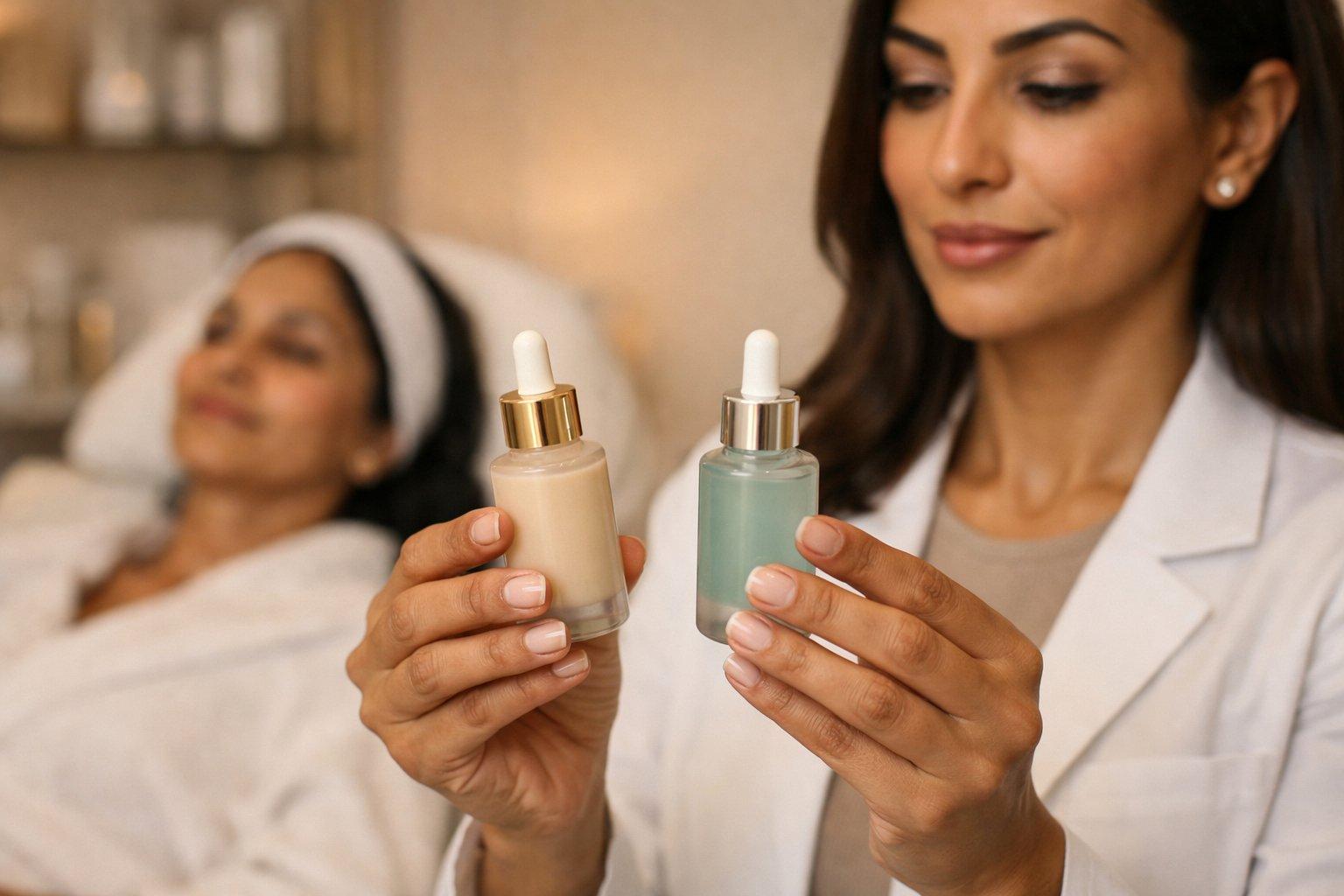
If your skin feels tight, reactive, dry, or suddenly less tolerant of products, it makes sense to wonder whether retinol is too much or whether peptides are the better fit. The short answer is that it depends on what your skin is asking for right now. In many routines, peptides are the gentler choice when your barrier feels stressed, while retinol can still be valuable when your skin can tolerate it and your goals include texture, tone, or visible signs of aging.
The key is not deciding which ingredient is “better” in the abstract. It’s understanding what each one does, how your skin responds, and when a simpler approach may be the smarter one. For many people, the best routine is less about chasing stronger products and more about supporting healthy, steady skin over time.
Quick answer
- Peptides are often the gentler option when your skin barrier feels irritated, dry, or easily reactive.
- Retinol may help with texture, uneven tone, and visible aging changes, but it can be harder on a compromised barrier.
- If your skin is stinging, flaking, or burning, it may be worth simplifying first before pushing active ingredients.
- Some people use both, but usually not by starting everything at once.
- If irritation keeps happening, a dermatologist can help you sort out whether your routine needs adjustment.
| Feature | Peptides | Retinol |
|---|---|---|
| Overall feel | Usually gentle and supportive | More active and potentially irritating |
| Best fit | Sensitive, dry, or stressed skin | Texture, tone, and aging concerns |
| Barrier friendliness | Often easier to tolerate | May weaken tolerance if overused |
| How to start | Usually simple to layer into a routine | Best introduced slowly |
What peptides do for the skin barrier
Peptides are short chains of amino acids that are often included in skincare to support the skin’s overall function and feel. In plain English, think of them as support players rather than aggressive actives. They are commonly used in formulas designed to help skin feel smoother, calmer, and more resilient.
If your skin barrier feels fragile, peptides may be a more comfortable place to start because they are generally less likely to create the dryness or peeling that some people notice with stronger actives. They can fit well into routines focused on recovery, maintenance, and long-term skin comfort.
What retinol does for the skin barrier
Retinol is a vitamin A derivative used in many anti-aging and texture-focused routines. It can be helpful for concerns like roughness, uneven tone, and the look of fine lines. But retinol is not usually thought of as a barrier-first ingredient. In fact, when it is introduced too quickly or layered with too many other actives, it can leave skin feeling dry, tight, red, or easily irritated.
That does not make retinol a bad ingredient. It just means it works best when your barrier is in a reasonably healthy place and your routine gives your skin room to adjust. For some people, that means using it less often, applying a small amount, or keeping the rest of the routine very simple.
How to tell what your skin barrier may need right now
A stressed skin barrier often shows up as skin that suddenly reacts to products you used to tolerate well. You might notice:
- Dryness that feels new or persistent
- Tightness after cleansing
- Stinging when you apply basic products
- Flaking, rough patches, or visible sensitivity
- Redness that seems easier to trigger
When that is the pattern, a gentler routine usually makes more sense than adding more intensity. In that setting, peptides may be easier to work with than retinol. If your skin feels stable and your main goal is smoothing texture or addressing visible aging changes, retinol may still have a role.
Can you use peptides and retinol together?
Yes, many people do. Peptides and retinol are not automatically incompatible, and some routines use both successfully. The important part is pacing. If your barrier is already struggling, adding both at the same time can make it harder to tell what is helping and what is pushing your skin too far.
A practical approach is to stabilize first. Once your skin feels calmer and more predictable, you can consider whether a low-and-slow retinol plan makes sense, while keeping the rest of the routine supportive. Your clinician can help you decide how to balance performance with tolerance.
What a simple barrier-friendly routine can look like
When your skin feels overworked, simpler is usually better. A basic routine may include a gentle cleanser, a bland moisturizer, daily sunscreen, and then either a peptide product or a carefully paced retinol product depending on your skin’s condition and goals.
It can also help to avoid stacking too many strong ingredients at once. If your skin is already irritated, layering exfoliating acids, scrubs, retinol, and multiple treatment serums may keep the cycle going. Many people notice their skin settles down when they remove the extras and rebuild slowly.
Professional options and when to check in
If your skin never seems to tolerate retinol, keeps burning with everyday products, or remains red and uncomfortable despite a gentler routine, it may be worth getting checked. Persistent irritation is not always just a product issue. A dermatologist can evaluate whether you are dealing with sensitivity, barrier disruption, or another condition that needs a more specific plan.
For patients interested in routine support as well as more tailored guidance, professional care can help simplify the guesswork. At Waverly DermSpa, we offer Chemical Peels and can help you understand whether it may be appropriate.
FAQ
Are peptides better than retinol for sensitive skin?
They may be easier to tolerate, especially if your skin barrier feels dry, reactive, or easily irritated. But the best choice depends on your goals and how your skin behaves over time.
Should I stop retinol if my skin burns?
If your skin is burning, stinging, or peeling more than expected, it may be worth pausing and simplifying your routine. If the problem continues, a dermatologist can evaluate what is going on.
Can peptides replace retinol?
Sometimes they can be a better fit for comfort and maintenance, but they do not do exactly the same job. Retinol is usually chosen for concerns like texture and visible aging changes, while peptides are often chosen for support and gentleness.
Is more retinol better?
Not usually. Stronger or more frequent use is not always more effective if it leaves your skin too irritated to stay consistent.
What matters most for the skin barrier?
Consistency, simplicity, moisturization, and sunscreen often matter more than having the most aggressive routine. Healthy skin usually responds best to a steady approach.
Ready to get help?
Schedule an appointment or send a message and our team will get back to you.
Prefer to call? 954-666-3736
This article is for educational purposes and is not medical advice. For diagnosis and personalized treatment, please book an appointment with a board-certified dermatologist.
