

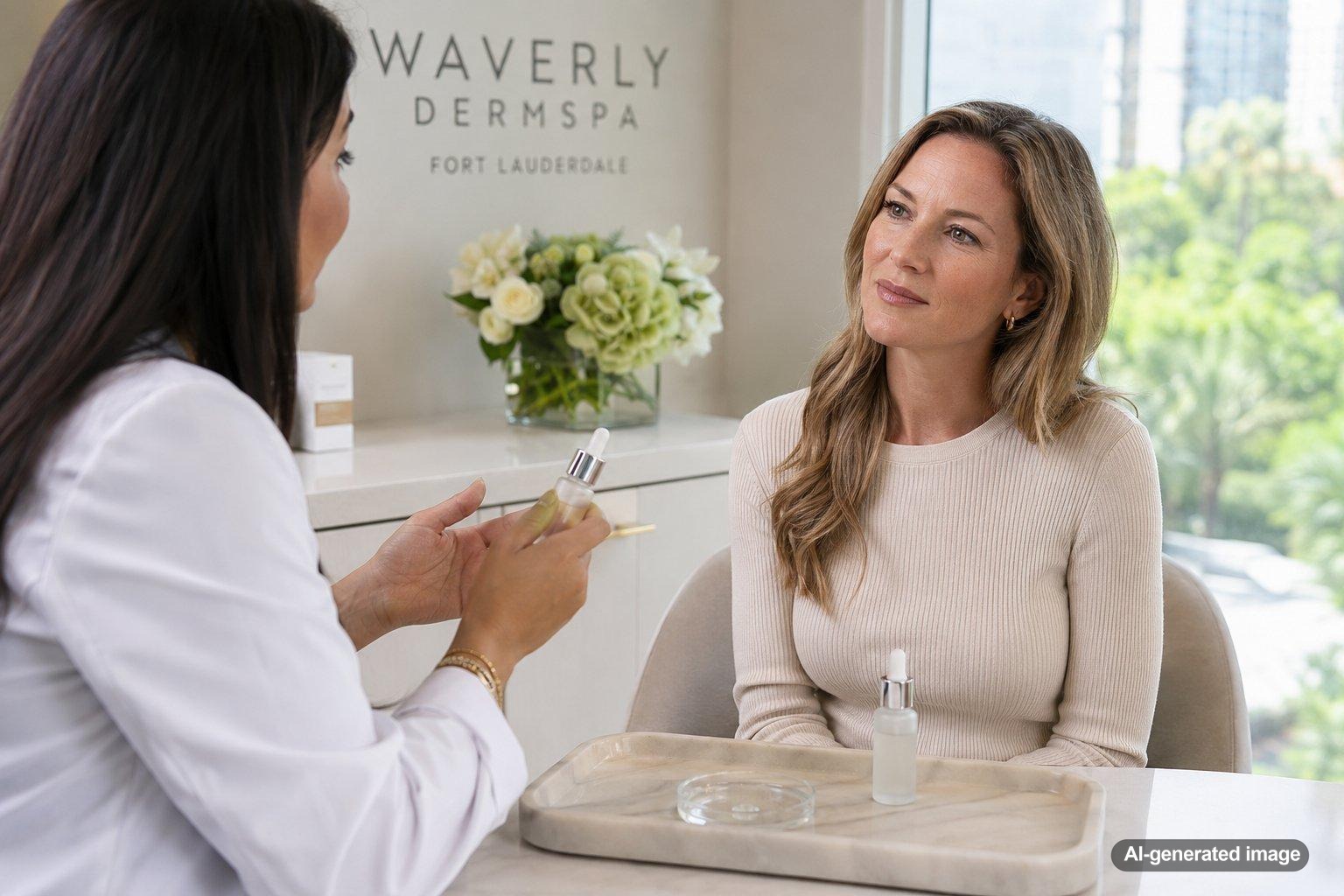
Peptides in skincare have become a quiet favorite for people who want a more supportive routine without jumping straight into aggressive active ingredients. They are often found in serums, moisturizers, eye creams, and barrier-focused formulas, and they are usually discussed in the context of firmness, fine lines, hydration, and skin resilience.
The most helpful expectation is simple: peptides are not a dramatic overnight change. They are typically a steady-support ingredient. With consistent use, a well-formulated peptide product may help skin look smoother, more comfortable, and better hydrated, especially when paired with sunscreen and a routine that protects the skin barrier.
Quick answer
- Peptides are short chains of amino acids, which are building blocks for proteins in the skin.
- In skincare, peptides may help support hydration, barrier comfort, and the appearance of smoother texture over time.
- They are usually best viewed as supportive ingredients, not a replacement for sunscreen, retinoids, procedures, or medical care when those are appropriate.
- Results vary by formula, consistency, skin type, and the rest of your routine.
- If your skin is reactive, acne-prone, or changing in a way that concerns you, a dermatologist can help you decide what belongs in your routine.
What peptides are
Peptides are small chains of amino acids. In the skin, amino acids are part of larger proteins such as collagen, elastin, and keratin. Topical peptide products are designed to support the look and feel of the skin in a gentle, gradual way.
Different peptide ingredients may be used for different goals. Some formulas focus on moisture and barrier support, while others are positioned for visible fine lines, texture, or firmness. The product base matters too. A peptide in a well-balanced moisturizer may feel very different from a peptide in a lightweight serum.
Why peptide products can feel different from one another
- Peptide type: Not every peptide is used for the same cosmetic goal.
- Formula quality: The overall product, including texture, preservatives, hydrators, and supporting ingredients, affects how it performs on the skin.
- Concentration and stability: A product can sound impressive on the label but still depend on thoughtful formulation.
- Your skin barrier: Dry, irritated, or over-exfoliated skin may respond differently than calm, balanced skin.
- Routine pairing: Sunscreen, gentle cleansing, moisturizer, and active ingredients all influence what you notice.
What you can do at home
If you are adding peptides to your routine, keep the rest of your skincare calm and consistent. Start with a gentle cleanser, moisturizer, and daily broad-spectrum sunscreen. Then add one peptide product at a time so you can tell how your skin responds.
- Use the product as directed on the label rather than layering multiple peptide products at once.
- Choose a texture that fits your skin type, such as a lightweight serum for oily skin or a richer cream for dry skin.
- Be cautious about adding several new active ingredients in the same week.
- If you use retinoids, exfoliating acids, or vitamin C, consider keeping your routine simple until you know what your skin tolerates.
- Do not rely on peptides as your only anti-aging step. Daily sun protection remains essential for helping protect skin from UV-related visible aging.
Professional options
In an office setting, peptide skincare may be discussed as part of a broader maintenance plan. A dermatologist or trained skincare professional can review your routine, skin goals, sensitivity level, and current products before suggesting where peptides may fit.
Professional options may include skincare routine guidance, barrier repair planning, treatment preparation, post-treatment skincare support, or pairing peptides with other well-tolerated ingredients. For concerns such as deeper lines, significant texture change, pigment concerns, acne, rosacea-like redness, or irritation, an in-person evaluation is often more helpful than guessing from product labels.
When to see a dermatologist
Peptides are cosmetic skincare ingredients, but not every skin concern should be handled with over-the-counter products alone. It is worth booking a dermatology visit if you notice a new or changing spot, a rash that persists, burning or stinging that does not settle, sudden sensitivity, worsening acne, unexplained scaling, or irritation after several products.
A dermatologist can help separate routine dryness or sensitivity from conditions that may need a different approach. They can also help you avoid over-layering products that may be working against your skin barrier.
FAQ
Are peptides good for every skin type?
Many peptide products are designed to be gentle, but no ingredient is perfect for every person. The full formula matters, especially if you have sensitive, acne-prone, or reactive skin.
How long does it take to notice a difference?
Visible changes vary. Peptides are usually associated with gradual improvement in the look of hydration, smoothness, and comfort rather than a fast, dramatic shift.
Can peptides replace retinol?
Not usually. Peptides and retinoids are different categories of ingredients. Some people use both, while others choose peptides when they want a gentler routine. A dermatologist can help you decide what makes sense for your skin.
Can I use peptides with vitamin C or hyaluronic acid?
Many routines combine peptides with hydrating ingredients such as hyaluronic acid, and some people also use vitamin C. If your skin is sensitive, introduce products slowly and avoid changing too many steps at once.
Are peptide eye creams worth it?
They may be helpful for dryness and the look of fine lines around the eyes, depending on the formula. For puffiness, pigment, or deeper lines, it is helpful to understand the cause before choosing products.
Ready to get help?
Schedule an appointment or send a message and our team will get back to you.
Prefer to call? 954-666-3736
This article is for educational purposes and is not medical advice. For diagnosis and personalized treatment, please book an appointment with a board-certified dermatologist.
