

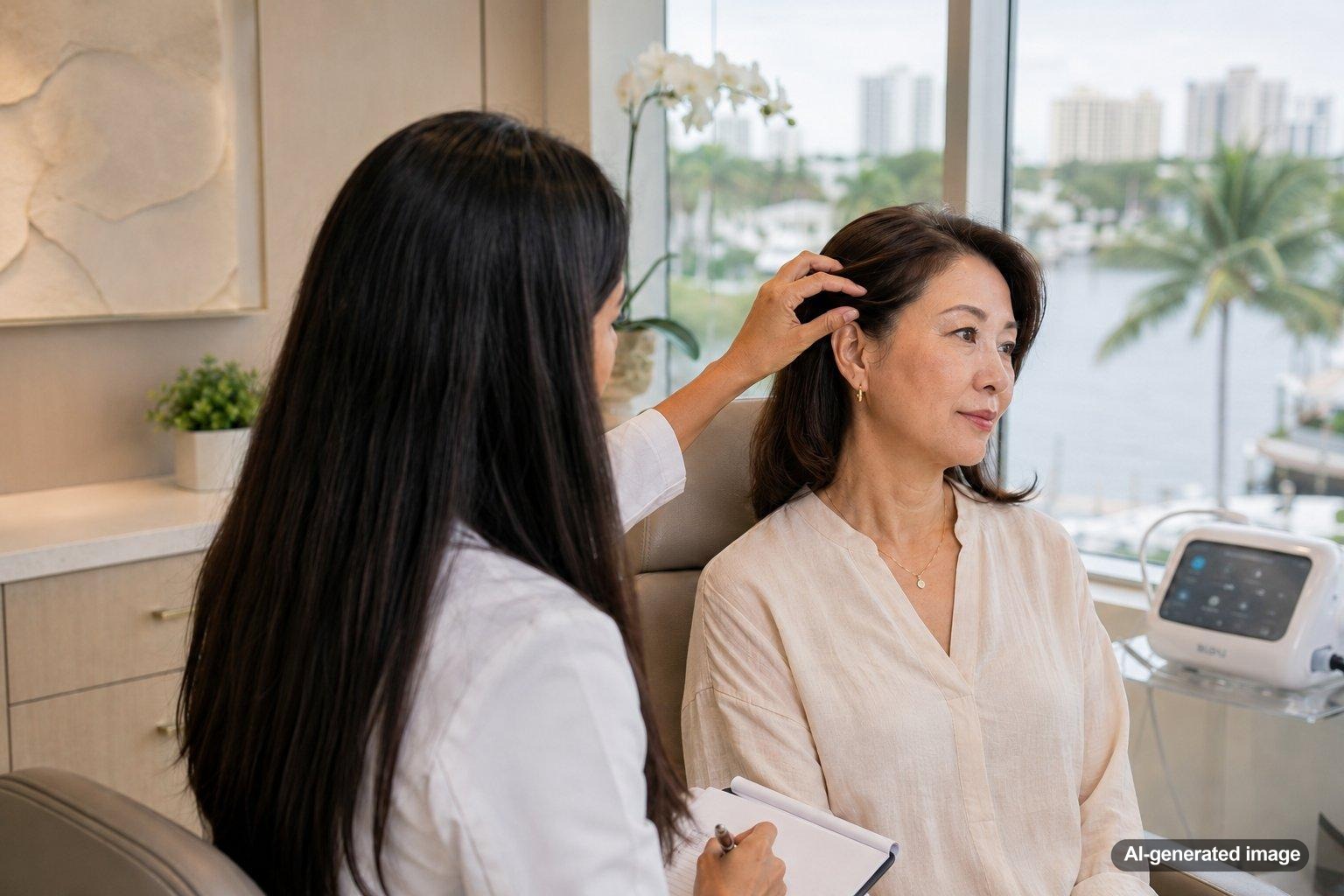
Rough, scaly spots on a frequently sun-exposed scalp or ear can be easy to dismiss as simple dryness, but some may be actinic keratoses, also called AKs. These precancerous growths develop in skin that has accumulated ultraviolet damage, making a dermatology evaluation important before deciding how a spot should be treated.
Photodynamic therapy, or PDT, is one option dermatologists may consider for actinic keratoses, particularly when there are multiple lesions or an area of broader sun damage. For people who spend significant time outdoors in Fort Lauderdale or return to South Florida seasonally, understanding the treatment process and the need for careful light protection afterward can make planning much easier.
Quick answer
- PDT is a dermatologist-directed treatment that combines a light-sensitive medication with a specific light source to target abnormal cells.
- It may be considered for multiple actinic keratoses or areas with broader sun damage, including parts of the scalp.
- The treated area can become red, tender, swollen, crusted, or sensitive while it recovers, and experiences vary.
- Strict light avoidance and protection after treatment are important because the medication temporarily increases photosensitivity.
- A dermatologist should examine concerning lesions first because not every rough or scaly spot is an actinic keratosis.
What are actinic keratoses?
Actinic keratoses are precancerous areas that develop after cumulative ultraviolet exposure. They often feel rough or gritty and can appear pink, red, tan, brown, or similar to the surrounding skin. Some are easier to feel than to see. They commonly occur on chronically sun-exposed areas, including the face, ears, scalp, forearms, and backs of the hands.
AKs deserve medical attention because some can progress to squamous cell carcinoma. It isn’t possible to reliably determine at home which individual lesion may become more concerning, so examination by a dermatologist is appropriate when a new, persistent, changing, painful, bleeding, or repeatedly crusting spot appears.
Why the scalp and ears need special attention
The scalp and ears can accumulate substantial ultraviolet exposure over many years. A thinning or bald scalp has less natural coverage, while the ears may receive direct sunlight even when the face is partly shaded by a hat. In South Florida, outdoor routines can make consistent sun protection especially important throughout the year.
These areas can also be difficult to inspect closely on your own. A dermatologist can evaluate individual lesions as well as the surrounding skin and determine whether a lesion appears appropriate for a field-directed treatment such as PDT or whether another approach, including biopsy when clinically indicated, should be considered.
How photodynamic therapy works
PDT generally involves applying a photosensitizing medication to the treatment area and allowing it to remain on the skin for a clinician-determined period. The area is then exposed to an appropriate light source. The combination activates the medication within targeted cells and is used to treat actinic keratoses and certain areas of sun-damaged skin.
The exact medication, preparation, incubation period, illumination method, and treatment schedule can vary. Your dermatologist can explain the protocol recommended for your skin and the location and extent of the lesions.
Why PDT may be considered for an area with multiple AKs
When numerous actinic keratoses appear within the same sun-damaged region, treating only the most visible spots may not address the broader area of abnormal skin. PDT is considered a field-directed therapy, meaning a dermatologist may use it across a defined treatment area rather than treating just one isolated lesion.
This can be particularly relevant to a sun-exposed scalp with scattered rough areas. Treatment decisions still need to be individualized because the number, thickness, appearance, location, and history of the lesions can influence which approach is appropriate.
What treatment can feel like
Sensations during light activation vary. Some people experience warmth, tingling, stinging, or burning during treatment. Temporary redness, swelling, tenderness, scaling, crusting, or peeling can occur afterward as the treated area recovers. Your dermatologist can explain what reactions are expected with the specific PDT protocol being used and how to care for the area afterward.
Because individual responses differ, it is helpful to discuss work, travel, outdoor activities, and social commitments before scheduling treatment, particularly if the scalp or ears will be highly visible.
Light protection after PDT is especially important in Fort Lauderdale
The medication used for PDT temporarily makes treated skin highly sensitive to light. Your clinician will give specific instructions about avoiding sunlight and other bright light sources after the procedure. Follow those instructions carefully, including the recommended duration of protection.
In a bright South Florida environment, planning transportation and your time after treatment matters. A wide-brimmed hat or other physical protection may be recommended, but your dermatologist’s instructions should guide exactly how the treated scalp or ears are protected. Do not assume sunscreen alone is sufficient immediately after PDT if your clinician has directed you to avoid light exposure.
What you can do at home
Home care doesn’t replace evaluation or treatment of a suspected actinic keratosis, but consistent sun protection can help reduce additional ultraviolet damage. Practical habits include seeking shade, wearing protective clothing and a broad-brimmed hat, and using a broad-spectrum sunscreen as directed for exposed skin once it is appropriate for the treatment stage.
Avoid picking or aggressively exfoliating rough lesions. After PDT, use only the cleansers, moisturizers, medications, and sun-protection measures recommended by your clinician until the area has recovered.
Other professional treatment options
PDT is one of several approaches a dermatologist may consider for actinic keratoses. Depending on the number and characteristics of the lesions, common categories include cryosurgery, prescription topical field therapies, curettage, and other dermatologist-directed procedures. A suspicious or atypical lesion may require further evaluation rather than routine field treatment.
The most appropriate option depends on factors such as lesion thickness, location, the amount of surrounding sun damage, medical history, previous treatments, and personal preferences. A dermatologist can help compare the practical advantages and limitations of each approach.
When to see a dermatologist
Arrange a dermatology evaluation for a new or persistent rough spot on the scalp or ear, especially if it is growing, becoming thicker, painful, tender, bleeding, ulcerated, or repeatedly crusting. A lesion that looks noticeably different from surrounding spots also deserves attention.
If you’ve previously had actinic keratoses or skin cancer, your dermatologist can advise you on an appropriate skin-examination schedule based on your individual history. Regular self-awareness between visits can also help you notice meaningful changes sooner.
Frequently asked questions
Can PDT be used for actinic keratoses on the scalp?
Yes. PDT is among the field-directed treatments dermatologists may consider for actinic keratoses, including lesions on the scalp. Whether it is appropriate depends on the characteristics of the lesions and the surrounding skin.
Can PDT be used on the ears?
A dermatologist may consider PDT for appropriately selected actinic keratoses in sun-exposed areas, but lesions on the ears should be examined carefully before treatment. Your clinician can determine whether PDT or another approach is more suitable for a specific lesion.
Does every actinic keratosis need the same treatment?
No. Treatment can differ depending on the lesion’s size, thickness, number, location, appearance, previous treatment, and the amount of surrounding sun damage. Some approaches treat individual lesions, while others treat a broader field.
How long does the skin stay sensitive to light after PDT?
The required period of light avoidance depends on the photosensitizing medication and protocol used. Follow the instructions from your treating clinician closely rather than relying on a general timeline.
Should a suspicious spot be treated with PDT before it is examined?
No. A dermatologist should evaluate a concerning or uncertain lesion first. If a spot has features that warrant additional assessment or biopsy, that evaluation may need to occur before field-directed treatment.
Can I schedule PDT right before a beach day or outdoor event?
PDT requires careful light protection afterward, so significant outdoor plans can make timing inconvenient. Discuss upcoming travel, beach activities, boating, golf, or other outdoor commitments with your clinician before scheduling the procedure.
At Waverly DermSpa, we offer Photodynamic Therapy (PDT) and can help you understand whether it may be appropriate.
Ready to get help?
Schedule an appointment or send a message and our team will get back to you.
Prefer to call? 954-666-3736
This article is for educational purposes and is not medical advice. For diagnosis and personalized treatment, please book an appointment with a board-certified dermatologist.
Sources & further reading
- American Academy of Dermatology (AAD) – Actinic keratosis: Diagnosis and treatment
- DermNet – Actinic keratoses (Solar keratosis): Diagnosis and Treatment
- The Skin Cancer Foundation – Actinic Keratosis Treatment
