

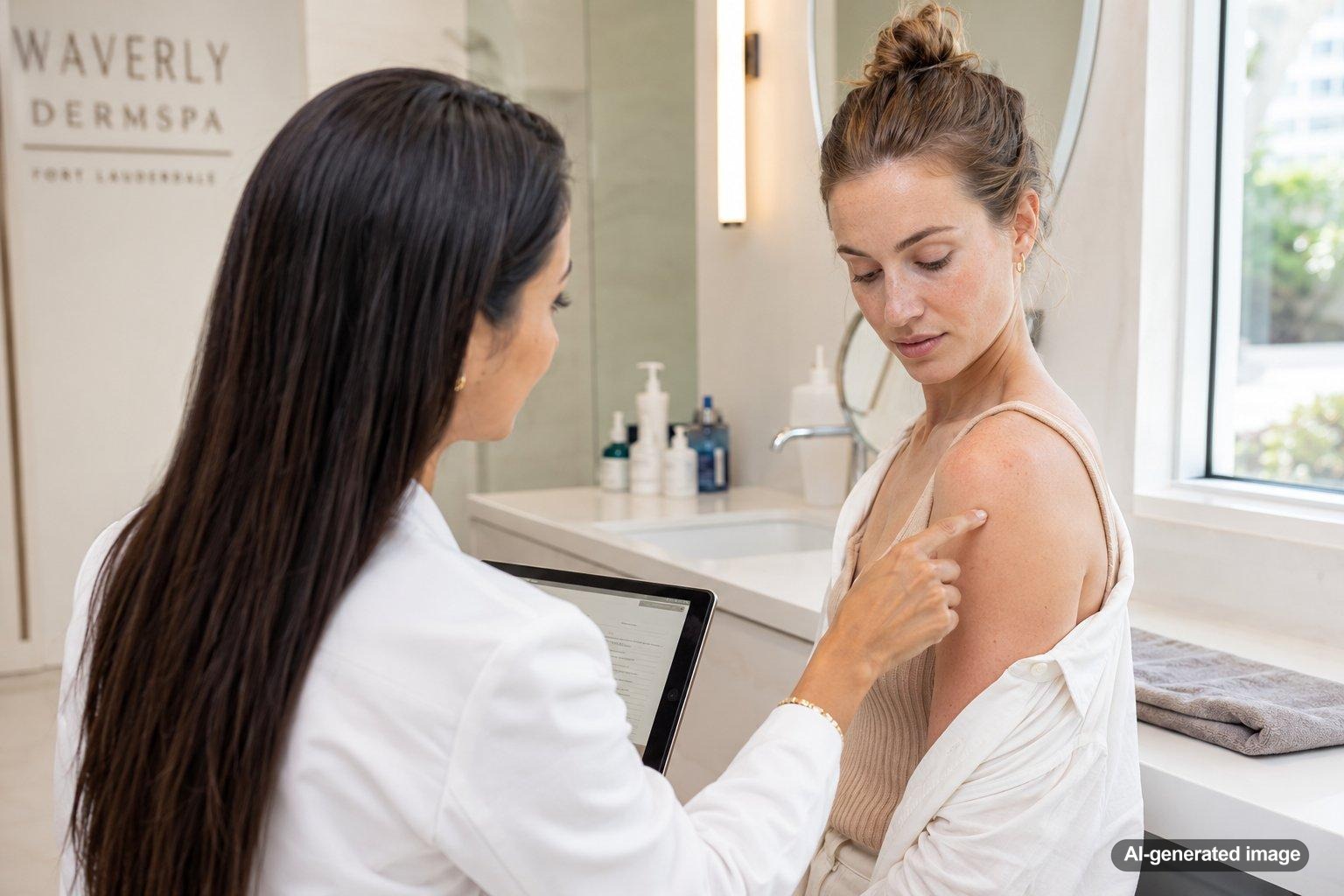
Painful, itchy bumps that appear beneath a swimsuit after ocean swimming may be associated with sea bather’s eruption. This reaction occurs when microscopic marine organisms or their stinging cells become trapped between wet fabric and the skin. Pressure, friction, evaporation, and rinsing while the swimsuit is still on can trigger additional stings.
The pattern is often a useful clue: the rash tends to be concentrated beneath a bathing suit, wetsuit cuffs, straps, or other areas where fabric holds organisms close to the body. However, several skin conditions can look similar, so persistent, severe, or uncertain symptoms are worth discussing with a dermatologist.
Quick answer
- Sea bather’s eruption is an itchy inflammatory reaction associated with tiny marine organisms, including larval forms of certain jellyfish and sea anemones.
- Bumps often develop beneath swimwear because the fabric traps the organisms against the skin.
- Changing out of wet swimwear promptly and avoiding vigorous rubbing may reduce further irritation.
- Cool compresses and gentle, fragrance-free skin care may help soothe mild discomfort.
- Seek medical evaluation for severe pain, widespread swelling, breathing difficulty, fever, vomiting, eye symptoms, signs of infection, or a rash that is not improving.
What is sea bather’s eruption?
Sea bather’s eruption is a skin reaction that can develop after swimming in warm coastal waters. It is sometimes informally called a sea lice rash, although it is not caused by lice. The reaction is linked to stinging cells from very small marine animals, such as larval thimble jellyfish or certain sea anemones.
These organisms may be difficult or impossible to see in the water. They can collect inside a swimsuit, beneath straps, around elastic edges, in a wetsuit, or in body hair. Once trapped, pressure from the fabric or rubbing with a towel can cause the stinging cells to release irritating substances into the skin.
The result may include clusters of red bumps, welts, small blisters, or pimple-like spots. The areas can feel intensely itchy, prickly, burning, or painful. Symptoms may begin while you are still in the water, shortly after leaving it, or several hours later.
Why does the rash appear under a swimsuit?
A swimsuit creates a close, damp environment that can hold microscopic organisms against the body. As seawater drains or evaporates, the fabric presses more firmly against the skin. Elastic bands, swimsuit seams, straps, and tight-fitting areas can create even more pressure.
That is why the eruption often appears on the chest, abdomen, buttocks, groin, waist, or upper thighs rather than only on exposed skin. A wetsuit can produce a similar pattern around the cuffs, neckline, and other snug areas.
A freshwater shower taken while the swimsuit is still on may sometimes worsen the reaction. Changes in water concentration, combined with the pressure of wet fabric, may trigger additional stinging cells. Rubbing the area with a towel can also increase irritation.
Common symptoms and clues
Sea bather’s eruption can look different from person to person. Common features include:
- Intense itching, tingling, burning, or tenderness after ocean exposure
- Red bumps, welts, small blisters, or pustule-like spots
- A rash concentrated beneath swimwear or tight fabric
- Greater irritation along straps, elastic edges, waistbands, or wetsuit cuffs
- Symptoms that become more noticeable several hours after swimming
- A stronger reaction after repeated exposure in some individuals
Some people may also feel generally unwell. Headache, fatigue, fever, chills, nausea, vomiting, or eye irritation can occur with more significant reactions. These symptoms deserve medical attention, particularly when they are pronounced or worsening.
Could it be something else?
Not every rash after swimming is sea bather’s eruption. The location, timing, appearance, and type of water exposure all matter. Other possibilities can include:
- Swimmer’s itch: This reaction more commonly affects exposed skin rather than areas beneath tight swimwear.
- Contact dermatitis: Sunscreen, detergent, fabric dyes, elastic, or a new skin product may irritate sensitive skin.
- Folliculitis: Inflamed hair follicles can create tender or itchy pimple-like bumps, sometimes after exposure to contaminated water.
- Heat rash: Heat, sweat, and tight clothing can block sweat ducts and produce clusters of small bumps.
- Jellyfish stings: Contact with a larger jellyfish may produce more immediate pain and linear or patterned marks.
- Insect bites: Bites acquired near the beach may become noticeable after swimming but are not caused by ocean water.
A dermatologist can evaluate the distribution and appearance of the rash, review the timing of your exposure, and help distinguish among these possibilities.
What can you do at home?
For a mild reaction, conservative skin care may help reduce irritation while the skin settles. Consider the following steps:
- Remove the swimsuit as soon as practical without rubbing it repeatedly across the skin.
- Rinse the body after the swimsuit has been removed.
- Pat the skin dry gently rather than scrubbing with a towel.
- Apply a cool compress for short intervals to soothe itching and discomfort.
- Use a mild, fragrance-free cleanser and a simple moisturizer suitable for sensitive skin.
- Avoid scratching, exfoliating products, fragranced lotions, retinoids, and strong acids until the area feels calmer.
- Wash the swimsuit thoroughly before wearing it again because stinging cells may remain in the fabric.
Over-the-counter anti-itch products are not appropriate for every person or every location on the body. Ask a pharmacist or clinician before applying medication to the groin, breasts, broken skin, or a large surface area. Children, pregnant individuals, and people with medication sensitivities may need additional guidance.
Professional evaluation and treatment options
A dermatologist may examine the rash to determine whether its pattern is consistent with sea bather’s eruption or another condition. Depending on the severity and location, professional options may include high-level categories such as prescription-strength anti-inflammatory treatment, oral medication for significant itching, or treatment for a secondary infection if scratching has damaged the skin.
The appropriate approach depends on factors such as the extent of the rash, the patient’s age, other symptoms, medication history, and whether sensitive areas are involved. Your clinician can help you decide which options are suitable.
When should you see a dermatologist?
Arrange an evaluation when the diagnosis is uncertain, the discomfort is significant, or the rash is not gradually improving. Seek prompt medical attention for:
- Trouble breathing, facial swelling, dizziness, or faintness
- Severe or rapidly increasing pain
- Widespread blistering or swelling
- Fever, chills, weakness, vomiting, or other systemic symptoms
- Eye involvement or significant irritation near the eyes
- Pus, spreading warmth, increasing tenderness, or red streaking
- Open sores caused by scratching
- Symptoms affecting a young child or a person with a weakened immune system
- A rash that repeatedly returns after ocean swimming
If you’re unsure, it’s worth getting checked. Similar-looking rashes can have different causes and may require different care.
How can you reduce the chance of another reaction?
There is no way to eliminate every risk in natural ocean water, but a few practical habits may help:
- Pay attention to beach advisories and local reports of jellyfish or sea bather’s eruption activity.
- Avoid swimming in areas where many people are reporting a similar rash.
- Change out of wet swimwear promptly after leaving the ocean.
- Do not shower in freshwater while still wearing the swimsuit.
- Avoid vigorous towel rubbing immediately after ocean exposure.
- Wash swimwear before wearing it again.
- Consider whether tight swimwear or wetsuit edges are concentrating irritation in recurring areas.
Even careful swimmers can experience a reaction because the organisms are microscopic. Developing a rash does not necessarily mean the beach was visibly dirty or that you did something wrong.
Frequently asked questions
Is sea bather’s eruption contagious?
No. The skin reaction itself does not spread from person to person. However, multiple swimmers may develop symptoms after exposure to the same area of water.
Why do people call it sea lice?
Sea lice is an informal and potentially confusing nickname. Sea bather’s eruption is not caused by head lice or body lice. It is associated with stinging cells from tiny marine animals.
Can the bumps appear after I leave the beach?
Yes. Some people notice tingling or itching quickly, while others develop a more visible rash several hours after swimming.
Should I put sunscreen on the rash?
Sunscreen remains important for exposed skin, but an inflamed rash may be sensitive to certain formulas. Protect the area with loose clothing when practical and ask a clinician about a suitable sunscreen if products sting or worsen irritation.
Can I swim again while the rash is present?
It may be more comfortable to avoid additional ocean exposure until the skin has settled. Saltwater, heat, friction, and tight swimwear can aggravate already inflamed skin.
Why did I react when other swimmers did not?
Individual sensitivity, previous exposure, swimsuit fit, time spent in the water, and the number of organisms trapped against the skin may all influence the reaction.
Ready to get help?
Schedule an appointment or send a message and our team will get back to you.
Prefer to call? 954-666-3736
This article is for educational purposes and is not medical advice. For diagnosis and personalized treatment, please book an appointment with a board-certified dermatologist.
Sources & further reading
- DermNet – Sea bather’s eruption
- Centers for Disease Control and Prevention (CDC) – Cercarial Dermatitis and Sea Bather’s Eruption Distinction
