

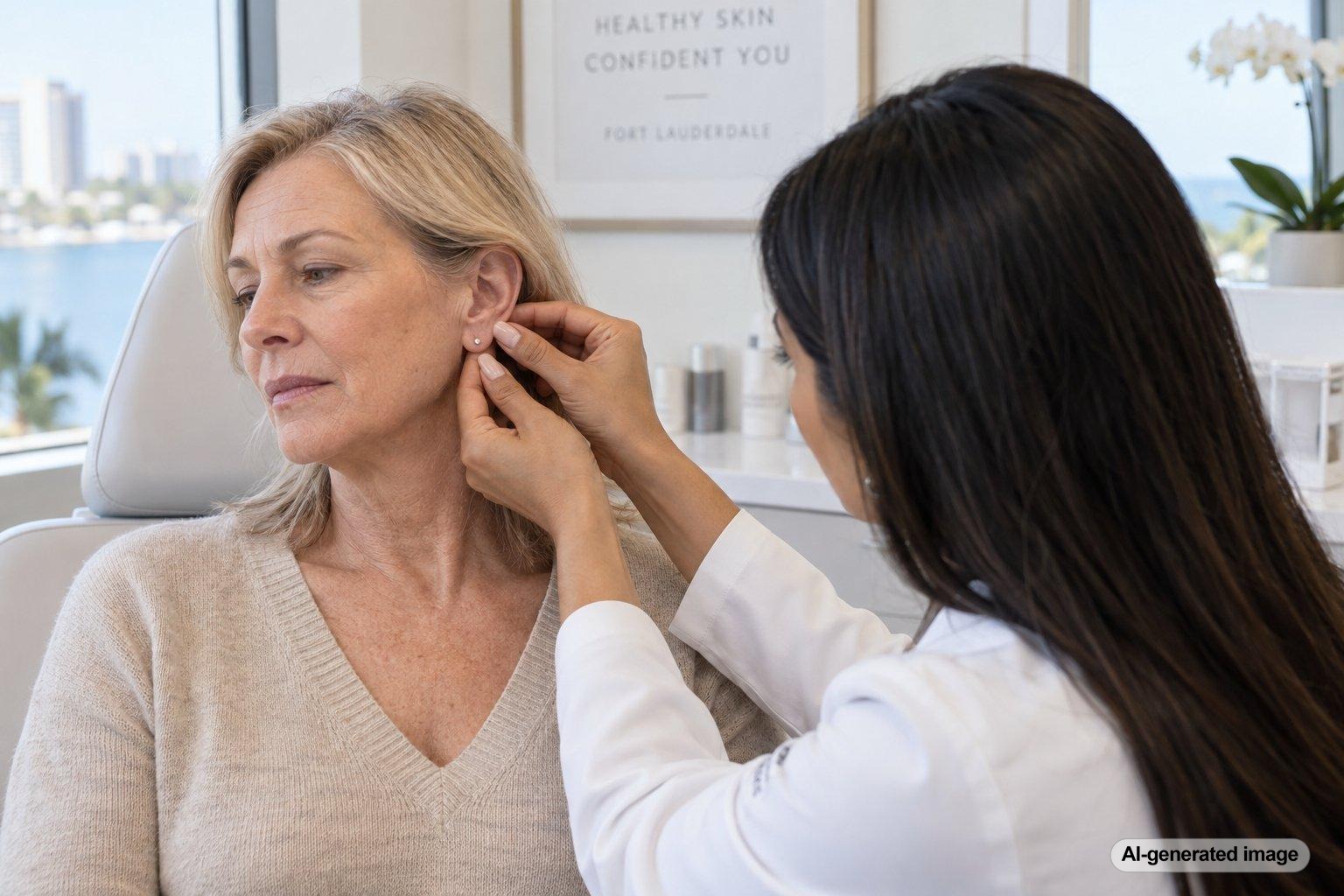
A small, painful lump in your earlobe after a piercing can have several possible causes. It may be temporary swelling or irritation from pressure and friction, but infection, developing scar tissue, or a small cyst can also create a tender bump. The way the lump looks and feels, how recently the piercing was done, whether it is growing, and whether there is redness or drainage can all provide useful clues.
Because different piercing-related bumps can look similar, especially early on, it is better not to squeeze, puncture, or try to diagnose the lump yourself. A dermatologist can examine the area and determine whether simple care, monitoring, or treatment is appropriate.
Quick answer
- Irritation: Pressure, repeated touching, tight jewelry, or friction can leave a new or established piercing sore and swollen.
- Infection: Increasing redness, warmth, tenderness, swelling, or yellowish drainage can be associated with infection.
- Scar tissue: A firm or gradually enlarging bump can represent a raised scar, including a keloid in people who are prone to them.
- Cyst: A round lump beneath the skin can sometimes be an epidermal inclusion cyst, which may become tender when inflamed.
- Evaluation matters: A lump that is increasingly painful, draining, enlarging, or not improving is worth showing to a dermatologist.
Why can a lump form after an ear piercing?
A piercing creates a small wound through the skin. During healing, the area can react to friction, jewelry pressure, repeated manipulation, or other irritation. Mild localized swelling can therefore occur without necessarily indicating a serious problem.
A piercing also creates an opening through which bacteria can enter. According to the American Academy of Dermatology, soreness, redness, puffiness, or yellowish drainage around a piercing may be signs of infection. Cleveland Clinic similarly notes that an infected ear piercing can become red, swollen, sore, warm, itchy, or tender and may produce drainage.
Another possibility is an abnormal scar response. Keloids can develop after skin injuries, including ear piercings. They usually become raised and may continue growing beyond the boundaries of the original injury. Some can also feel tender, painful, itchy, or firm.
Common causes of a small painful earlobe lump
- Mechanical irritation: Sleeping on the piercing, catching the earring on clothing, frequent touching, or pressure from jewelry can keep the area inflamed.
- Localized infection: Bacteria entering the healing piercing may cause increasing soreness, redness, warmth, swelling, or drainage.
- Raised scar tissue: A hypertrophic scar stays closer to the original wound, while a keloid may extend beyond it and continue to enlarge.
- Epidermal inclusion cyst: Skin cells and keratin can become trapped beneath the skin and form a round lump. These cysts may become tender or inflamed.
- Jewelry-related irritation: The size, placement, pressure, or material of jewelry can sometimes aggravate the surrounding skin.
How can you tell irritation from infection?
Some tenderness and localized swelling can occur while a piercing is healing, so one symptom alone does not identify the cause. The overall pattern is more useful. Irritation may remain limited to the area receiving pressure or friction and may improve when that trigger is reduced.
Infection becomes more concerning when pain, redness, warmth, or swelling is increasing rather than settling down, particularly if there is yellow or green drainage. Feeling unwell, developing fever, or seeing redness spread beyond the immediate piercing area also warrants prompt medical attention.
Do not rely on appearance alone to distinguish infection from an irritated cyst or scar. A dermatologist can examine the lump directly and determine what is most likely.
Could it be a keloid?
It is possible, but not every piercing bump is a keloid. Keloids are a type of raised scar that can develop after skin injury, and ear piercings are a recognized trigger. They often develop gradually rather than appearing as sudden overnight swelling.
A keloid may feel firm or rubbery and can slowly extend beyond the original piercing site. The American Academy of Dermatology notes that keloids may be painful, itchy, or burning while they are growing. Because early keloids can resemble other bumps, an in-person evaluation is useful before assuming that a piercing lump is scar tissue.
Could the lump be a cyst?
A small lump within or beneath the earlobe can sometimes be an epidermal inclusion cyst. These develop when keratin and skin cells collect beneath the surface. They are often painless, but inflammation can make a cyst swollen, warm, or tender.
A cyst should not be squeezed, cut, or drained at home. Trying to empty it yourself can injure the skin, increase inflammation, introduce bacteria, and make it harder to determine what the lump actually is.
What can you do at home?
If the area is mildly irritated and you do not have concerning symptoms, focus on gentle care rather than aggressive treatment.
- Wash your hands before touching the piercing.
- Keep the area clean using gentle care appropriate for a healing piercing.
- Avoid repeatedly twisting, squeezing, or picking at the lump.
- Reduce avoidable pressure or friction, including sleeping directly on a tender piercing when possible.
- Do not puncture or attempt to drain a lump yourself.
- Avoid harsh products such as hydrogen peroxide on a healing piercing, since they can irritate healing skin.
If you suspect infection, significant swelling, an embedded earring, or a developing keloid, it is better to have the area evaluated before making major changes to the jewelry on your own.
What professional options may be considered?
Treatment depends on what is causing the lump. A dermatologist may recommend conservative care for irritation, evaluate whether infection requires medical treatment, or discuss options for an inflamed cyst or excessive scar tissue. Raised scars and keloids may require a different approach from infections or cysts, which is why identifying the cause matters before treatment begins.
If jewelry is contributing to pressure, irritation, or another complication, your clinician can also help you decide how it should be managed without unnecessarily traumatizing the piercing site.
When should you see a dermatologist?
Consider scheduling an evaluation if the lump is persistently painful, continues to enlarge, or does not settle with gentle care. Prompt evaluation is especially important if you notice:
- Increasing redness, warmth, swelling, or tenderness
- Yellow or green drainage
- Redness spreading away from the piercing
- Fever or feeling generally unwell
- An earring or backing becoming embedded in swollen tissue
- A firm raised area that continues growing beyond the piercing site
- A recurrent lump that repeatedly becomes inflamed
- Bleeding, rapid change, or another feature that concerns you
A dermatologist can distinguish among irritation, infection, cysts, and scar-related changes and recommend care based on what is actually present.
FAQ
Should I pop a piercing bump?
No. Squeezing or puncturing a bump can further injure the skin and introduce bacteria. A keloid is scar tissue and cannot be popped, while attempting to drain a cyst yourself can increase the risk of inflammation or infection.
Does every hard lump after a piercing mean a keloid?
No. A firm bump may come from swelling, scar tissue, a cyst, or another localized skin reaction. Keloids typically grow as raised scars and may extend beyond the original injury, but an examination is the safest way to tell similar-looking bumps apart.
Can an old piercing suddenly develop a painful lump?
Yes. Even an established piercing can become irritated, and cysts or localized inflammation can occur later. A newly painful or changing lump should be checked if it persists, grows, drains, or becomes increasingly inflamed.
Can I use hydrogen peroxide on an irritated piercing?
The American Academy of Dermatology advises avoiding hydrogen peroxide on a healing piercing because it can damage healing skin. Gentle cleaning and avoiding unnecessary manipulation are generally preferable while you arrange evaluation for symptoms that are not improving.
How do I know whether the lump needs treatment?
That depends on the cause. Some irritation may improve after the source of friction or pressure is addressed, while infection, an inflamed cyst, or growing scar tissue may need professional care. If you’re unsure, it’s worth getting checked.
Ready to get help?
Schedule an appointment or send a message and our team will get back to you.
Prefer to call? 954-666-3736
This article is for educational purposes and is not medical advice. For diagnosis and personalized treatment, please book an appointment with a board-certified dermatologist.
Sources & further reading
- American Academy of Dermatology (AAD) – Caring for new piercings
- Cleveland Clinic – Infected Ear Piercing: Symptoms, Treatment & Prevention
