

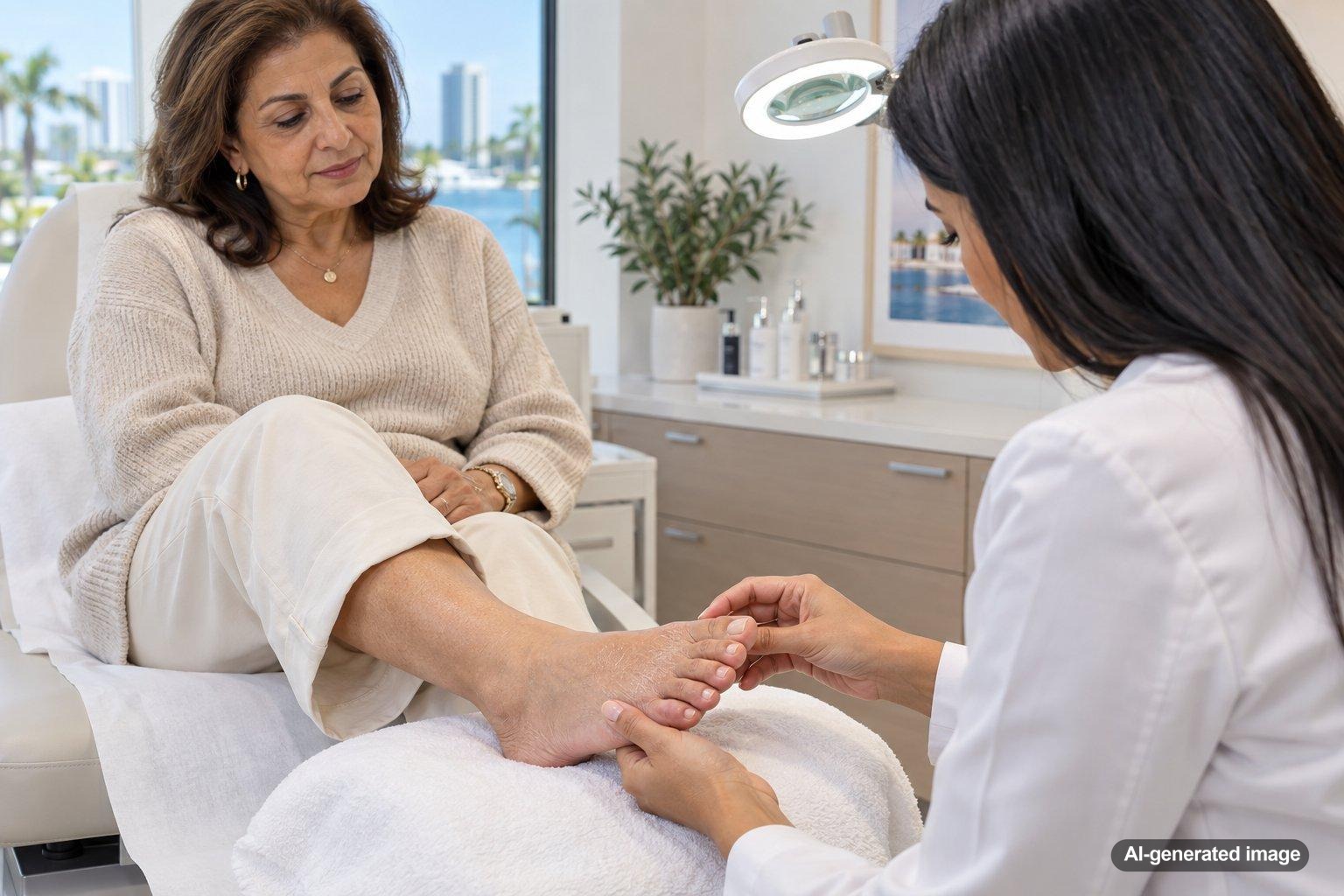
Painful cracks at the base of your toes usually happen when the skin barrier becomes damaged enough to split. Moisture trapped around the toes, repeated friction, very dry or thickened skin, and certain skin conditions can all contribute. Fungal infections such as athlete’s foot can also cause peeling and painful fissures, particularly around or between the toes.
Because several problems can look similar in this area, the location of the cracks alone doesn’t identify the cause. Persistent, recurrent, spreading, or very painful cracks are worth having examined, especially if you also notice itching, scaling, drainage, swelling, or changes in the toenails.
Quick answer
- Moisture and friction can soften and irritate skin where the toes meet the foot.
- Dry or thickened skin can lose flexibility and split when you walk or bend your toes.
- Athlete’s foot can cause peeling, scaling, itching, and painful cracking around the toes.
- Eczema and other inflammatory skin conditions may also leave foot skin dry, irritated, and prone to fissures.
- Cracks that keep returning or show signs of infection should be evaluated by a dermatologist.
Why skin at the base of the toes can split
The skin around the toe creases goes through a lot during an ordinary day. It bends with every step, rubs against shoes and neighboring toes, and can stay damp from sweat. When the outer skin barrier is healthy, it can usually tolerate that movement. When the barrier is softened, irritated, unusually dry, or thickened, normal stretching may be enough to create a fissure.
These splits may feel surprisingly painful because walking repeatedly pulls on the same small area. A superficial crack may sting, while a deeper fissure can become tender or occasionally bleed.
Common causes and triggers
- Excess moisture: Sweat, damp socks, wet shoes, or moisture that stays trapped between the toes can soften the skin and make it easier to break down.
- Friction and pressure: Tight shoes, toes rubbing together, repetitive exercise, or pressure on a thickened area can contribute to cracking.
- Very dry skin: Skin that lacks flexibility can split where the foot repeatedly bends.
- Athlete’s foot: This fungal infection can cause itching, burning, peeling, scaling, whitened skin between the toes, and painful fissures.
- Eczema: Some forms of eczema can affect the feet and leave skin inflamed, scaly, thickened, or deeply cracked.
- Other skin or nail problems: Psoriasis, contact irritation, callused skin, and other conditions can sometimes resemble simple dryness or athlete’s foot.
Clues that moisture may be part of the problem
Skin that looks pale, whitish, soft, or soggy around a crack may have been exposed to too much moisture. This is especially common between closely spaced toes or after long periods in socks and closed shoes. In warm, humid South Florida weather, perspiration and occlusive footwear can make this easier to notice.
Moisture doesn’t automatically mean a fungal infection is present. However, persistent peeling, itching, burning, odor, or spreading scale can be reasons to have the area checked rather than repeatedly treating it as simple dry skin.
What you can do at home
Gentle foot care can reduce some of the everyday irritation that contributes to fissures. The goal is to keep the area clean and appropriately dry without aggressively scrubbing or picking at damaged skin.
- Wash your feet gently and dry carefully, including between the toes.
- Change out of damp socks and shoes rather than leaving the skin wet for long periods.
- Choose footwear with enough room to reduce rubbing and pressure around the toes.
- Avoid peeling, cutting, or filing cracked skin aggressively.
- If surrounding skin is dry rather than soggy, a bland moisturizer may help support the skin barrier. Avoid packing heavy moisturizer between persistently moist toes.
- Pay attention to whether a new shoe, foot product, adhesive, or topical product seems to coincide with irritation.
If you’re considering an over-the-counter antifungal but aren’t sure whether the problem is actually fungal, a dermatologist can help clarify the cause. Similar-looking rashes may need different approaches.
How a dermatologist may evaluate recurring cracks
A dermatologist can examine the pattern of scaling, redness, moisture, thickening, and fissuring and look for clues elsewhere on the feet and nails. If a fungal infection is suspected but the appearance isn’t clear, testing such as a skin scraping may sometimes be used to help confirm the diagnosis.
Professional treatment depends on what is causing the skin to break down. Common categories may include measures to control moisture and friction, skin-barrier care, antifungal treatment when a fungal infection is present, or treatment directed at an inflammatory skin condition. Your clinician can help you decide which approach fits the findings on examination.
When to see a dermatologist
Consider scheduling an evaluation when cracks are painful, deep, repeatedly return, spread to new areas, or don’t improve with gentle skin care. It’s also worth getting checked when you aren’t sure whether you are dealing with dryness, athlete’s foot, eczema, or another condition.
Seek prompt medical care if the area becomes increasingly red, warm, swollen, or tender, or if you notice pus, significant drainage, rapidly worsening pain, fever, or redness spreading beyond the cracked area. Breaks in the skin can provide an entry point for bacteria.
FAQ
Why do the cracks hurt so much when they are small?
The base of the toes bends and stretches constantly while you walk. Even a relatively small fissure can repeatedly pull apart with movement, making it feel more painful than its size suggests.
Can athlete’s foot cause deep cracks?
Yes. Athlete’s foot can be associated with peeling, scaling, and painful fissures, especially between the toes. Other conditions can cause similar cracking, so appearance alone isn’t always enough to distinguish them.
Why does the skin between my toes look white before it cracks?
Skin can become white and softened when it remains damp for extended periods. Sweat, tightly spaced toes, damp footwear, and fungal infection are among the possible contributors.
Could eczema affect the bottom of my toes?
Yes. Eczema can affect foot skin and may cause dryness, scaling, inflammation, thickening, or painful cracks. A dermatologist can evaluate whether eczema or another condition better explains the pattern.
Should I keep cracked toe skin moisturized or dry?
It depends on what the surrounding skin looks like. Dry, thickened skin may benefit from gentle moisturizing, while persistently soggy skin between the toes usually needs careful drying and moisture control. If the pattern is unclear or keeps returning, it’s worth getting checked.
Ready to get help?
Schedule an appointment or send a message and our team will get back to you.
Prefer to call? 954-666-3736
This article is for educational purposes and is not medical advice. For diagnosis and personalized treatment, please book an appointment with a board-certified dermatologist.
Sources & further reading
- American Academy of Dermatology (AAD) – Ringworm: Signs and symptoms
- DermNet – Athlete’s foot
- American Academy of Dermatology (AAD) – Eczema types: Dyshidrotic eczema signs and symptoms
