

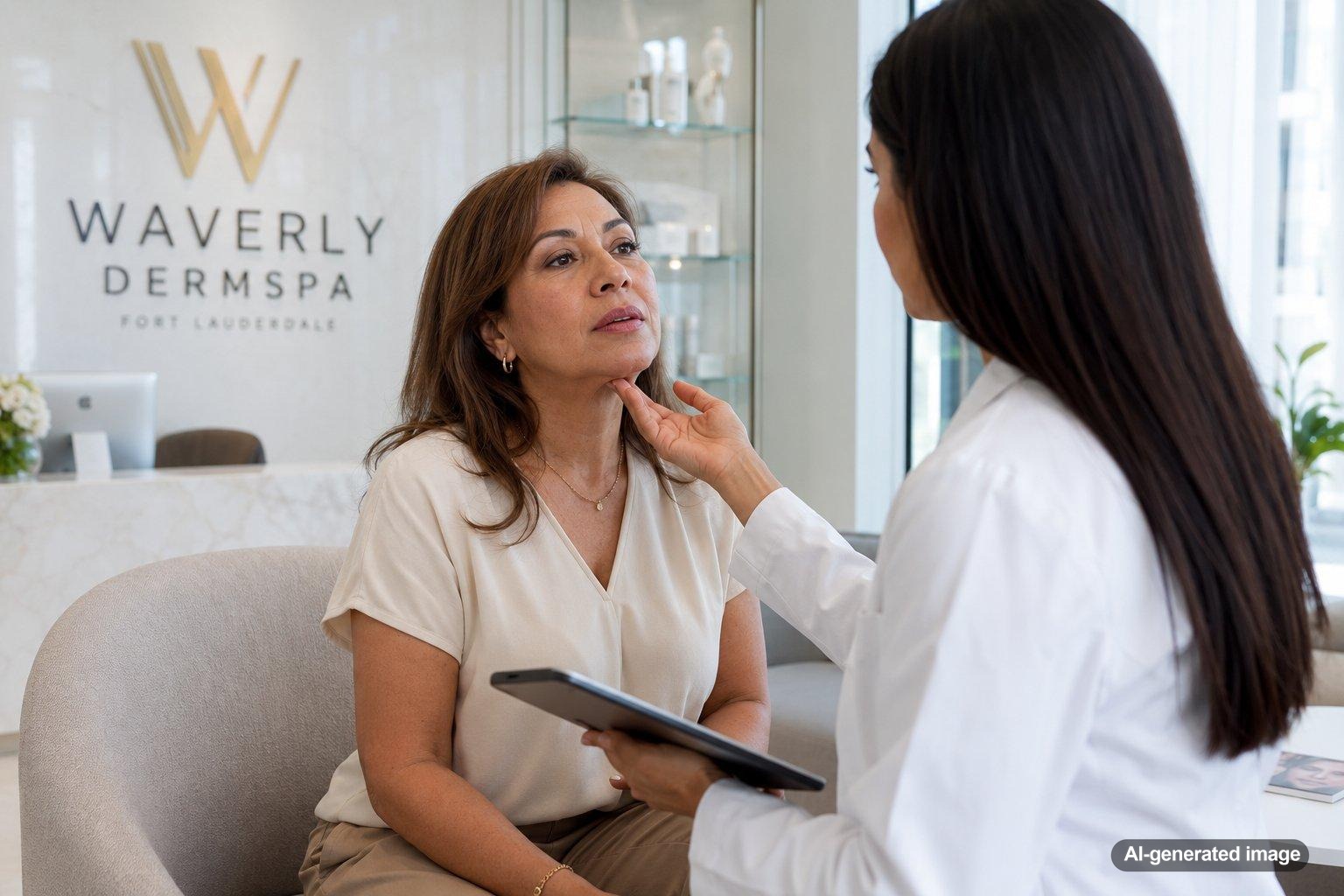
Painful bumps under the chin after tweezing or waxing commonly develop because hair removal irritates the follicle, disrupts the surrounding skin, or causes a regrowing hair to become trapped beneath the surface. The bumps may represent simple inflammation, ingrown hairs, or folliculitis, which can sometimes involve an infection.
The chin and upper neck are especially prone to this reaction because facial hairs may be coarse, curved, or removed repeatedly from the same small area. Although many mild bumps settle with conservative care and a break from hair removal, recurring, pus-filled, deeply painful, or discoloration-prone bumps are worth discussing with a dermatologist.
Quick answer
- Tweezing and waxing can inflame or damage the opening of a hair follicle.
- A new hair may curl sideways or back into the skin, creating an ingrown hair.
- Bacteria can sometimes enter a disrupted follicle and contribute to folliculitis.
- Squeezing, digging, or repeatedly removing the same hair can worsen pain and discoloration.
- A dermatologist can distinguish irritation from acne, infection, cysts, and other conditions that may look similar.
What may be happening beneath the skin
Waxing pulls multiple hairs out from the root, while tweezing removes individual hairs. Both methods place mechanical stress on the follicle and the surrounding skin. Temporary redness or tenderness can occur even when the hair removal technique is careful.
As the hair begins to grow again, it must pass through the follicular opening. If the opening is swollen, blocked by dead skin, or healing after irritation, the hair may remain trapped. It can grow sideways beneath the surface or curve back into the skin. The immune system may then react to the hair as though it were a foreign object, producing a sore, inflamed bump.
Not every bump contains an ingrown hair. Some are caused primarily by irritation, and others may involve inflammation or infection of the follicle. Acne can also occur along the chin and jawline, making it difficult to identify the cause based on appearance alone.
Common causes and triggers
- Ingrown hairs: A regrowing hair becomes trapped or curves into the skin, causing a tender papule or pustule.
- Irritant folliculitis: The follicle becomes inflamed after plucking, waxing, friction, or repeated manipulation, even when no infection is present.
- Infectious folliculitis: A damaged follicle may become vulnerable to bacteria, producing increasing tenderness, pus, warmth, or spreading redness.
- Skin barrier disruption: Hot wax, repeated passes, aggressive tweezing, or strong products used immediately afterward can leave the area sensitive and reactive.
- Coarse or curly hair: Curved hairs have a greater tendency to turn back toward the skin while regrowing.
- Repeated picking: Digging for a hair with fingers, needles, or tweezers can increase inflammation and introduce bacteria.
- Occlusive products: Heavy makeup, thick ointments, or oily products may trap sweat and debris around recently treated follicles.
- Friction and perspiration: Tight collars, chin straps, masks, hands resting on the chin, and humid weather can aggravate freshly waxed or tweezed skin.
Why the bumps can feel unusually painful
The area beneath the chin contains dense hair follicles and is frequently exposed to movement, touch, sweat, and friction. When inflammation develops around a follicle, pressure can build in a small space. That pressure may make even a relatively small bump feel sore.
Pain may also increase when a hair is deeply trapped, when several nearby follicles are inflamed, or when a bump has been squeezed. A deep, rapidly enlarging, or throbbing lump should not automatically be assumed to be a routine ingrown hair. A dermatologist can evaluate whether another type of cyst, infection, or inflammatory condition may be involved.
What you can do at home
For a mild reaction, the safest first step is usually to stop tweezing, waxing, shaving, and picking until the skin has calmed. Continuing to remove hair from an inflamed area can restart the cycle and make it harder to determine what is causing the bumps.
- Use a warm compress: Apply a clean, comfortably warm cloth to the area to soothe tenderness and support gentle drainage. Do not use water hot enough to burn the skin.
- Cleanse gently: Wash with a mild, fragrance-free cleanser and lukewarm water. Avoid scrubs, cleansing brushes, and vigorous rubbing.
- Keep your hands off: Do not squeeze the bump or dig for a hair. Manipulation may lead to more inflammation, infection, scarring, or dark marks.
- Simplify your routine: Temporarily pause strong exfoliating acids, retinoids, fragranced products, and other potentially irritating ingredients around the affected area.
- Reduce friction: Keep tight collars, mask edges, helmet straps, and other rubbing surfaces away from the bumps when practical.
- Use clean tools: Before future tweezing, clean the tweezers according to the manufacturer’s instructions and avoid sharing personal hair removal tools.
Avoid attempting to open a painful bump with a needle or lancet at home. Even when a hair appears visible, digging into the skin can create a larger wound and increase the risk of complications.
How to reduce future chin bumps
Prevention often requires changing both the hair removal method and the way the skin is treated before and afterward.
- Allow irritated skin to fully settle before removing hair again.
- Avoid repeatedly tweezing short hairs that cannot be grasped without pinching the skin.
- Do not wax over broken, sunburned, inflamed, or recently exfoliated skin.
- Follow instructions about pausing retinoids or other sensitizing products before waxing.
- Use a qualified professional who follows appropriate hygiene and temperature practices.
- Avoid touching the freshly treated area with unwashed hands.
- Choose lightweight, noncomedogenic skincare and makeup when the area is prone to clogged follicles.
- Discuss alternative hair removal methods when bumps recur after every session.
When tweezing is necessary, remove only clearly visible hairs and pull in the direction of growth without repeatedly scraping or pinching the surrounding skin. If waxing consistently leads to inflammation, continuing the same routine may not be the right approach for your skin.
Professional options a dermatologist may discuss
Treatment depends on whether the bumps are caused by sterile irritation, ingrown hairs, acne, infection, or another condition. A dermatologist may examine the pattern, ask about your hair removal routine, and determine whether testing or prescription treatment is appropriate.
Common professional approaches may include high-level options such as calming inflammation, treating a confirmed infection, addressing acne-like congestion, reducing discoloration, or changing the method of hair removal. A clinician may also recommend a carefully selected topical routine to reduce follicular blockage and improve tolerance between sessions.
For people who repeatedly develop painful ingrown hairs, laser hair removal may help reduce the amount and thickness of regrowing hair over time. Suitability depends on factors such as hair color, skin tone, medical history, current medications, and the condition of the skin. At Waverly DermSpa, we offer Excel HR Laser Hair Removal and can help you understand whether it may be appropriate.
When to see a dermatologist
Schedule an evaluation when bumps keep returning, remain painful despite stopping hair removal, or leave persistent dark marks or scars. Prompt medical attention is especially important if you notice:
- Rapidly increasing pain, swelling, warmth, or redness
- Pus, drainage, crusting, or an unpleasant odor
- A deep or enlarging lump beneath the skin
- Redness that spreads beyond the original follicle
- Fever, chills, or feeling unwell
- Multiple bumps that merge together
- Recurring lesions in exactly the same location
- Scarring, thickened skin, or worsening discoloration
- No improvement after a reasonable break from hair removal and gentle care
These findings do not confirm a particular diagnosis, but they can signal that an in-person examination is needed. Avoid waxing or tweezing the area while signs of infection or significant inflammation are present.
Frequently asked questions
Are painful chin bumps always ingrown hairs?
No. Ingrown hairs are common after waxing or tweezing, but acne, irritant folliculitis, infectious folliculitis, contact reactions, and deeper cysts can look similar. A dermatologist can evaluate persistent or unusual bumps.
Should I pull out a visible ingrown hair?
It is generally safer not to dig beneath the skin or squeeze the bump. If the hair is trapped below the surface, aggressive removal can worsen inflammation and introduce bacteria. A clinician can help when the area is deeply painful or repeatedly affected.
Can I wax again once the tenderness improves?
Wait until the skin is fully calm, with no open areas, crusting, marked redness, or significant tenderness. Because recovery varies, ask your dermatologist or waxing professional when you are unsure.
Why do the bumps leave dark spots?
Inflammation can stimulate excess pigment production, especially in medium to deep skin tones. This is called post-inflammatory hyperpigmentation. Picking and repeated irritation may make the discoloration more noticeable or longer lasting.
Could my skincare products be making the reaction worse?
Possibly. Retinoids, exfoliating acids, scrubs, fragranced products, and certain acne treatments may increase sensitivity around waxing. Heavy or occlusive products can also aggravate follicle-prone skin in some people. Review your routine with a qualified clinician before your next session.
Is laser hair removal an option for recurring ingrown hairs?
It may be considered when unwanted hair and recurrent ingrown hairs are closely connected. A consultation is needed to assess your hair, skin, medications, medical history, and treatment goals before deciding whether it is appropriate.
Ready to get help?
Schedule an appointment or send a message and our team will get back to you.
Prefer to call? 954-666-3736
This article is for educational purposes and is not medical advice. For diagnosis and personalized treatment, please book an appointment with a board-certified dermatologist.
Sources & further reading
- American Academy of Dermatology (AAD) – Acne-like breakouts could be folliculitis
- DermNet – Folliculitis
- Cleveland Clinic – Ingrown Hair: What It Looks Like, Causes, Treatment and Prevention
