

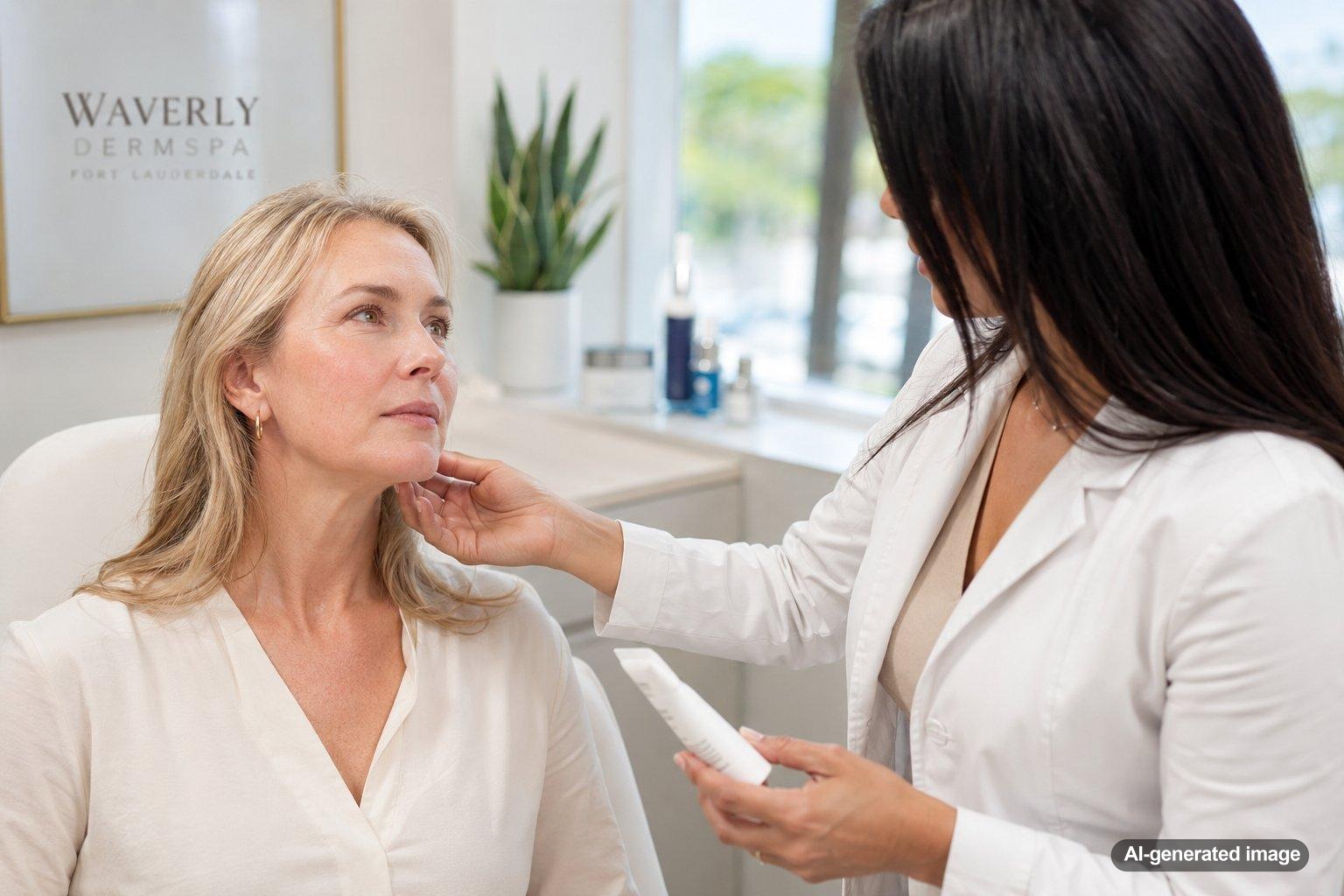
Exfoliation can be helpful when it is used thoughtfully. It may smooth the look of rough texture, brighten a dull surface, and help skincare products feel more elegant on the skin. But when scrubs, acids, retinoids, peels, or exfoliating devices are layered too often, the skin can start to look and feel stressed rather than refreshed.
Over-exfoliation is not always dramatic. Sometimes it begins as a tight, shiny feeling after cleansing, a sudden sting from products that used to feel gentle, or redness that lingers longer than expected. The goal is not to panic or abandon skincare altogether, but to pause, simplify, and let your skin barrier recover.
Quick answer
- Skin that feels tight, hot, shiny, or unusually tender may be reacting to too much exfoliation.
- Stinging from gentle products can be a sign that the skin barrier is feeling compromised.
- Breakouts, flaking, and redness can sometimes worsen when exfoliation is too frequent.
- A conservative reset usually means pausing exfoliants and focusing on gentle cleanser, moisturizer, and sunscreen.
- If symptoms are intense, persistent, or confusing, a dermatologist can evaluate what is really going on.
1. Your skin feels tight even after moisturizing
A little smoothness after exfoliation can be normal. A tight, stretched, uncomfortable feeling is different. When the outer barrier is irritated, water can escape more easily, and the skin may feel dry even after you apply moisturizer. This can be especially noticeable after cleansing or when moving from humid outdoor air into strong air conditioning.
2. Products that used to feel gentle now sting
If a basic moisturizer, sunscreen, or mild cleanser suddenly burns or prickles, your skin may be asking for a break. This does not automatically mean the product is bad or that you need a completely new routine. It may mean the skin surface is temporarily more reactive and needs fewer active ingredients for a while.
3. You notice redness that lingers
Healthy skin can flush briefly after cleansing, heat, or activity. With over-exfoliation, redness may hang around longer or appear in areas where you repeatedly apply acids, scrubs, peels, or retinoids. People with naturally sensitive skin, rosacea-prone skin, or a history of irritation may notice this earlier than others.
4. Your skin looks unusually shiny but not oily
There is a difference between a healthy glow and a thin, glassy shine that feels delicate. When exfoliation is too aggressive, the surface can look polished in a way that comes with tightness, tenderness, or visible irritation. That combination is a useful clue that the skin may need barrier support rather than more smoothing.
5. Flaking or roughness keeps coming back
It can feel tempting to exfoliate more when flakes appear. Sometimes, though, repeated flaking is the result of irritation, not a sign that the skin needs another scrub or acid. Adding more exfoliation may keep the cycle going. A gentler approach may help the skin feel more comfortable while it settles.
6. Breakouts or bumps seem worse after adding actives
Some skincare ingredients can cause a temporary adjustment period, but irritation can also look like breakouts, bumps, or uneven texture. If the skin feels hot, raw, itchy, or stingy at the same time, it may be worth stepping back from exfoliating products and asking a dermatology professional for guidance before adding more treatments.
What can trigger over-exfoliation?
Over-exfoliation is often less about one product and more about stacking several exfoliating steps together. Common triggers can include using a scrub plus an acid toner, combining retinoids with peels too often, exfoliating after a professional treatment without guidance, or using strong actives on skin that is already dry or sun-exposed.
- Daily use of exfoliating acids when the skin is not tolerating them well
- Physical scrubs used too firmly or too frequently
- Layering retinoids, acids, vitamin C, and peels without enough recovery time
- Trying multiple new active products at once
- Skipping moisturizer or sunscreen while using exfoliating ingredients
What to do at home when your skin feels over-exfoliated
A simple reset can be a reasonable first step for mild irritation. Consider pausing exfoliating acids, scrubs, peels, and other strong actives for a short period, and keep the routine calm: gentle cleanser, bland moisturizer, and broad-spectrum sunscreen during the day. Avoid picking at flakes or trying to polish them away. If sunscreen stings, fragrance-free mineral formulas may feel more comfortable for some people, though individual tolerance varies.
Once the skin feels calm again, reintroduce active ingredients slowly and one at a time. Many people do better with exfoliation only a few times a week or less, depending on skin type, climate, other prescriptions, and professional treatments. Your clinician can help you decide what cadence makes sense for your skin.
Professional options
If your skin is frequently irritated, a professional evaluation can help separate over-exfoliation from other concerns such as eczema, rosacea, acne, allergic contact dermatitis, or reactions to specific ingredients. In-office support may include a review of your current products, barrier-focused skincare guidance, or a more appropriate plan for exfoliation and maintenance treatments.
At Waverly DermSpa, we offer HydraFacial and can help you understand whether it may be appropriate.
When to see a dermatologist
Book an evaluation if the discomfort is intense, if redness or flaking persists, if you see swelling, crusting, oozing, significant pain, or if the skin around the eyes is involved. It is also worth getting checked if irritation keeps returning despite simplifying your routine. A dermatologist can evaluate your skin and help you avoid guessing, especially if prescription therapies or underlying skin conditions may be part of the picture.
FAQ
How do I know if I exfoliated too much?
Common clues include tightness, stinging, redness, flaking, unusual shine, tenderness, or bumps that appear after increasing exfoliating products. These signs do not confirm one specific diagnosis, but they suggest your skin may benefit from a gentler routine.
Should I stop all skincare if my skin feels irritated?
Not usually. Many people do better by pausing exfoliants and strong actives while continuing a gentle cleanser, moisturizer, and sunscreen. If even basic products sting or symptoms are severe, a dermatologist can help you decide what to use.
Can over-exfoliation cause breakouts?
Irritated skin can sometimes look bumpy or breakout-prone. Because acne, dermatitis, rosacea, and product reactions can overlap, persistent or confusing breakouts are best evaluated rather than treated with more exfoliation.
How often should I exfoliate?
There is no perfect schedule for everyone. Skin type, product strength, other active ingredients, medications, professional treatments, and sun exposure all matter. A slower, less frequent approach is often easier to tolerate than daily exfoliation.
Can a facial help over-exfoliated skin?
A gentle, barrier-focused treatment may help some people feel supported, but it depends on how irritated the skin is. If the skin is raw, painful, swollen, or actively inflamed, it is better to have a dermatology evaluation first.
Ready to get help?
Schedule an appointment or send a message and our team will get back to you.
Prefer to call? 954-666-3736
This article is for educational purposes and is not medical advice. For diagnosis and personalized treatment, please book an appointment with a board-certified dermatologist.
