

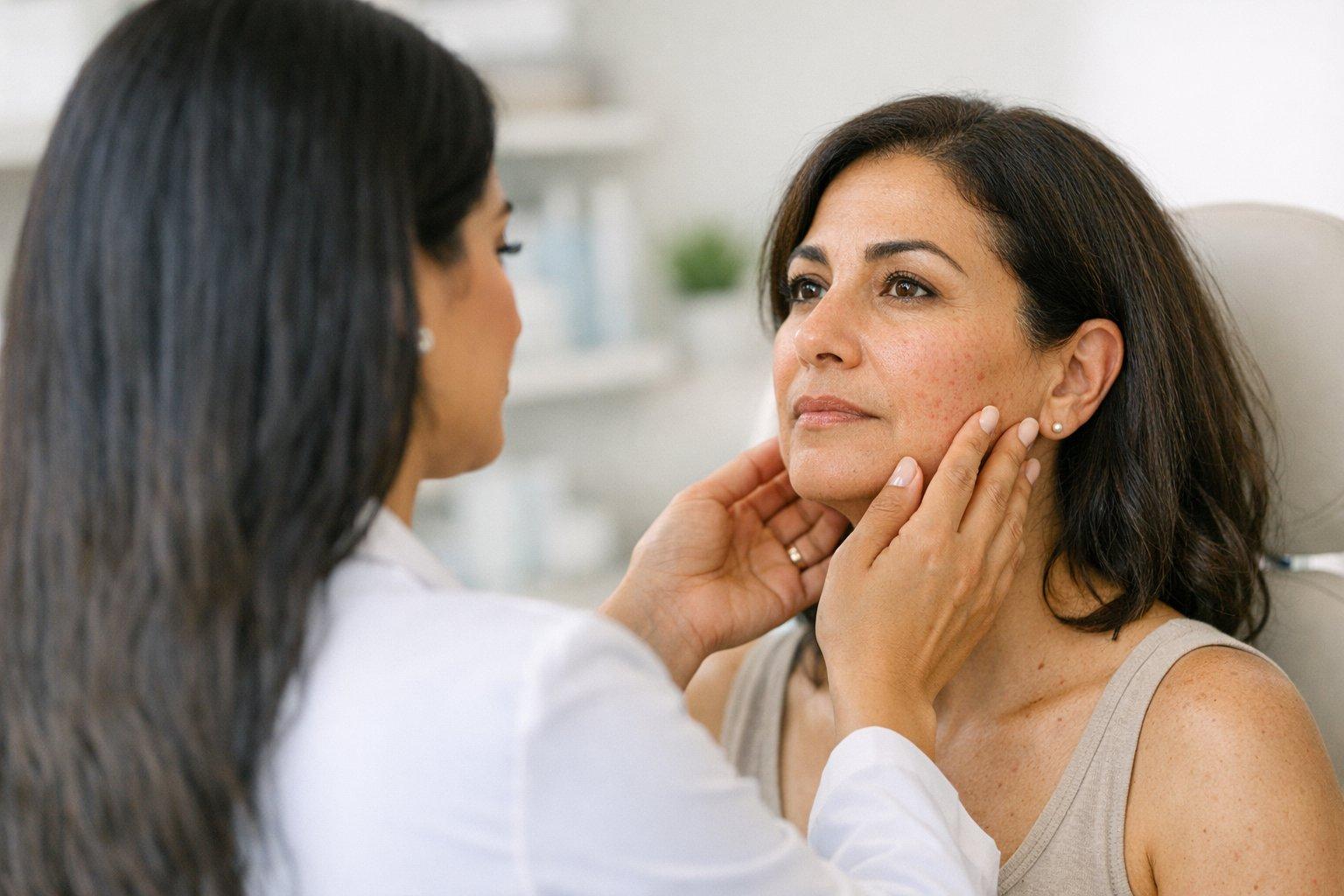
Adult acne can feel especially frustrating when it seems to flare during already stressful seasons of life. Many people notice that breakouts become more stubborn around travel, work pressure, poor sleep, or major changes in routine. That does not mean stress is the only cause, but it can be an important piece of the puzzle.
The term neurocosmetics is often used to describe the connection between the skin and the nervous system, including how stress can influence oil production, inflammation, skin sensitivity, and even daily skincare habits. In plain terms, your mind and skin are more connected than they may seem.
Quick answer
- Stress may contribute to adult acne by increasing inflammation and making skin feel more reactive.
- Stress can also affect sleep, picking habits, routine consistency, and product choices, which may add to breakouts.
- A simple, barrier-friendly skincare routine is often more helpful than aggressively treating every blemish.
- If acne is painful, persistent, scarring, or suddenly worsening, a dermatologist can evaluate what is driving it.
What neurocosmetics means in plain English
Neurocosmetics is a broad, consumer-friendly term for skincare and skin science that pays attention to the relationship between the skin, the nervous system, and emotional stress. Skin is not just a surface. It responds to internal signals, including stress-related changes that may influence redness, oiliness, sensitivity, and breakouts.
For adults with acne-prone skin, that connection matters. A stressful period may not create acne all by itself, but it can be associated with conditions that make blemishes more likely or harder to calm down. That is one reason adult acne often feels cyclical and unpredictable.
Common causes or triggers
- Emotional stress and poor sleep
- Hormonal fluctuations
- Over-cleansing or using too many active products at once
- Picking, touching, or rubbing the skin more often during stressful periods
- Heavy or irritating products that disrupt the skin barrier
- Travel, climate shifts, and changes in daily routine
- Sweat, friction, or occlusion from hats, phones, or workout gear
What you can do at home
Start by simplifying your routine. When skin is stressed, piling on multiple exfoliants, masks, and spot treatments can backfire. A gentle cleanser, a non-comedogenic moisturizer, sunscreen, and a carefully chosen acne product may be a more balanced approach than constantly switching products.
It may also help to notice your own patterns. Some people break out more when sleep is short, when meals become irregular, or when they are tempted to pick at blemishes. Paying attention to those habits can be just as useful as choosing the right serum.
Try to protect the skin barrier while addressing acne. If your face feels tight, stingy, or unusually reactive, that can be a sign your routine is too harsh. In that setting, calmer and more consistent skincare often makes more sense than stronger and more frequent treatment.
- Wash gently twice daily and after sweating.
- Use lukewarm, not hot, water.
- Avoid scrubs and harsh brushes.
- Choose products labeled non-comedogenic when possible.
- Keep hands away from active blemishes to reduce irritation.
- Give new products time before changing course again.
Professional options
If adult acne is not improving, professional guidance can help narrow down whether the main drivers seem hormonal, inflammatory, barrier-related, or routine-related. Common options include prescription topicals, acne-safe skincare adjustments, in-office procedures, or a plan that addresses both breakouts and post-acne discoloration.
The right approach depends on the pattern of your acne, your skin sensitivity, and whether you are also dealing with redness, pigmentation, or early scarring. A dermatologist can evaluate the bigger picture and help you decide what makes sense for your skin.
When to see a dermatologist
- Your acne is painful, deep, or leaving scars.
- Breakouts are concentrated around the jawline and seem cyclical or persistent.
- Over-the-counter products are causing burning, peeling, or worsening irritation.
- You are no longer sure whether it is acne, rosacea, folliculitis, or another condition.
- Adult acne is affecting your confidence or daily routine in a significant way.
FAQ
Can stress really cause acne?
Stress may help set the stage for breakouts, especially when it is paired with poor sleep, increased inflammation, skin picking, or a disrupted routine. It is usually one factor among several rather than the whole story.
What is the difference between stress acne and hormonal acne?
They can overlap. Stress-related flares may appear during intense life periods, while hormonal acne often follows a more predictable pattern. A dermatologist can help sort out what seems most likely in your case.
Should I use stronger products when I am breaking out more?
Not always. When skin is stressed, stronger is not automatically better. Too many active ingredients at once can worsen dryness and irritation, which may make skin look and feel more inflamed.
Does a damaged skin barrier make acne look worse?
It can. When the barrier is irritated, skin may feel more sensitive, red, and reactive. That can make breakouts seem more noticeable and make treatment harder to tolerate.
Ready to get help?
Schedule an appointment or send a message and our team will get back to you.
Prefer to call? 954-666-3736
Disclaimer
This article is for educational purposes and is not medical advice. For diagnosis and personalized treatment, please book an appointment with a board-certified dermatologist.
