

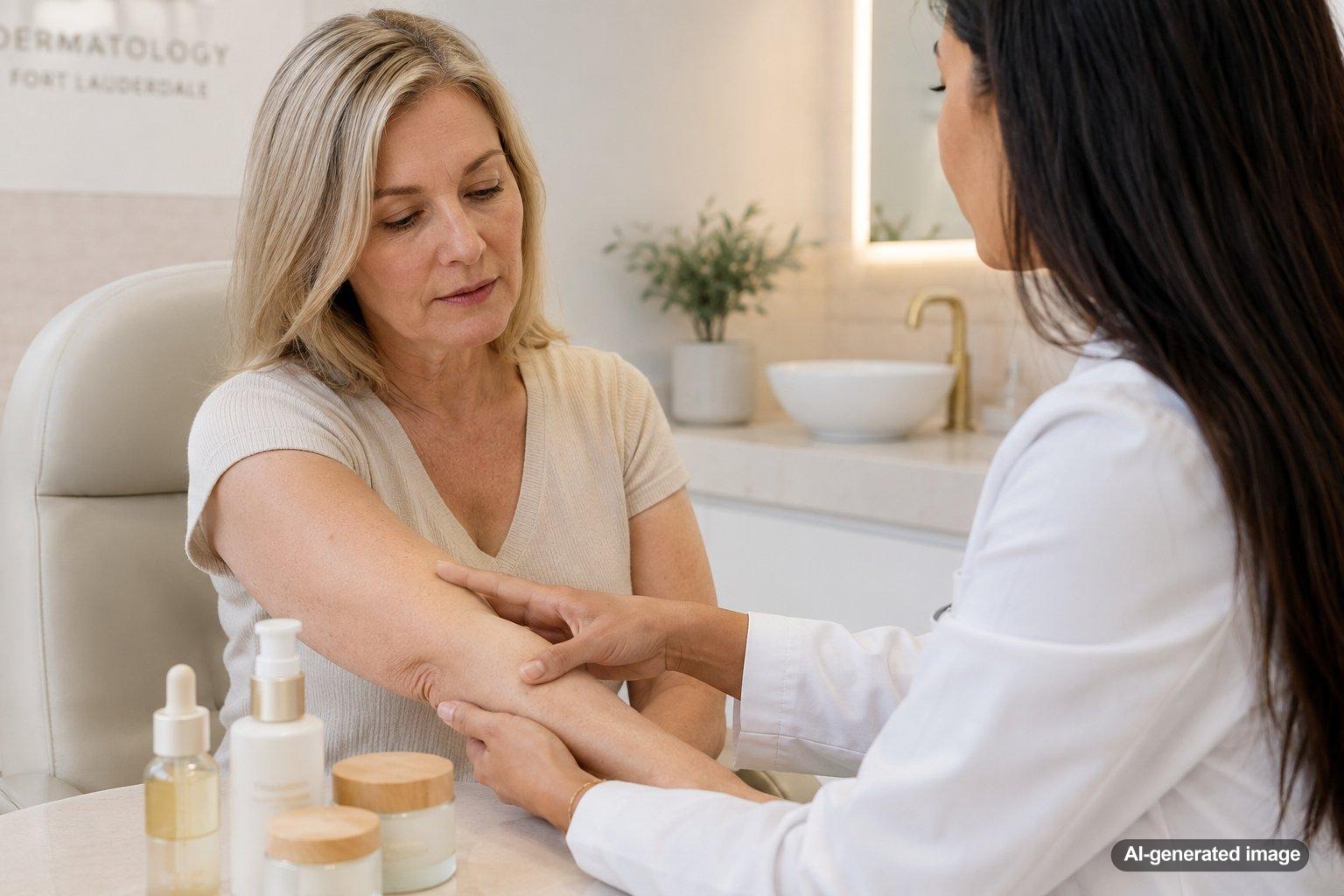
“Natural” skincare can sound gentle, clean, and reassuring, especially when your skin is dry, itchy, or easily irritated. For eczema-prone skin, though, natural does not automatically mean safer. Some plant extracts, essential oils, botanical fragrances, scrubs, and preservative systems can still sting, dry the skin, or trigger a reaction.
The better question is not whether a product is natural. It is whether the formula supports the skin barrier, avoids common irritants, and fits your personal triggers. If eczema is flaring, spreading, or not improving, a dermatologist can help sort out whether skincare, allergy, infection, or another skin condition may be involved.
Quick answer
- Natural skincare can still irritate eczema-prone skin, especially if it contains fragrance, essential oils, exfoliating acids, or rough scrubs.
- Fragrance-free is usually more helpful than unscented for sensitive or eczema-prone skin.
- Simple moisturizers, gentle cleansers, and barrier-supportive routines are often better tolerated than long ingredient lists.
- Patch testing a new product on a small area first may help you notice irritation before applying it more widely.
- See a dermatologist if eczema is painful, oozing, crusting, spreading, disrupting sleep, or not responding to gentle care.
What “natural” skincare really means
On a skincare label, natural is not a medical category. It may refer to plant-derived ingredients, oils, extracts, minerals, or a brand’s general marketing style. It does not tell you whether the product has been tested for eczema-prone skin, whether it is fragrance-free, or whether it will be tolerated by your skin.
Eczema is commonly associated with a sensitive skin barrier. When that barrier is stressed, ingredients that seem harmless in other routines may burn, itch, or worsen dryness. A product can be botanical, organic, or minimalist and still be too active or too fragrant for a person with eczema-prone skin.
Common natural ingredients and product types to watch for
Not every natural ingredient is a problem, and not every synthetic ingredient is harsh. Still, these categories deserve extra caution when eczema is active or your skin is easily reactive:
- Essential oils: Tea tree, lavender, peppermint, citrus, eucalyptus, and similar oils can be irritating or allergenic for some people.
- Botanical fragrances: A product may smell natural because of plant extracts, but fragrance compounds can still trigger sensitive skin.
- Unscented formulas: Unscented does not always mean fragrance-free. Some products use masking fragrance to hide odor.
- Harsh exfoliants: Scrubs, brushes, acids, and enzymes may be too much when the skin barrier is inflamed or cracked.
- Alcohol-heavy toners: These may increase dryness or stinging for some eczema-prone skin.
- Long ingredient lists: More ingredients can mean more possible triggers, especially when you are trying to identify what your skin tolerates.
- DIY remedies: Kitchen ingredients, undiluted oils, and homemade masks may be unpredictable and can irritate compromised skin.
What to look for instead
For eczema-prone skin, a calmer routine is often more practical than a trend-driven one. Look for products that are labeled fragrance-free, gentle, and suitable for sensitive skin. Creams and ointments are often more supportive for dry skin than lightweight lotions, though the best texture can vary by body area, climate, and personal tolerance.
Helpful routine features may include a mild cleanser, a moisturizer applied after bathing while the skin is still slightly damp, and sun protection that your skin tolerates. If you are testing a new product, consider applying it to a small area first for several days before using it more broadly. Stop using a product if it causes persistent burning, itching, swelling, or a new rash.
What you can do at home
- Keep showers or baths lukewarm rather than hot.
- Use a gentle cleanser only where needed, rather than aggressively washing dry areas.
- Apply moisturizer soon after bathing to help seal in hydration.
- Choose fragrance-free laundry products when clothing, towels, or bedding seem to bother your skin.
- Avoid picking, scratching, or over-exfoliating irritated areas.
- Introduce one new skincare product at a time so it is easier to notice patterns.
- Keep notes on products, weather changes, sweating, travel, stress, and other possible flare patterns.
Professional options
If eczema keeps recurring, a dermatologist can evaluate the pattern, location, severity, and possible triggers. Common medical options may include prescription-strength topical medications, non-steroid anti-inflammatory creams, itch support, infection evaluation when needed, and guidance on whether allergy or patch testing may be appropriate. The right plan depends on your skin and should be personalized.
Professional guidance can also help simplify your skincare routine. Many people with sensitive skin are using too many products at once, which can make it harder to identify what is helping and what is irritating.
When to see a dermatologist
Book a dermatology visit if your rash is painful, rapidly worsening, oozing, crusting, bleeding, affecting sleep, involving the face or eyelids, or not improving with gentle skincare. It is also worth getting checked if a product reaction keeps returning, if you are unsure whether it is eczema, or if you need help choosing products that fit your skin barrier.
FAQ
Is natural skincare better for eczema?
Not always. Some natural ingredients may be well tolerated, but others can irritate eczema-prone skin. Fragrance-free, gentle, barrier-supportive formulas are usually a better guide than natural claims alone.
Are essential oils safe for eczema-prone skin?
Essential oils can be irritating or allergenic for some people with eczema. If your skin is actively flaring or very sensitive, it is generally wise to be cautious and ask a dermatologist for guidance.
What is the difference between fragrance-free and unscented?
Fragrance-free means fragrance ingredients are not intentionally added for scent. Unscented products may still contain masking fragrance to cover the smell of the formula, so fragrance-free is often the more useful label for sensitive skin.
Should I stop all skincare during an eczema flare?
You usually still need gentle cleansing and moisturizing, but it may help to pause nonessential products such as scrubs, masks, fragranced oils, retinoids, or exfoliating acids until a clinician advises otherwise.
Can a dermatologist help me choose eczema-friendly products?
Yes. A dermatologist can look at your skin, review your routine, discuss possible triggers, and help you decide which products or medical options may be appropriate.
Ready to get help?
Schedule an appointment or send a message and our team will get back to you.
Prefer to call? 954-666-3736
This article is for educational purposes and is not medical advice. For diagnosis and personalized treatment, please book an appointment with a board-certified dermatologist.
Sources & further reading
- American Academy of Dermatology (AAD) – How can I find eczema friendly products?
- National Eczema Association – 8 Skincare Ingredients to Avoid If You Have Eczema
- Mayo Clinic – Atopic dermatitis (eczema) – Symptoms and causes
