

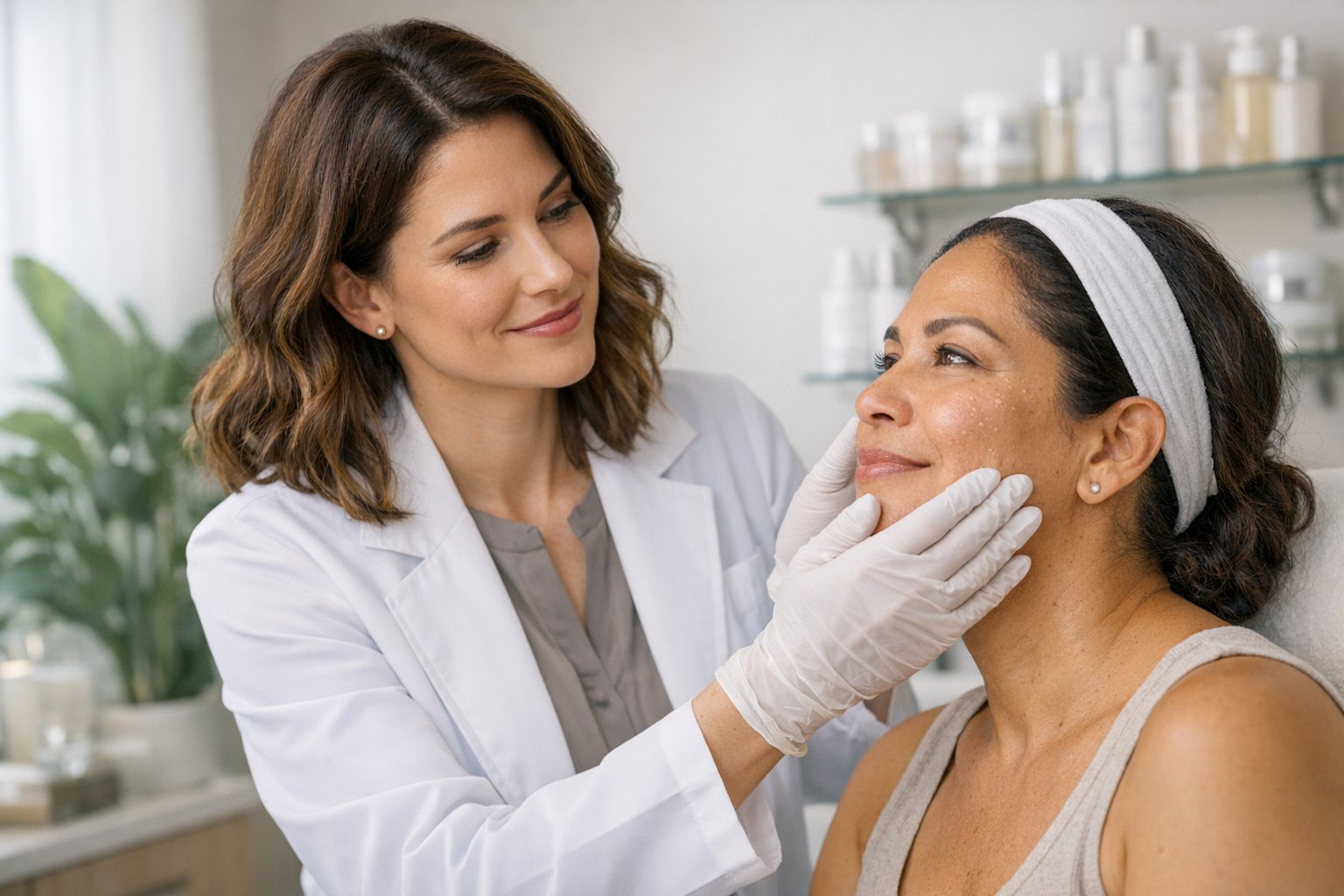
If you have ever noticed small, firm white bumps on your face that do not seem to behave like pimples, you may be looking at milia. These tiny keratin-filled cysts are common, harmless, and often appear around the eyes, cheeks, nose, or forehead. Unlike blackheads or whiteheads, milia do not have an opening to the surface, which is why they do not respond to typical acne treatments.
The short answer: milia form when keratin becomes trapped beneath the outermost layer of skin. They are not a sign of poor hygiene or infection. While they often go away on their own over time, many people choose to have them removed for cosmetic reasons or because they are persistent. A dermatologist can help distinguish milia from other small bumps and offer safe removal options.
Quick answer
- Milia are tiny, dome-shaped white or yellowish bumps, usually 1-2 millimeters in size.
- They form when keratin becomes trapped under the skin, not from clogged pores with oil like acne.
- Milia are common in newborns but can occur at any age.
- They often appear around the eyes, cheeks, nose, and forehead.
- At-home extraction is not recommended, as it can cause scarring or infection.
- A dermatologist can safely remove milia with a quick in-office procedure.
What milia actually are
Milia are small, superficial cysts filled with keratin, a protein that makes up your skin, hair, and nails. They form when dead skin cells become trapped in a small pocket just beneath the skin’s surface rather than shedding normally. Because there is no opening to the surface, the keratin builds up into a visible bump.
There are a few different types of milia. Primary milia are the most common and develop spontaneously in both children and adults. Secondary milia can form after skin trauma, such as burns, blistering rashes, or certain procedures. Milia en plaque is a rarer form that appears as clusters of milia on a raised, inflamed patch of skin, usually behind the ears or on the eyelids.
In newborns, milia are extremely common and often appear on the face, scalp, or upper body. These typically clear on their own within the first few weeks or months without any treatment.
Common causes and triggers
- Dead skin buildup: When natural exfoliation slows, dead cells can become trapped beneath the surface.
- Heavy or occlusive skincare products: Thick creams, ointments, or oil-based products can contribute, especially around the delicate eye area.
- Sun damage: Chronic sun exposure can thicken the outer layer of skin, making it harder for keratin to shed normally.
- Skin trauma or procedures: Burns, blisters, laser resurfacing, or dermabrasion can sometimes trigger secondary milia during healing.
- Certain medications: Long-term use of topical steroids or other medications may increase the likelihood of milia formation in some people.
- Genetics: Some individuals simply have a tendency to develop milia.
Milia vs. acne: how to tell them apart
Milia are frequently mistaken for whiteheads, but the two are different. A whitehead forms when a pore becomes clogged with oil and dead skin, creating an open comedone. Milia, on the other hand, form when keratin is trapped beneath the skin with no opening to the surface. This is why milia feel firm, do not come to a head, and do not respond to typical acne ingredients like salicylic acid or benzoyl peroxide.
Other bumps that can resemble milia include sebaceous hyperplasia (enlarged oil glands), syringomas (benign sweat gland growths), and small closed comedones. A dermatologist can often tell the difference by appearance alone, but sometimes a closer look with a dermatoscope is helpful.
What you can do at home
If you have milia, gentle, consistent skincare may help prevent new ones from forming, but it is unlikely to remove existing milia since they are trapped beneath the skin. Patience is key, as many milia eventually work their way to the surface and resolve on their own over weeks or months.
- Use gentle exfoliation with products containing alpha-hydroxy acids (like glycolic or lactic acid) or retinoids to encourage cell turnover. Introduce these slowly to avoid irritation.
- Choose non-comedogenic, lightweight moisturizers, especially around the eye area where skin is thinner and more prone to milia.
- Protect your skin from sun damage with daily broad-spectrum sunscreen, as thickened skin can contribute to milia formation.
- Avoid heavy creams, oils, or ointments directly in the area where milia appear.
- Do not attempt to extract milia at home. Because they have no opening, squeezing or picking can damage the surrounding skin, cause redness, lead to scarring, or introduce infection.
Professional options
When milia are persistent, numerous, or cosmetically bothersome, a dermatologist can remove them safely. The procedure is typically quick and involves minimal discomfort.
- Manual extraction: Using a sterile needle or small blade, the dermatologist creates a tiny opening in the skin and gently removes the keratin core. This is the most common approach for individual milia.
- Electrocautery or laser: For multiple milia or those in sensitive areas, controlled heat or laser energy can be used to open the cyst and remove the contents.
- Topical retinoids: Prescription-strength retinoids may help increase cell turnover and gradually clear milia over time, though results are slower than in-office extraction.
- Chemical peels or microdermabrasion: For patients with widespread milia or thickened skin, these treatments can help exfoliate the surface layer and reduce recurrence.
Your clinician will recommend an approach based on the number, location, and type of milia you have. At Waverly DermSpa, we offer safe, precise milia removal and can help you determine what fits your skin.
When to see a dermatologist
- You are unsure whether the bumps are milia or something else, such as syringomas, sebaceous hyperplasia, or small basal cell carcinomas.
- Milia are persistent and do not improve with gentle home care after several months.
- You have a sudden onset of multiple milia or they appear after a skin injury or procedure.
- Milia are causing cosmetic concern or affecting your confidence.
- You have tried to extract them at home and experienced irritation, scarring, or recurrence.
Most milia are harmless, but a professional evaluation ensures you know exactly what you are dealing with and gives you the safest path forward.
FAQ
Can milia go away on their own?
Yes. In many cases, especially in newborns and younger adults, milia eventually resolve on their own as the skin naturally sheds the trapped keratin. This can take weeks to months.
Are milia caused by using too much moisturizer?
Not exactly. Milia can be associated with heavy, occlusive products that slow natural exfoliation. Lightweight, non-comedogenic moisturizers are usually well-tolerated.
Can I pop milia like a pimple?
No. Milia do not have an opening to the surface, so squeezing will not release the contents and often causes redness, inflammation, or scarring.
Does retinol help milia?
Yes, retinoids can help by increasing skin cell turnover and encouraging the trapped keratin to surface over time. Prescription-strength retinoids tend to work more effectively than over-the-counter versions for persistent milia.
Are milia only on the face?
No. Milia can appear on other areas such as the eyelids, ears, chest, or genitals, though facial milia are most common.
Can milia be prevented?
Consistent gentle exfoliation, sun protection, and avoiding heavy occlusive products in milia-prone areas may reduce the likelihood of new milia forming. Some people, however, are simply more prone to them.
Ready to get help?
Schedule an appointment or send a message and our team will get back to you.
Prefer to call? 954-666-3736
This article is for educational purposes and is not medical advice. For diagnosis and personalized treatment, please book an appointment with a board-certified dermatologist.
