

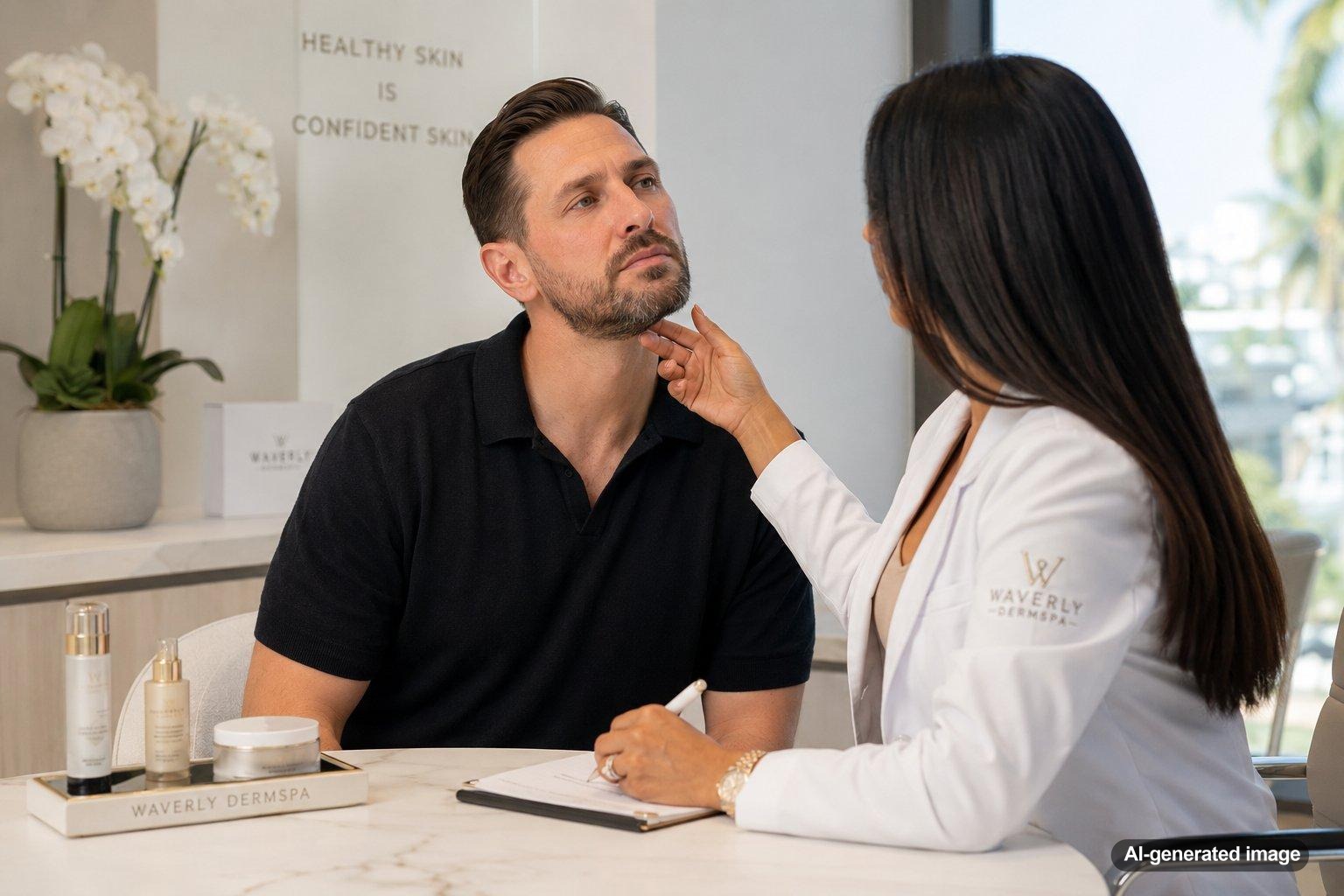
Shaving can leave the skin looking red, rough, bumpy, or uneven, especially along the neck, jawline, cheeks, and under the chin. For many men, the issue is not simply the razor itself. It can involve skin sensitivity, trapped hairs, clogged pores, shaving technique, beard texture, and a skincare routine that is either too harsh or not supportive enough.
Men’s facials can be a helpful part of a calmer, more consistent routine for shaving irritation and ingrown hairs. They are not a substitute for medical evaluation when bumps are painful, infected-looking, spreading, or persistent, but they can support clearer pores, smoother texture, and better daily skin habits.
Quick answer
- Shaving irritation can happen when the skin barrier is stressed by friction, dull blades, strong products, or frequent shaving.
- Ingrown hairs often develop when a shaved hair curves back into the skin or becomes trapped under buildup.
- A men’s facial may help by gently cleansing, exfoliating, hydrating, and supporting a more balanced routine.
- Professional extractions should be conservative and appropriate for the skin, not aggressive or painful.
- A dermatologist should evaluate bumps that are painful, draining, crusting, worsening, or not improving with gentle care.
What shaving irritation and ingrown hairs are
Shaving irritation is a broad term for redness, stinging, tenderness, dryness, or a rough feeling after shaving. It can be related to friction, product sensitivity, pressure from the razor, or shaving over already irritated skin.
Ingrown hairs are different. They happen when a hair does not grow cleanly out of the follicle and instead becomes trapped or curls back into the skin. This can create small bumps that may look skin-colored, red, or inflamed. Some people are more prone to this because of beard curl pattern, close shaving, or repeated irritation in the same area.
Common causes or triggers
- Very close shaving: Shaving too closely can leave the hair tip more likely to sit below the surface of the skin.
- Dull or dirty blades: A blade that drags instead of glides can increase friction and irritation.
- Too much pressure: Pressing hard may feel more efficient, but it can stress the skin and worsen roughness.
- Shaving against the grain: This may create a closer shave, but it can also make bumps more likely for some skin and beard types.
- Heavy buildup: Oil, sweat, sunscreen, and dead skin can make it harder for hairs to emerge smoothly.
- Harsh aftershaves: Alcohol-heavy or strongly fragranced products may sting and dry out sensitive skin.
- Skipping moisturizer: Dehydrated or barrier-stressed skin can feel more reactive after shaving.
What you can do at home
A gentle routine can often make shaving feel less harsh. The goal is to reduce friction, support the skin barrier, and avoid picking at bumps.
- Wash with a gentle cleanser before shaving to remove oil and debris without stripping the skin.
- Use warm water and a cushiony shave product so the razor glides more easily.
- Shave in the direction of hair growth when possible, especially on the neck and jawline.
- Use light pressure and avoid repeatedly shaving over the same spot.
- Replace blades regularly if they start to tug, drag, or feel rough.
- Apply a simple, fragrance-light moisturizer after shaving to help calm dryness and tightness.
- Avoid picking, squeezing, or digging out ingrown hairs, which can increase irritation and marks.
If exfoliation is part of your routine, keep it measured. Scrubs, strong acids, and too many active products can make shaving irritation worse if the skin barrier is already stressed. Your clinician can help you decide what type of exfoliation is appropriate for your skin.
How a men’s facial may help
A well-designed men’s facial is not just a relaxing treatment. For shaving-related concerns, it can be tailored around cleansing, gentle exfoliation, hydration, calming care, and education about what your skin may be tolerating poorly.
For some men, a facial may help remove surface buildup that contributes to clogged pores and uneven texture. For others, the biggest benefit is learning which products are too drying, too heavy, or too irritating around the beard area. A conservative approach matters, especially when skin is sensitive or actively inflamed.
Professional options
Professional care depends on what is actually happening on the skin. Common options may include customized facials, gentle exfoliation, careful extractions when appropriate, barrier-supportive skincare planning, and dermatologist evaluation when bumps appear more inflamed or persistent.
Some patients with recurring ingrown hairs may also want to discuss longer-term hair reduction options. At Waverly DermSpa, we offer Excel HR Laser Hair Removal and can help you understand whether it may be appropriate.
When to see a dermatologist
It is worth seeing a dermatologist if shaving bumps are frequent, painful, leaving dark marks, or not improving with gentle routine changes. You should also seek evaluation if there is pus, crusting, spreading redness, warmth, swelling, or tenderness, since those changes may need medical assessment.
A dermatologist can help distinguish routine shaving irritation from acne, folliculitis, contact dermatitis, pseudofolliculitis barbae, or other conditions that can look similar. That distinction matters because the best plan depends on the cause.
FAQ
Can a facial remove ingrown hairs?
A facial may help with surface buildup and clogged pores, and careful extractions may be appropriate in some cases. However, deeply inflamed, painful, or infected-looking bumps should be evaluated by a dermatologist rather than treated aggressively during a facial.
How often should men get facials for shaving irritation?
Frequency varies by skin type, shaving habits, and the level of irritation. Some people benefit from occasional maintenance, while others need a more structured plan. Your clinician can recommend a cadence based on how your skin responds.
Should I shave before a facial?
It depends on your skin and the type of facial planned. If shaving usually makes you red or sensitive, your provider may suggest avoiding a very close shave right before treatment. Ask the office for guidance before your appointment.
Can skincare products make razor bumps worse?
Yes, some products can contribute to irritation, dryness, clogged pores, or stinging. Heavy occlusive products, harsh scrubs, strong acids, and fragranced aftershaves may be poorly tolerated by some men, especially around the beard area.
Are ingrown hairs the same as acne?
Not exactly. Ingrown hairs and acne can both create bumps, but they have different triggers and may need different care. A dermatologist can evaluate recurring or unclear bumps and help guide the right approach.
Ready to get help?
Schedule an appointment or send a message and our team will get back to you.
Prefer to call? 954-666-3736
Disclaimer
This article is for educational purposes and is not medical advice. For diagnosis and personalized treatment, please book an appointment with a board-certified dermatologist.
