

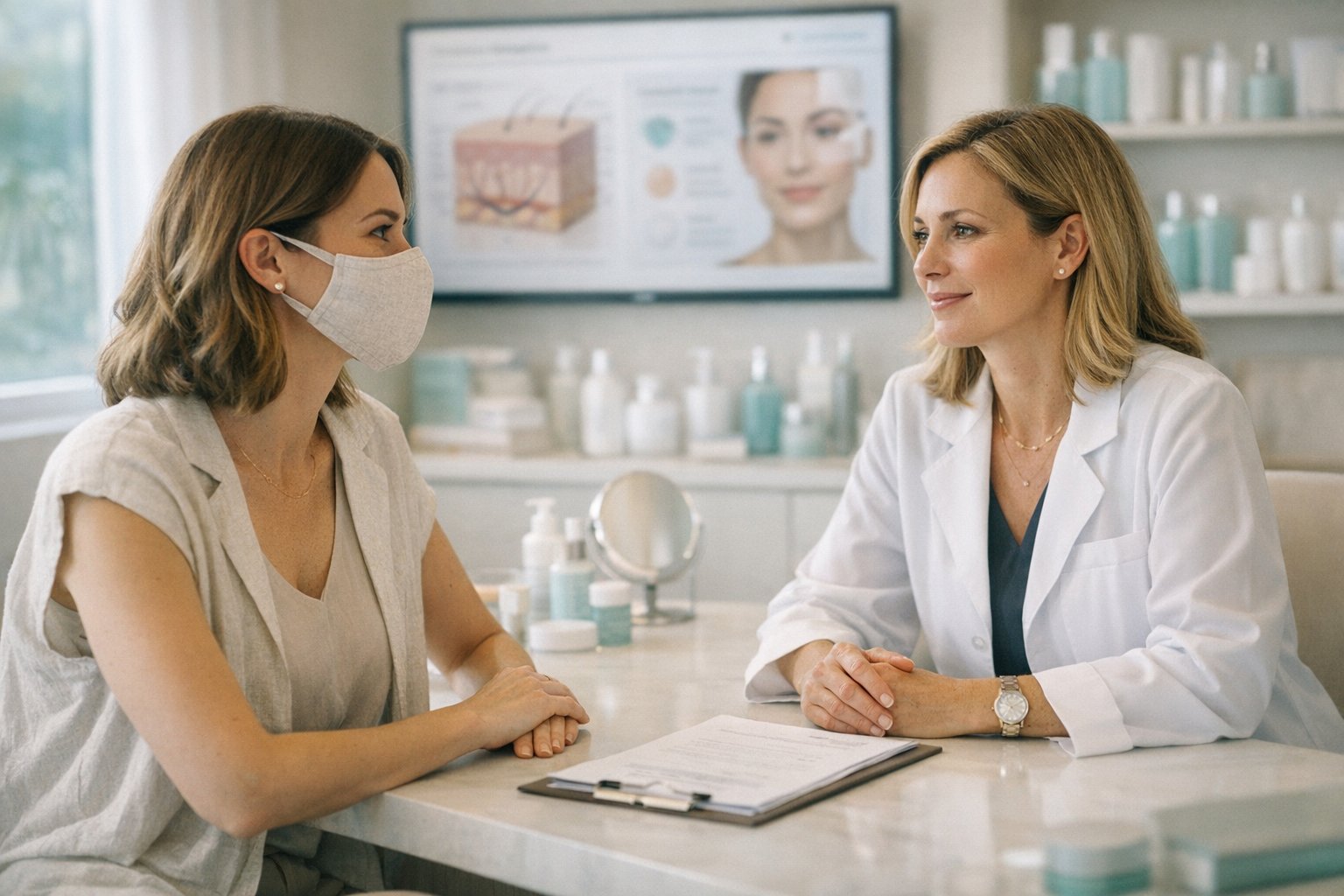
Face coverings can be important in many settings, but they can also create a warm, humid, high-friction environment on the skin. The good news is that small, consistent changes often make a noticeable difference.
Quick answer
- Choose a well-fitting, breathable mask and avoid constant rubbing or readjusting.
- Keep skincare simple: gentle cleanse, light moisturizer, and skip heavy layers under the mask.
- Change disposable masks regularly and wash reusable masks after each day of use.
- If breakouts are persistent or painful, a dermatologist can evaluate and personalize next steps.
What it is
Maskne is a mix of acne breakouts and irritation that can happen where a mask touches the face. Friction, pressure, heat, and trapped moisture can disrupt the skin barrier and clog pores, especially around the chin, jawline, cheeks, and nose.
Common causes and triggers
- Friction and pressure from a tight fit, seams, or frequent adjustments
- Heat and humidity that soften the skin and increase oil and sweat buildup
- Occlusion that traps skincare, makeup, and environmental debris against the skin
- Reusable masks that are not washed often enough
- Products that feel rich or heavy under a mask (thick creams, oils, fragranced products)
- Long wear time, especially during travel, workouts, or long shifts
What you can do at home
Start with fit and fabric. A mask that fits securely but comfortably can reduce rubbing. Look for breathable materials and a smooth inner surface. If a certain style consistently irritates your skin, trying a different shape or fabric blend may help.
Keep the routine minimalist. Under a mask, more product is not always better. A gentle cleanser, a light non-comedogenic moisturizer, and sunscreen on exposed areas is often a solid baseline. If you wear makeup, consider skipping foundation in the mask area to reduce buildup.
Support the skin barrier. When skin is irritated, it can feel tight, sting, or look red. A simple moisturizer can help reduce friction and support comfort. If your skin is very reactive, fragrance-free formulas are often a safer place to start.
Be smart about cleansing. Over-washing can backfire by drying and irritating the skin. Many people do well cleansing after mask wear and after workouts, then moisturizing. If you are acne-prone, a gentle acne cleanser may help, but it is worth introducing new products slowly to see how your skin responds.
Change masks on schedule. Disposable masks should be replaced regularly, especially when damp. Reusable masks should be washed after each day of use with fragrance-free detergent, then fully dried. A clean mask reduces the mix of oil, sweat, and residue that sits on the skin.
Handle breakouts conservatively. For occasional pimples, a small amount of an over-the-counter acne ingredient may help (for example, benzoyl peroxide or adapalene), but these can also irritate sensitive skin. Consider patch testing and using a moisturizer to reduce dryness. If irritation worsens, stop and check in with a dermatologist.
Professional options
If mask-related breakouts do not improve with consistent at-home changes, professional guidance can help you avoid trial-and-error and protect your skin barrier.
- Personalized skincare planning: Identifying which products may be contributing to clogged pores or irritation, and simplifying your routine without stripping the skin.
- Prescription acne therapies: For persistent acne, a dermatologist may discuss prescription topicals or other options based on your skin type, tolerance, and goals.
- In-office support: Depending on your skin, professional treatments that calm congestion or address post-breakout discoloration may be considered. Your clinician can help you decide what is appropriate and how to maintain results safely.
When to see a dermatologist
- Breakouts that are painful, cystic, or leaving marks despite a consistent routine
- Significant irritation, burning, cracking, or rash-like changes under the mask
- Worsening redness or sensitivity that makes it hard to tolerate products you used to handle well
- Signs of infection (spreading redness, warmth, swelling, pus, fever) or sores that are not healing
- Any skin change you are unsure about, especially if it is changing quickly
FAQ
Is maskne the same as acne?
It can look like acne, but it often includes irritation from friction and moisture. Many people notice a combination of clogged pores, pimples, and sensitivity in the mask area.
Should I stop moisturizing if I am breaking out?
Not usually. A light, non-comedogenic moisturizer can reduce friction and support the skin barrier. The key is choosing a formula that feels breathable and does not feel heavy under a mask.
How often should I wash a reusable mask?
Many people do best washing reusable masks after each day of use. A clean, fully dry mask can reduce buildup that may contribute to breakouts and irritation.
What if my skin is more irritated than acne-prone?
Focus on barrier support: gentle cleansing, a simple fragrance-free moisturizer, and minimizing actives until the skin feels calmer. If irritation persists or spreads, a dermatologist can evaluate for other causes.
Ready to get help?
Schedule an appointment or send a message and our team will get back to you.
Prefer to call? 954-666-3736
Disclaimer
This article is for educational purposes and is not medical advice. For diagnosis and personalized treatment, please book an appointment with a board-certified dermatologist.
