

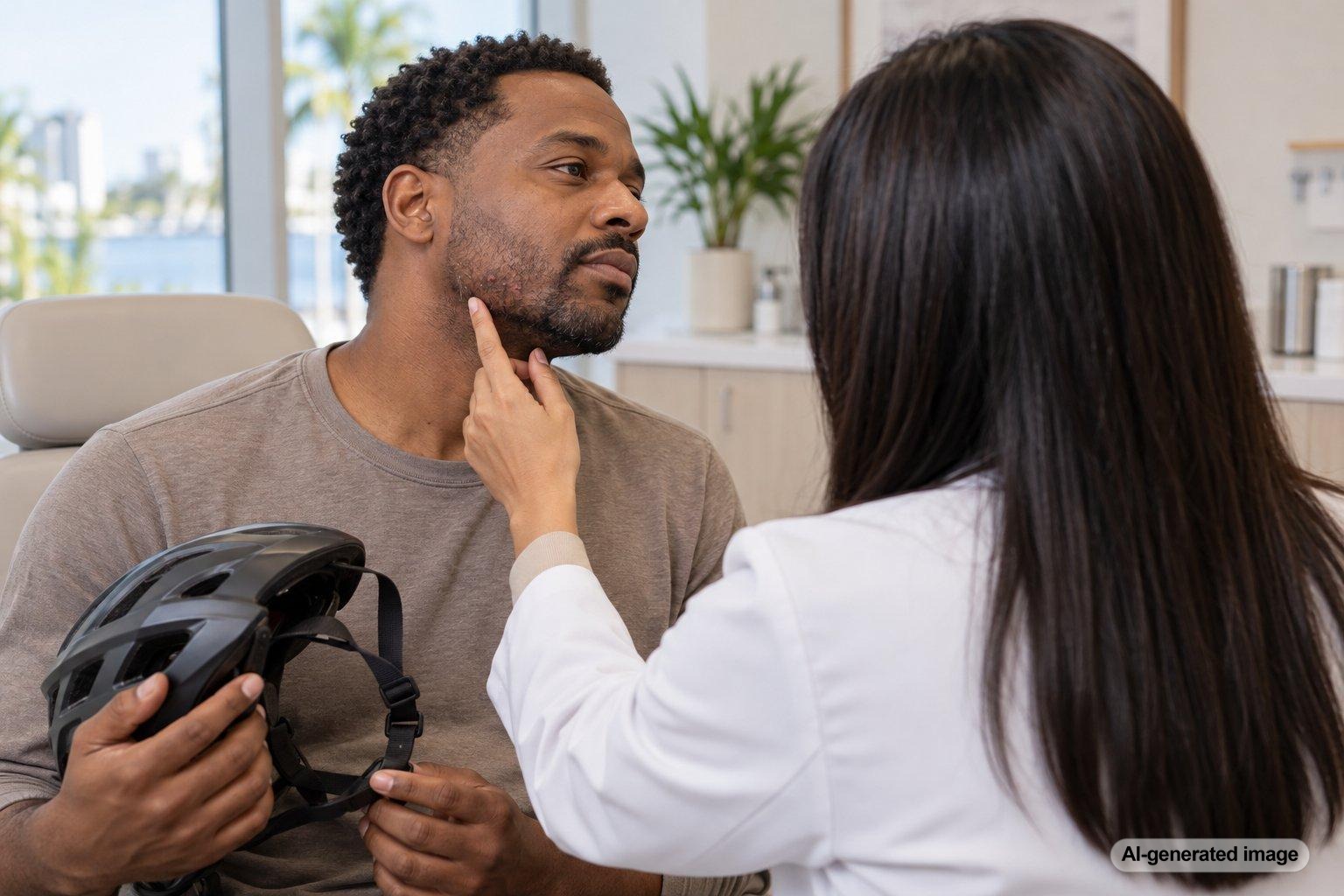
If you notice small pimples or irritated bumps along your jawline after wearing a helmet, the chin strap may be contributing to the problem. Repeated rubbing, pressure, warmth, and trapped sweat can create conditions that aggravate acne-prone skin. This type of friction-related breakout is often called acne mechanica. It can affect cyclists, motorcyclists, horseback riders, and anyone who regularly wears protective headgear.
In Fort Lauderdale, where warm temperatures and humidity can make outdoor activities especially sweaty, the combination of a snug helmet strap and prolonged skin contact may be particularly uncomfortable. However, not every bump beneath a chin strap is acne. Irritation, sensitivity to strap materials, and inflammation around hair follicles can produce similar symptoms. Understanding the differences can help you make sensible adjustments without compromising helmet safety.
Quick Answer: Why Does a Helmet Chin Strap Cause Breakouts?
- Friction: Repeated rubbing can irritate the skin and contribute to acne mechanica.
- Heat and sweat: Moisture trapped beneath a strap can aggravate acne-prone skin.
- Pressure: A tightly fitted strap may repeatedly irritate the same area of the jawline.
- Strap residue: Accumulated skin oils, sweat, and skincare products can contribute to irritation.
- Material sensitivity: Some bumps may reflect contact dermatitis rather than acne.
The most useful approach is usually to reduce unnecessary rubbing, maintain clean equipment, and use gentle skincare while keeping the helmet properly secured.
What Is Acne Mechanica?
Acne mechanica is a form of acne associated with repeated friction, pressure, heat, and moisture against the skin. It commonly occurs in areas covered or rubbed by athletic clothing and protective equipment. Helmet chin straps are a recognizable example because they repeatedly contact a relatively narrow section of the lower face.
Early changes may appear as small, rough bumps that are easier to feel than see. With continued irritation, some people develop more visible pimples or inflamed lesions. Breakouts may follow the exact path of the chin strap, making the connection with helmet use easier to recognize.
The strap does not necessarily create acne on its own. Instead, friction and occlusion may aggravate skin that is already susceptible to clogged pores and inflammation. This distinction matters because reducing mechanical irritation can be helpful, but some people may also need appropriate acne treatment.
Common Reasons the Jawline Reacts to a Chin Strap
Repeated Friction and Movement
A chin strap moves slightly as you turn your head, speak, or adjust your helmet. Even when the movement is subtle, repeated rubbing in the same location can irritate the skin barrier. This is especially relevant during longer rides or activities that require frequent head movement.
Trapped Sweat and Humidity
Warmth and moisture beneath the strap can make the skin more vulnerable to friction-related irritation. In South Florida, perspiration may accumulate quickly during cycling, riding, and other outdoor activities. A damp strap that remains in contact with the jawline can prolong that exposure.
Oil and Product Residue
Sunscreen, moisturizer, makeup, and natural skin oils can transfer onto the strap during ordinary use. Residue may remain on the material between activities, particularly when the manufacturer’s cleaning instructions are not followed regularly. This does not mean sunscreen or moisturizer should be skipped. Selecting non-comedogenic formulas and keeping the strap clean may make routine use more comfortable.
Excessive Pressure
A helmet must fit securely to perform its intended protective function. However, unnecessary pressure from twisted straps, poorly positioned hardware, or an improperly adjusted fit can concentrate friction against the jawline. The goal is not to loosen protective equipment beyond its recommended specifications. Instead, the fit should follow the helmet manufacturer’s instructions.
Sensitivity to Strap Materials
Some individuals react to components of fabrics, rubber, adhesives, dyes, or cleaning products. When itching, redness, scaling, or burning is more prominent than recognizable acne lesions, contact dermatitis may be a consideration. A dermatologist can evaluate whether irritation or an allergic reaction is contributing to the symptoms.
Is It Acne or Another Type of Skin Irritation?
Several conditions can produce bumps in the same area. Their appearance and associated sensations may offer useful clues, although a visual examination is sometimes needed to distinguish them.
- Acne mechanica: Small clogged pores, rough bumps, or inflamed pimples concentrated where the strap rubs.
- Irritant contact dermatitis: Redness, dryness, stinging, or a burning sensation associated with repeated rubbing or exposure to irritating substances.
- Allergic contact dermatitis: An itchy rash that may develop after exposure to a particular material or cleaning product.
- Folliculitis: Inflamed bumps centered around hair follicles, sometimes resembling small pimples.
- Shaving-related bumps: Irritation or ingrown hairs that may be aggravated when a strap repeatedly rubs recently shaved skin.
These conditions do not all respond to the same products. For example, an acne treatment that helps clogged pores may aggravate skin affected primarily by contact dermatitis. If the bumps are persistent, especially itchy, painful, or difficult to identify, a dermatologist can help clarify the cause.
How to Reduce Chin Strap Breakouts at Home
Clean the Strap According to Its Care Instructions
Follow the helmet manufacturer’s guidance for cleaning the chin strap and any removable padding. Appropriate cleaning helps remove accumulated sweat, skin oils, and residue without damaging protective materials. Avoid harsh solvents, bleach, or aggressive scrubbing unless expressly permitted by the manufacturer. Allow washable components to dry as directed before using the helmet again.
Maintain a Gentle Cleansing Routine
Wash the jawline with a mild, non-comedogenic cleanser after activities that cause significant sweating. Use lukewarm water and your fingertips rather than a rough washcloth or exfoliating brush. Avoid repeatedly scrubbing the affected area, since additional friction may worsen irritation.
If immediate washing is not practical, gently blotting sweat with a clean towel may be more comfortable than rubbing the skin.
Check the Helmet Fit
Inspect whether the strap is twisted, the buckle is pressing into the jawline, or the contact area is narrower than intended. Adjust the helmet only within the manufacturer’s fitting instructions. If the equipment continues to create painful pressure, a qualified retailer or fitting professional may be able to assess whether a different helmet design would provide a more appropriate fit.
Do not add improvised padding, modify the chin strap, or alter its routing unless the manufacturer specifically approves that configuration. Protective performance should remain the priority.
Choose Lightweight Skincare Products
People who develop clogged pores may benefit from moisturizers and sunscreens labeled non-comedogenic or oil-free. Apply products according to their instructions and allow them to settle before putting on protective equipment when practical.
Daily sun protection remains important during outdoor activities in Fort Lauderdale. A broad-spectrum, water-resistant sunscreen with SPF 30 or higher can be part of a suitable routine. Reapply as directed, particularly during prolonged outdoor exposure or after significant sweating.
Avoid Excessive Exfoliation
It may be tempting to scrub bumps or use several acne products at once. However, combining strong exfoliating acids, abrasive cleansing tools, and frequent washing can further irritate skin that is already exposed to friction.
For mild, recognizable acne, an over-the-counter product containing salicylic acid may help some individuals. Introduce products cautiously, follow label directions, and stop using anything that causes significant irritation. Avoid applying potentially irritating acne treatments to broken or visibly inflamed skin without professional guidance.
What If You Need to Wear a Helmet Every Day?
People who commute by motorcycle, cycle regularly, ride horses, or wear helmets occupationally may not be able to reduce their equipment use. Fortunately, skin care and helmet safety do not have to be competing priorities.
A consistent routine is often more practical than frequent product changes. Clean the skin gently after prolonged sweating, maintain the helmet according to its care instructions, and check for pressure points that can be corrected without altering its protective design.
Pay attention to whether breakouts are concentrated beneath one part of the strap or occur along both sides of the jawline. This pattern may help identify a mechanical trigger. If symptoms continue despite careful equipment maintenance, professional evaluation may help determine whether acne, contact dermatitis, or another condition is involved.
For individuals who shave along the jawline, irritation may be more noticeable when a strap presses against freshly shaved skin. Avoiding an unnecessarily close shave and using gentle shaving products may reduce additional friction-related discomfort.
Professional Options for Persistent Jawline Breakouts
When conservative changes are not enough, a dermatologist can examine the distribution and appearance of the lesions and recommend an individualized approach.
Depending on the findings, professional care may include topical acne therapies, treatment for an inflammatory skin condition, or evaluation for contact allergy. Prescription treatments may be considered when appropriate. The selection depends on the diagnosis, skin sensitivity, medical history, and severity of the symptoms.
For some patients, supportive skincare guidance may also help simplify a routine that has become overly complicated or irritating. Gentle maintenance treatments are not substitutes for diagnosing unexplained rashes or treating significant inflammatory acne.
At Waverly DermSpa, Dr. Maryann Mikhail, MD, can help evaluate persistent jawline breakouts and distinguish common acne from other conditions that may require a different management approach.
When Should You See a Dermatologist?
Occasional mild bumps may improve when mechanical irritation is reduced. However, professional evaluation is appropriate when symptoms persist, repeatedly return, or become more uncomfortable.
Consider scheduling an appointment if you notice:
- Deep, painful bumps or lesions that may leave scars.
- Breakouts that continue despite gentle skincare and appropriate equipment care.
- Persistent itching, peeling, or burning that suggests something other than ordinary acne.
- Recurring bumps around facial hair follicles that are difficult to distinguish from acne.
- Dark marks or texture changes that develop after repeated inflammation.
- Skin irritation that interferes with wearing required protective equipment comfortably.
Rapidly spreading redness, increasing warmth or swelling, significant pain, fever, or drainage accompanied by worsening symptoms should prompt timely medical evaluation because these findings can sometimes indicate infection.
Early assessment may also help reduce the risk of prolonged inflammation and post-inflammatory discoloration, which can be especially noticeable in some skin tones.
Frequently Asked Questions
Can a clean helmet strap still cause acne?
Yes. Even a clean strap can create repeated friction, pressure, and warmth against the skin. Cleaning reduces residue exposure, but it does not eliminate the mechanical factors associated with acne mechanica.
Why do the bumps appear only on one side of my jawline?
Uneven pressure, differences in strap positioning, or repeated movement against one side of the face may contribute. However, asymmetrical breakouts can have other causes. Persistent one-sided symptoms deserve evaluation if the explanation is unclear.
Should I stop wearing my helmet until the breakouts disappear?
Do not stop using required protective equipment simply to address mild breakouts. Maintain the recommended helmet fit and seek professional advice if irritation makes safe use difficult. A dermatologist and an appropriate helmet fitting professional can help address the separate skin and equipment concerns.
Will washing my face immediately after a ride help?
Gentle cleansing after sweating may help remove accumulated oil and perspiration. It can be a useful part of prevention, although it may not completely address breakouts caused by repeated friction or an underlying skin condition.
Can sunscreen make chin strap acne worse?
Some heavy or pore-clogging formulations may aggravate acne-prone skin, particularly beneath occlusive equipment. A lightweight, non-comedogenic sunscreen may be more comfortable. Do not skip sun protection when participating in outdoor activities.
Are jawline bumps always caused by hormones?
No. Hormonal influences can contribute to acne in some people, but localized friction, shaving irritation, and contact dermatitis are also possible explanations. Breakouts that closely follow the path of a helmet strap suggest that mechanical irritation deserves consideration.
Protect Your Skin Without Compromising Safety
Jawline breakouts beneath a helmet chin strap are often associated with repeated friction, trapped sweat, pressure, and irritation. Small adjustments to equipment maintenance and skincare habits may make the area more comfortable without compromising protective fit.
If the bumps persist or their cause is uncertain, a dermatology evaluation can help distinguish acne mechanica from other conditions and guide an appropriate treatment plan.
Ready to get help?
Schedule an appointment or send a message and our team will get back to you.
Prefer to call? 954-666-3736
Disclaimer
This article is for educational purposes and is not medical advice. For diagnosis and personalized treatment, please book an appointment with a board-certified dermatologist.
Sources & Further Reading
- American Academy of Dermatology (AAD) – Is sports equipment causing your acne?
- DermNet – Skin reactions to face masks
- DermNet – Personal protective equipment
