

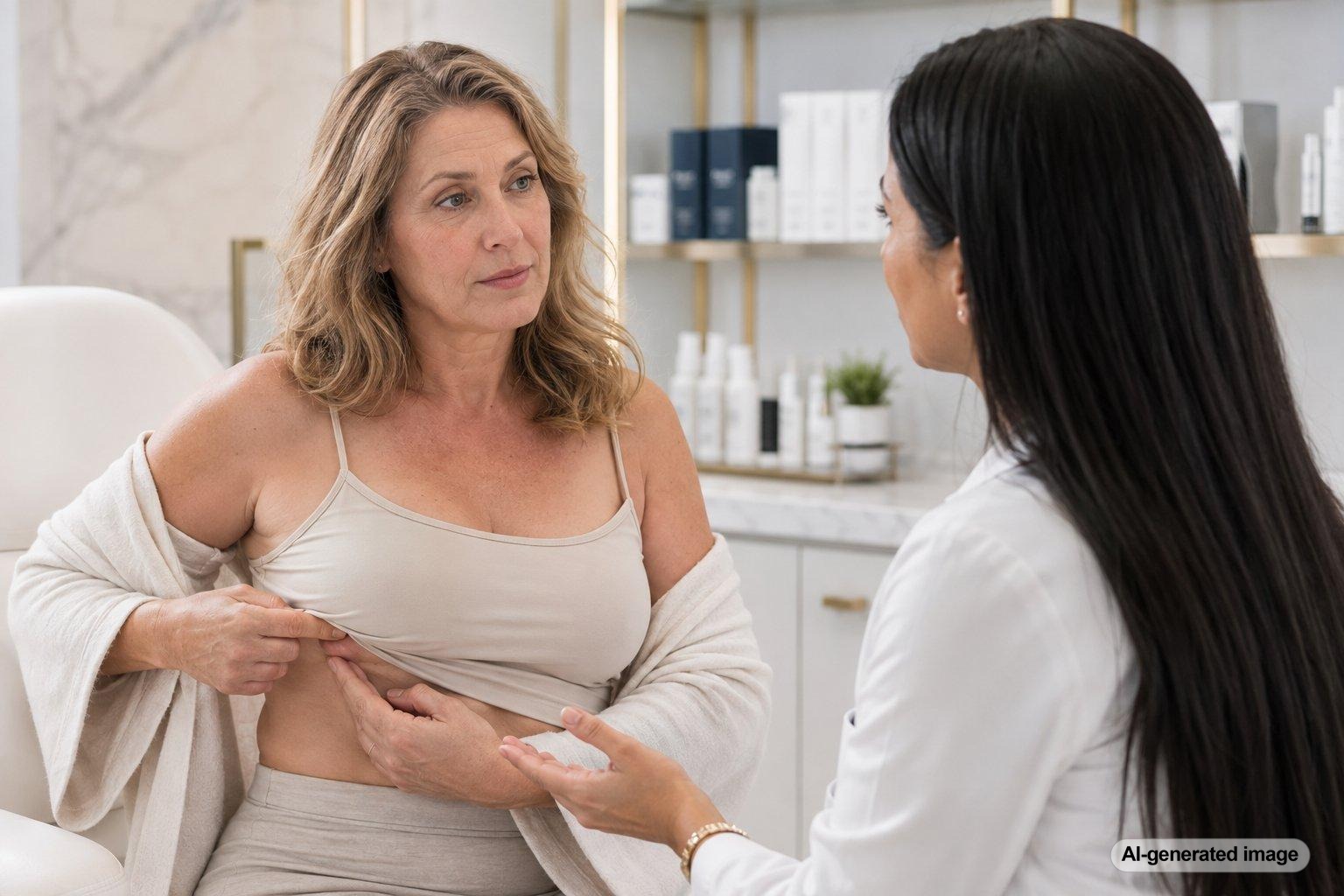
If the skin under your breasts seems to stay itchy, flaky, irritated, or peeling, the explanation is often related to what happens naturally inside a warm skin fold. Moisture, heat, sweat, and repeated skin-on-skin friction can weaken the surface of the skin and create an environment where irritation or microbial overgrowth becomes easier.
One common possibility is intertrigo, which is inflammation within a skin fold, but it isn’t the only explanation. Yeast or bacterial involvement, eczema, contact irritation, and certain forms of psoriasis can sometimes look similar. Because several conditions overlap in appearance, persistent or recurring symptoms are worth having evaluated rather than repeatedly guessing at the cause.
Quick answer
- Moisture and friction are common triggers. Sweat trapped under the breasts can soften and irritate the skin, especially in warm weather or after exercise.
- Intertrigo is a common possibility. This term describes inflammation where skin surfaces rub together and moisture becomes trapped.
- Yeast or bacteria may sometimes become involved. An irritated, damp skin fold can provide conditions where microorganisms can multiply.
- Eczema, contact irritation, or psoriasis can also affect this area. Similar-looking rashes can have different causes and may need different approaches.
- Recurring, painful, spreading, oozing, or unusually persistent symptoms should be evaluated. A dermatologist can examine the area and help determine what is contributing to the problem.
Why does the skin under the breasts get irritated so easily?
The fold beneath the breasts is an area where warmth, moisture, pressure, and friction can occur at the same time. Sweat may remain against the skin instead of evaporating quickly, while movement allows adjacent surfaces to rub repeatedly. Tight or non-breathable clothing can add another layer of heat and friction.
When the skin stays damp, its protective outer barrier can become softer and more vulnerable to irritation. The result may be itching, tenderness, redness, scaling, cracking, or peeling. In Fort Lauderdale’s warm, humid climate, controlling moisture in skin folds can be especially challenging throughout much of the year.
Intertrigo may be part of the explanation
Intertrigo describes inflammation that develops in areas where skin touches skin. According to Cleveland Clinic and MedlinePlus, it commonly affects warm, moist skin folds and is associated with friction and trapped moisture. The area may feel itchy, burning, sore, or raw, and the skin can become scaly or cracked.
Intertrigo itself does not automatically mean there is an infection. However, irritated and persistently moist skin can sometimes develop secondary fungal or bacterial involvement. This distinction matters because treatment depends on what is actually contributing to the rash.
Could it be yeast?
Yeast can sometimes contribute to rashes beneath the breasts. Candida naturally exists on the body, but warm and damp conditions within a skin fold can favor overgrowth in some people. DermNet describes candidal intertrigo as a superficial infection of skin folds that can involve redness, moisture, peeling, scaling, and small surrounding bumps or pustules.
Not every red or peeling rash under the breasts is caused by yeast, so repeatedly applying an antifungal product without knowing the cause may not address the actual problem. A clinician can evaluate the pattern and, when necessary, use a skin scraping or other testing to look for fungal involvement.
Other common causes of itching and peeling
- Friction and sweat: Repeated rubbing combined with perspiration can irritate otherwise healthy skin, particularly during exercise, hot weather, or long periods in damp clothing.
- Contact irritation: Laundry products, fragranced body products, adhesives, fabrics, dyes, or topical products can irritate sensitive skin or contribute to contact dermatitis.
- Eczema: Eczematous inflammation can cause itching, dryness, scaling, and irritation. Its appearance can overlap with other rashes, making an examination useful when symptoms persist.
- Psoriasis: Inverse or flexural psoriasis can affect skin folds, including beneath the breasts. Instead of the thick scale people often associate with psoriasis, folds may appear smoother, redder, or shinier.
- Bacterial involvement: Certain bacteria can contribute to rashes in skin folds. Changes such as increasing tenderness, drainage, odor, crusting, or rapid worsening deserve medical attention.
What you can do at home
For mild irritation, gentle moisture and friction control may help support the skin while you watch how it responds. Keep the area clean without aggressive scrubbing, and dry it thoroughly after bathing or sweating. Patting the area dry is usually gentler than rubbing.
Breathable, properly fitted clothing and bras may reduce heat and rubbing. Changing out of sweaty clothing promptly can also help limit prolonged moisture exposure. If skin surfaces consistently rub together, a simple fragrance-free barrier product may help reduce friction for some people.
Avoid layering multiple fragranced creams, powders, acids, exfoliants, or other active skincare products onto already irritated skin. Using several products at once can make it harder to determine what is helping and what may be aggravating the area.
If you suspect yeast, eczema, psoriasis, or another specific condition, it is better to get persistent symptoms evaluated rather than assuming every breast-fold rash should be treated the same way. The correct approach depends on the underlying cause.
What a dermatologist may look for
A dermatologist can evaluate the location, color, borders, scale, moisture level, tenderness, and overall pattern of the rash. They may also ask whether it changes with heat, sweating, exercise, clothing, skincare products, medications, or other skin symptoms elsewhere on the body.
If fungal or bacterial involvement is a possibility, testing such as a skin scraping, culture, or examination with a specialized light may sometimes be considered. Professional options depend on the findings and can include targeted topical therapies, prescription treatments, or strategies for controlling inflammation and moisture. Your clinician can help you decide which approach makes sense for your skin.
When should you see a dermatologist?
Consider scheduling an evaluation if the rash repeatedly comes back, does not improve with gentle skin-fold care, or is difficult to identify. It is also worth getting checked when the skin becomes increasingly painful, cracked, raw, or widespread.
Seek prompt medical attention for signs that may suggest a more significant infection or complication, such as pus, rapidly increasing redness or swelling, significant warmth, foul-smelling drainage, fever, or rapidly worsening pain. If you notice a persistent change involving the breast itself rather than only the skin fold, including an unexplained lump, nipple change, persistent wound, or other concerning breast symptom, contact an appropriate healthcare professional for evaluation.
FAQ
Why does the rash under my breasts keep coming back?
Recurring moisture, friction, heat, sweating, clothing, and an underlying inflammatory or infectious skin condition can all contribute. If it continues returning despite careful drying and friction reduction, a dermatologist can evaluate whether another factor is involved.
Does peeling skin under the breasts always mean a yeast infection?
No. Yeast is one possibility, but friction, intertrigo, eczema, contact irritation, psoriasis, and bacterial conditions can produce overlapping symptoms. Appearance alone may not always distinguish them reliably.
Can sweating make the problem worse?
Yes. Sweat can remain trapped within the breast fold, increasing moisture and friction. Warm, humid conditions can make this more noticeable, so drying the area and changing damp clothing may help reduce irritation.
Should I put moisturizer on peeling skin under my breasts?
It depends on why the skin is peeling. A simple fragrance-free barrier may reduce friction in some situations, while heavy or irritating products can sometimes trap moisture or aggravate sensitive skin. If the area is persistently inflamed, wet, painful, or recurrent, it is worth getting checked before experimenting with multiple products.
Can psoriasis occur under the breasts?
Yes. A form called flexural or inverse psoriasis can involve skin folds, including beneath the breasts. Because it may look different from psoriasis on other parts of the body and can resemble other fold rashes, a dermatologist can help distinguish it.
When is a breast-fold rash more concerning?
Rapid worsening, significant pain, pus, spreading redness, marked swelling, fever, foul-smelling drainage, persistent sores, or symptoms that repeatedly return are reasons to seek medical evaluation. If you’re unsure, it’s worth getting checked.
Ready to get help?
Schedule an appointment or send a message and our team will get back to you.
Prefer to call? 954-666-3736
This article is for educational purposes and is not medical advice. For diagnosis and personalized treatment, please book an appointment with a board-certified dermatologist.
Sources & further reading
- Cleveland Clinic – Intertrigo: What Is It, Causes, Symptoms & Treatment
- DermNet – Intertrigo (Rash in body folds): Causes, Images, and More
- MedlinePlus (NIH) – Intertrigo
- DermNet – Candidal Intertrigo
