

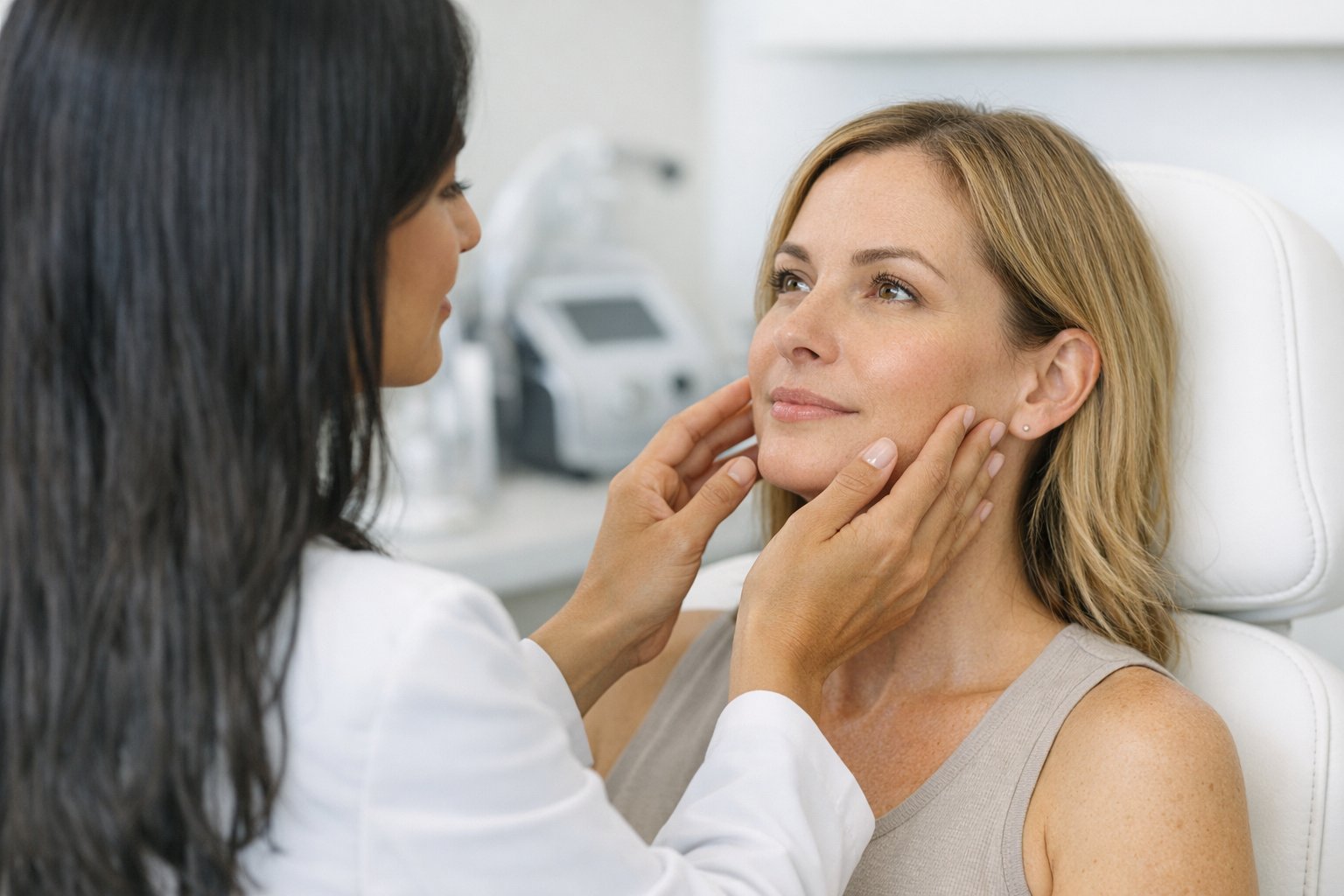
If you are considering XERF, it is reasonable to ask about safety before focusing on glow, firmness, or convenience. In general, treatments in this category are designed to heat deeper skin layers in a controlled way, and many people tolerate them well when they are performed thoughtfully and with the right settings.
The important part is that safe does not mean risk-free. Comfort level, skin sensitivity, treatment area, your medical history, and the experience of the person performing the treatment all matter. A careful evaluation helps determine whether XERF makes sense for your skin and goals.
Quick answer
- XERF is generally considered a noninvasive radiofrequency skin-tightening treatment, and many people find it manageable when performed appropriately.
- Common short-term effects may include warmth, redness, tenderness, or temporary swelling.
- Safety depends on the device, treatment settings, cooling, the area being treated, and the skill of the clinician.
- People with very sensitive skin, active irritation, certain implanted devices, or other medical considerations may need extra caution or a different approach.
- A dermatologist can help you decide whether the potential benefits and tradeoffs fit your skin, goals, and comfort level.
What XERF is in plain English
XERF is a skin-tightening treatment that uses radiofrequency energy. In simple terms, it delivers controlled heat below the skin surface while helping protect the top layer of skin. The goal is to support a firmer, smoother look over time rather than create an abrupt change.
Because it is an energy-based treatment, the details matter. The exact device design, how energy is delivered, and how your skin is assessed beforehand all play a role in how comfortable and appropriate the treatment may be.
What can affect safety
- Skin sensitivity: Skin that is easily irritated may react more strongly to heat.
- Treatment area: Thinner or more delicate areas can require a more conservative approach.
- Recent treatments: If you recently had resurfacing, peels, or another energy-based procedure, timing matters.
- Active skin issues: Rashes, open areas, infection, or significant irritation should be evaluated first.
- Medical history: Some implanted devices or other health considerations may affect whether treatment is appropriate.
- Operator technique: Proper assessment, settings, cooling, and monitoring during treatment are central to safe care.
Common side effects and possible risks
Many people notice temporary redness, warmth, mild swelling, or tenderness after radiofrequency skin-tightening treatments. These effects are often short-lived, but experiences vary from person to person.
Less common but more significant problems can include blistering, burns, prolonged irritation, pigment changes, or delayed healing. Risk is one reason a personalized treatment plan matters, especially for patients with sensitive skin, darker skin tones, recent sun exposure, or a history of post-inflammatory discoloration.
It is also worth knowing that the FDA has issued safety communications for certain radiofrequency microneedling uses. XERF is not the same as RF microneedling, but the broader takeaway is still helpful: energy-based treatments deserve careful patient selection, proper training, and attention to device-specific safety steps.
What you can do before and after treatment
You do not need a complicated routine to be thoughtful about safety. A few simple steps can make the conversation with your clinician more productive and help you feel more prepared.
- Share your skin history, including sensitivity, pigment changes, cold sores, or recent procedures.
- Mention any implanted medical devices or health conditions that could affect treatment planning.
- Avoid arriving with irritated, sunburned, or actively inflamed skin.
- Ask what normal short-term reactions look like and what would be considered unusual.
- Use gentle skincare afterward and avoid overdoing actives if your skin feels warm or reactive.
Professional options and when evaluation matters most
If your main concern is mild to moderate laxity, a noninvasive treatment may be one option. If the issue is more related to surface texture, pigment, scarring, or deeper volume loss, a different treatment category may make more sense. That is why a good consultation is less about selling a device and more about matching the approach to the problem you actually want to improve.
A dermatologist can also help you sort through overlap. Sometimes what looks like loose or tired skin is partly related to sun damage, inflammation, texture changes, or volume shifts, and each of those concerns can call for a different strategy.
When to see a dermatologist
- You have a history of unusual scarring, pigment changes, or strong reactions to cosmetic procedures.
- You have active eczema, rosacea flares, a rash, open skin, or an unexplained bump in the treatment area.
- You are unsure whether your concern is laxity, discoloration, texture, or something medical that should be checked first.
- You develop significant pain, blistering, worsening swelling, or skin changes that do not seem to be settling after treatment.
FAQ
Is XERF safer than surgery?
It is less invasive than surgery, but that does not automatically make it the right choice for everyone. The best option depends on your goals, anatomy, tolerance for downtime, and the type of result you are hoping for.
Does XERF hurt?
Comfort varies. Many people describe a sensation of heat or brief intensity rather than sharp pain, but individual experience can differ based on the area treated and the settings used.
Can sensitive skin still be treated?
Sometimes, yes, but that decision should be individualized. Sensitive or reactive skin may need a more cautious plan, a different treatment, or a delay until the skin is calmer.
Are side effects always minor?
Not always. Many reactions are mild and temporary, but more significant side effects can happen with energy-based treatments. That is why proper evaluation and technique are important.
How do I know if XERF is appropriate for me?
The safest answer comes from an in-person assessment. Your clinician can review your skin, your goals, and any factors that may change the risk-benefit balance.
At Waverly DermSpa, we offer XERF and can help you understand whether it may be appropriate.
Ready to get help?
Schedule an appointment or send a message and our team will get back to you.
Prefer to call? 954-666-3736
Disclaimer: This article is for educational purposes and is not medical advice. For diagnosis and personalized treatment, please book an appointment with a board-certified dermatologist.
Sources & further reading
- U.S. Food and Drug Administration (FDA): Potential Risks with Certain Uses of Radiofrequency (RF) Microneedling
- Cleveland Clinic: Radio Frequency (RF) Skin Tightening
- DermNet: Radiothermoplasty and Thermage
