

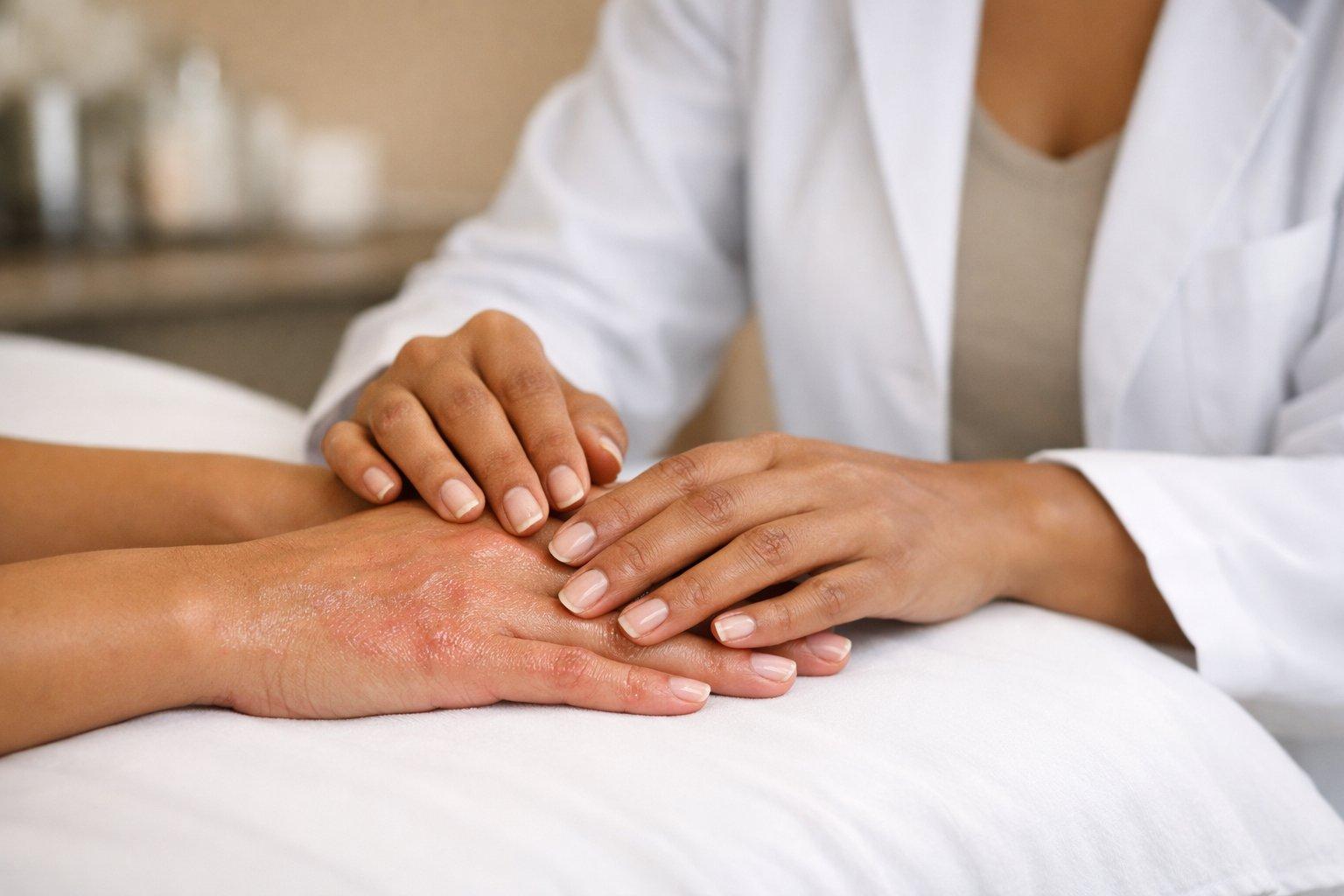
A weeping rash on the hands can be unsettling, especially when the skin feels raw, itchy, or suddenly more inflamed than usual. The short answer is that it may be eczema, but eczema is not the only possibility. Hand rashes can also be linked to irritation, allergy, or infection, and those problems can overlap.
Because the hands are exposed to soap, sanitizer, cleaning products, water, heat, sweat, and friction all day long, it is not always easy to tell what is driving the flare. A careful exam can help sort out what fits best and what the next step should be.
Quick answer
- A weeping hand rash can happen with eczema, especially when the skin barrier is very inflamed or blistered.
- It is not specific to eczema alone, so contact dermatitis, irritation, and infection can look similar.
- Clues like itching, dryness, cracking, and repeat flares after soap or wet work may point toward hand eczema.
- If the rash is painful, spreading, crusting, or not improving, a dermatologist can evaluate what is going on.
Why a hand rash can be mistaken for eczema
Eczema is a broad term for inflammatory skin conditions that can cause itching, redness, dryness, cracking, and sometimes small blisters. When those blisters break down, the skin can ooze or look wet. On the hands, this can be especially confusing because irritation from frequent washing or repeated exposure to products can create a very similar picture.
In plain English, a weeping rash means the skin barrier is disrupted enough that fluid is seeping through the inflamed surface. That can happen in eczema, but it can also happen when irritated or allergic skin becomes more severe.
Signs that can fit hand eczema
- Itching that comes before or alongside the rash
- Dryness, roughness, or scaling around the irritated areas
- Stinging or burning after washing, sanitizer, or cleaning products
- Small blisters, then oozing, crusting, or cracking
- Flares that keep coming back in the same places
- Skin changes on the fingers, knuckles, palms, or wrists
What else could it be?
- Irritant contact dermatitis: Common on the hands after frequent washing, sanitizers, detergents, or wet work.
- Allergic contact dermatitis: A reaction to something touching the skin, such as fragrance, preservatives, rubber, or certain nail and skincare products.
- Infection: Broken skin can become infected, and infection can make drainage, tenderness, crusting, or worsening redness more noticeable.
- Psoriasis or another inflammatory rash: Some rashes can overlap in appearance, especially when the skin is cracked and irritated.
What you can do at home
- Use a gentle, fragrance-free cleanser instead of harsh soap.
- Apply a thick, bland moisturizer after every hand wash and again before bed.
- Keep showers and hand washing lukewarm rather than hot.
- Wear protective gloves for cleaning or dishwashing, and try to avoid prolonged wet work.
- Avoid picking, scrubbing, or trying to peel crusted areas.
- Pause new fragranced products or hand treatments until the skin settles.
Professional options
If the rash keeps returning, feels severe, or is hard to identify, a dermatologist can evaluate the pattern, ask about triggers, and look for signs that suggest eczema versus another cause. Depending on the visit, common options may include a focused skin exam, guidance on barrier repair, discussion of prescription treatment categories, or patch testing if an allergy seems possible.
If infection is a concern or prescription treatment may be needed, it is worth getting checked rather than guessing. The right plan depends on what is actually driving the rash.
When to see a dermatologist
- The rash is painful, rapidly worsening, or spreading
- You notice marked swelling, pus, or heavy crusting
- Cracks are deep, bleeding, or making normal hand use difficult
- It keeps flaring despite gentle skincare and trigger avoidance
- You are not sure whether the rash is eczema, allergy, or infection
FAQ
Does weeping always mean infection?
No. Inflamed eczema can ooze fluid when the skin barrier is very disrupted. That said, infection can also change the look and feel of a rash, so new tenderness, worsening redness, or heavier drainage should be evaluated.
Can too much hand washing make this worse?
Yes, it can. Repeated washing, sanitizer use, and prolonged wet work can strip the skin barrier and make hand eczema or irritant dermatitis more likely to flare.
Should I keep trying over-the-counter products until something works?
It is usually better to simplify than to keep layering on multiple products. Sticking with gentle cleansing and a bland moisturizer is often a safer starting point while you arrange an evaluation if the rash is persistent or severe.
Can a dermatologist tell the difference between eczema and an allergic reaction?
Often, yes. The history, the exact pattern on the hands, and sometimes patch testing can help clarify whether eczema, irritation, allergy, or overlap is most likely.
Ready to get help?
Schedule an appointment or send a message and our team will get back to you.
Prefer to call? 954-666-3736
Disclaimer
This article is for educational purposes and is not medical advice. For diagnosis and personalized treatment, please book an appointment with a board-certified dermatologist.
Sources & further reading
- American Academy of Dermatology: How to manage wet or weeping eczema
- National Eczema Association: Hand Eczema
- National Institute of Arthritis and Musculoskeletal and Skin Diseases: Atopic Dermatitis
