

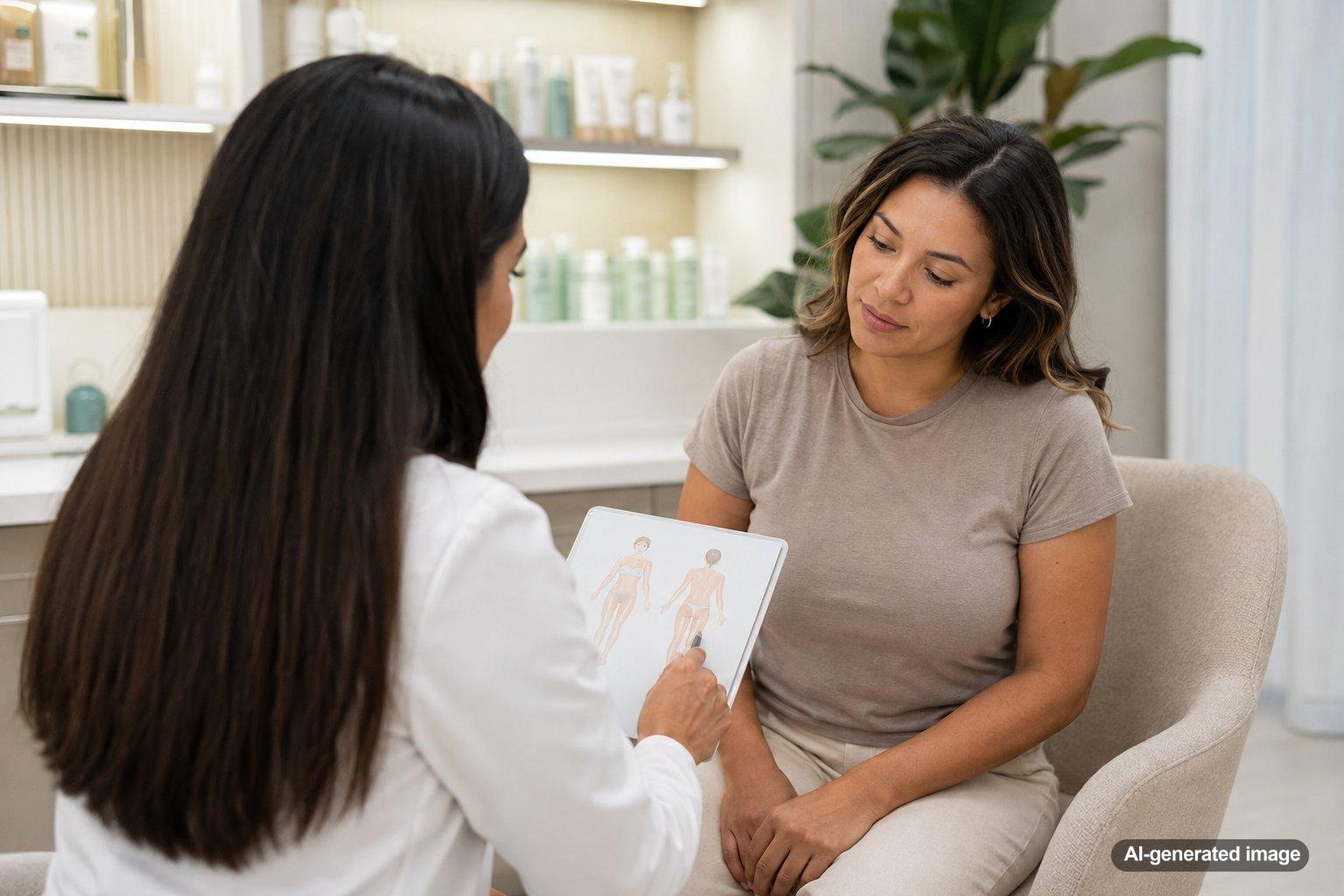
A rash tucked beneath a breast, inside the groin, under an arm, or between the buttocks can be uncomfortable and difficult to interpret. When the skin looks smooth, shiny, and inflamed rather than dry and scaly, psoriasis may not be the first possibility that comes to mind. Inverse psoriasis is a form of psoriasis that favors areas where skin touches skin.
Warm weather, travel, exercise, and everyday friction can make these hidden areas feel especially sensitive. The good news is that a dermatologist can examine the pattern, distinguish it from other common fold rashes, and discuss options suited to delicate skin. Here is a calm, practical guide to what inverse psoriasis may look like and what to do next.
Quick answer
- Inverse psoriasis often appears as smooth, well-defined patches in skin folds, with little of the silvery scale associated with plaque psoriasis.
- Depending on skin tone, affected areas may look red, pink, purple, brown, or darker than the surrounding skin.
- Sweat, heat, moisture, and rubbing can aggravate discomfort in these areas.
- Several other rashes can look similar, so an in-person dermatology evaluation is useful before choosing treatment.
- Gentle cleansing, careful drying, breathable clothing, and reduced friction may help support comfort while you arrange care.
What inverse psoriasis is
Psoriasis is an immune-mediated inflammatory condition that can affect the skin in different patterns. Inverse psoriasis, also called flexural or intertriginous psoriasis, develops where skin surfaces meet. Common locations include the underarms, beneath the breasts, the groin and genital region, the crease between the buttocks, and around the navel.
The moist environment inside a fold changes how psoriasis looks. Instead of a thick plaque with obvious scale, inverse psoriasis may appear smooth, shiny, sharply outlined, and tender. The area may itch, burn, crack, or feel sore. Some people also have more typical psoriasis patches on the scalp, elbows, knees, or other areas, but fold symptoms can occur without an obvious plaque nearby.
Appearance alone cannot confirm the cause. Yeast or fungal rashes, irritant or allergic contact dermatitis, intertrigo, and other inflammatory conditions may overlap in location or appearance. A dermatologist can evaluate the skin and decide whether testing is appropriate.
Common causes or triggers
Inverse psoriasis reflects the same underlying inflammatory process as other forms of psoriasis. It is not caused by poor hygiene, and psoriasis itself is not contagious. In skin folds, local conditions can intensify irritation or make a flare harder to settle.
- Friction: Repeated skin-on-skin rubbing, tight clothing, or vigorous movement can aggravate tender areas.
- Heat and sweat: Hot, humid Fort Lauderdale weather, outdoor activity, and long travel days may leave folds warm and damp.
- Moisture: Water or perspiration that remains trapped in a crease can increase irritation.
- Skin injury: Chafing, scratching, or harsh hair-removal practices may bother already inflamed skin.
- Personal psoriasis triggers: Stress, illness, certain medications, and other individual factors may be associated with flares. A clinician can help review patterns without assuming a single cause.
Because infections can occur alongside irritated fold skin, new odor, drainage, crusting, or rapidly worsening pain deserves medical attention rather than self-treatment based only on appearance.
What you can do at home
Conservative skin care may help reduce day-to-day irritation, although it does not replace a diagnosis or a personalized plan.
- Wash gently with lukewarm water and a mild, fragrance-free cleanser. Avoid aggressive scrubbing, exfoliating acids, and fragranced wipes on an active rash.
- Pat the fold dry with a soft towel. A cool hair dryer held at a comfortable distance may help remove lingering moisture without rubbing.
- Choose loose, breathable clothing and change out of damp swimwear or workout clothes when practical.
- Notice whether seams, waistbands, bras, or repetitive movement are increasing friction, then make small adjustments to reduce rubbing.
- Avoid borrowing a prescription cream or repeatedly applying over-the-counter antifungal or steroid products without guidance. Different fold rashes can require different care, and delicate skin may be more vulnerable to side effects.
If you’re visiting South Florida, pack enough of your established skin-care products and prescribed medication for the trip. Keep products in their labeled containers, follow your clinician’s directions, and contact a dermatologist if the rash changes or your usual plan is no longer helping.
Professional options
A dermatologist may begin with a careful skin examination and questions about symptoms, timing, products, medications, and psoriasis elsewhere on the body. If the appearance is unclear, the clinician may consider a simple test to look for yeast or fungus or another evaluation based on the findings.
Common treatment categories can include carefully selected topical anti-inflammatory medications, nonsteroid prescription topicals that may be useful for sensitive sites, or treatments aimed at a confirmed overlapping infection. For more extensive, persistent, or difficult psoriasis, a dermatologist may discuss light-based or systemic therapies. The appropriate choice depends on the location, severity, health history, age, pregnancy considerations, other medications, and prior response.
Skin folds require particular care because some medications that are appropriate for thicker skin may cause problems when used too strongly or for too long in a covered, delicate area. Your clinician can help you decide what to apply, how much to use, and when to check back.
When to see a dermatologist
It is worth scheduling an evaluation when a fold rash is new, recurrent, painful, spreading, or not improving with gentle care. Prompt medical attention is especially important if you notice:
- Rapidly increasing redness or discoloration, warmth, swelling, or pain
- Drainage, pus, crusting, an unpleasant odor, open sores, or deep cracks
- Fever, chills, or feeling generally unwell
- Blisters, significant skin peeling, or a sudden widespread rash
- Eye, mouth, or extensive genital involvement
- Joint pain, swelling, or morning stiffness alongside possible psoriasis
A timely visit can also prevent months of trial and error. If you’re unsure, it’s worth getting checked, particularly before applying a strong medication to the groin, genital skin, or another sensitive fold.
Frequently asked questions
Is inverse psoriasis contagious?
No. Psoriasis is an immune-mediated condition and does not spread from person to person. However, a separate infection can resemble or occur alongside a fold rash, which is one reason an accurate evaluation matters.
Why doesn’t inverse psoriasis always look scaly?
Moisture and continual contact between skin surfaces tend to reduce visible scale. The patch may instead look smooth, shiny, and sharply defined.
Can inverse psoriasis be mistaken for a yeast or fungal rash?
Yes. Several conditions favor warm, moist folds and can share features such as redness or discoloration, itching, burning, and soreness. A dermatologist can examine the distribution and may perform testing when needed.
Can I use an over-the-counter hydrocortisone cream in a skin fold?
It is better to ask a clinician first, especially for genital skin, the groin, or prolonged use. Covered areas can absorb medication differently, and an incorrect treatment may mask another condition or cause unwanted effects.
Does inverse psoriasis occur only in people with psoriasis elsewhere?
No. Some people have recognizable plaques in other areas, while others first notice symptoms in a fold. The overall pattern and examination findings help a dermatologist assess the possibilities.
What information should I bring to an appointment?
Note when the rash began, where it appears, what it feels like, products or medications you’ve tried, and what seems to worsen it. Photos taken during a flare can be useful if the appearance changes before your visit.
Ready to get help?
Schedule an appointment or send a message and our team will get back to you.
Prefer to call? 954-666-3736
This article is for educational purposes and is not medical advice. For diagnosis and personalized treatment, please book an appointment with a board-certified dermatologist.
Sources & further reading
- National Psoriasis Foundation – Inverse Psoriasis: Symptoms, Causes & Treatment
- American Academy of Dermatology (AAD) – Psoriasis: Signs and symptoms
- DermNet – Flexural psoriasis. Psoriasis in skin folds and genitals
